
Now Reading: Bhoto Jatra: The Legendary Festival of the Living Goddess and a Lost Vest
-
01
Bhoto Jatra: The Legendary Festival of the Living Goddess and a Lost Vest


Bhoto Jatra
Introduction
In Nepal, every year before the beginning of the rainy season, Machhindra Jatra, also known as the god of rain is celebrated.This jatra (festival) is celebrated in the beautiful city of Nepal called Lalitpur. This jatra is also considered to be one of the longest-running festivals of Nepal, which is celebrated for one month. On the last day of this jatra, Bhoto jatra is celebrated. Bhoto Jatra marks the end of the month-long celebration.
There is a very interesting story behind the celebration of Bhoto Jatra in Nepal.
Many years ago there was a snake god named Karkotak who used to stay in his palace with his wife peacefully under the lake of Taudaha in the Kathmandu valley. One day the queen, wife of Karkotak, suddenly started crying because of pain in her eyes; later on, everyone discovered that she had been infected with the eye disease. The king Karkotak searched for medicine for curing his wife’s pain, but he couldn’t make it a success.At that era there was this farmer from Bhaktapur who was a very good healer. After finding out about him, the king went to his place, told him everything about his wife, and requested him to come with the king to heal his wife.
Once they both reached the palace, the farmer looked into the eyes of the queen and quickly prepared the medicine using Ayurbedic herbs and gave it to the queen of snake. After putting the medicine the queen of snake instantly cured her eyes, seeing his wife the snake king became so happy he not only appreciate his work but also gifted the farmer a invaluable vest(bhoto) as a token of love. The vest(Bhoto) was mottled with diamonds which a farmer used to wear wherever he would go. After seeing that shiny vest everyone around him started noticing him.
One day a Lakhey (fire-burning demon) also happened to see the farmer’s shiny vest; after seeing that, he also liked that vest so much that he started to envy that vest later on; he started chasing him silently. One day the farmer was working in his field; it was a very sunny day. He felt so warm he opened his vest and put it somewhere nearby. At that exact moment, the Lakhey (fire-burning) demon grabs this opportunity and steals that invaluable vest from the farmer. The farmer tried his best but couldn’t manage to find Lakhey; the farmer became very sad.
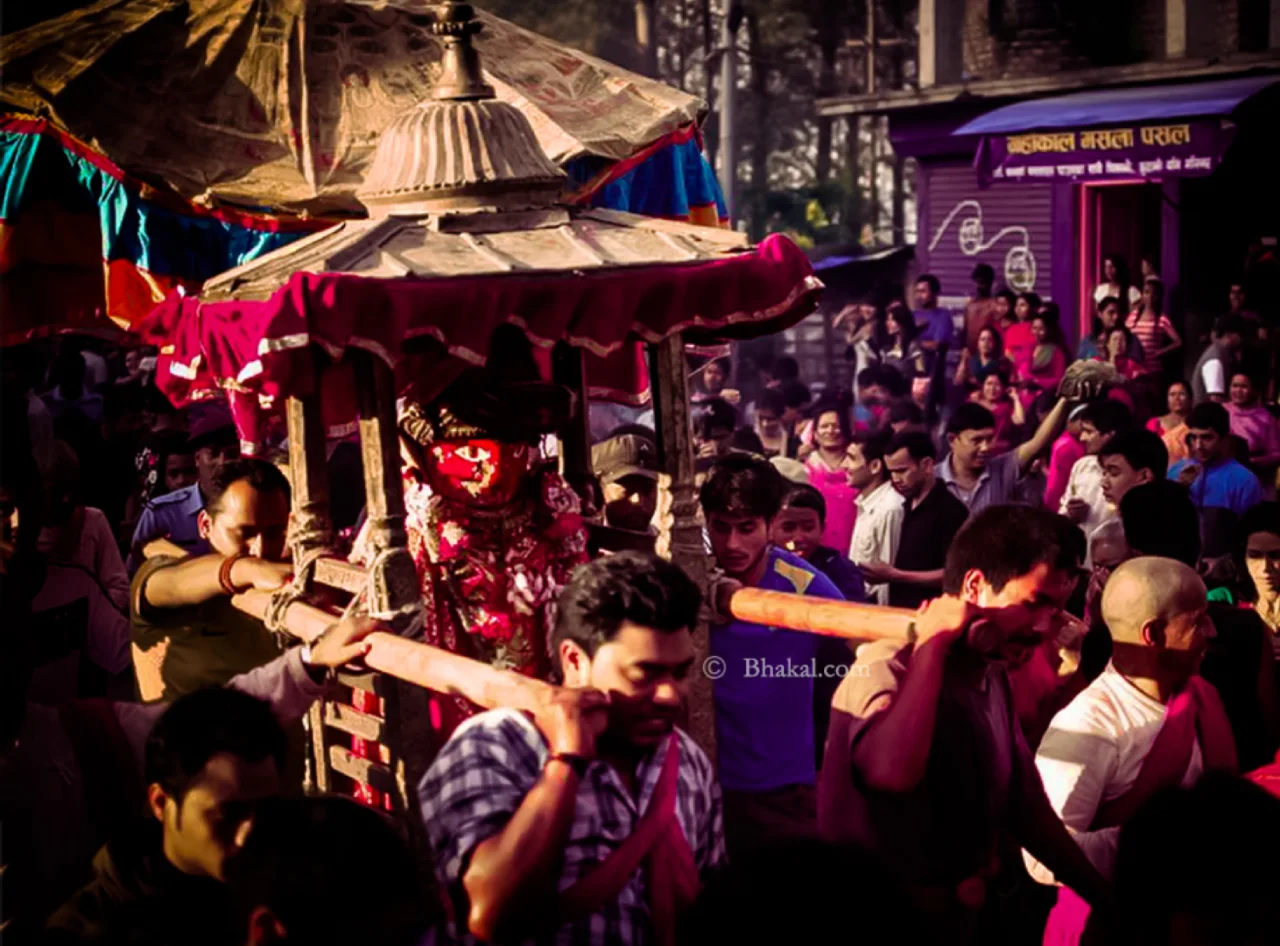
Rato Machhindranath
Time passes by, and it was a time during the Machhindranath Jatra when the farmer also went there to celebrate, but suddenly he saw that demon wearing his shiny and invaluable vest. The farmer immediately reached near to Lakhey and asked for his vest, but sadly, Lakhey refused to give it back to him. Then there was a very ugly fight that started to happen between them. After seeing them fighting for the vest, King Guna Kaamdev thought of solving the misunderstanding between them. He asked both of them to bring the evidence that the invaluable vest belongs to them, and until the decision comes out, he said the invaluable vest will be under the care of Lord Rato Machhindranath. Sad farmer went to Snake King and requested him to come to Machhindranath Jatra as evidence. The king of snakes accepted his request, but he said he would come to the festival as a human wearing a white cloth; he will be taller than everyone, the wind will be dusty, but his condition was that the farmer should be able to recognize him; otherwise he will not come up. As that day was the last day of the Machhindranath Jatra, the place was very crowded as there were many people around. There was dust in the winds and many people, but the farmer couldn’t recognize the Snake King. It was already evening, but nobody came up to claim that vest after seeing that King Guna Kaamdev ordered to show the vest all around the chariot, saying, “Yo bhoto kasko ho? Whose vest is this? But after showing that vest, yet nobody came up to claim it with the evidence. From that day, there is a trend of showing that vest like that from the chariot of Lord Rato Machhindranath every year.
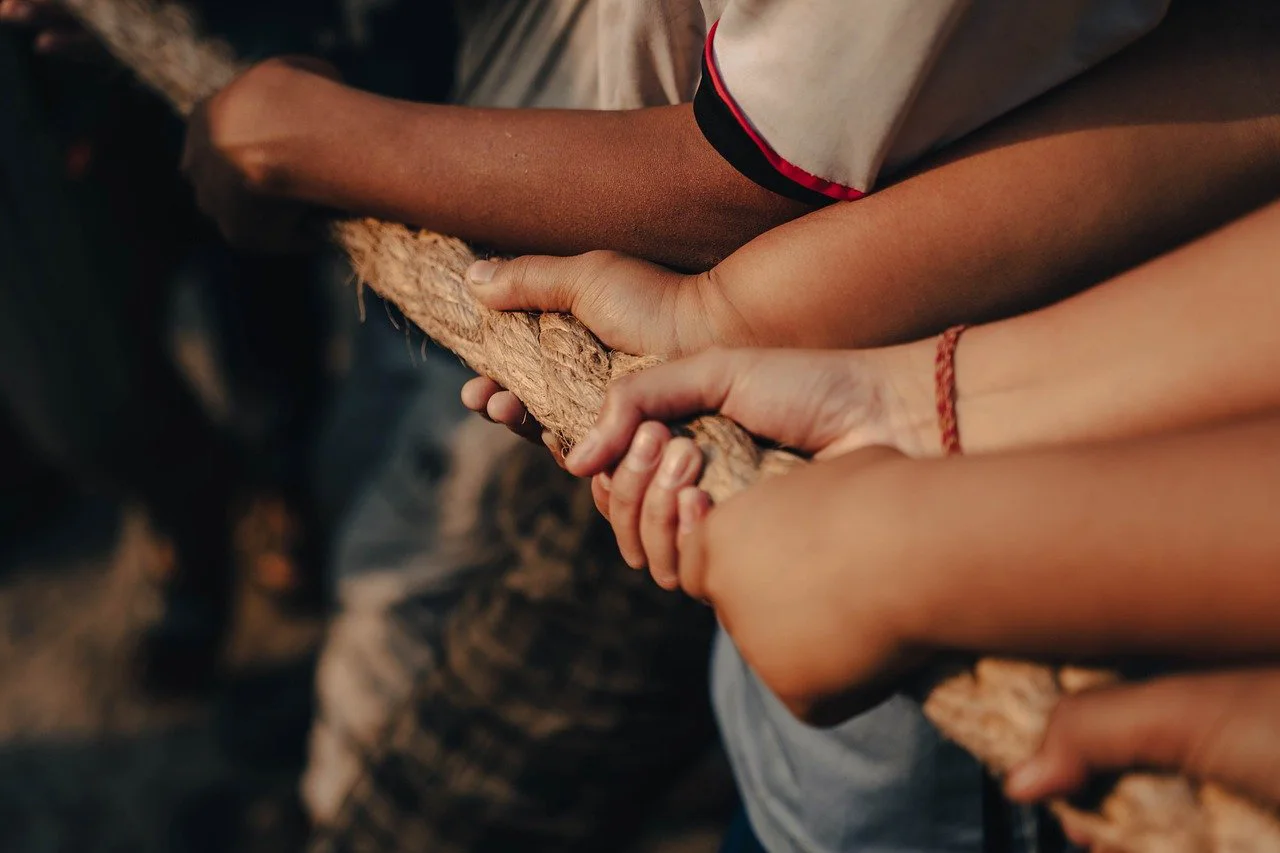
Chariot Procession
Some people also believe that this Bhoto Jatra is celebrated in honor of the living goddess Kumari, a young girl chosen to be the goddess embodied of goddess Taleju
Key Features of Bhoto Jatra:
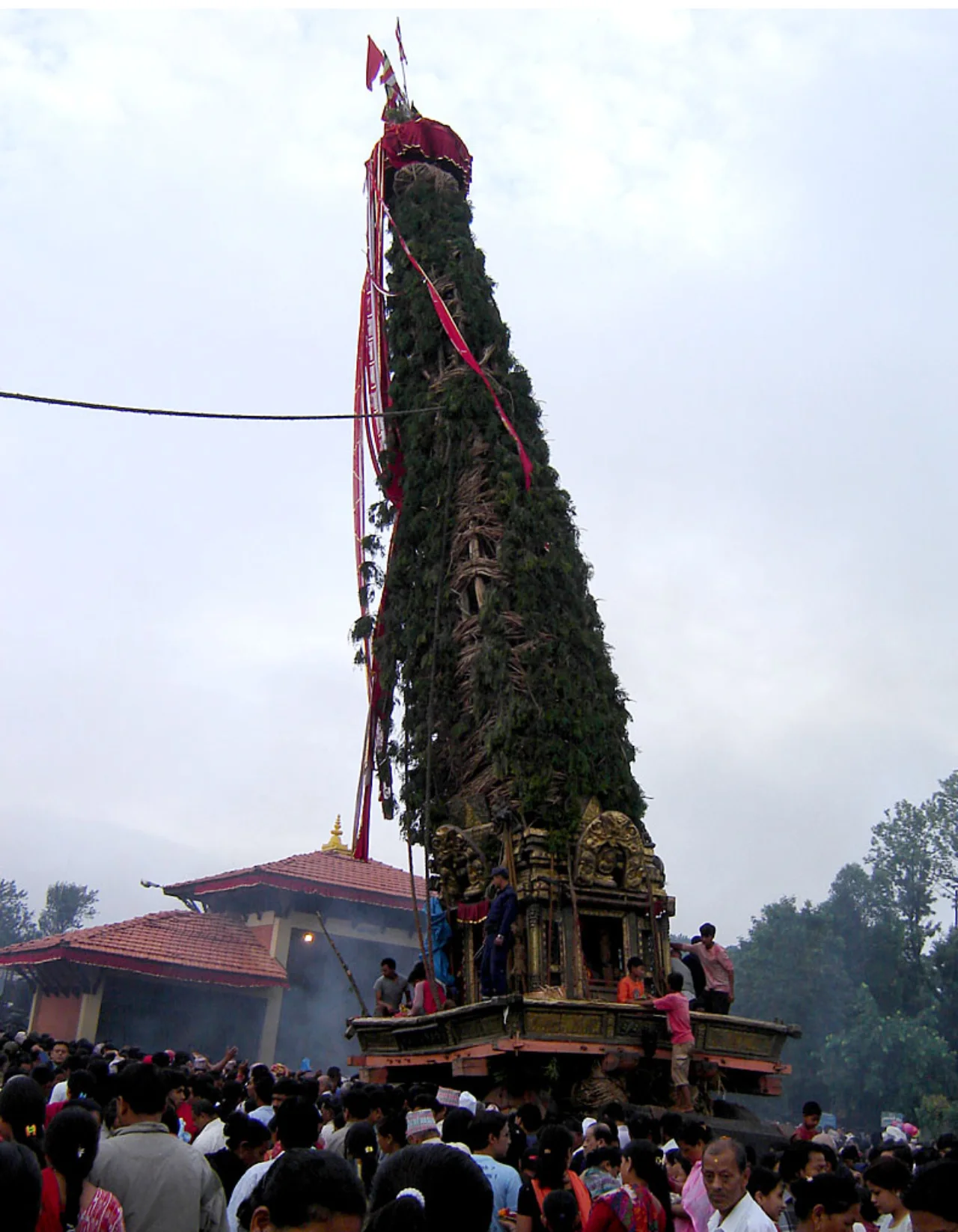
Chariot procession
- Chariot Procession: The festival is marked by a colorful and lively chariot procession featuring the Kumari, who rides in a beautifully decorated chariot. Devotees and spectators line the streets to catch a glimpse of the goddess. This festival is one of the colorful and lively chariot processions where they feature a kumari (the living goddess) who will ride in a beautifully decorated chariot. All the devotees and followers will gather there to catch a glimpse of Kumari and that invaluable vest (Bhoto).
- The Bhoto (Sacred Vest): The highlighting part of this event is displaying the invaluable vest mottled with diamonds. This Bhoto is believed to have some divine power, which was once worn by the kumari, which was once lost and later recovered.
- Cultural Celebration: Bhoto jatra is also believed to be the fusion of Buddhist and Hindu tradition, which shows the religious diversity in Nepal. This festival gathers the people from different cultural background which helps to celebrate their shared cultural heritage, lively music, traditional dances, and street festival.
- Religious Importance:. This festival not only honors the ancient invaluable vest mottled with diamonds but also honors a Kumari (the living goddess).
Overview of Bhoto Jatra in Lalitpur (Patan)
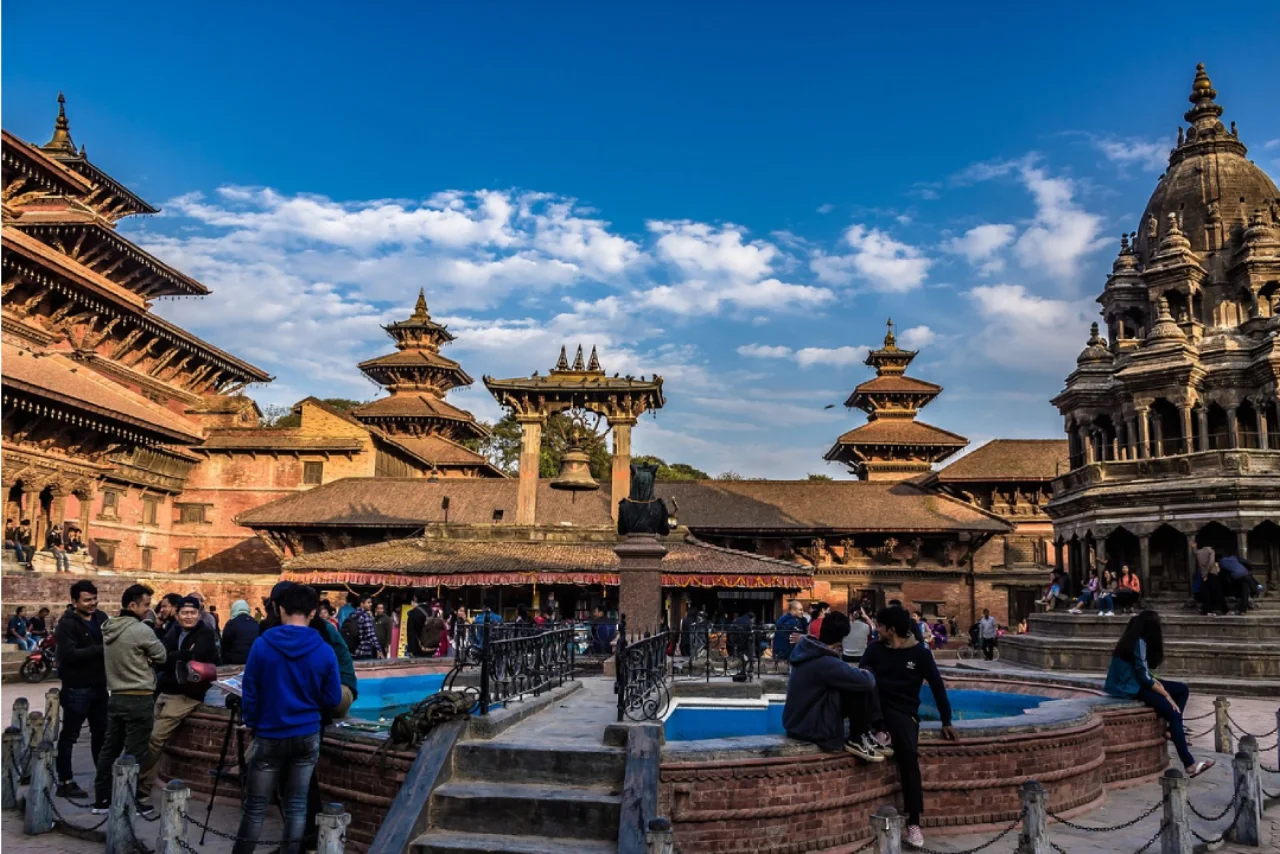
Patan Durbar Square
Bhoto Jatra is one of the biggest festivals, which is celebrated in the historical city of Nepal, Patan in Lalitpur. This festival is celebrated by the Newari community of Nepal during the month of April or May.This festival is a part of Rato Machhindranath Jatra, which is celebrated on the last day of the Machhindranath festival. The major highlight of this Bhoto jatra is displaying the Bhoto ( a black invaluable vest mottled with diamond).It attracts a lot of people, including the locals and tourists, who come to enjoy the festivities. This shows the historical significance of Nepal and also depicts how, even being a small country, Nepal is culturally rich and the oldest country in South Asia.
The Chariot Procession Featuring Kumari (a living goddess)
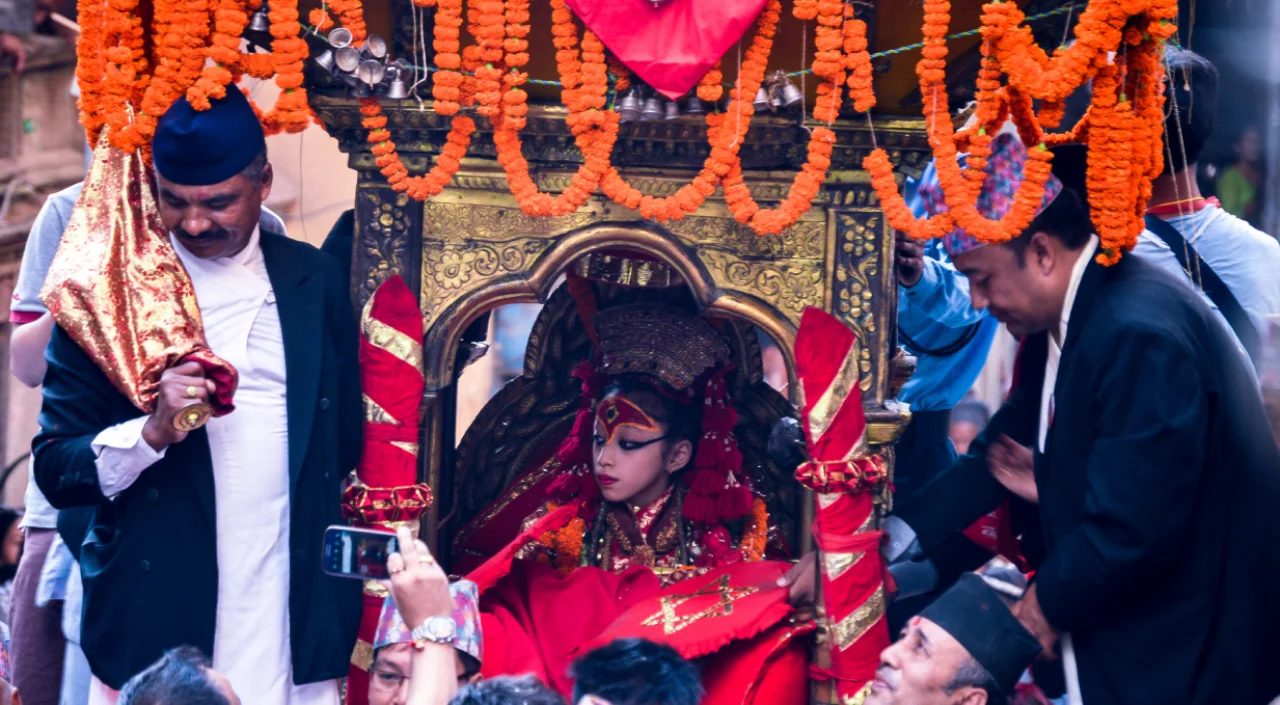
Kumari Goddess
The major attraction of this Bhoto Jatra is the huge chariot procession, where this colorful and beautifully decorated chariot carries the statue of Rato Machhindrnath, a rain god who is believed and worship for rain and good crops. The Kumari (the living goddess) rides in and travels in her own chariot and blesses the crowd as she passes by. People celebrate her presence and come there to have just a blessing and glimpse of her from the crowd.
Display of the Bhoto (Vest) to the Public
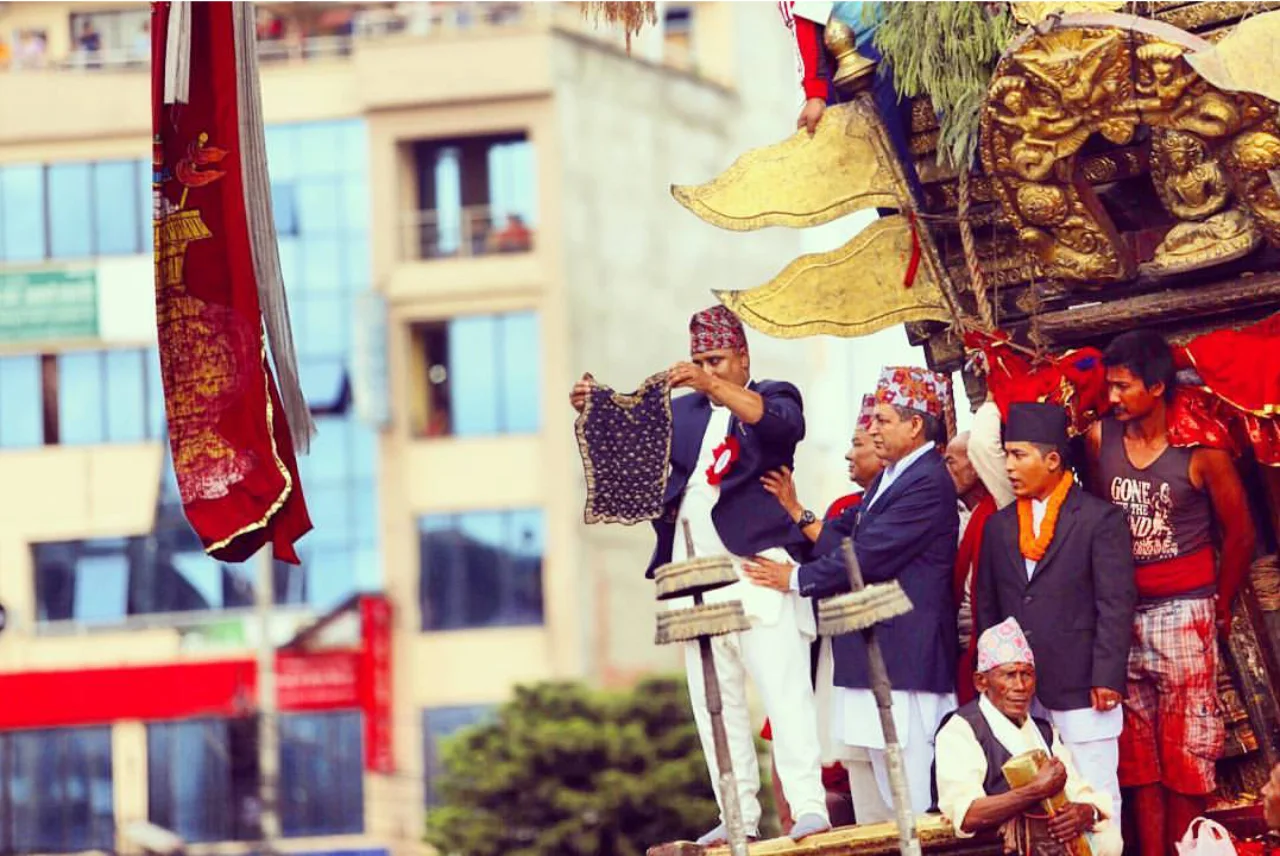
Display of the Bhoto
This ceremony of displaying the Bhoto is done at the end of the Rato Machhindranath Jatra. The Bhoto (vest) is an invaluable vest mottled with diamonds; this vest is believed to be given by the snake king Karkotak to the farmer as a reward after he healed his wife, who was suffering from eye pain. Only the high priest or special devotee has access to present it to the people during the festival.This moment of displaying the bhoto is highly cherished and also the climax of this long month celebration of Rato Machhindranth jatra.
Bhoto jatra is not a festival of religion, but also a fun and lively festival that happens in the streets of Lalitpur. This festival gathers people from many religious background in a same place where they celebrate a shared culture and enjoy this once in a year festival with full of joy and fun. Many traditional music, drums and folk dancers add as cherry on top and entertain the crowd. Here the crowd not only enjoys their time but also gets to learn about newari culture and tradition through their eyes. Here the local and tourist now only enjoy this festival but there will be many food stalls offering typical newari cuisine and newari dishes which add even more excitement to this festival
The Fusion of Hindu and Buddhist Traditions
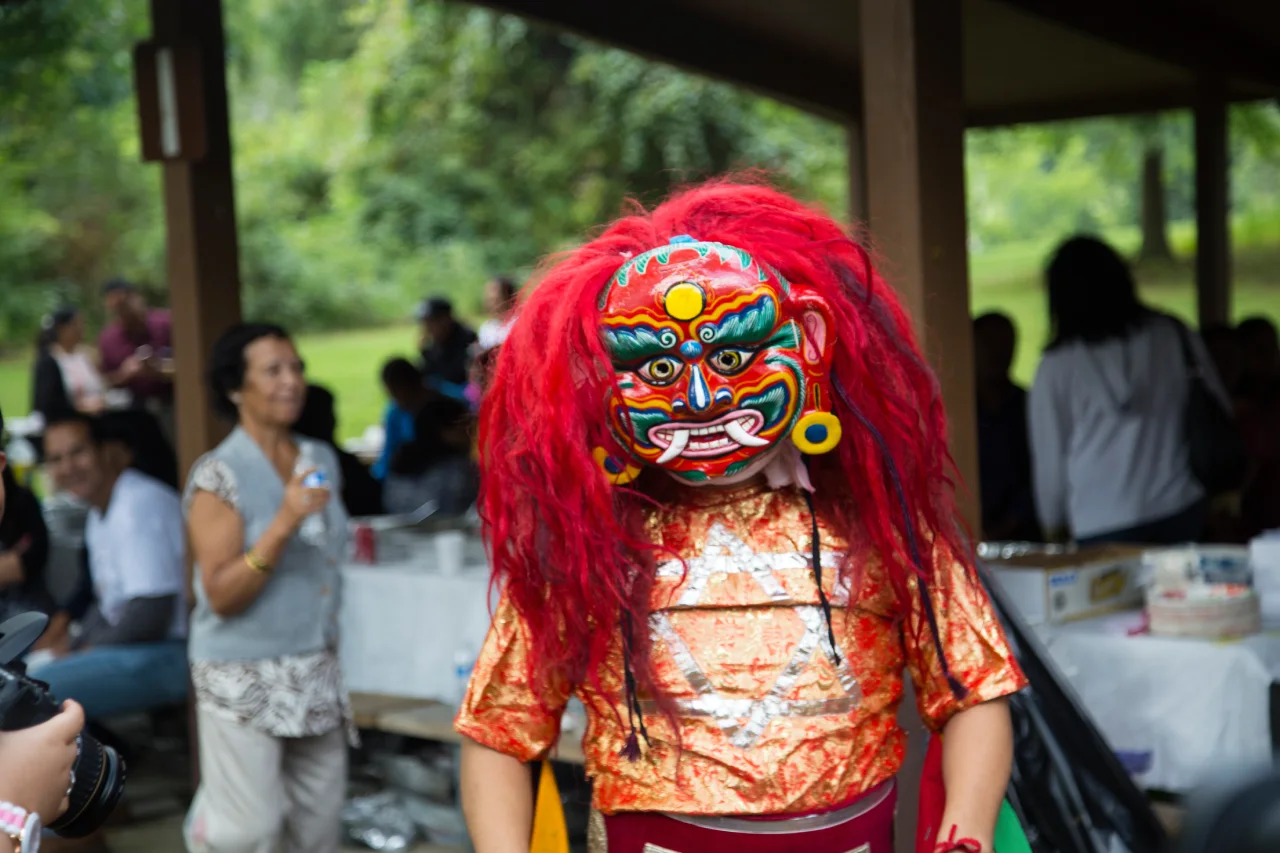
Lakhe
Bhoto jatra is a festival that combines the blend of both Buddhist and Hindu tradition. The festival honors Rato Machhindranath, which is a deity worshipped by the people of both religions, Hindu and Buddhist. Here, Rato Machhindranth is a Buddhist god where the participation of Kumari (a living goddess) have roots in Hinduism. This fusion of two religions reflects how the how two religion of Nepal influenced each other to create unique spiritual and cultural environment in Nepal.
The Importance of Kumari and Her Association with the Goddess Taleju
Nepal is the only place in the world where people worship the living goddess. The Kumari, also known as a living goddess of Nepal, holds immense spiritual significance during this Bhoto jatra.The kumara is also believed to be the embodiment of the goddess Taleju, a Hindu deity. Taleju is a goddess who is believed to protect and guard the Kathmandu Valley, which is the capital city of Nepal. Many locals and tourists come there to take blessings and to catch a glimpse of Kumari.
How It Keeps Nepalese Traditions Alive and Strengthens the Community
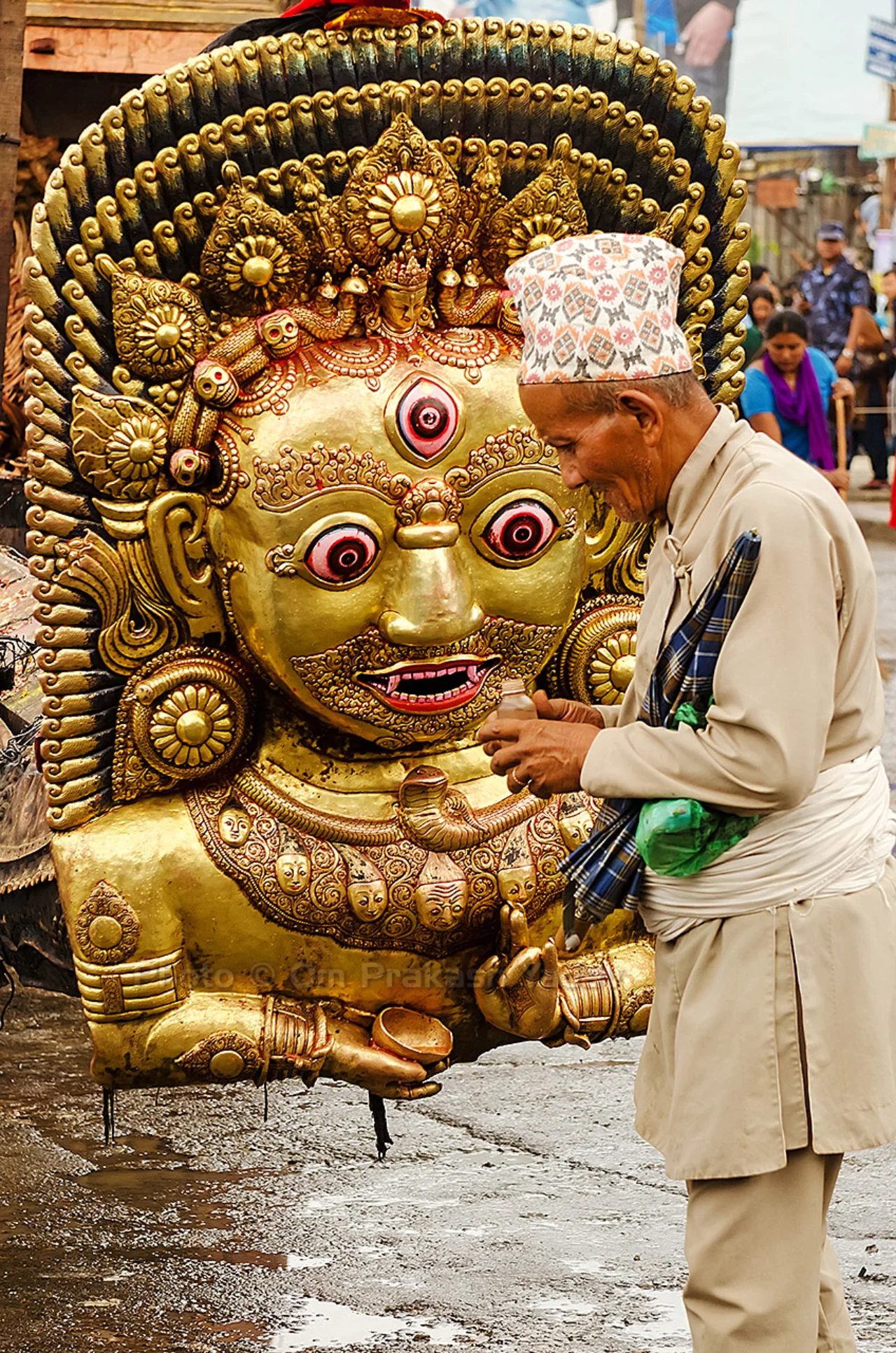
Rato Machindranath
Bhoto Jatra is more than just a religious celebration—it is a time when people come together, strengthening their sense of community and shared culture. The festival brings together families, neighbors, and people from different parts of Patan and beyond. It fosters a sense of unity, as everyone participates in the chariot procession, dances, music, and religious rituals. By keeping such traditions alive, Bhoto Jatra ensures that younger generations learn about their cultural heritage and pass it down to the future. Bhoto Jatra is not only a ceremony of displaying the invaluable vest, but it is more than that; it is a time when it makes people gather and come together, strengthening their sense of unity and their shared culture. To organize this festival, the locals of Patan and beyond come together as a family, neighbors, which makes their bond even stronger. This festival educates the youngsters about their culture and helps to keep it alive for the next generation as well. During this festival, people will participate in chariot processions, dancing, music, and religious rituals.
Conclusion
Bhoto Jatra is a very colorful and joyful festival in Patan that brings the locals of Patan, the Newari community, together to celebrate their culture. This festival teaches them to honor their god. Bhoto Jatra is not just a religious festival but also the celebration of Nepal’s rich and diverse culture, where two religions, Buddhism and Hinduism, influence each other to create a unique spiritual and cultural environment. This shows the cultural diversity of Nepal and how Nepalese people respect each other’s religion, culture, tradition, norms, and values.
If you ever get a chance to visit Nepal, Bhoto Jatra is a must-watch festival, and it should be on your to-do list for Nepal. It is a very perfect way to understand and experience the unique culture and tradition of Nepal. On the street of Patan, you will be enjoying the big chariot procession and an invaluable black vest mottled with diamonds. You can enjoy the Newari food and enjoy their music, dancing, and the exciting crowds. You will get to witness the ancient ritual and, most importantly, get a blessing from the living goddess Kumari.















-
 0115 Best Easy Treks in Nepal for Beginners and Families
 -
 02Best season for Everest Base Camp Trek
 -
 03Best Time to Go Hiking in Nepal: A Seasonal Guide for Trekkers
 -
 04Suchi Purja –Wife of Nirmal Purja aka Nims Dai
 -
 05Dubai desert safari outfit ideas
 -
 06Top Beaches in Sri Lanka
 -
 0710 Best Easy Treks in Nepal