
Now Reading: Fun Things to Do in Melbourne: 25 Must-Try Experiences for First-Time Visitors
-
01
Fun Things to Do in Melbourne: 25 Must-Try Experiences for First-Time Visitors

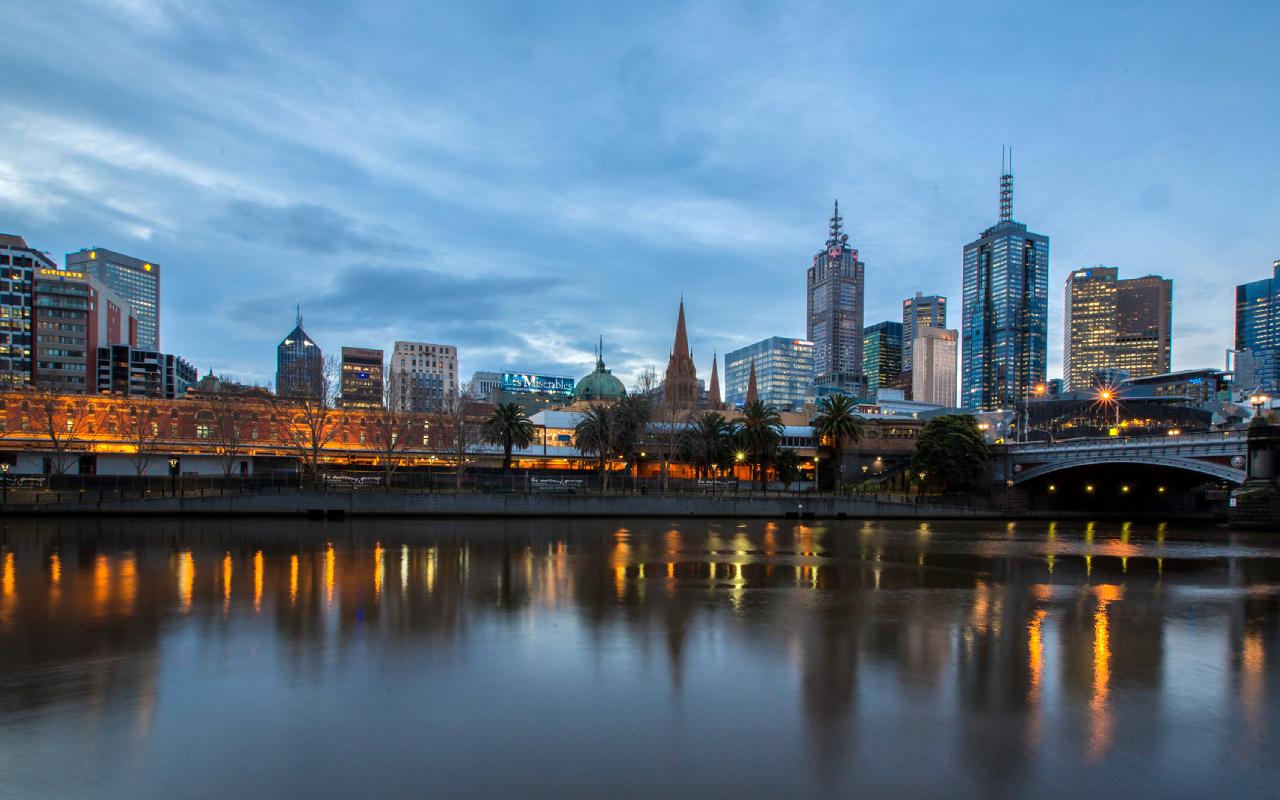
Melbourne is a vibrant city, which is known for its food, coffee, beaches, markets, art, sports, and cultural sites. First time visitors will find numerous Fun Things to Do in Melbourne, whether it is exploring the colourful laneways and Queen Victoria Market or at St Kilda Beach and strolling next to the Yarra River.
During their visit, visitors can also experience rooftop cafes and museums, local neighbourhoods, and view the coastal scene.
Melbourne is also famous for its coffee culture, creative neighbourhoods, and convenient public transport. Travelers have an opportunity to ride the free City Circle Tram, go to galleries and museums, or make day trips to such locations as the Great Ocean Road, Phillip Island, and Yarra Valley.
Every neighbourhood offers something different and helps visitors experience both the modern and local side of Melbourne.
This guide features 25 experiences that help travelers enjoy Melbourne in a more local and enjoyable way. Melbourne has activities that can be done by individuals, couples, families, and groups, whether you are in love with food, shopping, nightlife, beaches, wildlife, or cultural attractions.
The practical travel tips and seasonal advice that are posted throughout the blog allow visitors to plan a trip to Melbourne and enjoy it without any doubts.
| Melbourne Trip Facts | Details |
| Country: | Australia |
| State/Territory: | Victoria |
| Best Time to Visit: | Mar–May & Sep–Nov (mild, clear weather) |
| Famous for: | Street art laneways, coffee, sports (MCG), culture, and cuisine |
| Currency: | Australian Dollar (AUD) |
| Main Airports: | Melbourne Tullamarine (MEL); Avalon Airport (AVV) |
| Ideal Trip Length: | 3–5 days |
| Official Language: | English |
| Public Transport: | Extensive trams, trains, and buses (City Circle tram free) |
| Top Day Trips: | Great Ocean Road, Yarra Valley, Phillip Island |
Exploring hidden laneways, local cafés, and street art is one of the most popular Fun Things to Do in Melbourne.
1. Explore Melbourne’s Vibrant Laneways & Street Art
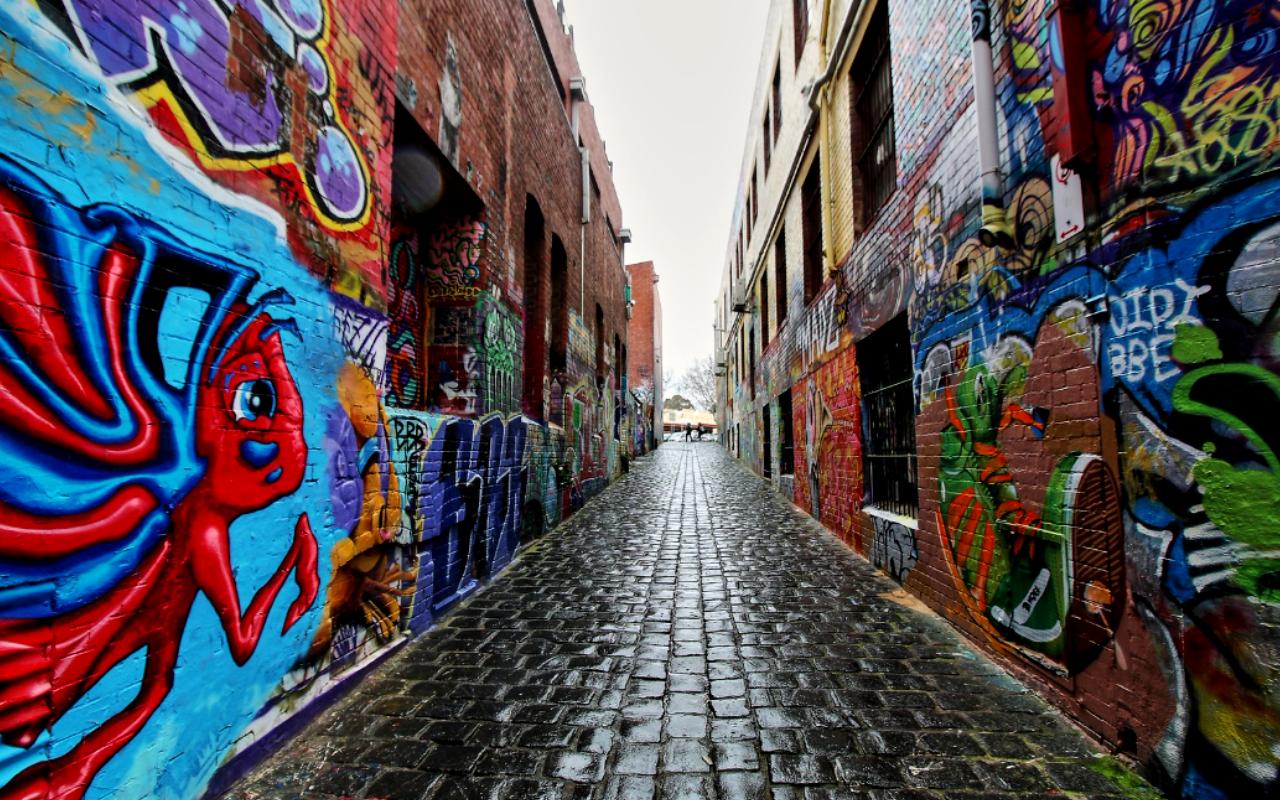
Melbourne’s Street Art
The laneways of Melbourne are known to be good for street art, cafes, and local culture, and therefore they are considered to be one of the best Fun Things to Do in Melbourne when visiting Melbourne for the first.
One can spend hours jumping around the laneways, such as Hosier Lane, AC/DC Lane, Duckboard Place, and Croft Alley, that have constantly evolving murals and graffiti pinned to their walls.
Expect a riot of color and creativity on the walls, with works by local and international artists. These hidden corridors also house tiny cafes and bars (try a flat white at a laneway espresso bar) and cutting-edge boutiques tucked between the art. Every corner feels like a secret discovery.
What to Expect: Vibrant, ever-changing murals; camera-worthy graffiti (think funky murals, stencils, paste-ups); cozy laneway cafes and bars; lots of foot traffic at popular spots; and the buzz of city street music or buskers in the air.
Hosier Lane is the most famous, often packed with tourists and photographers, especially on weekends. Degraves Street and Centre Place are lively laneways known for cafes and brunches (get there early to avoid queues).
Practical Tips: Hosier Lane and the adjacent art lanes are free to walk anytime. Wear comfortable shoes for walking. These laneways are in the CBD near Flinders Street Station, so easily reached on foot or tram (Free City Circle tram stops at Flinders St).
Photography is allowed and encouraged. (Tip: Go after light rain – colors pop against wet pavement!) There are no entrances or tickets; it’s public street space.
Best Time to Visit: Daytime is best for photos in natural light. Evening sees cafes and bars light up, which is atmospheric, but the art is darker to photograph. Summer evenings (Jan-Mar) can be lively but quite warm; shoulder seasons (Mar–May, Sep–Nov) are pleasant for strolling without summer heat.
Local Tip: As one official guide notes, merely whispering the word “laneway” evokes “a riotous colour of street art, the scent of freshly roasted coffee” in Melbourne. Melbourne is proud of its laneways – ask a local, and many will say the hidden alleys are where the real city life happens.
2. Ride the Free City Circle Tram
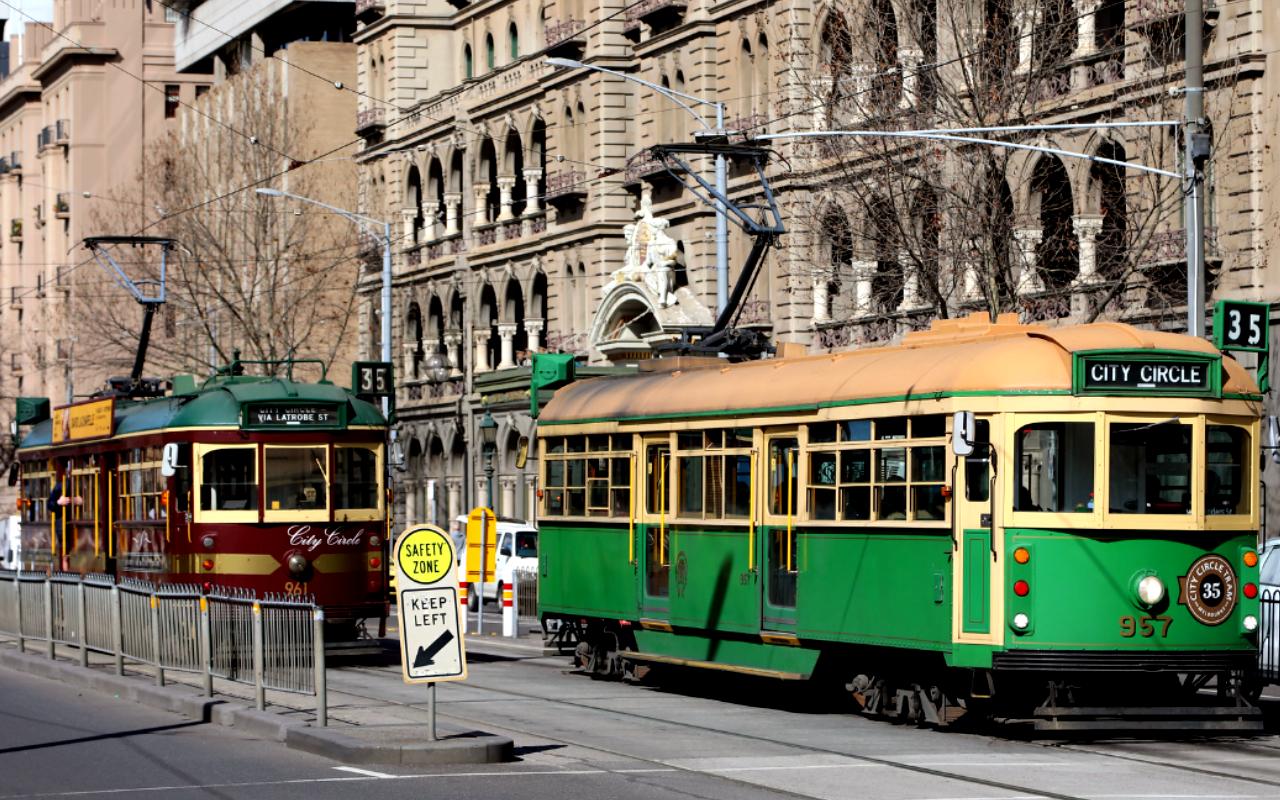
City Circle Tram
The City Circle Tram is a vintage-style tram that loops around Melbourne’s CBD, passing many landmarks. Best of all, it’s completely free. It’s not just transport; it’s a moving sightseeing tour.
Along the route, you’ll see Parliament House, the Arts Centre, Flinders Street Station, and, of course, it goes past Hosier Lane for street art. Helpful audio commentary (in English and Japanese) explains each stop and background info. You can hop on/off at any stop and keep the same tram number, since it continuously loops.
What to Expect: Classic red heritage tram carriages with open windows. The ride is moderately paced, so you can enjoy the sights – expect some wait times between stops. It runs in both directions (Route 35), one circle is clockwise, the other anti-clockwise. The commentary shares fun facts about Melbourne’s history and landmarks as you pass.
Practical Tips: The tram operates daily (it doesn’t run on Christmas Day or ANZAC Day). Typical hours are roughly 10 am–4 pm (with shorter hours in winter), but check the updated schedule online. All trams are wheelchair accessible (low floor).
Since it’s free, no ticketing, just hop on and off. (You do not need a Myki card for the City Circle Tram because the service is free.) The City Circle stops at Flinders St Station, Parliament, Spring St, Melbourne Museum (Tram Stop 60), La Trobe St, and more. See the map at stops.
Best Time to Visit: Mid-morning or midday is great – the sun lights up the city facades. It can get busy during peak tourist season (Dec-Feb and weekends). Otherwise, it’s usually not too crowded. Avoid early mornings (cold) and late afternoons when trams turn around.
Local Tip: Even locals love the novelty. It’s often the first free Melbourne attraction visitors discover. A little-known perk: you can also just ride the tram line inside the Free Tram Zone (which covers most of downtown) without touching your Myki, simply board, find a seat, and enjoy the ride.
3. Dive into Melbourne’s Coffee Culture
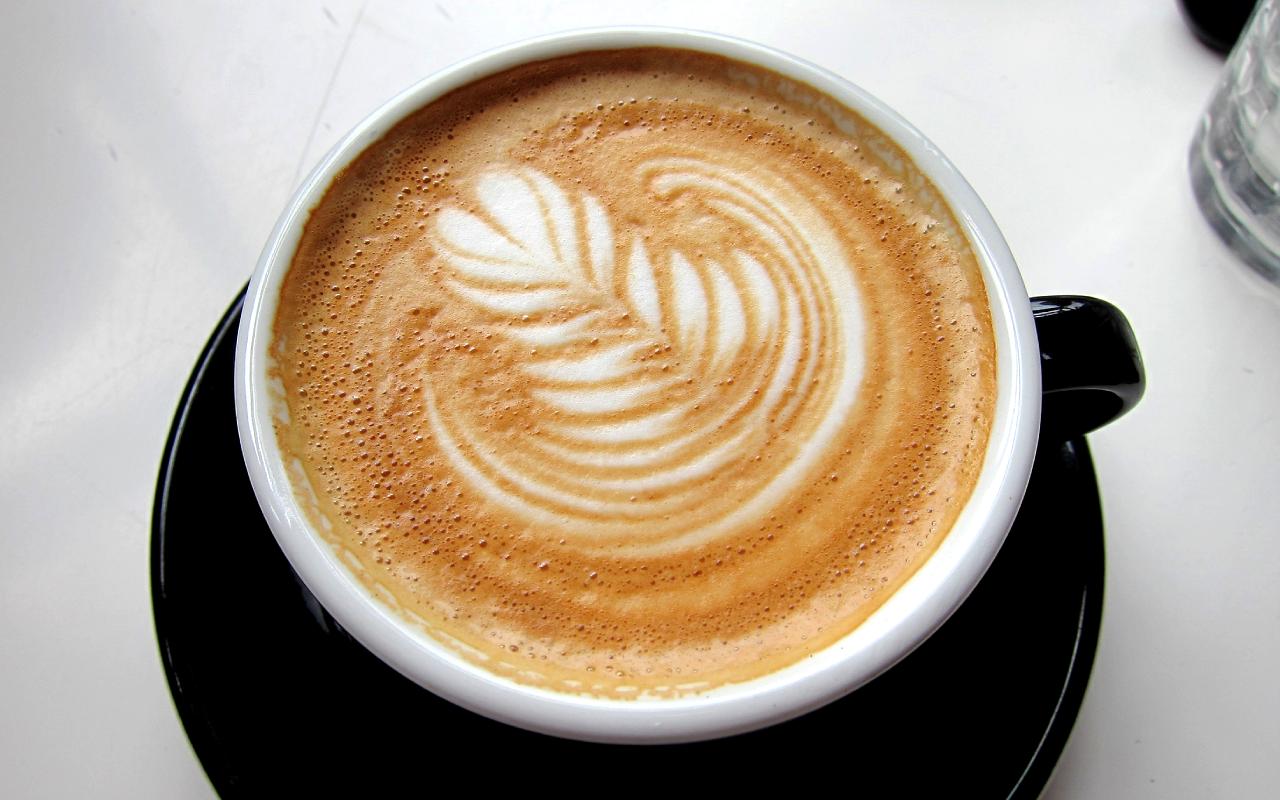
Coffee
Experiencing the local café culture is one of the most recommended Fun Things to Do in Melbourne for first-time visitors. This city prides itself on artisan coffee roasting and brewing.
Here you can order all sorts of espresso-based drinks, a buttery flat white (a smooth, smaller latte) is practically Melbourne’s signature. Dozens of local roasters and award-winning baristas mean you’ll find a stellar coffee shop on nearly every corner, especially in laneways and neighborhoods like Fitzroy and Collingwood.
Expect the coffee to be strong, expertly made, and often served with a friendly greeting.
What to Expect: Quirky cafes with hipster décor or minimalist styles, often in converted warehouse spaces. Orders are usually at the counter or table. You might hear baristas chat about “single origin beans,” “brew ratio,” or “pour-over” style.
Food often includes avocado toast, gourmet toasties, pastries, and brunch items. To truly dive in, join a café crawl – grab a flat white in Degraves Street, try a cold brew in Fitzroy, and sample a sweet lamington cake with coffee at Queen Vic Market.
Practical Tips: Cafés typically open around 7–8 am daily (often until late afternoon; brunch is big here). Weekend brunch can be very busy – reservations are rare, so get there early or expect a short wait. Many great cafes are cashless (card only). The city is flat, so biking or walking between cafes is easy.
Best Time to Visit: Spring and autumn mornings are wonderful for al fresco coffee on a laneway table. Winters can be grey, but then curling up inside with a latte is perfect. Summer mornings (pre-9 am) can be comfortably cool.
Local Tip: The Melbourne laneways smell of “freshly roasted coffee” as much as they feel of art. A fun local trivia: Melbourne has produced multiple World Barista Champions, so don’t be shy, ask for “recommendations” or the barista’s favorite roast.
4. Shop & Stroll through Queen Victoria Market
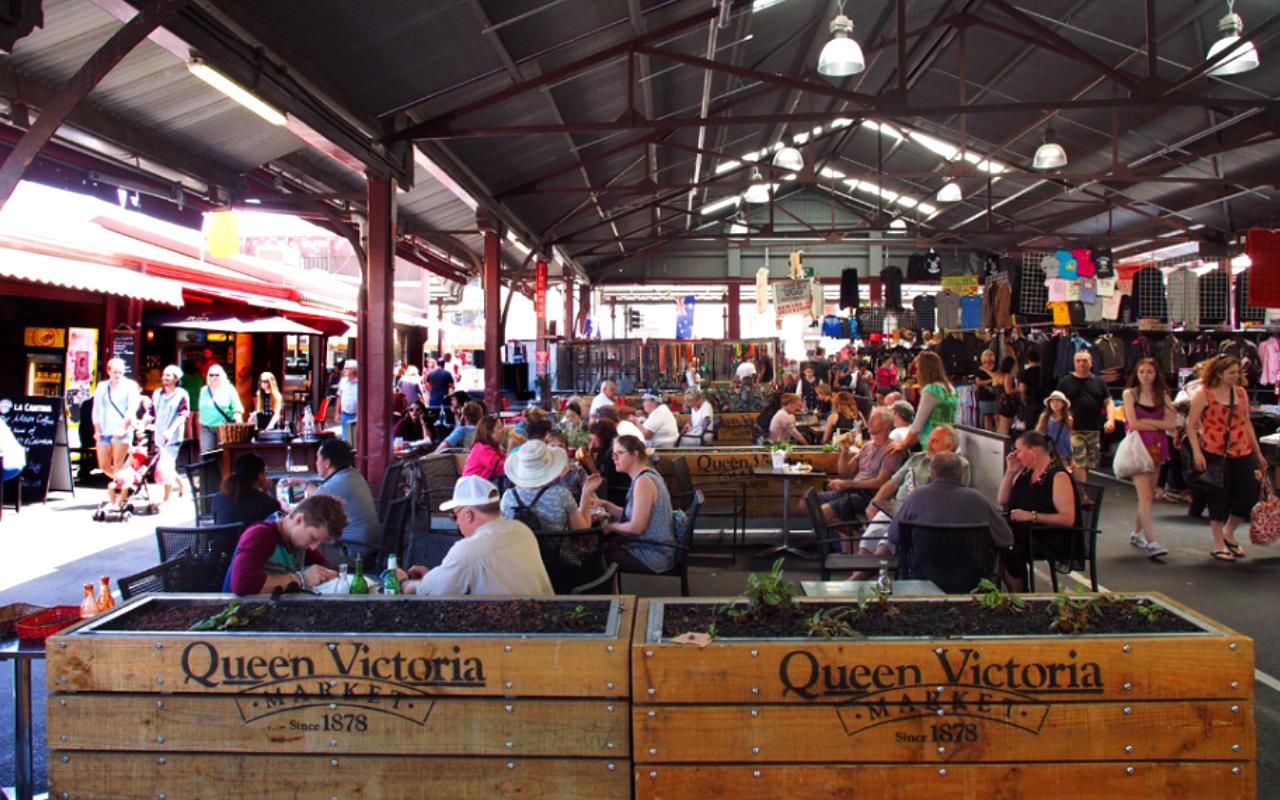
Queen Victoria Market
Visiting Queen Victoria Market is one of the most popular Fun Things to Do in Melbourne for travelers interested in food, shopping, and local culture. This century-old market sells everything from fresh produce and gourmet food to souvenirs, clothing, and unique crafts.
By day, it’s a bustling bazaar of stalls: head to the meat and fish wing for local sausages, cheeses, and seafood, and to the deli area for olives, nuts, and baked goods. When hunger strikes, sample multicultural eats, banana-stuffed doughnuts (a local specialty), dim sum, halal kebabs, artisanal gelato, or creative coffee.
What to Expect: The market spreads across several blocks and becomes especially busy on weekends. (Tue, Thu, Fri, Sat, Sun). Saturday is busiest – expect crowds hunting bargains.
The atmosphere is lively: vendors call out specials, shoppers bargain a little, and street musicians often play. On Friday and Sunday, the “European” section has a more relaxed vibe with deli foods. The market closes on Mon-Wed, so plan accordingly.
Practical Tips: Queen Victoria Market is usually open Tuesday, Thursday, and Friday from 6 am to 3 pm, Saturday from 6 am to 4 pm, and Sunday from 9 am to 4 pm. It is closed on Monday and Wednesday, so check the latest opening hours before visiting.
Wear comfortable shoes for lots of walking between the sheds. There is ample parking, but public transit is easiest: tram routes 19 and 57 drop you outside (Stop 8 on Elizabeth St). No entry fee.
Tip: Check out the summer or winter Night Market (see sidebar) for street food, live music, and bars at night (Wed 5–10 pm in warmer months).
Best Time to Visit: Mornings are best to beat the heat and crowds (especially Sat by 9 am). Winter is cozy inside; in summer, bring sunscreen/hat as some aisles have an open roof. The market fills with Christmas lights and festive stalls in November and December, magical in the evening.
Local Tip: QVM hosts night markets seasonally (typically Wed nights Dec–Mar) with a different vibe, think food trucks, craft beer, and lanterns. It’s well known that locals love the grilled cheese sandwiches and mini-burgers in the food hall. Also, don’t miss the rooftop farm tours on weekends; Victoria’s first urban rooftop farm is here (tiny fee).
5. Experience Sports at the MCG (Melbourne Cricket Ground)
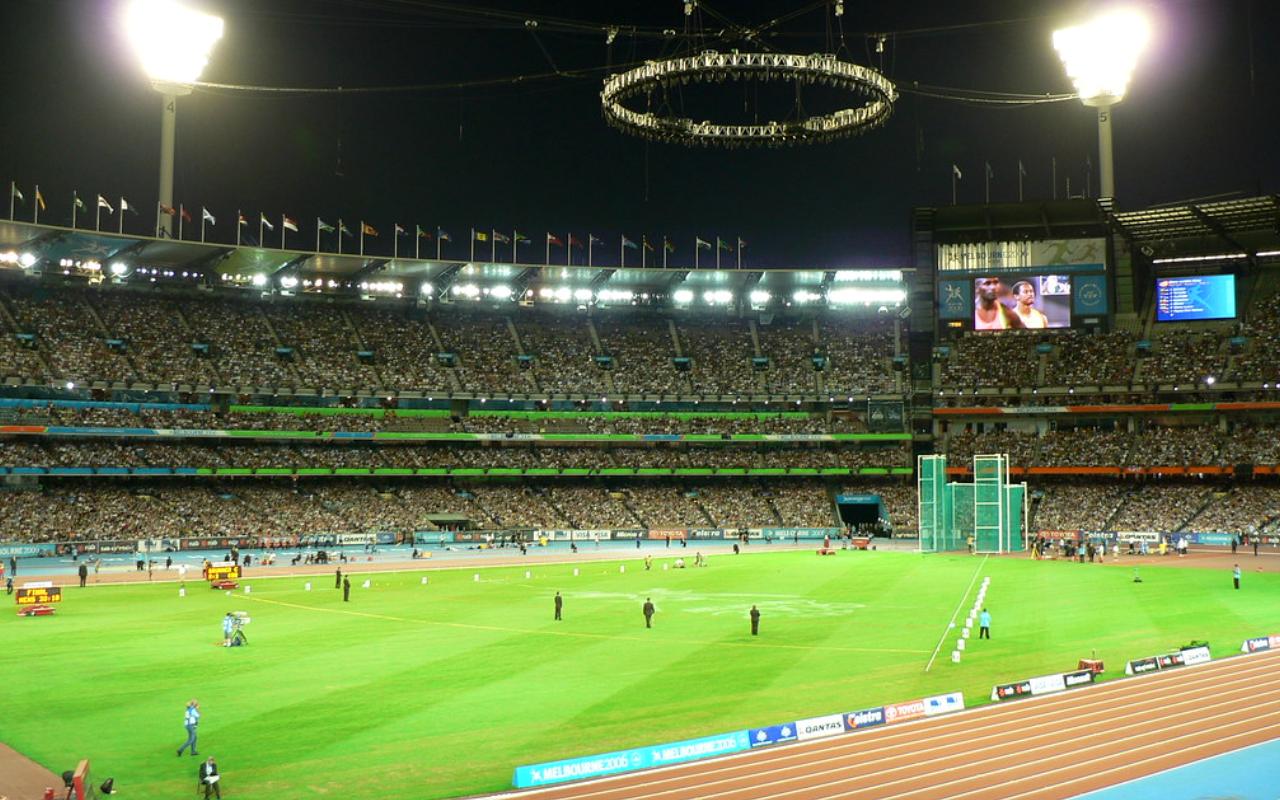
MCG (Melbourne Cricket Ground)
Watching live sports or visiting the MCG is one of the classic Fun Things to Do in Melbourne for travelers interested in Australian culture.
This historic stadium (affectionately “the G”) is the largest in the Southern Hemisphere, seating over 100,000 spectators. It hosts cricket in summer (including the Boxing Day Test) and AFL (Australian football) in winter (including the Grand Final).
Even if you’re not a sports fan, the place thrills with its scale and history. Imagine where Australia played its first ever Test cricket match in 1877.
What to Expect: A stadium tour or game day. On tour, you’ll walk in players’ footsteps: see the Ponsford Stand, the Long Room (with honoree plaques), and step out onto the hallowed turf.
The on-site Australian Sports Museum showcases Olympic torches, Ashes urns, and memorabilia from Aussie sporting legends. If you attend a match (AFL or cricket), dress for the weather and team colors – even casual fans wear footy jerseys. Expect crowds (especially for finals) and lots of cheering Aussie chants like “Aussie, Aussie, Aussie! Oi, Oi, Oi!”
Practical Tips: MCG tours run daily (except some holidays) – typical hours 10 am–4 pm, costing about AUD 35-40 for adults (kids discounts available). Book online to secure a spot, or wander up (but tours may fill).
To watch a game, check the AFL or Cricket schedules and book tickets early. Seating is general admission in some sections (arrive early for best views). Nearby transport: take the train to Richmond or Jolimont Station (2 stops from Flinders St), or trams 70, 75 (stop at Wellington Parade) or 48.
Best Time to Visit: If touring, spring (Sep–Nov) and autumn (Mar–May) offer nice weather for walking the grounds. For events: AFL Grand Final (late Sep) is a bucket-list spectacle if you can get a ticket. Cricket in summer (Dec–Feb) means hot days in the stands – remember hat/sunscreen.
Local Tip: Locals will tell you, “You haven’t been to Melbourne if you haven’t done the MCG tour.” Interestingly, the MCG is older than Australia itself, founded in 1853. It’s nicknamed the “spiritual home of Australian sport.” Even if you can’t catch a game, the MCC Museum inside is free and has trophies, uniforms (think Don Bradman’s cap!), and interactive displays celebrating Aussie sports history.
6. Soak in the View at Eureka Skydeck
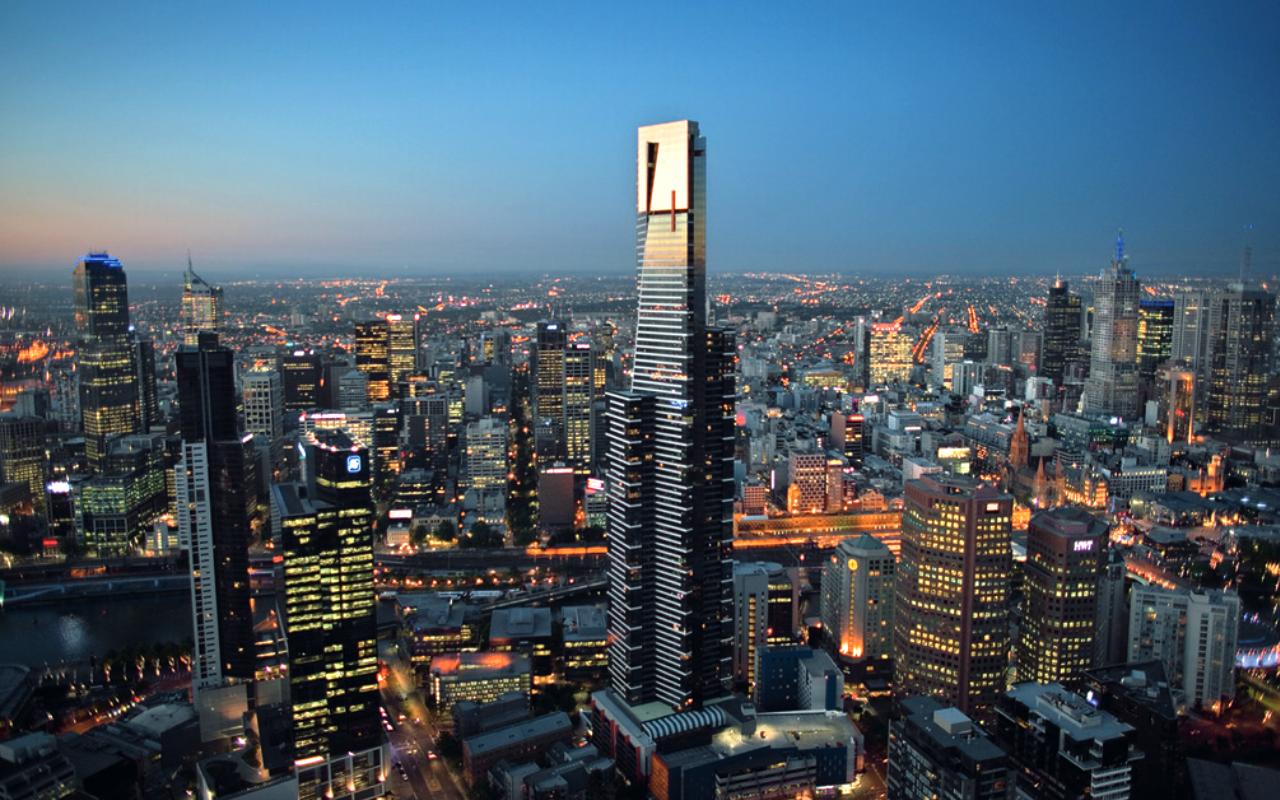
Eureka Skydeck
Seeing the city skyline from Eureka Skydeck is one of the most memorable Fun Things to Do in Melbourne during the evening. At 285 meters high, it’s the highest public observation deck in Melbourne.
Step out onto the open-air platforms (Season in the Clouds and The Edge) to feel the wind on your face while looking down at the city skyscrapers and the winding Yarra River below.
On clear days, you can see all the way to Port Phillip Bay. This is the spot for that postcard view of Melbourne’s grid of streets, parklands, bay bridge, and even the distant You Yangs.
What to Expect: Sleek observation floors with windows (and small open-air balconies). There are interpretive panels pointing out landmarks, plus binocular stands.
The Edge is a glass cube that slides 3m out from the building – if you dare step into it, you’ll get a killer photo with the city sprawling beneath your feet! (There’s a photo fee if you want the souvenir shot.) Entry costs around $25-35 AUD; it’s cheaper with online advance tickets. There’s a cafe/snack bar at Level 88 for a drink with a view.
Practical Tips: Melbourne Skydeck is usually open daily from 12 pm to 10 pm, with last entry at 9:30 pm. Check the official website for updated hours before visiting. Dress warmly on windy days if you’re on the balcony.
The Skydeck is a short walk south of Flinders St Station across the river (over Southbank promenade). It’s accessible (elevator and ramps). Tickets can be bought onsite or cheaper online (kids under 4 free).
Best Time to Visit: Sunset is magic; you’ll see the city light up after dusk. Summer days get long (sunset 8 pm), while winter sunsets come as early as 5:30 pm. If you go in winter, try for clear days (spring and autumn often have crisp air). Weekdays are less crowded. Also, if the weather is cloudy, you’ll only see fog – try again on a clear day.
Local Tip: Indulge in “Melbourne’s highest Happy Hour”; there is sometimes an early evening drink special at the Skydeck cafe. But truly, locals say the view is “even better than on a postcard.” One blogger noted how watching Melbourne “turn on at sunset” from 88 floors gives a magical golden glow to everything.
7. Relax Along the Yarra River & Southbank Promenade
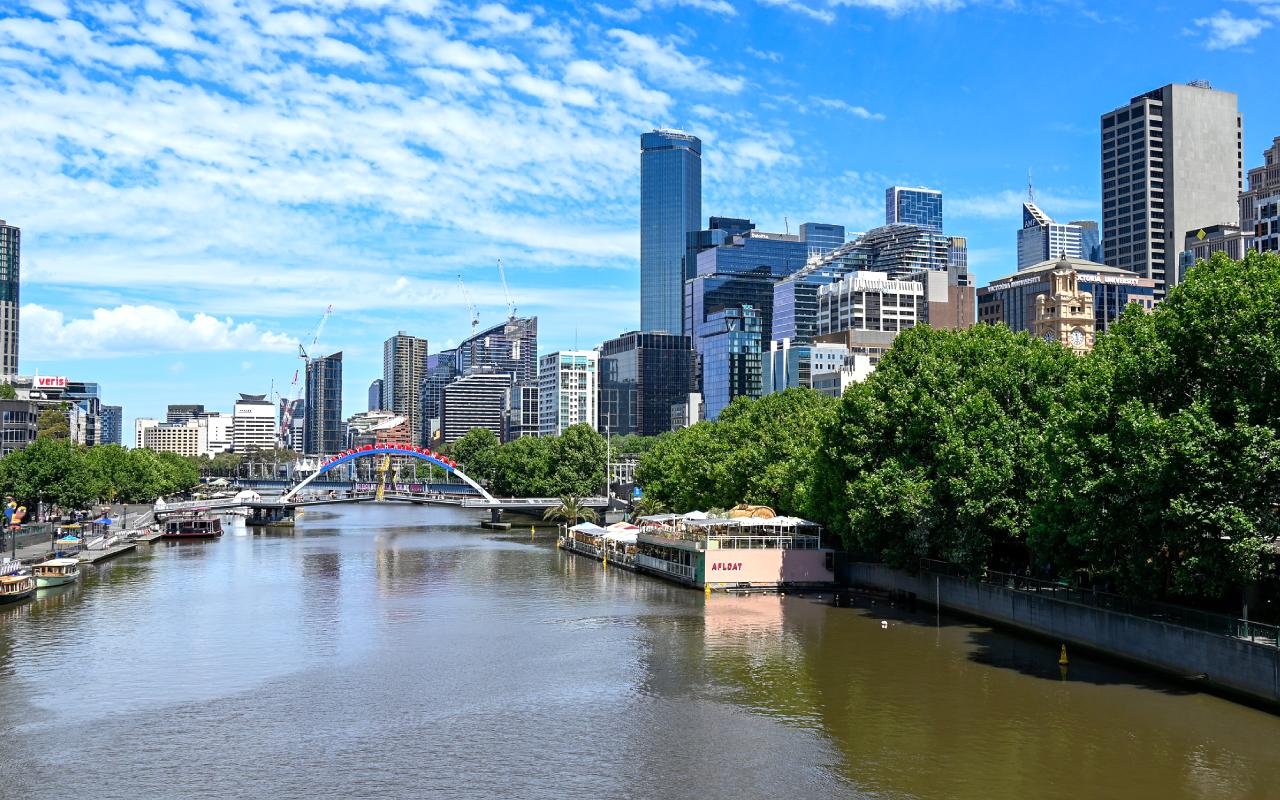
Yarra River
The Yarra River snakes through the heart of Melbourne, and its banks are perfect for a leisurely stroll or a sunset drink. On the south side, you’ll find Southbank, a riverside promenade lined with cafes, restaurants, and the Arts Centre’s spire.
Take a riverside walk from Flinders Street Station down to Southbank and beyond (passing Federation Square and the Victorian Arts Centre).
You’ll see people rowing boats, cyclists on the bike path, and maybe swans on the water. For a different view, hop on a river cruise: day trips and dinner cruises operate year-round, letting you glide past landmarks like Crown Casino and the Melbourne Convention Centre.
What to Expect: A flat, paved promenade with plenty of seating and public art (like the big blue “Angel” sculpture). On nice days, street performers and pop-up markets appear.
Many restaurants have outdoor tables overlooking the water, try a modern Australian lunch or evening cocktails by the river. Boat rides range from short sightseeing cruises (30–45 min) to dinner cruises with live music. The river isn’t for swimming, but it’s picturesque.
Practical Tips: The riverside walk is free and open 24/7. Good stops include Federation Square (north bank) and Southbank’s Crown complex (the largest building with casinos and shops).
Southbank has numerous restaurants (Italian, Japanese, bar-and-grills, etc.). Public toilets and showers are in nearby parks. For cruises: the main operators board near Federation Square (Flinders Landing, at the foot of Princes Bridge) and at Southbank. Prices vary: AUD 20-30 for short cruises, up to $100+ for dinner.
Best Time to Visit: Late afternoon through evening is lovely – enjoy golden light on the river and city lights after dark. Weekends get busy with locals out for dinner or walking dogs. Spring and autumn have mild evenings; summer daytimes along the river can get hot (seek shade or plan an air-conditioned cruise).
Local Tip: Locals love the Prince’s Bridge view (near Flinders St) – if you stand there at dusk, you’ll have the best vantage of city skyscrapers and Yarra lights reflected.
Another tip: On New Year’s Eve, the riverfront is prime for fireworks (though crowds are huge). And for free culture: in summer, the Birrarung Marr park (just east of Swanston St on the north bank) hosts the annual Moomba Festival, with river activities and pyrotechnics.
8. Relax in the Royal Botanic Gardens
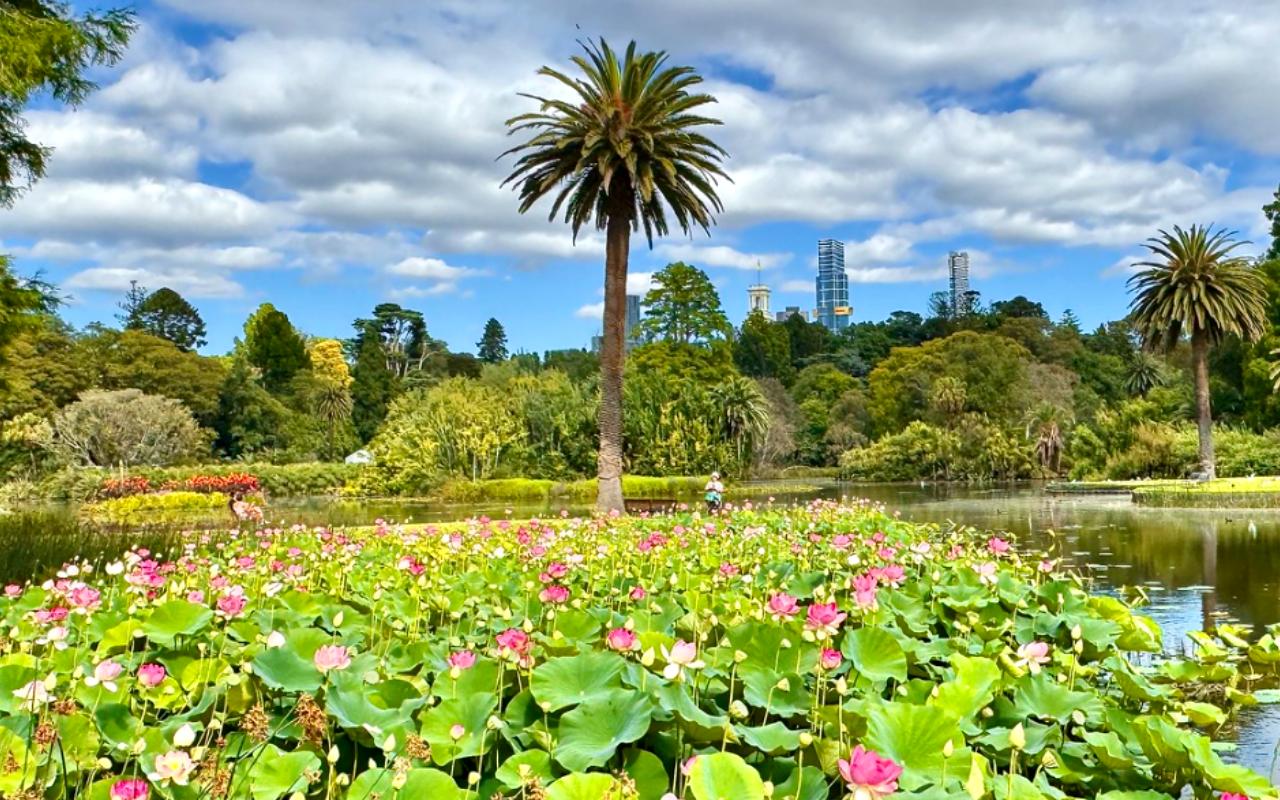
Royal Botanic Gardens
Escape the city buzz in the lush Royal Botanic Gardens Melbourne – 38 hectares of manicured lawns, ponds, and themed plant collections on the south side of the Yarra (near the Arts Centre). These gardens are free to enter and open daily (7:30 am–5:30 pm or later in summer).
Wander through stately tree-lined avenues, see blooming roses, towering eucalypts, rainforests, and succulent gardens. It’s a picturesque spot for a picnic or just a peaceful walk along Ornamental Lake. During summer evenings, you can even catch outdoor movies (“Cinema Under the Stars”) or the light trail event Lightscape.
What to Expect: A spacious, tranquil park with people picnicking on the Great Lawn. Family activities: children’s play areas and a short train ride (the Explorer Bus) through the gardens (small fee), that’s fun for kids.
There’s also a shaded Shiraz Gallery (restaurant) and a Garden Restaurant for full meals. The Visitor Centre has maps and guided walks. Don’t miss the Aboriginal Heritage Walk for Indigenous plant stories.
Practical Tips: Admission is free. The gardens are wheelchair/stroller friendly (paved paths). Closest tram stops: Swan Street or Domain Road (Tram 55, 8, etc). By car, there’s pay parking at the corner of Birdwood Ave and Lansdowne Rd. Bring water, especially in summer. The garden closes at 5:30 pm (7:30 pm in daylight saving) except for special events.
Best Time to Visit: Spring (Sept–Nov) brings flowers and warmer weather for walking. Summer’s long days are perfect for picnics (but bring shade gear). Autumn (Mar–May) has cool, crisp air and autumnal colors. Winter is quieter, but the gardens still offer serene winter light.
Local Tip: The Botanic Gardens are a cultural hub. Each January, the King’s Domain Carols attract crowds to hear live music under the stars. The adjacent Shrine of Remembrance (north of Birdwood Ave) offers superb city views from its balcony (if you have the energy to climb). Also, early risers often book Yoga or Tai Chi classes on the lawns – check local listings if that interests you.
9. Enjoy St Kilda Beach & Luna Park Fun
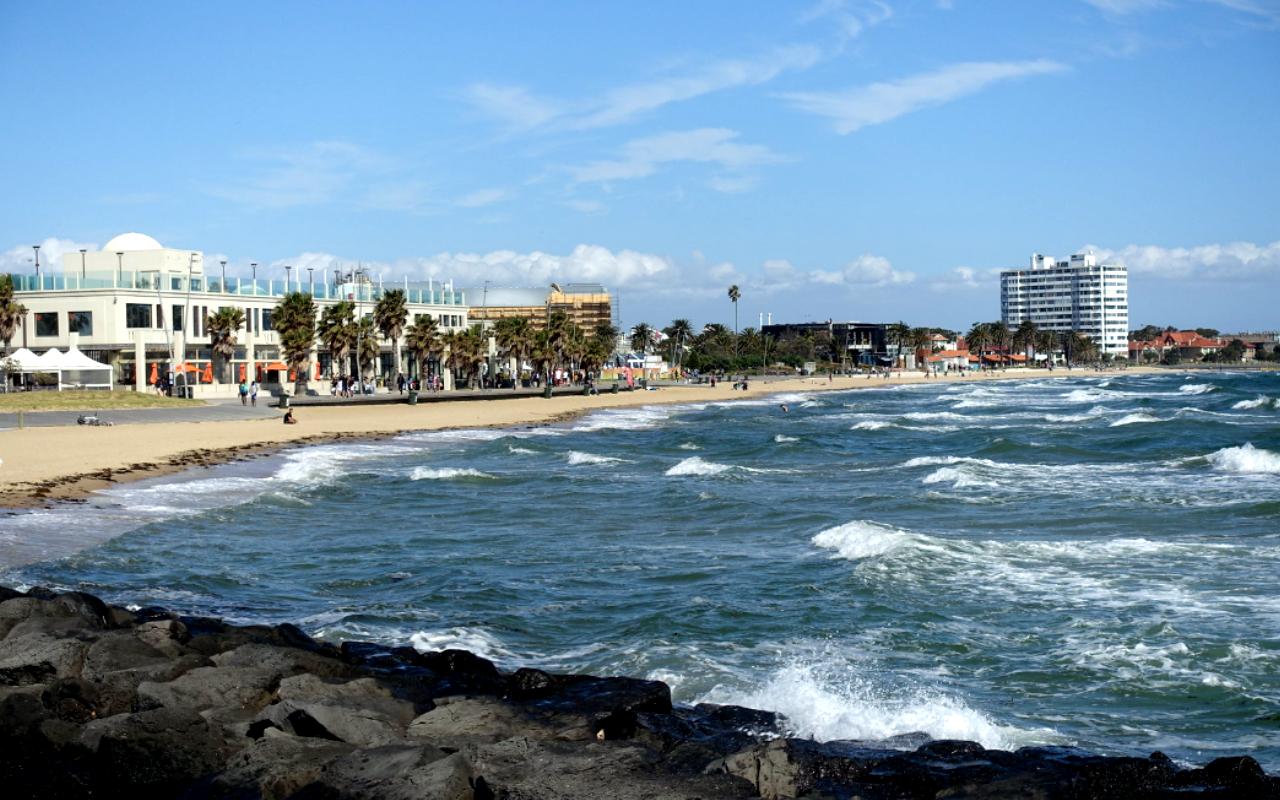
St Kilda Beach
Spending time at St Kilda Beach is one of the most enjoyable Fun Things to Do in Melbourne during warmer months. Stroll or bike along the bay (take tram 96 to the terminus), feel the sea breeze on St Kilda’s Esplanade, and grab a gelato. At St Kilda Pier, you might spot the little penguins nesting under the breakwater at dusk (they waddle ashore nightly to their burrows).
For family fun, step into Luna Park (free entry, pay per ride) – this historic 1912 amusement park with its iconic smiling face is a colorful throwback. Ride the Scenic Railway roller coaster (one of the world’s oldest), play carnival games, or just enjoy the funhouse mirrors. Afterward, enjoy fish ‘n chips at the pier or cake shops on Acland Street.
What to Expect: A classic Victorian beach scene: picnickers, kitesurfers, and joggers on the boardwalk. The water’s often too cold for long swims (especially outside summer), but paddle on the sand or watch kiteboarders out on Port Phillip Bay.
Luna Park usually opens on weekends, public holidays, and school holidays, with longer hours during summer and shorter hours during winter. Nearby, Acland Street’s cake shops are famous for decadent slices (try the pistachio ouzo cake at Cicciolina).
Practical Tips: St Kilda Beach has free street parking, but it gets busy. Trams 16, 3a, 67 all head to Fitzroy St (a few blocks from the beach). Toilets and showers are at the pier. Dress in layers (sea breezes can be cool). Luna Park’s rides have moderate height requirements – check restrictions if you have small kids. The beach is family-friendly with gentle waves at high tide.
Best Time to Visit: Summer days (Dec-Feb) are popular, expect crowds at cafes, so come on a weekday or early. Winter is quieter but romantic (St Kilda’s winter lighting festival in July, Winter Wonderlights). Sunset here is glorious behind the city skyline – many locals come after work to watch.
Local Tip: A charming local anecdote: if you ask Melburnians about St Kilda’s penguins, you’ll hear that they’re considered “our little penguin colony” and locals enjoy guessing how many come ashore each night. Also, free evening tours (through Melbourne Museum) let you walk out on the pier and see the penguins up close after sunset (book ahead).
10. Discover Federation Square & the Arts Precinct
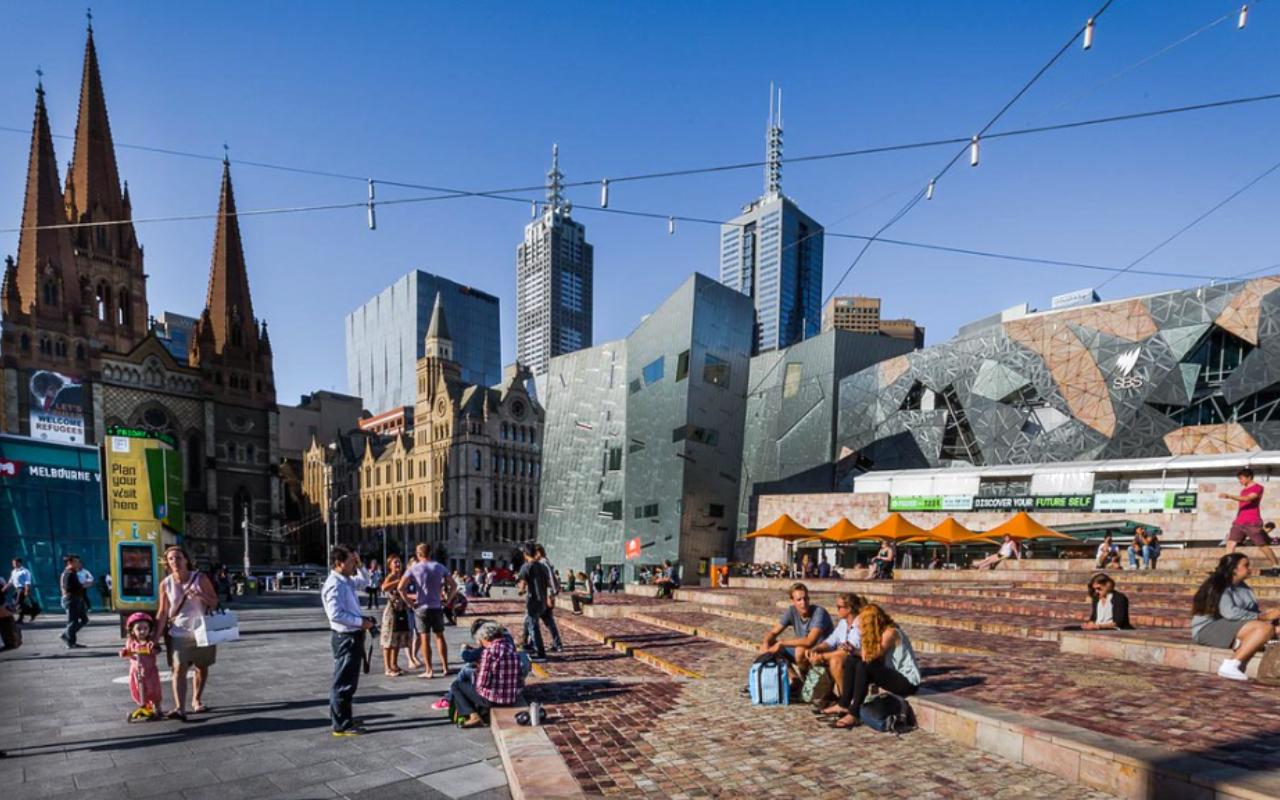
Federation Square
Exploring Federation Square is one of the convenient Fun Things to Do in Melbourne because many major attractions are located nearby. It’s a hub for free public events (festivals, outdoor movies, sports screenings on the big LED wall) and cultural hotspots.
Within Fed Square, you’ll find the Ian Potter Centre: NGV Australia (the Australian art branch of the NGV), ACMI (Australian Centre for the Moving Image), which celebrates film and digital culture, and the Koorie Heritage Trust, showcasing Indigenous art and history. Federation Square is a great spot to start your city tour or grab a coffee and watch the world go by.
What to Expect: An eclectic modern building complex with patios and open space. There are cafes, casual restaurants (from fine dining to ramen bars) lining the outer edges.
People lounge on the steps (known as “Fed Square steps”) watching street performances. Inside, you can explore the NGV’s Australian art collection (entry to the gallery is free) or check if ACMI has rotating exhibitions (often free). Above all, feel the buzz – every month there’s usually something happening (live music, laneway festivals, sports on big screen).
Practical Tips: Federation Square is always open and free to roam. It’s a short walk from Flinders Street Station across the pedestrian bridge. Public Wi-Fi is available, and the large screens often show live sports or events (free viewing for AFL finals, Grand Prix, etc).
The Visitor Information Centre is also in Fed Square (helpful for maps and any bookings). For NGV Australia (Ian Potter Centre) inside Fed Square, open daily 10 am–5 pm, free entry.
Best Time to Visit: Anytime! Daytime for wandering galleries and cafes; evenings for the lights and events (the big screen lights up neon ads after dark). Summer sees Fed Square host sunset events; winter evenings can host covered markets and warm mulled wine stalls.
Local Tip: One of Melbourne’s quirks: people often wait at “Meeting Point” signs in Fed Square, it’s a popular landmark meetup spot (simply search “Fed Square Meeting Point” on maps). Also, look for hidden laneways behind Fed Square with boutique shops. If you’re lucky, you might catch the volunteer street performers doing contemporary dance or acrobatics on The Atrium stage.
11. Skyline Sips: Rooftop Bars & Dining
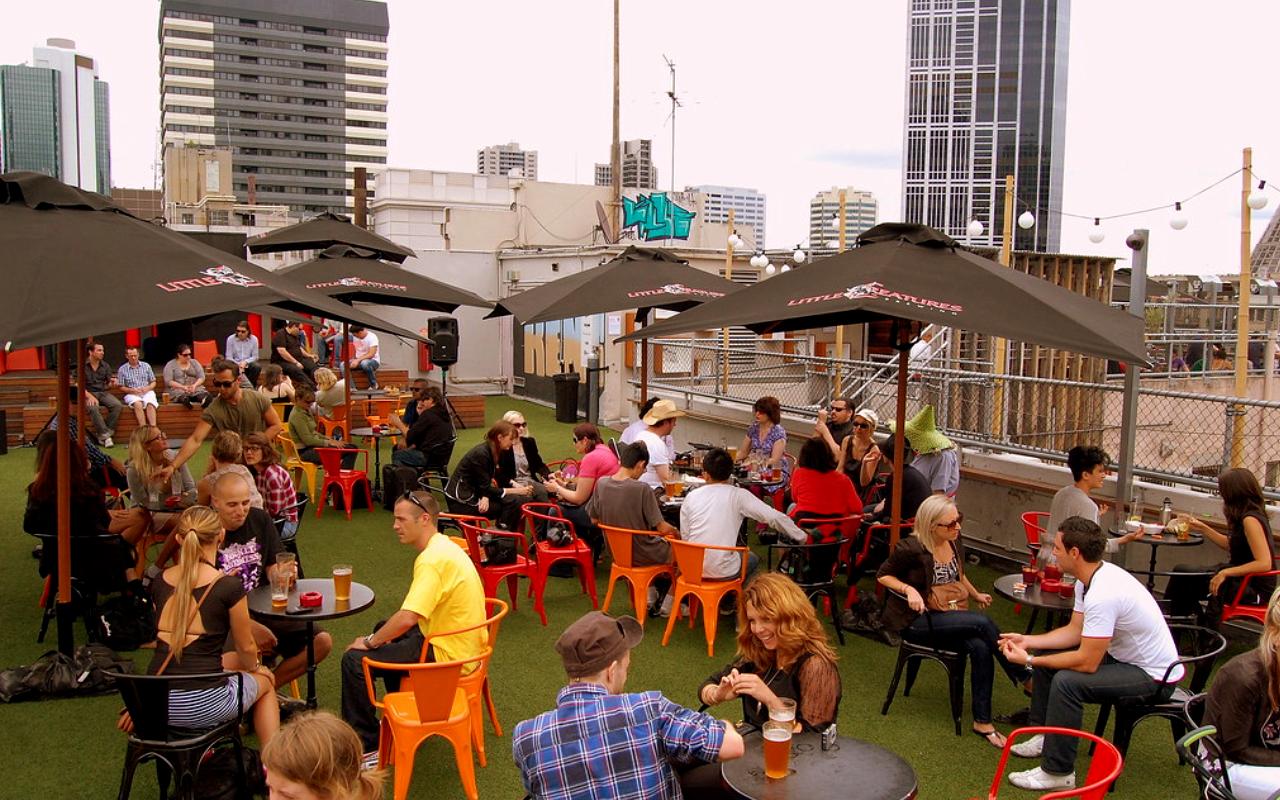
Rooftop Bars
Melbourne looks especially lively at night, and there’s no better way to enjoy it than from a rooftop bar or high-rise restaurant. The city has dozens of rooftop venues – from chic cocktail bars to casual beer gardens – many hidden atop CBD hotels or arcades. Try Eureka 89 for fine dining with 360° city views from 297m high, or The Lui Bar (54 floors up) for Jazz Age glamour.
Closer to laneways, spots like Versailles’ (on Flinders Lane) or The Rooftop at QT offer sunset drinks above the urban canyons. In South Yarra, Loop Roof on Chapel St is a relaxed garden-y rooftop. Most rooftops are 18+ after hours. While there’s no official guide to each, word of mouth and local listings (like Time Out Melbourne’s rooftop guide) can pinpoint the trendiest spots.
What to Expect: Upmarket cocktail menus (sometimes pricey, AUD 18+ per drink) and small plates or full dinners. Dress codes are often smart-casual. For a splurge, reserve an outdoor table at sunset (Sunset through Valhalla Curtain at Naked in Melbourne is a local favorite). Some bars have live DJs on weekends. Service can be slow on busy nights, so arrive early or on quieter weeknights if possible.
Practical Tips: Rooftops are typically open in the evening (5 pm onwards). Table bookings are recommended if they allow it (some are walk-in only). They can be hard to find; look for discrete stair entrances or elevators on alleyways (for example, Step in Hall on Meyers Place leads up to rooftop bars). Check schedules: some close in winter.
Best Time to Visit: Summer and autumn nights are ideal (you can sit outside without shivering). Spring evenings with light jackets are fine too. Winters can be cold, so pick a covered rooftop or go early before the chill sets in. Weekdays are often quieter for better table options.
Local Tip: Rooftop bars often pair with the evolving laneway culture. For example, you might start your night at a hidden cocktail bar (like Eau de Vie) then move up to a rooftop (like Curtin House’s Rooftop Bar) as the city lights up. And if you’re on the hunt, look for hashtags like #melbskyline or local blogs – Melburnians keep their favorite secret rooftops on the down-low!
12. Visit the National Gallery of Victoria (NGV International)
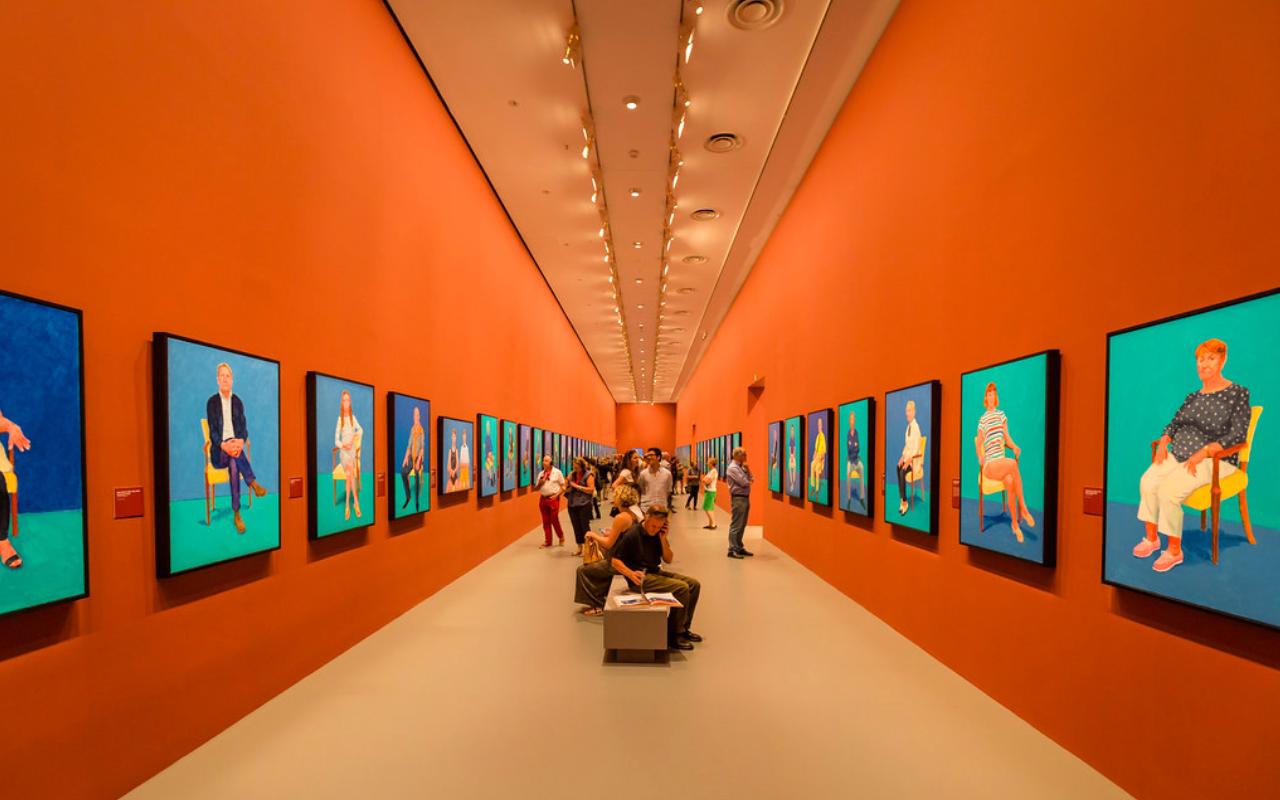
David Hockney Exhibition, National Gallery of Victoria
Art and design enthusiasts should not miss the NGV International on St Kilda Road (the Ian Potter Centre at Fed Square is for Australian art). NGV International houses a vast collection of international art, from European masterpieces to contemporary installations. Entry to the main collection is always free.
Highlights include works by Rembrandt, Monet, Picasso, and a large Asian ceramics collection. Special exhibitions (often blockbuster, like the Terracotta Army or Van Gogh) may have a ticket fee (around $20–$40).
The building itself is historic (the Great Hall with its stained glass ceiling is stunning). The NGV also often programs free public talks, live music, and Sunday afternoon art-making for families.
What to Expect: Two sites: NGV International at 180 St Kilda Road (close to Royal Botanic Gardens) and NGV Australia (Ian Potter Centre) at Federation Square. Both open daily 10 am–5 pm (closed Christmas Day, open from 1 pm on ANZAC Day).
As noted on the official plan, each is “free entry”. Galleries are quiet and well-signposted. Large cloakrooms store big bags for free. Cafés on site offer coffee and light meals. Audio guides or free guided tours enhance the experience.
Practical Tips: Catch tram 3a/3/8 to St Kilda Road for NGV International, or just walk in from Fed Square for Ian Potter Centre. Wheelchairs are available. If visiting special exhibitions, book online ahead (especially on weekends) – often faster entry. Photography (no flash) is allowed in many areas, but check signage if some works are sensitive.
Best Time to Visit: Weekdays or early mornings to avoid crowds, especially when a new exhibition opens. December–Feb sees more visitors, while winter weekdays are calm. The NGV is perfect for rainy day plans too (and is heated in winter).
Local Tip: The NGV has a funny claim: it’s Australia’s oldest and most visited art museum. Locals love the seasonal outdoor sculpture on the lawn (currently Water Sculpture and Gouge). Near the NGV, don’t miss the Shrine of Remembrance and then a coffee at the Parkville mall cafes.
13. Melbourne Zoo & Wildlife Encounters
Family travelers or animal lovers should check out Melbourne Zoo in Parkville. It’s the oldest zoo in Australia and home to over 300 animal species. You can meet native wildlife (koalas, kangaroos, platypus) as well as creatures from around the world (elephants, tigers, apes, penguins, komodo dragons).
The zoo is lushly landscaped and broken into precincts like “Asian Rainforest” and “African Savannah,” which make it feel like a mini safari. Don’t miss the walk-through butterfly house or the daily animal talks (check schedule at entry).
What to Expect: A full day of walking (7 hectares). Animals have naturalistic enclosures with informative signage. There are keeper talks – e.g., feeding sessions for platypus or exotic birds.
Play areas for kids, a boat ride on Lilly Pond, and a monkey bar café for a break. Friendly kangaroos often hop out into an enclosure where kids can feed them. A new “Dino Trail” with life-like dinosaurs is a hit with little ones (though no real dinos, of course!).
Practical Tips: Open daily 9 am–5 pm. Tickets AUD 55 for adults (cheaper if booked online or packaged), kids (4–15) are free on weekends and holidays (weekdays $28.50), and under-4 always free. Bring or buy food; zoo cafes and kiosks are plentiful. You can catch Tram 55 or 19 to Gisborne St (Zoo corner) or train to Royal Park Station (then a short walk). Wheelchairs are available.
Best Time to Visit: Morning or late afternoon is best for active animals (they nap midday). Summer mornings can be warm, but the zoo is well shaded. Rainy days are quieter, but the walking paths have some cover. Avoid school holidays if you don’t like crowds.
Local Tip: Melbourne Zoo is part of Zoos Victoria, which runs Healesville Sanctuary (native animals, 50min away) and Werribee Open Range Zoo (African safari style).
Many families get a membership (with cheap monthly payments) for unlimited visits to all ZoosVic parks. Also, note that Melbourne Zoo was recently voted a silver winner in the Australian Tourism Awards for major attractions, so locals take pride in it.
14. Brighton Bathing Boxes – Iconic Beach Huts
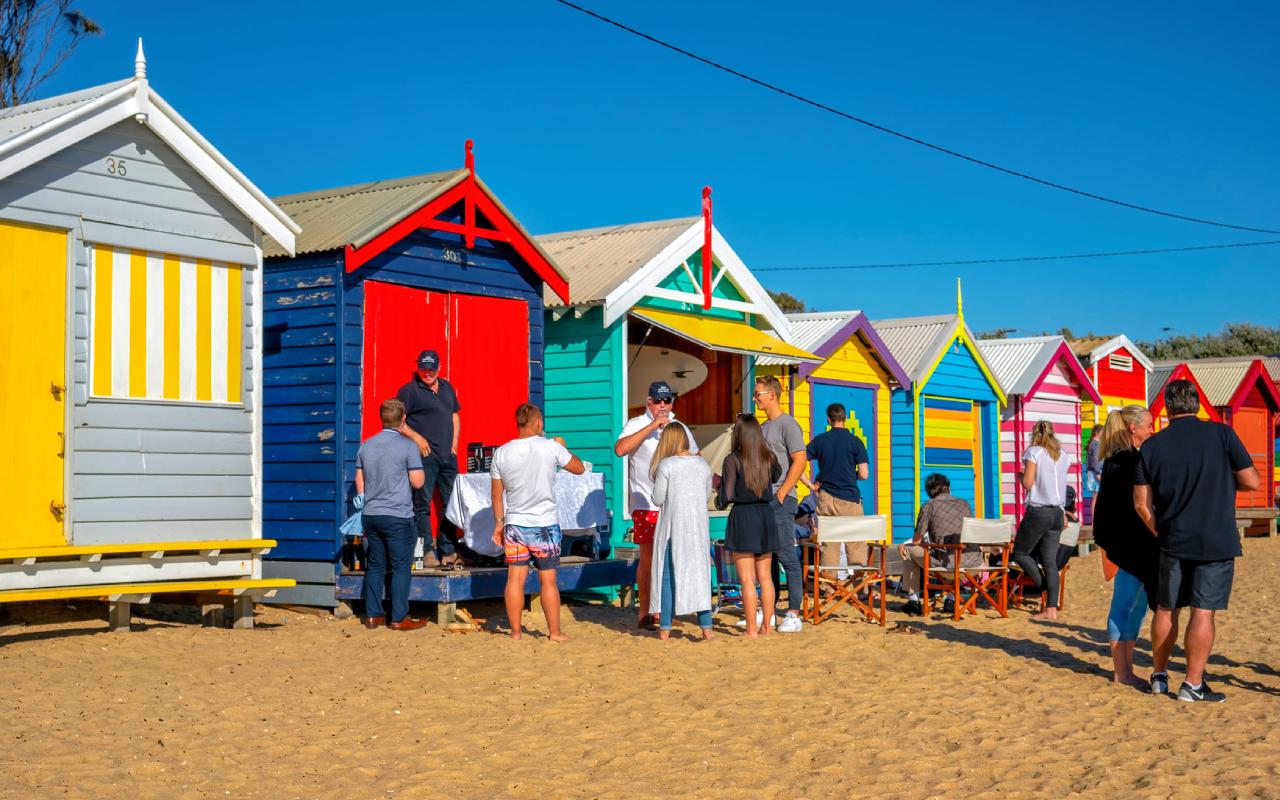
Bathing Boxes
Just 11 km south of the CBD, Brighton Beach is home to the famous Bathing Boxes: 93 vibrantly painted beach huts lining Dendy Street Beach. These century-old cottages, often passed down through generations, were once practical changing rooms to preserve modesty.
Today, they’re one of Melbourne’s most photographed attractions. Each box is privately owned (you can’t go inside or on top), but they make a perfect backdrop for photos. The beach itself is a long sandy stretch with calm water (thanks to the bay), ideal for splashing or picnicking.
• What to Expect: Rows of uniform Victorian-style huts painted bright colors – stripes, polka dots, or blocks of bold hues. Usually 6×3 meters each, all on a single boardwalk. On any given day, you’ll see tourists lining up to snap shots. Beyond the boxes, Brighton Beach has amenities (toilets, cafes). The backdrop of Port Phillip Bay and St Kilda’s lighthouse in the distance makes it scenic.
• Practical Tips: Street parking along Beach Road or Hurlingham Rd is available (limited). The best viewpoint is from the waterline across Beach Rd (watch for cars), though Clive St provides street-level views too.
Note that these huts are privately owned; please admire from outside and do not climb onto them. Transport: take a train to Brighton Beach Station (the orange line from Flinders St), then it’s a 15-min walk, or drive 20 minutes from the city.
• Best Time to Visit: Weekdays and mornings are less busy for photos. Sunrise or early morning light is especially lovely on the huts. If you want to swim, the afternoon is warmer. The color contrast stands out beautifully on sunny days; overcast weather makes them dull.
• Local Tip: The huts are heritage-listed; they’re legally protected. If you’re an architecture buff, notice how their roofs slope toward the water (traditional design to avoid sand buildup).
Fun fact: some of these huts have sold in auctions for hundreds of thousands of dollars (one went for $350K) because owning one is seen as a lifestyle asset. For locals, the brightly colored boxes are as symbolic of Melbourne summer as fireworks on New Year’s Eve.
15. Wander through Fitzroy & Collingwood (Arts and Nightlife)
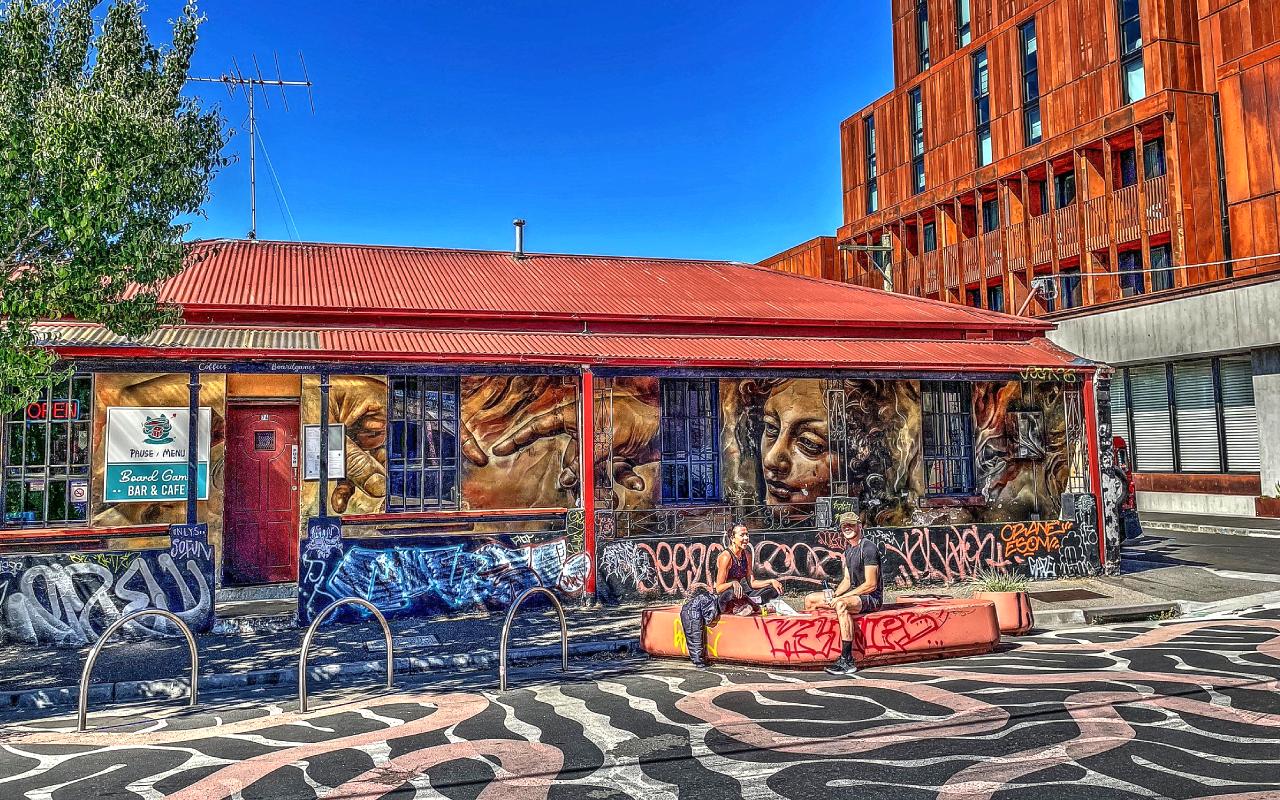
street art
For a more local, offbeat slice of Melbourne, explore the inner-north suburbs of Fitzroy and Collingwood (bordering the CBD). These bohemian neighborhoods are crammed with vintage shops, indie record stores, street art, craft breweries, and a buzzing nightlife. Brunswick Street (Fitzroy) is lined with cafes by day and bars by night.
Smith Street (Collingwood) has hip eateries and Melbourne’s famous burger joints. Don’t miss the Brunswick Street murals and the hidden bar, Curtin House Rooftop. If you time it right, find a local street fair or live music gig (these ’hoods host many small venues).
What to Expect: Laid-back, creative vibes. You’ll see coffee shops that serve experimental blends, galleries showcasing emerging artists, and record stores blaring vinyl. At night, the area pulses with young crowds at cocktail bars, craft breweries (Try Moon Dog World or Pentridge Beer District), and underground clubs. It’s edgier than the CBD, with a gritty charm.
Practical Tips: Tram routes 11, 12, and 109 run along major Fitzroy and Collingwood streets. Walking from the city is doable (about 2-3 km north of Flinders St). Keep an eye out for graffiti on laneways. Fitzroy’s Johanna or Brunswick Street laneways have great murals. If you shop vintage, mornings and early afternoons are best; at night, many shops close by 5 pm.
Best Time to Visit: Daytime for vintage shopping and brunch (brunch here is a religion, try a deconstructed cake or mushroom coffee). Evenings (especially weekends) for bars, note that Fitzroy’s rooftops and late-night clubs stay open till 3 am or later.
Local Tip: Fitzroy is known as the birthplace of Melbourne’s craft beer scene (Big brands like Matilda Bay started here). Look for “good beer windows”, for example, The Brunswick Green has a take-away beer window for evening drinkers. Also, Fitzroy hosts an annual Living Arts festival (usually in March) where streets shut down for art, food, and music.
16. Chapel Street & South Yarra (Shopping & Dining)
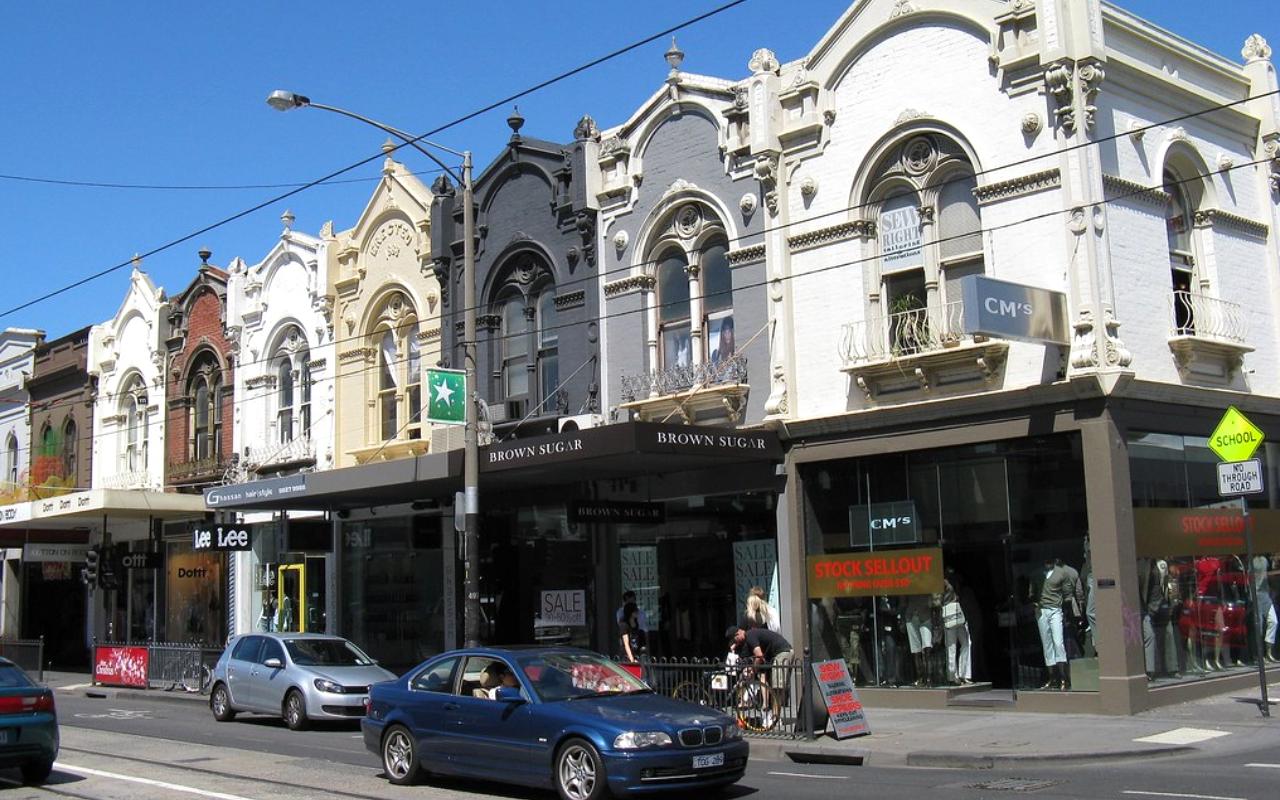
South Yarra
Another quintessential Melbourne experience is strolling along Chapel Street in the South Yarra suburb. This long shopping and nightlife strip (and adjoining Little Chapel St and Windsor) mixes high-end boutiques with local fashion, homewares, and a ton of cafes and bars.
By day, you can shop Australian designer brands (Scanlan Theodore, Aje) and peruse trendy home decor stores. By night, Chapel Street transforms into a party scene – from rooftop bars (like Loop Roof) to clubs and eateries serving global cuisine (Thai, Mediterranean, etc.). It’s the city’s playground for millennials and style-seekers.
What to Expect: Flashy storefronts and vintage leather jackets by day, cocktail crowds in slim-fit blazers by night. Common outdoor dining options include Italian pizzerias, sushi, and modern Australian grill. Midweek nights are quieter; Fridays/Saturdays see Chapel buzzing until late. The famous “Kame” (Kame Weekender bar) or the Terrace Hotel are landmark spots with live DJs.
Practical Tips: You can get there by tram (routes 5, 64, 78, 16 along Chapel St) or train to South Yarra Station (then walk a block). There’s free parking if you arrive early (Street parking rules apply). For shopping, explore the stretch from Toorak Rd down toward Windsor; there are small laneway cafés tucked in there, too.
Best Time to Visit: Saturdays, 10 am–6 pm for shopping bargains (arcades close by 5 pm). Nights on Fri/Sat for dinner and drinks. If you come for nightlife, dress codes are enforced in some clubs (no shorts/shirts).
Local Tip: Chapel Street has one of the largest stretches of laneway art outside the city – peek into The Astor Theatre (an old cinema) or in the alley behind The Prahran Hotel for street art. Also, the area hosts the annual Night Noodle Markets (summer food festival) on nearby Central Square – perfect for sampling Asian street eats.
17. Indulge in Melbourne’s Food Scene
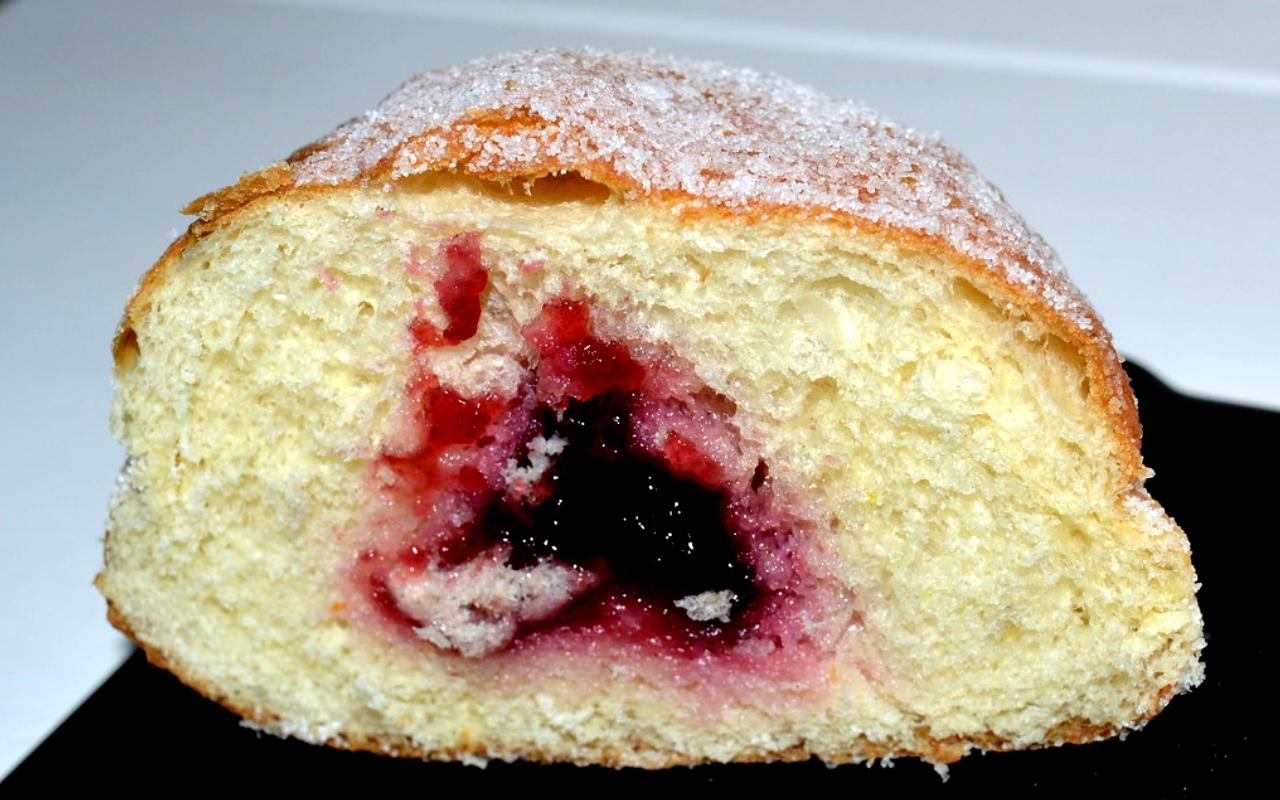
Jam doughnut
Trying local cafés and international cuisine is a great way to experience Melbourne’s food and coffee culture. Beyond cafes, be sure to dive into the city’s global cuisine: taste authentic dim sum or Peking duck in Chinatown (Little Bourke St), sip Vietnamese iced coffee in Richmond’s Little Saigon, grab a gourmet burger in Fitzroy’s brunch strip, or feast on oysters at a South Wharf seafood bar.
Don’t miss local staples like a hearty meat pie (try Harry’s in CBD) or a jam doughnut at Saint Misery bakery in East Melbourne. If you love markets, the laneway Block Arcade has Melbourne’s famous Donut King, and the esplanade in Southbank has the opulent Gin Palace (gin cocktails!).
What to Expect: Everything from hole-in-the-wall gems to high-end dining. Most cultural cuisines have a neighborhood (e.g., Brunswick Street for Vietnamese, Glenferrie Rd for Persian, Djarragun Rd in Collingwood for Indonesian). Melbourne even has a “Little Italy” (Lygon St) and a “Little Saigon” (Victoria St). Don’t shy from ordering share plates; many restaurants serve tapas or dim sum style.
Practical Tips: Peak dining times are 12–2 pm for lunch and 6–9 pm for dinner. Some popular restaurants (e.g. Chin Chin for Thai) require queuing or booking. Always ask locals for current top spots; food trends change fast here. Use apps like Zomato or Timeout Melbourne for up-to-date reviews. And finally, embrace coffee breaks between meals – a strong flat white can power you from pho to pasta.
Best Time to Visit: Food is great year-round. Summer evenings are perfect for al fresco dining, while winter invites cozy taverns and braised dishes. Weekdays have shorter restaurant waits, but more limited hours (many Aussie businesses close on Sundays except hotels and pubs).
Local Tip: Melbourne has so many laneway restaurants that many chefs set up in hidden arcades. A fun experience is to join a Melbourne food tour (several companies offer guided walks through Fitzroy, Chinatown, etc.); otherwise, a self-guided “Meat Pies & Coffee” loop or “Chinatown dumplings crawl” can fill a day deliciously.
18. Yarra Valley Wine & Gourmet Tour
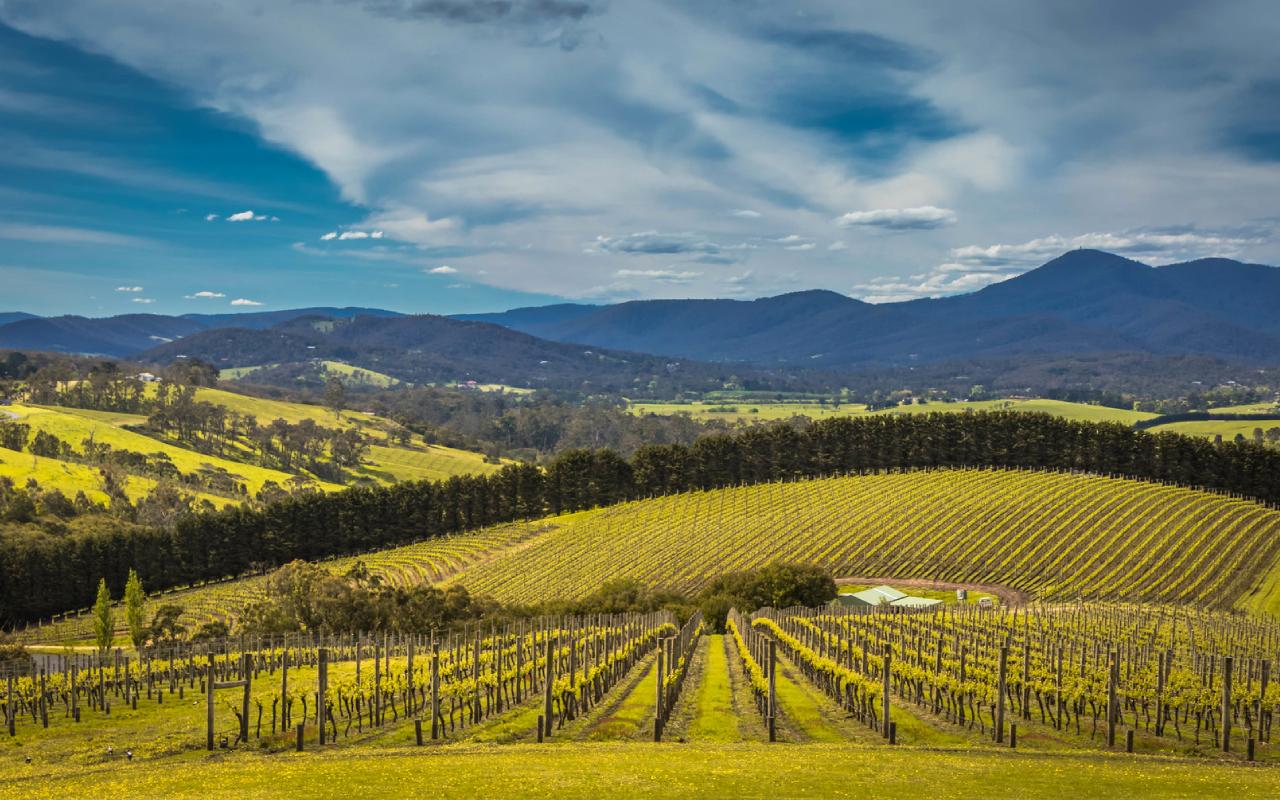
Yarra Valley
Just an hour’s drive from Melbourne is the Yarra Valley, one of Australia’s premier wine regions, known especially for its cool-climate Chardonnay and Pinot Noir. Booking a day tour or renting a car and going is a popular Melbourne day-trip.
Highlights include boutique wineries and cellar doors (e.g., Domaine Chandon for sparkling, Punt Road Winery), farm gates (say, olive oil tasting, berries, or cheese), and gourmet restaurants overlooking vineyards. Many tours also stop at the Healesville Sanctuary (native wildlife park) or local breweries if wine isn’t your only drink.
What to Expect: Scenic rural countryside with rolling hills and vines. Tastings usually involve 4–6 wineries per day, each pouring their specialties (be prepared to spit or pace yourself!). Tour operators often include lunch (like a winery platter or a sit-down meal). The vibe is relaxed: guests often buy a bottle of their favorite drops to enjoy later.
Practical Tips: Organized tours depart from central hotels (7 am–8 pm). Cost around AUD 150–200 for a full-day guided group tour (incl. lunch, transfers and tastings). Driving yourself: rent a car or a chauffeur, stay safe (designate a driver or book a “wine taxi”). Cellar doors often are open 10 am–5 pm (some close Mon/Tue).
Best Time to Visit: Late summer (Jan–Mar) for grape harvest atmosphere; vines are lush and sunsets are late. Autumn (April) for beautiful vine colors. Winter is quiet, but wineries are open. Spring (Sep–Nov) sees flowers in bloom. Avoid very hot days (crests 30°C+) for maximum comfort.
Local Tip: The valley has an annual Food and Wine Festival (May/Jun) and Winter’s Harvest events (July). And if you’re visiting December–January, the Yarra Valley Gourmet Escape in early Dec is one of Australia’s top food festivals (international chefs come!).
But for a quieter visit, pick an off-peak weekday and book a table at a vineyard restaurant (like Healesville’s Innocent Bystander for pizza and wine).
19. Witness the Phillip Island Penguin Parade
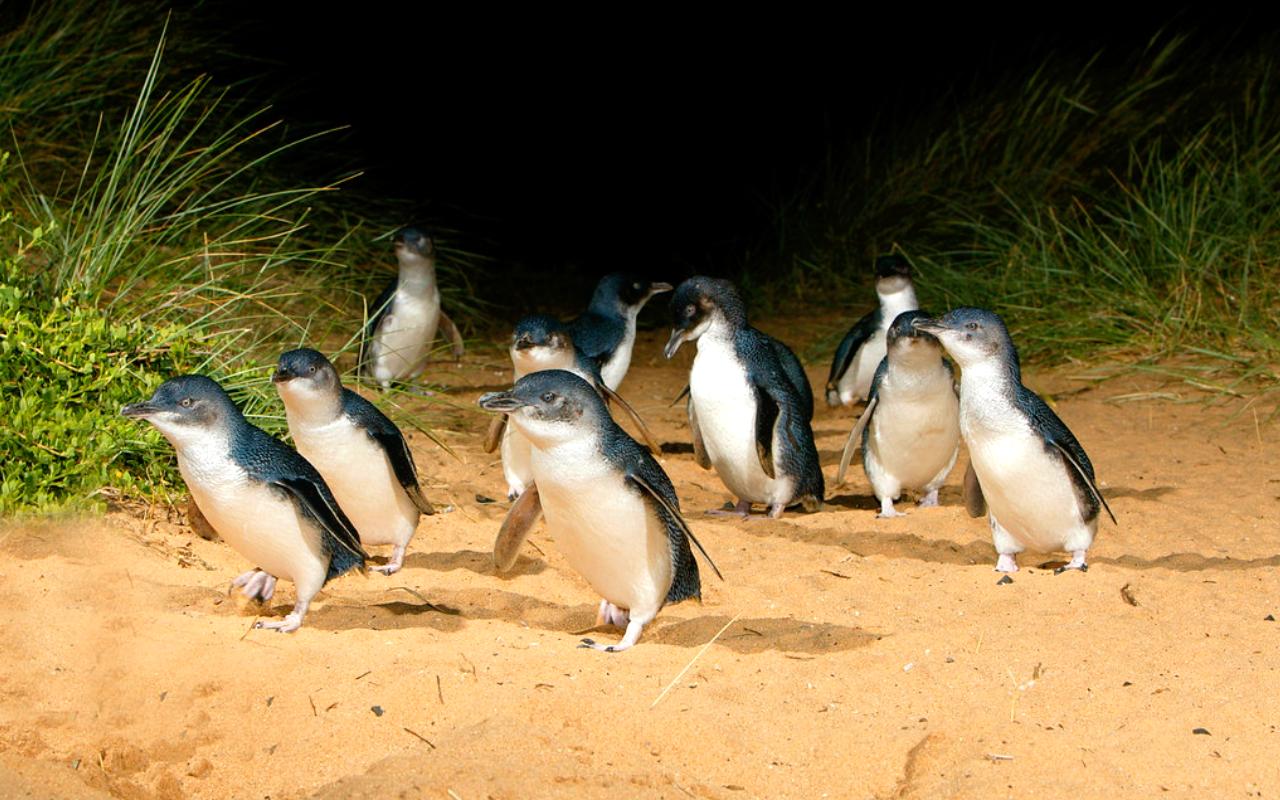
Phillip Island Penguin Parade
About 90 minutes south-east of Melbourne, Phillip Island offers a magical wildlife spectacle: every evening at dusk, hundreds of little penguins come ashore at the Penguin Parade.
These are the world’s smallest penguins (about a foot tall), and seeing them waddle up the sand in groups is an unforgettable experience. The event takes place at the Phillip Island Nature Parks’ centre, where you watch from tiered stands or boardwalks that blend into the dunes.
What to Expect: A very cute but natural occurrence. You’ll sit in near-darkness on wooden seats as guides give quiet commentary about conservation. At sunset, watch carefully for tiny dark shapes emerging from the ocean waves. The penguins then waddle together toward the dunes to their burrows; it’s a very slow, amusing shuffle.
The Visitor Centre (open from noon) has wildlife exhibits and a café. Book tickets in advance online (especially in summer or holiday times), as they sell out. Fees vary ($25–$40 depending on viewing level), and you must arrive about 1 hour before penguin time.
Practical Tips: Phillip Island is about 140 km from Melbourne, best reached by car (allow 90–120 min). V/Line coaches also run from Southern Cross Station to Cowes (the island’s town), but you’d still need local transport.
Penguin viewing times change daily (roughly 15 minutes after sunset), so check the calendar once you’re there. No pets are allowed, and night photography is usually restricted to protect the penguins. Parking is free. The Nocturnal House (inside the visitor centre) has other animals (owls, gliders) if you arrive extra early.
Best Time to Visit: From September to February (spring–summer), the weather is mild and arrival times are later (around 8–9 pm). Winter nights (June–Aug) are cold, and penguins come at 5 pm, but the stands are less crowded. Peak season (Dec–Jan) can be very busy, so go on a weeknight or shoulder season if possible.
Local Tip: Besides penguins, Phillip Island has lots for nature lovers. On the drive out, you can stop at the Panny’s chocolate factory (for a sweet treat) and the Koala Conservation Centre (boardwalks through treetops where koalas nap).
Also, right next to the Penguin Parade centre, the Nobbies boardwalks offer coastal scenery and sometimes seal-watching during the day. Lastly, Penguin Parade is a conservation project; proceeds help fund penguin protection (locals take pride in their “little penguins”).
20. Soar Above the Yarra Valley in a Hot Air Balloon
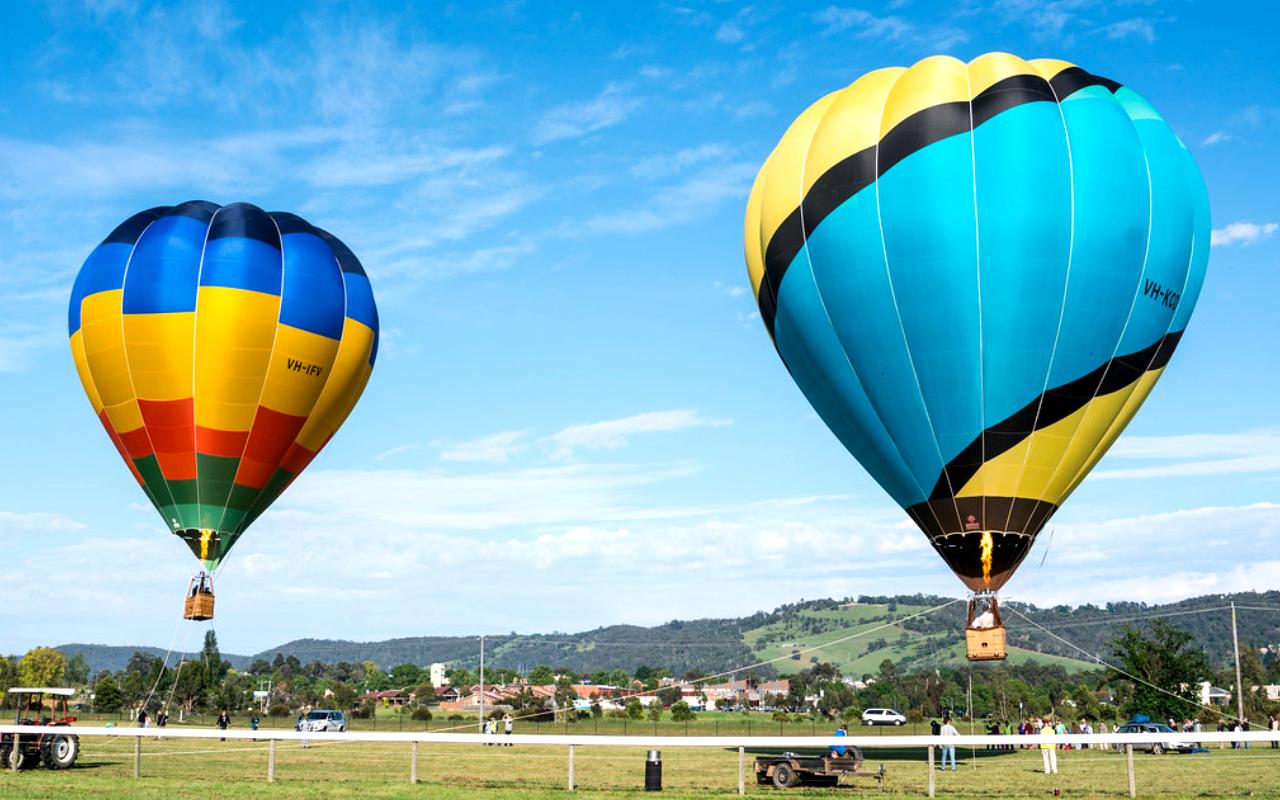
Yarra Valley in a Hot Air Balloon
For an extraordinary adventure, take a hot air balloon flight over the Yarra Valley (or even directly above the city). Many companies offer sunrise ballooning: you’ll lift off just before dawn, drifting gently over vineyards, past rolling hills, and the city skyline as the sun rises.
It’s quiet (no engine noise) and surreal, floating at a slow pace, seeing kangaroos bounding below in dawn light. Flights last 1 hour, followed by a traditional champagne toast upon landing.
What to Expect: Pre-dawn early start (meet around 4–5 am). Travel by minibus out to a launch site (usually near Yarra Glen). Pilots set up the balloon with the ground crew (safety demo). Once up, you’re in a basket with 8–12 people (standing room only; no seatbelts). Views: vineyards, farmland, maybe the city spire if near Melbourne. After landing, many operators include a breakfast buffet or champagne celebration back at a winery.
Practical Tips: Ballooning can cost $300–$400 per person (book well in advance, as spots are limited). Dress warmly, it’s chilly in the early morning at altitude (layers, gloves). You have to climb into the basket (about waist height), so some mobility is needed. All equipment and fuel are provided. It’s very safe if done by a licensed operator. Book through reputable companies (some hotels and tourism desks can recommend).
Best Time to Visit: Clear, calm mornings are ideal (dry season winter/spring often have good conditions). Flights are canceled if it’s too windy or rainy (operators will reschedule or refund). Note: winter flights require very warm clothing; summer flights may just need a sweater.
Local Tip: Floating over the Yarra Valley is wonderfully peaceful – a local told us it’s like “swimming in silence over vines.” If Melbourne’s weather is unsettled, some companies also launch right from within city parks or reserves, giving you a unique cityscape perspective. After your flight, linger in the Yarra Valley or nearby Dandenong Ranges for brunch or visit the Puffing Billy steam train.
21. Shop the Bourke Street Mall & Around
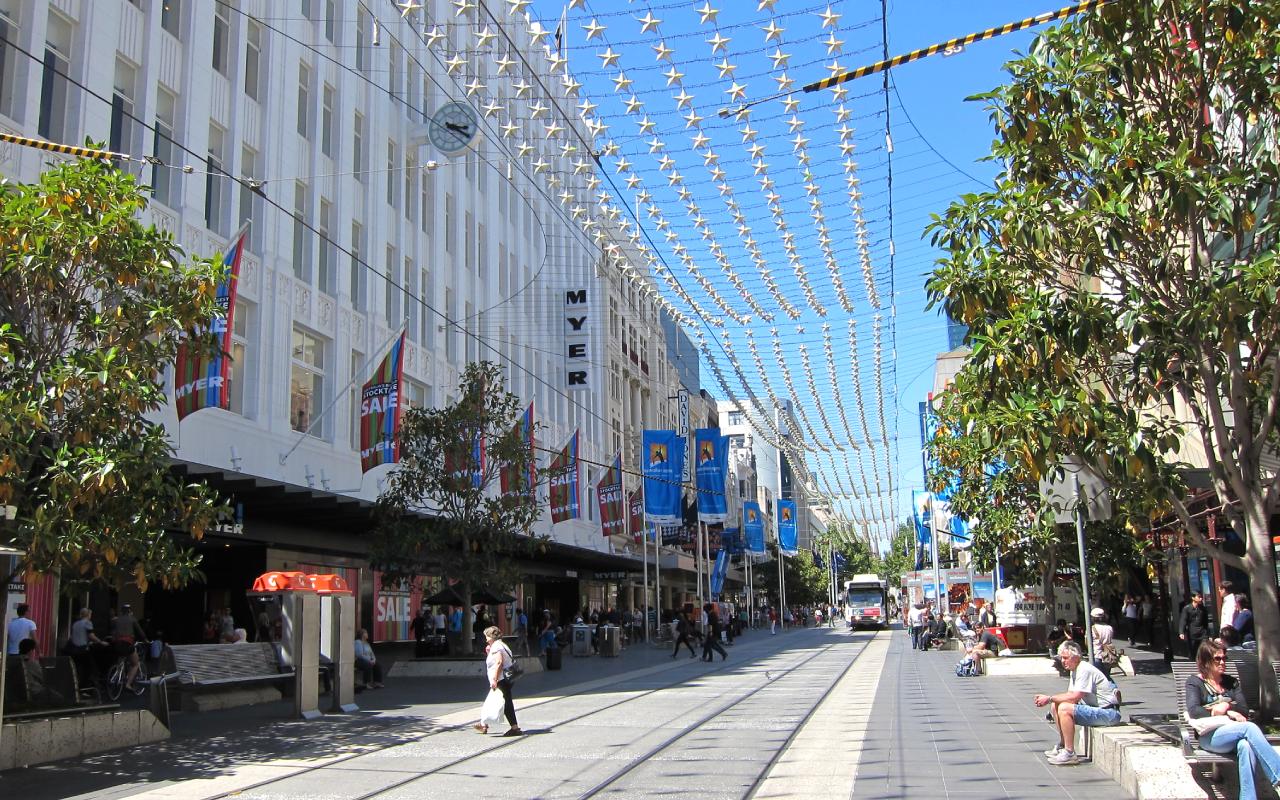
Bourke Street Mall
For classic city shopping, wander Bourke Street Mall, Melbourne’s pedestrian shopping precinct. Spanning Swanston to Elizabeth Streets, it’s filled with department store giants Myer and David Jones, plus international fashion brands and souvenir shops.
Street performers are a fixture here, too; you might catch a silver statue or a jazz band. The Victorian-era GPO building (now H&M and cafes) adds charm.
What to Expect: Crowds of shoppers and the iconic “Myer Christmas Windows” in December, when Myer paints its storefront with moving holiday scenes. It’s always lively: trams glide down (almost) the center of the Mall, and parents often bring kids to see the Christmas corner at the southern end. The area is fully covered (good if it’s raining).
Practical Tips: The Mall is entirely free (no entry fee). Shops open roughly 9 am–6 pm (Sun 11 am–5 pm). Cashless payments are ubiquitous. If you need tourist info, the Melbourne Visitor Booth (with friendly volunteers) sits mid-Mall, great for maps or directions. Beware pickpockets in any big city crowd – keep your bags safe.
Best Time to Visit: Weekday mornings or late mornings to avoid the weekend rush. Boxing Day sales (Dec 26) see bargain-hungry throngs if you like sales chaos. If shopping isn’t your focus, it’s still a fun people-watching zone.
Local Tip: Though many tourists stay in the Mall, locals often duck into the adjoining laneways: Royal Arcade and The Block Arcade (little north of the Mall), which house boutique shops and the famous Pellegrini’s Espresso Bar (a nearly century-old coffee haunt). Grab an Italian sandwich or pastry from Pellegrini’s as a local Melbourne experience, then continue browsing.
22. Explore Melbourne’s Chinatown & Asian Quarter
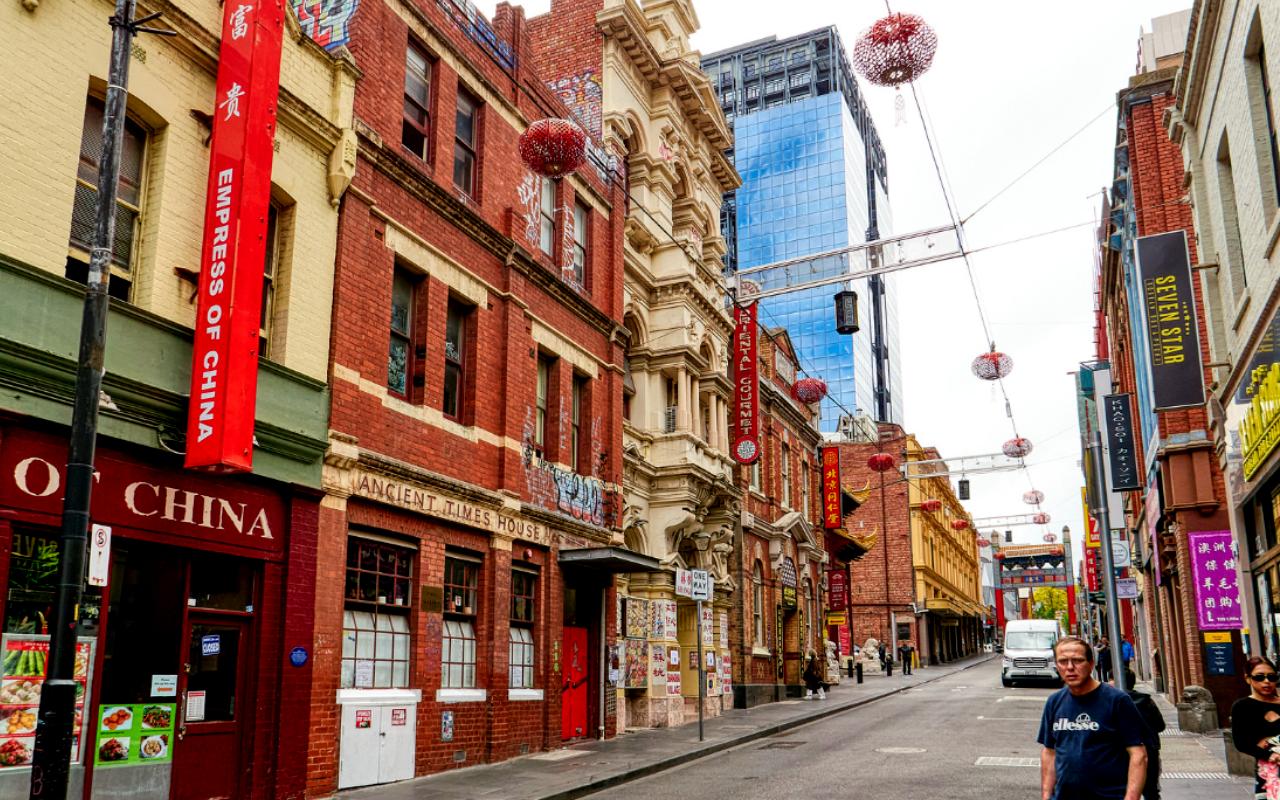
Melbourne’s Chinatown
Melbourne’s Chinatown (centered on Little Bourke Street) is one of Australia’s oldest (over 160 years) and is great for a snack crawl. Lanterns line the street outside Chinese restaurants and dumpling houses. You’ll find yum cha (“dim sum brunch”), noodle bars, and bubble tea shops here.
Nearby, Melbourne’s Asian influence extends to several “quarters”: Little Saigon on Victoria St (Vietnamese pho, banh mi), Tokyo’s Karayuki Niombu on Lonsdale St (ramen, sushi), and Chinese supermarkets. A night market here (Chinatown Street Asia Festival in Lunar New Year) livens up the laneways with performances.
What to Expect: Authentic food at all hours. For example, in Chinatown’s market alley (Centre Place), grab Hong Kong egg waffles from Queen Victoria Market’s hawker, or at supper time, try late-night dumplings (some places are open till midnight).
Smells of soy and star anise fill the air. The Centre’s Rotunda often has Chinese community festivals (free events like lion dances for Lunar New Year).
Practical Tips: Chinatown occupies Little Bourke St between Swanston and Spring Streets. It’s pedestrian-friendly and close to restaurants of all Asian cuisines.
Many locals don’t realize that the streets just off Chinatown (like Little Lonsdale or Little Collins) have excellent Thai and Japanese spots. Don’t assume “restaurants are cheap only outside the city”, bargains abound with many $10 noodle bowls and dumpling deals.
Best Time to Visit: Dinner and late night (Chinatown’s vibe is particularly animated after 6 pm). Lunchtime dim sum is another peak (8 am–2 pm). Festivals (Lunar New Year, usually January/February) are especially colorful and full of freebies (dumpling giveaways, traditional dance).
Local Tip: A favorite insider dish is congee (rice porridge with toppings) at 1000 Dollar Congee for comfort or duck pancakes at Shanghai Street Food. For a unique dessert, try Hong Kong-style snow ice at 3meals.
Also note: the dim sum institution Shark Fin Inn is cash-only, so come prepared. And remember that many Vietnamese places on Victoria Street (south of CBD) stay open late, serving pho to crowds well past midnight.
23. Embrace Festivals & Events
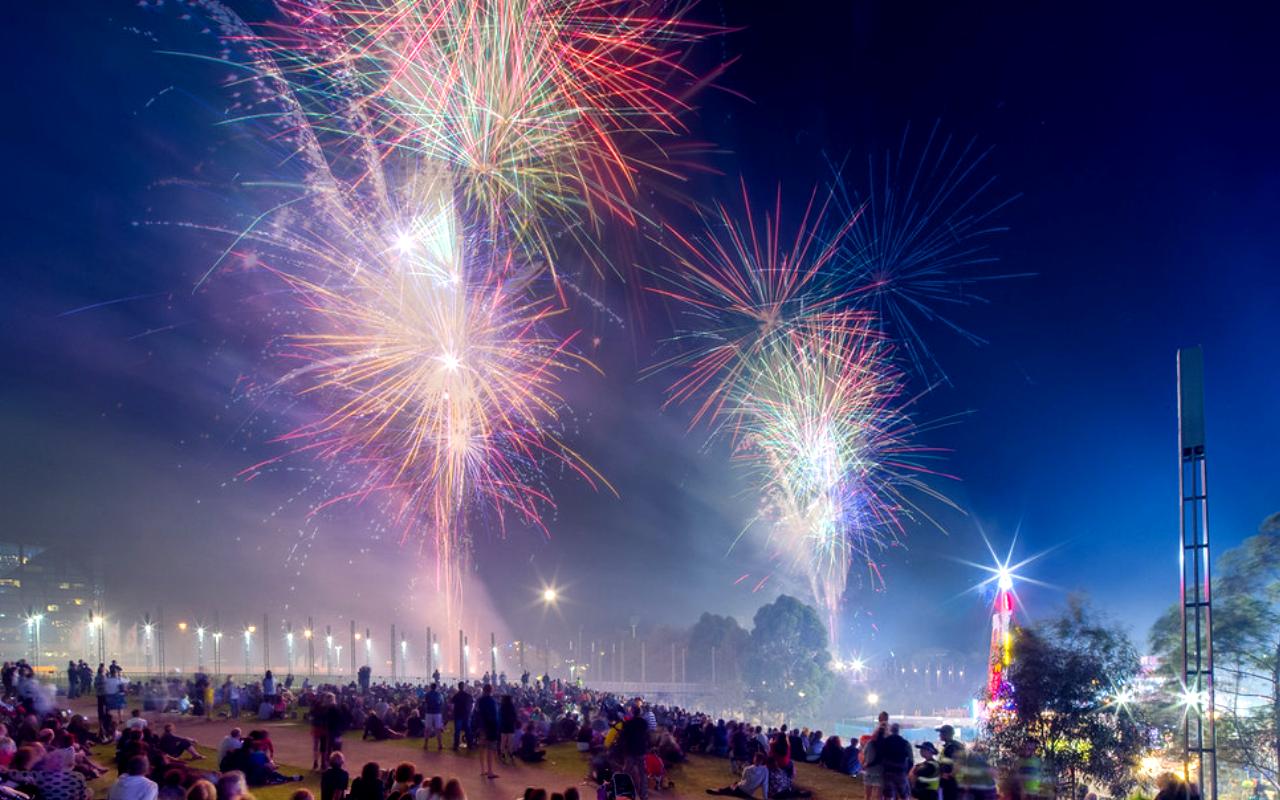
Moomba Festival
Melbourne’s calendar is packed with events, so your trip might coincide with something special. Here are a few highlights:
Australian Open (Tennis): Late Jan. If you love tennis or vibe, catch the action (or even just soak up the lively fan atmosphere at Melbourne Park).
Moomba Festival: Early March on the Yarra, with river parades, fireworks, carnival rides, and free concerts. Locals flock to the free “birdman rally” where people jump contraptions off Princes Bridge.
Melbourne International Comedy Festival: March/April. The city is comedy-crazy – besides big ticket shows, free street performances pop up, especially on the “comedy walk” around city corners.
Melbourne Food & Wine Festival (March) & Vegan Festival: March offers pop-up dinners, and April sees a vegan food festival with crazy eats.
Floriade and Blossom: In Spring, there are cherry blossom festivals in parks (e.g., Cheong Park).
Winter Night Markets (Queen Vic): May–Aug Wed nights. Think street food hawker stalls, fire pits, live music.
White Night (Bright 2025): Yes, on Melbourne’s streets (usually Feb). It’s an all-night art party with projections on buildings and performances.
If your dates are flexible, check [VisitVictoria events calendar] or local tourist boards for exactly what’s on. Melbourne loves a public celebration, cricket Test matches, AFL finals (Sep), or even New Year’s fireworks around the Yarra.
24. Day Trips from Melbourne (Itinerary Ideas)
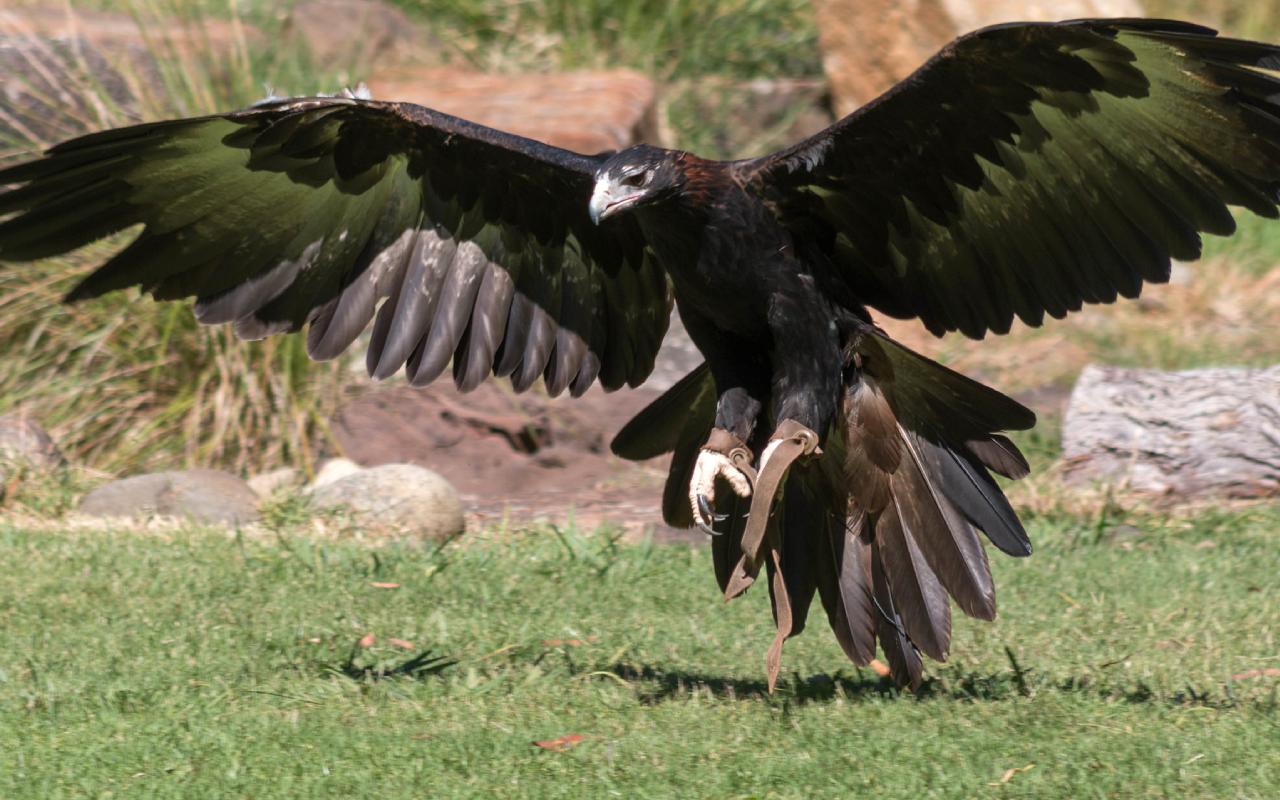
Wedge-tailed Eagle, Healesville Sanctuary
Some of the best Fun Things to Do in Melbourne also include exploring scenic destinations outside the city on day trips.
- Philip Island Wildlife: (see #19). Combine penguins with sunrise koala spotting.
- Healesville Sanctuary: 1 hour NE of Melbourne. Hand-feed kangaroos, see koalas, platypus, and see birds of prey. A very family-friendly half-day trip.
- The Dandenong Ranges: 1hr E, rainforests and the Puffing Billy steam train. Great for walking, gardens (National Rhododendron Gardens), and a ride on a century-old steam train through fern gullies.
- Mornington Peninsula: 1.5hr S. Wine, hot springs, seaside villages. (Not to be confused with the Mornington Peninsula in summer.)
- Daylesford & Macedon Ranges: 1.5hr NW. Mineral springs spa town, Convent Gallery, charming villages.
- Lakes Entrance / Gippsland Lakes: Multi-day, but lakes/beaches for nature.
- Mount Dandenong (SkyHigh): Fine views of city lights if you go at night.
Each trip can be self-driven or via specialized tours. For instance, the Puffing Billy can be combined with a visit to the Dandenong Ranges.
25. Conclusion and Next Steps
Melbourne is a city of layers; every alley, park, and suburb has its own personality. Hopefully, this guide has helped you discover some of the best Fun Things to Do in Melbourne for your trip.
From street art in the laneways and world-class coffee, to dramatic coastal drives and tiny penguins, there’s a memory waiting at every corner.
Ready to Plan? Pack comfortable shoes for laneways and sneakers for nature walks, and charge your camera, every corner of Melbourne is a photo opportunity.
Bookmark official sites (e.g., Visit Victoria, the City of Melbourne, attraction pages) for any schedule updates or ticket bookings. Check the weather and think layers (Melbourne can be “four seasons in one day,” especially in spring).
Most importantly, dive in with a curious, local spirit. Melburnians are proud of their city, and you’ll find the people as friendly as the café owners.
We’d love to hear which of these adventures you try! Share your Melbourne photos with friends, or tag us on social with #MelbourneMagic.
Safe travels and enjoy exploring the vibrant, sunny, or rainy, always-surprising city of Melbourne!
Call to Action: Book your flights and hotels early, and start making that Melbourne itinerary now. Your adventure Down Under awaits.
| Expense | Per Person (AUD) | 3-Day Total (AUD) |
| Flights (to MEL) | $1,200 | $1,200 |
| Hotels (3 nights @ $150) | $450 | $450 |
| Meals & Coffee (@$60/day) | $180 | $540 (for 3 days) |
| Transport (Public/Taxi) | $30 (Myki pass) | $90 |
| Attractions & Tours | $100 (avg/day) | $300 |
| Miscellaneous (souvenirs, etc.) | $50 | $150 |
| Total (approx) | $2,730 |
(All prices are indicative per adult. Actual costs vary.)
Best Time to Visit Melbourne (By Season)
Summer (Dec–Feb): Warm (avg 25°C), long days. Great for the beach (St Kilda, Brighton) and festivals (New Year’s fireworks). Prepare for sudden storms (“Melbourne’s cool change” can drop temps quickly).
Autumn (Mar–May): Golden season. Mild 15–22°C, tree colors in parks, food & wine festivals. Ideal for walking tours and city sightseeing.
Winter (Jun–Aug): Cool (10–15°C), sometimes rainy. Cozy indoor activities shine, museums, NGV, cafés with fireplaces, laneway bars with heaters. Winter Night Markets at Queen Vic are festive.
Spring (Sep–Nov): Gardens in bloom, 12-23°C. Melbourne Cup (horse race) in Nov, Twilight Barbecues, and outdoor events. Just watch out for occasional showers; always keep an umbrella handy in Melbourne!










-
 0115 Best Easy Treks in Nepal for Beginners and Families
 -
 02Best season for Everest Base Camp Trek
 -
 03Best Time to Go Hiking in Nepal: A Seasonal Guide for Trekkers
 -
 04Suchi Purja –Wife of Nirmal Purja aka Nims Dai
 -
 05Dubai desert safari outfit ideas
 -
 06Top Beaches in Sri Lanka
 -
 0710 Best Easy Treks in Nepal