
Now Reading: 25 Best Christmas Markets in Europe You Must Visit This Winter (2026 Guide)
-
01
25 Best Christmas Markets in Europe You Must Visit This Winter (2026 Guide)

Europe transforms into a real-life snow globe every winter. If you want to experience the true magic of the holiday season, visiting the best Christmas markets in Europe should sit at the very top of your travel bucket list.
These festive gatherings offer much more than just shopping. They provide a full sensory experience. You smell roasted chestnuts roasting on open fires. You taste warm, spiced mulled wine. You hear cheerful carols echoing across medieval squares. Europe truly is the best place for Christmas markets because the tradition runs deep.
The history of Christmas markets traces back to the Late Middle Ages in the German-speaking parts of Europe. Cities like Dresden and Nuremberg hosted some of the first true winter markets, allowing locals to stock up on supplies before the harshest cold set in. Over centuries, these practical gatherings evolved into the dazzling, fairy-light-draped festivals we know and love today.
What makes popular Christmas markets in Europe so magical now? It is the perfect blend of rich history, stunning Gothic or alpine backdrops, and deeply rooted cultural traditions. Whether you want to ice skate under the stars in Vienna or bite into authentic gingerbread in Germany, this guide covers everything you need to know.
We will explore the top 25 markets across the continent for the 2026 season. You will discover exactly where to go, what to eat, and how to plan the ultimate winter itinerary.
Quick Facts: European Christmas Markets 2026
| Feature | Details |
| Best Time to Visit | Late November through December 24 |
| Typical Opening Hours | 10:00 AM to 9:00 PM daily |
| Average Cost per Day | €50 – €100 (Food, drinks, small souvenirs) |
| Top Must-Try Drink | Glühwein (Hot mulled wine) |
| Weather Expectation | 0°C to 5°C (Dress in warm layers!) |
What Makes European Christmas Markets Special?
The moment you step into a European Christmas market, you feel the festive charm instantly. Traditional wooden stalls line the cobblestone streets. Vendors decorate these tiny huts with fresh pine branches, twinkling lights, and shiny ornaments.
Food plays a massive role in the experience. You simply cannot visit the best Christmas markets in Europe without trying the local street food. The air always carries the sweet, spicy scent of Glühwein. Vendors roast chestnuts right in front of you. Freshly baked gingerbread cookies and sizzling sausages tempt you at every corner.
Beyond the food, the entertainment brings the squares to life. Many markets feature massive outdoor ice skating rinks. Spectacular light shows illuminate historic cathedrals and palaces. Live choirs and brass bands fill the air with classic Christmas music.
You will also notice unique cultural traditions across different countries. While Germany focuses heavily on wooden toys and nutcrackers, Scandinavian markets highlight beautiful wool crafts and local berries.
To get the most out of your trip, timing matters. The best time to visit falls between late November and the days right before Christmas. Most markets close completely on December 24 or 25, so plan your flights accordingly!
Top Christmas Markets in Germany
Germany holds the crown when it comes to festive winter traditions. You will find some of the most famous and popular Christmas markets in Europe right here.
1. Nuremberg Christmas Market (Christkindlesmarkt)
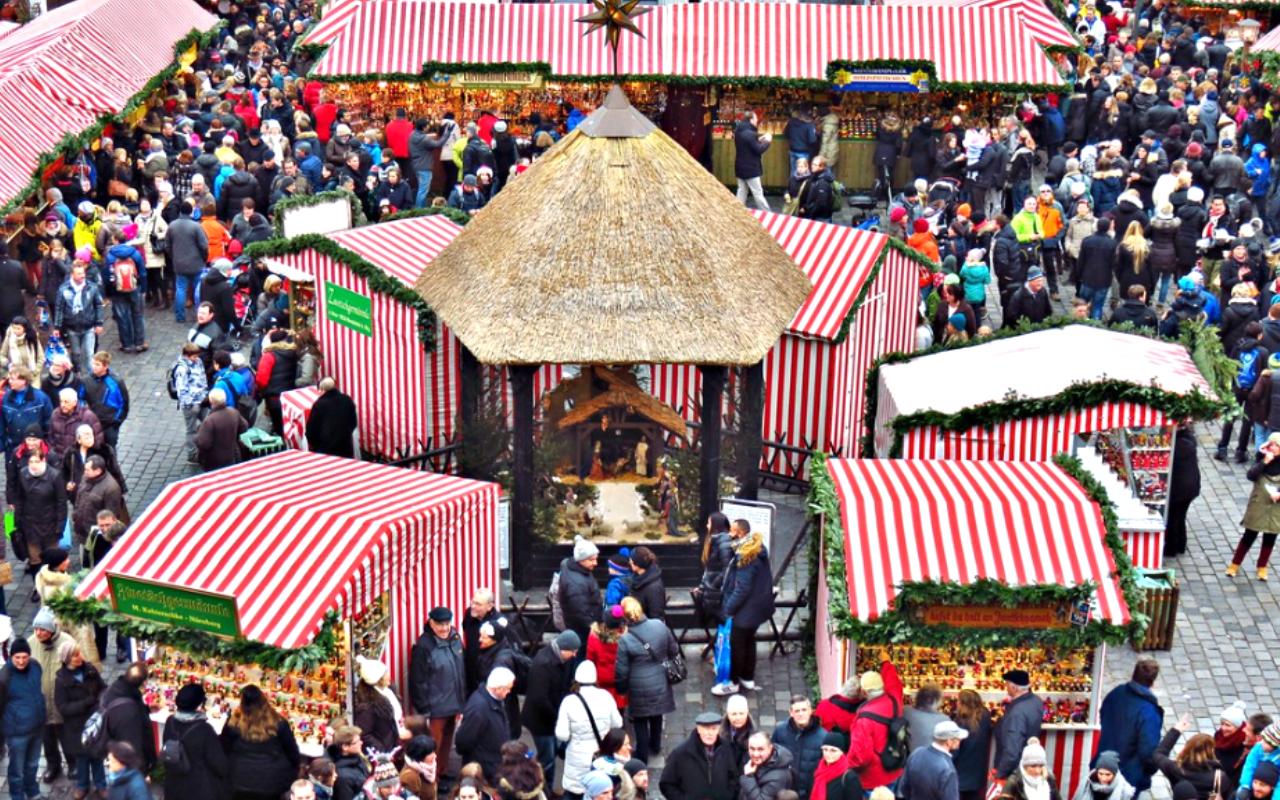
Nuremberg Christmas Market
The Nuremberg Christkindlesmarkt is legendary. It ranks as one of the oldest and most traditional markets in Europe. For the 2026 season, it runs from November 27 to December 24.
Nuremberg strictly bans mass-produced plastic toys. Instead, you find high-quality, handmade crafts. The market is world-famous for its Lebkuchen (soft gingerbread) and the original Nuremberg bratwurst, which vendors serve three to a bun. Look out for the “Zwetschgenmännle”—adorable little figures made entirely from dried plums and figs.
2. Munich Christmas Markets
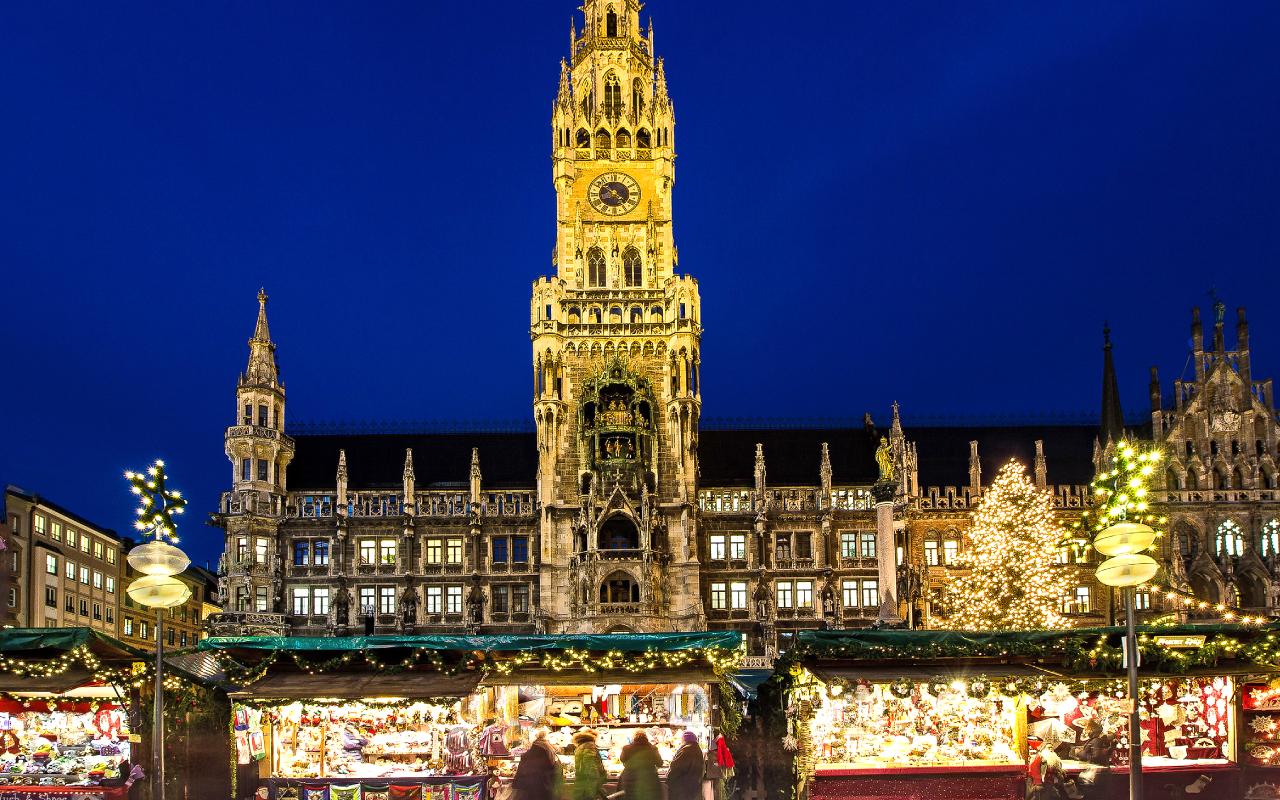
Munich Christmas Markets
Munich does not just host one market; the city transforms into a massive winter wonderland with multiple markets spread across different neighborhoods.
The Marienplatz main market serves as the beating heart of Munich’s celebrations. A massive Christmas tree glows against the dramatic backdrop of the Neo-Gothic Town Hall.
If you want something unique, head to the Medieval Christmas Market at Wittelsbacher Platz, where vendors dress in historical costumes and serve drinks in heavy clay goblets.
3. Cologne Christmas Market
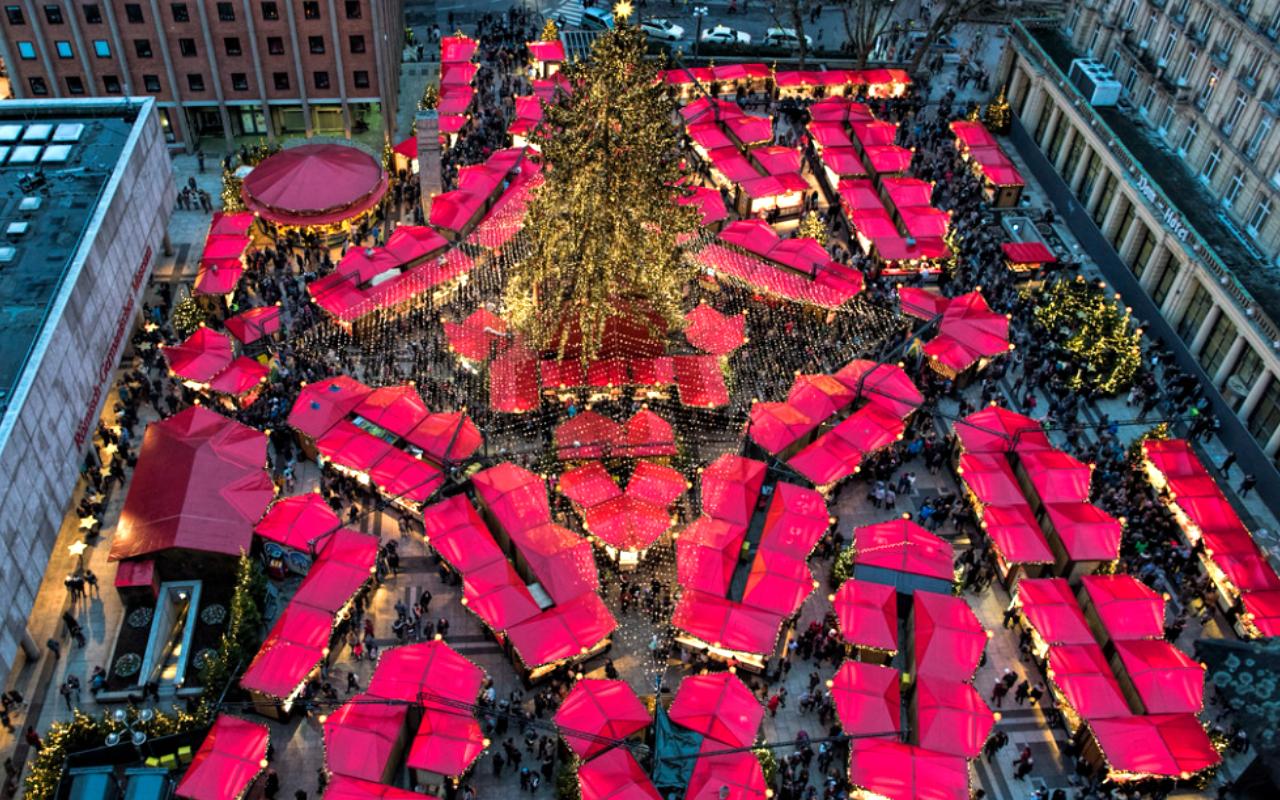
Cologne Christmas Market
Cologne offers a dramatic and unforgettable setting. The main market sits directly beneath the towering, magnificent Cologne Cathedral. A massive canopy of fairy lights radiates outward from the central Christmas tree, creating a glowing starry sky effect over the stalls.
Cologne also features a fantastic outdoor ice rink at the Heinzels Wintermärchen market in the old town. You can skate for hours before warming up with hot apple cider and potato pancakes.
4. Dresden Striezelmarkt
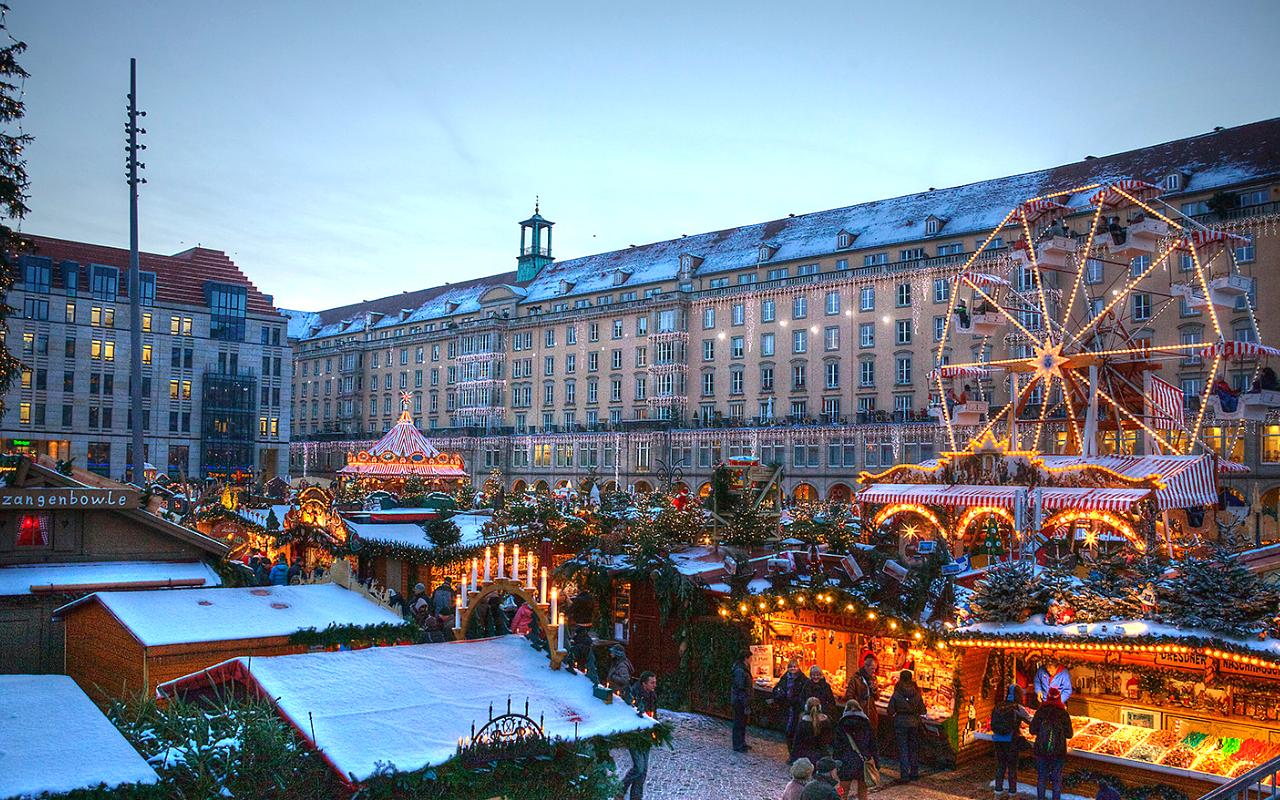
Dresden Striezelmarkt
If you love history, you must visit Dresden. The Striezelmarkt holds the title of the oldest recorded Christmas market in Germany, dating back to 1434.
The market takes its name from Striezel, the traditional German Stollen cake. You will see a massive, multi-tiered wooden Christmas pyramid glowing in the center of the square. Bakers here take their craft seriously, so make sure you buy a loaf of authentic Dresden Stollen to take home.
Best Christmas Markets in Austria
Austria offers a distinctly elegant and imperial take on the holiday season. The backdrop of snowy Alps and grand palaces makes these markets truly spectacular.
5. Vienna Christmas Markets
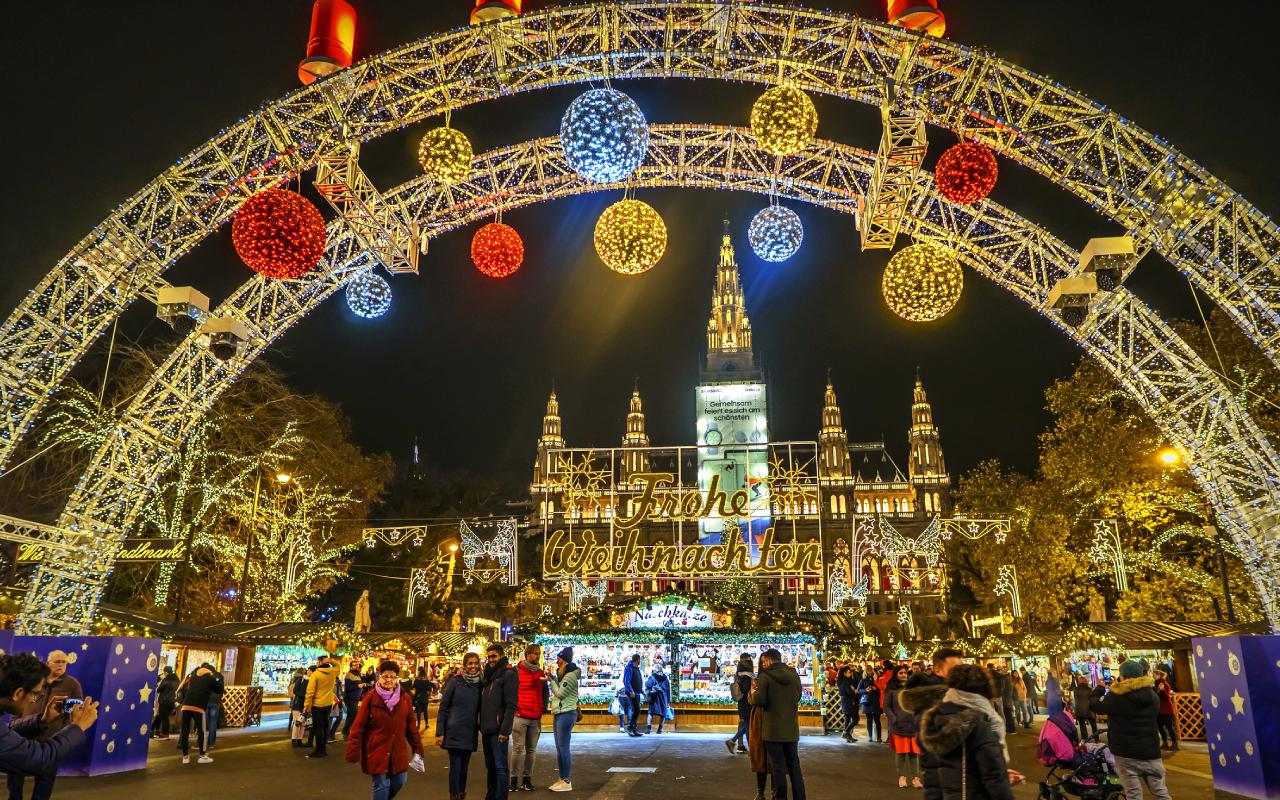
Vienna Christmas Market, one of the Best Christmas Markets in Europe
Vienna oozes romance and sophistication during the winter. You will find several stunning markets scattered throughout the capital.
The Schönbrunn Palace Market offers a regal experience. The grand yellow palace provides a breathtaking backdrop for stalls selling elegant glass ornaments and handmade jewelry.
Meanwhile, the Rathausplatz Market (City Hall Square) feels like a classic fairy tale. The trees in the surrounding park glow with oversized, illuminated shapes. You can ice skate through romantic winding trails that snake through the park itself.
6. Salzburg Christmas Market
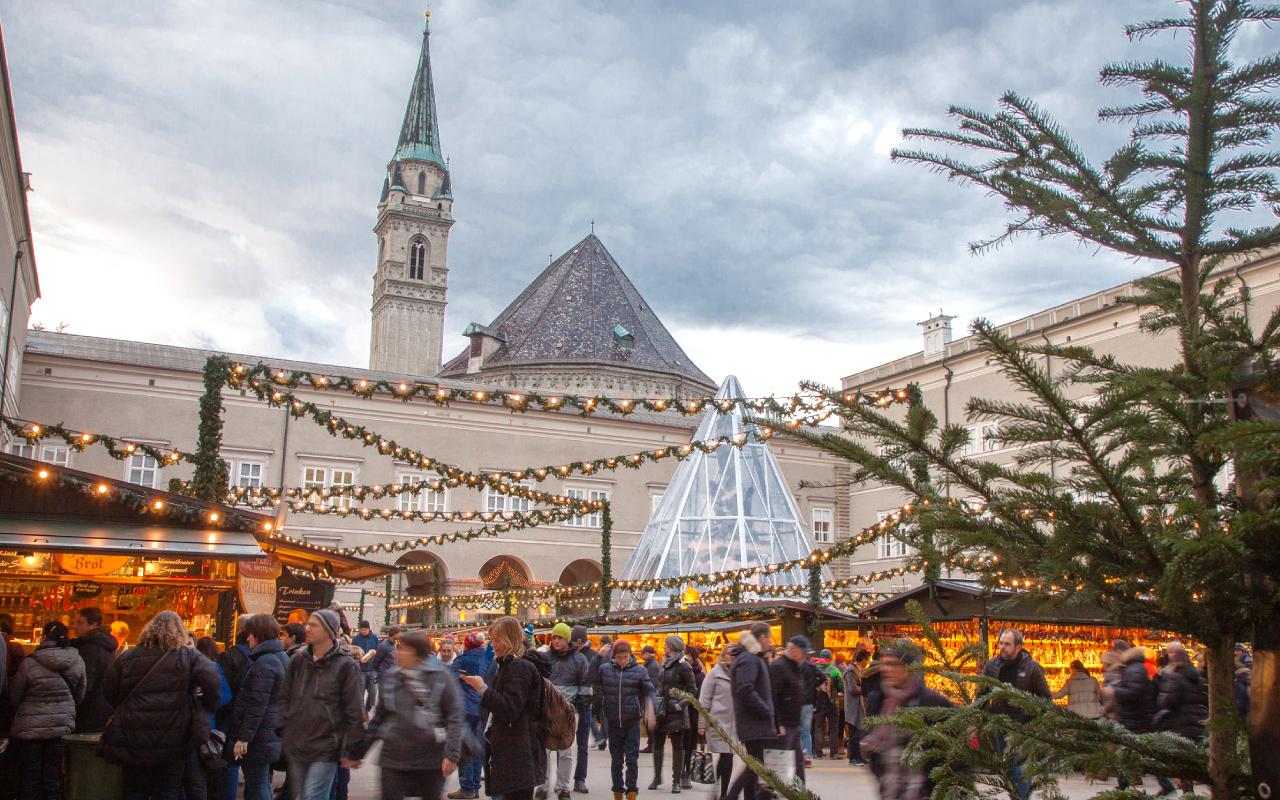
Salzburg Christmas Market
Salzburg, the birthplace of Mozart, delivers incredible festive charm. The main market sits at the foot of the Hohensalzburg Fortress, surrounded by stunning Baroque architecture.
The Alpine backdrop makes Salzburg feel incredibly cozy. Choirs regularly perform traditional carols on the cathedral steps. Try the Kaiserschmarrn, a shredded, fluffy pancake topped with powdered sugar and plum compote.
Best Christmas Markets in France & Switzerland
French and Swiss markets blend Germanic traditions with unique local flair, creating some of the most popular Christmas markets in Europe.
7. Strasbourg Christmas Market (France)
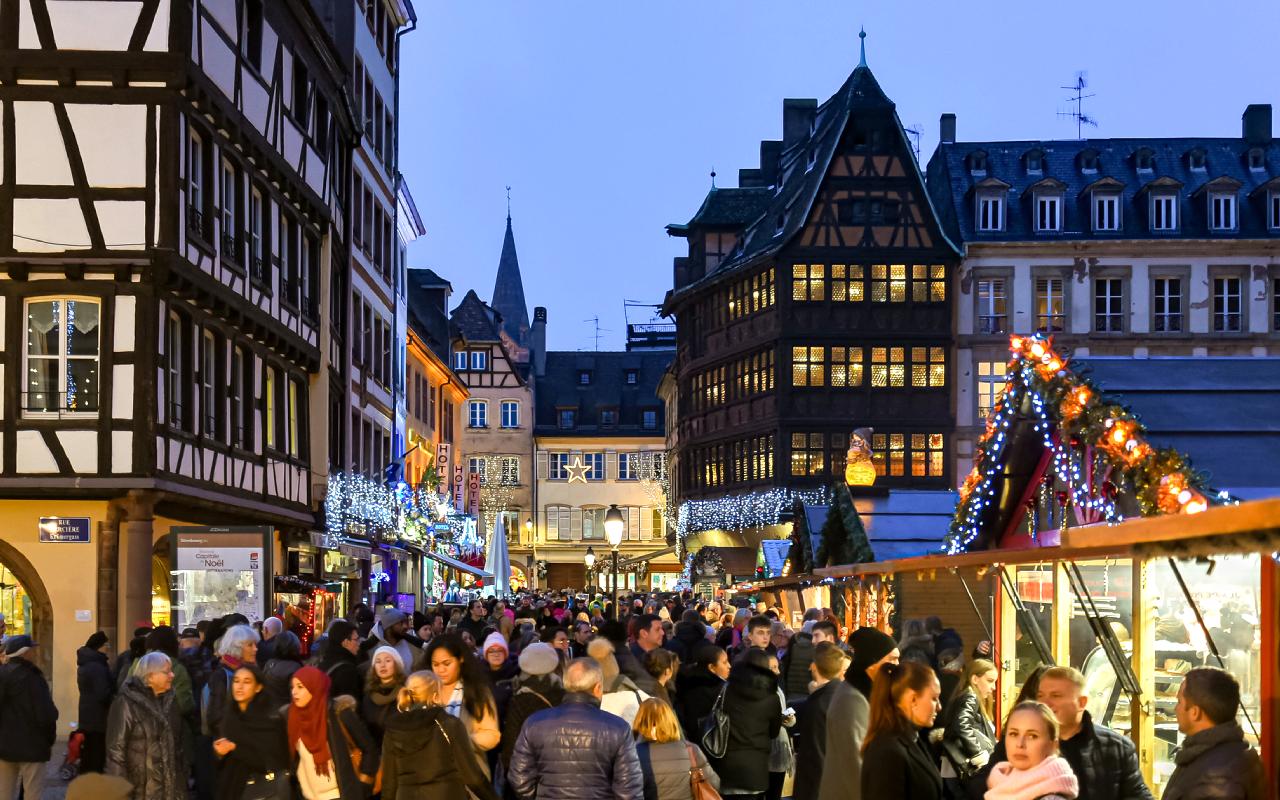
Strasbourg Christmas Market
Strasbourg proudly calls itself the “Capital of Christmas.” The city takes decorating to an entirely new level. Locals cover half-timbered houses with massive teddy bears, shining stars, and miles of garland.
The market spreads across the huge, decorated old town. You will find over 300 wooden chalets selling Alsatian specialties like flammkuchen (a thin, crispy flatbread topped with cream, onions, and bacon) and hot white wine.
8. Colmar Christmas Market (France)
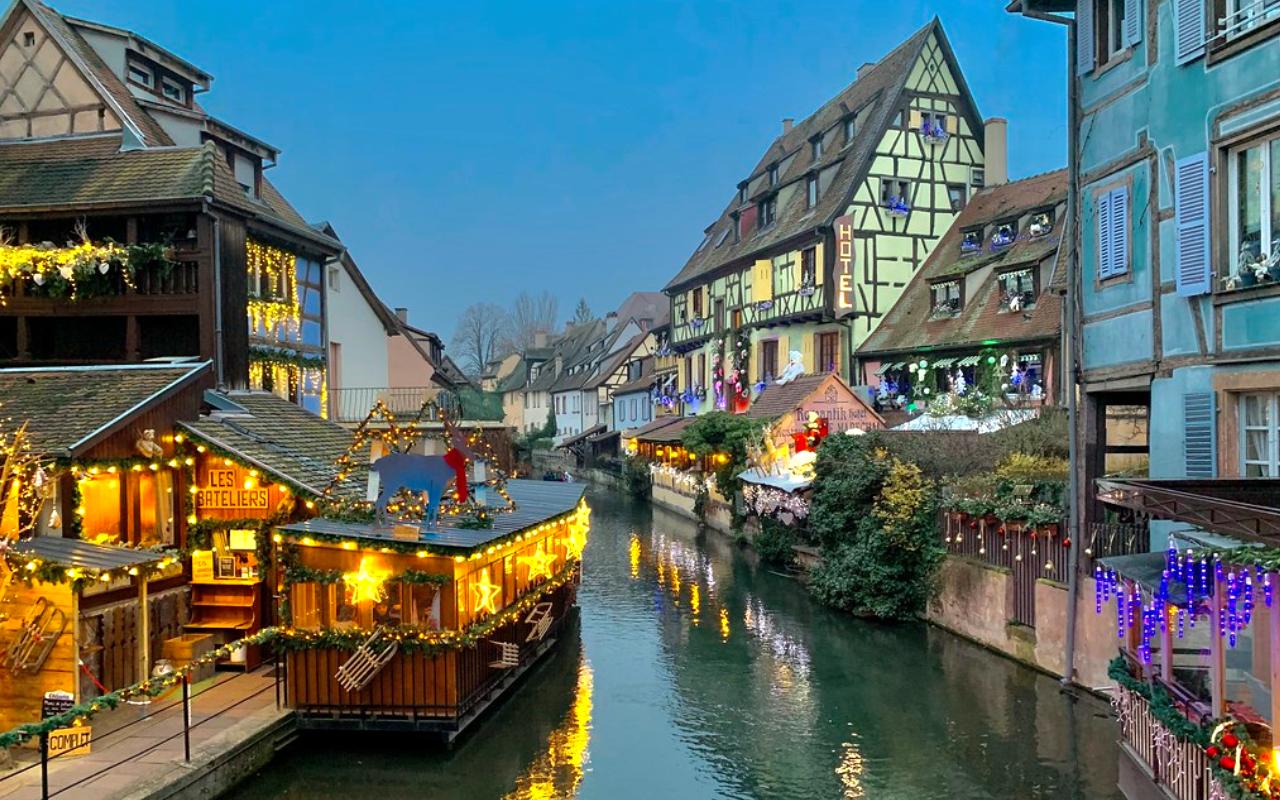
Colmar Christmas Market
Just a short train ride from Strasbourg, Colmar looks like a village plucked straight from a Disney movie. The town features a network of small canals and incredibly preserved medieval buildings.
Colmar hosts six different mini-markets, each with a specific theme. The entire town feels like an intimate, fairy-tale village setting. It feels less crowded than Strasbourg but packs just as much visual punch.
9. Zurich Christmas Market (Switzerland)
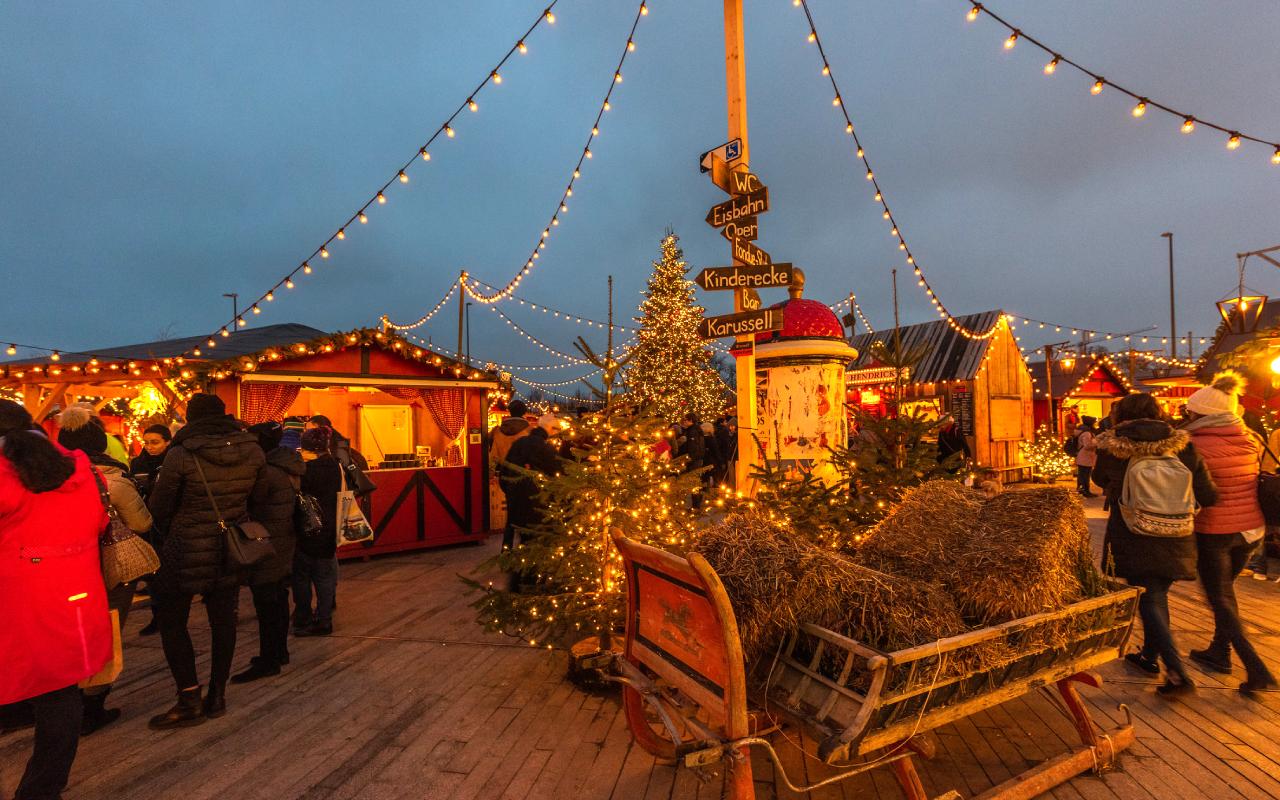
Zurich Christmas Market
Zurich perfectly blends cozy outdoor vibes with grand indoor spectacles. The city hosts one of the largest indoor Christmas markets in Europe right inside the main train station.
The centerpiece of this indoor market is a towering Christmas tree covered entirely in thousands of sparkling Swarovski crystals. Outside, the Wienachtsdorf market near the Opera House offers a trendy, vibrant atmosphere with incredible fondue stalls and a popular ice rink.
Best Christmas Markets in the Czech Republic & Hungary
Eastern and Central Europe offer incredibly atmospheric markets that often feel a bit more affordable than their Western counterparts.
10. Prague Old Town Square Market (Czech Republic)
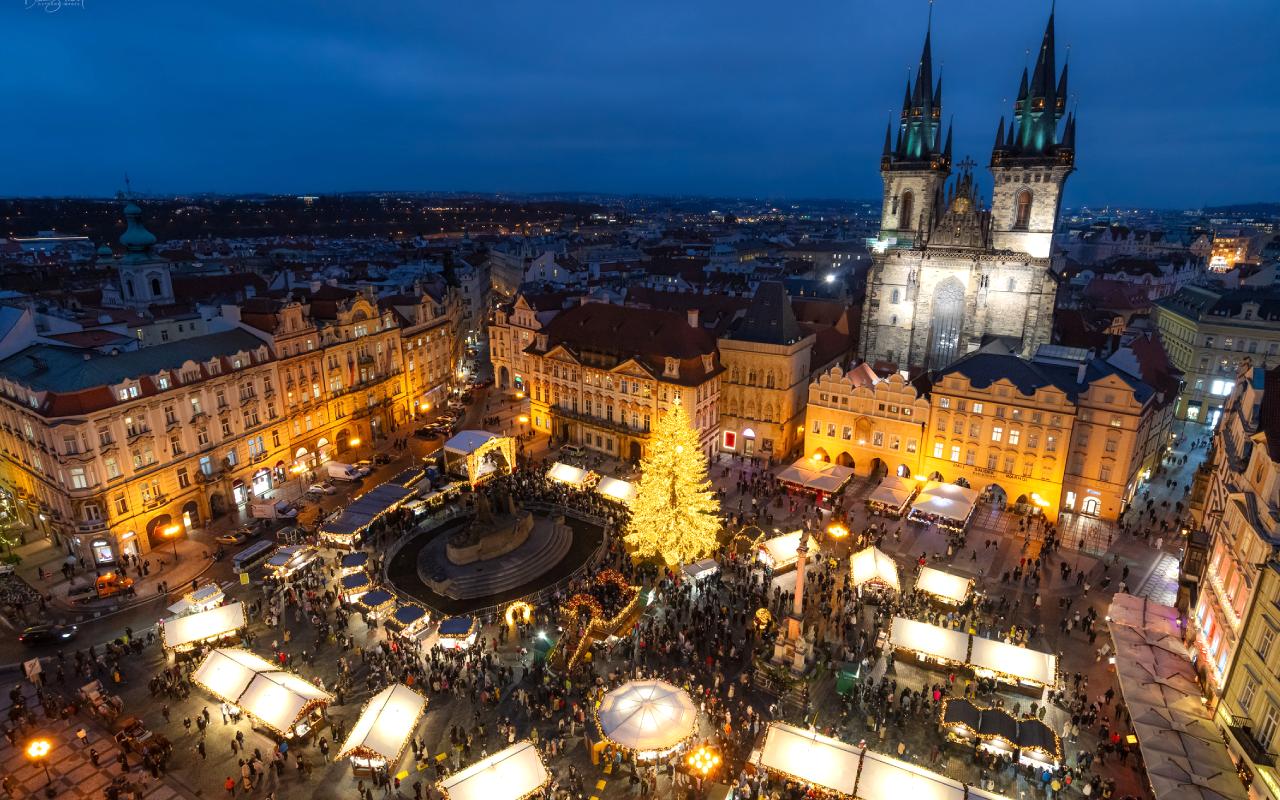
Prague Old Town Square Market
Prague provides a moody, Gothic architecture backdrop that feels incredibly dramatic in the winter. The Old Town Square hosts the biggest market in the city.
You must try the traditional Czech food and drinks. Grab a Trdelník (a sweet chimney cake roasted over open coals and rolled in cinnamon sugar). Pair it with some warm honey wine (Medovina) as you watch the famous Astronomical Clock strike the hour.
11. Budapest Christmas Market (Hungary)
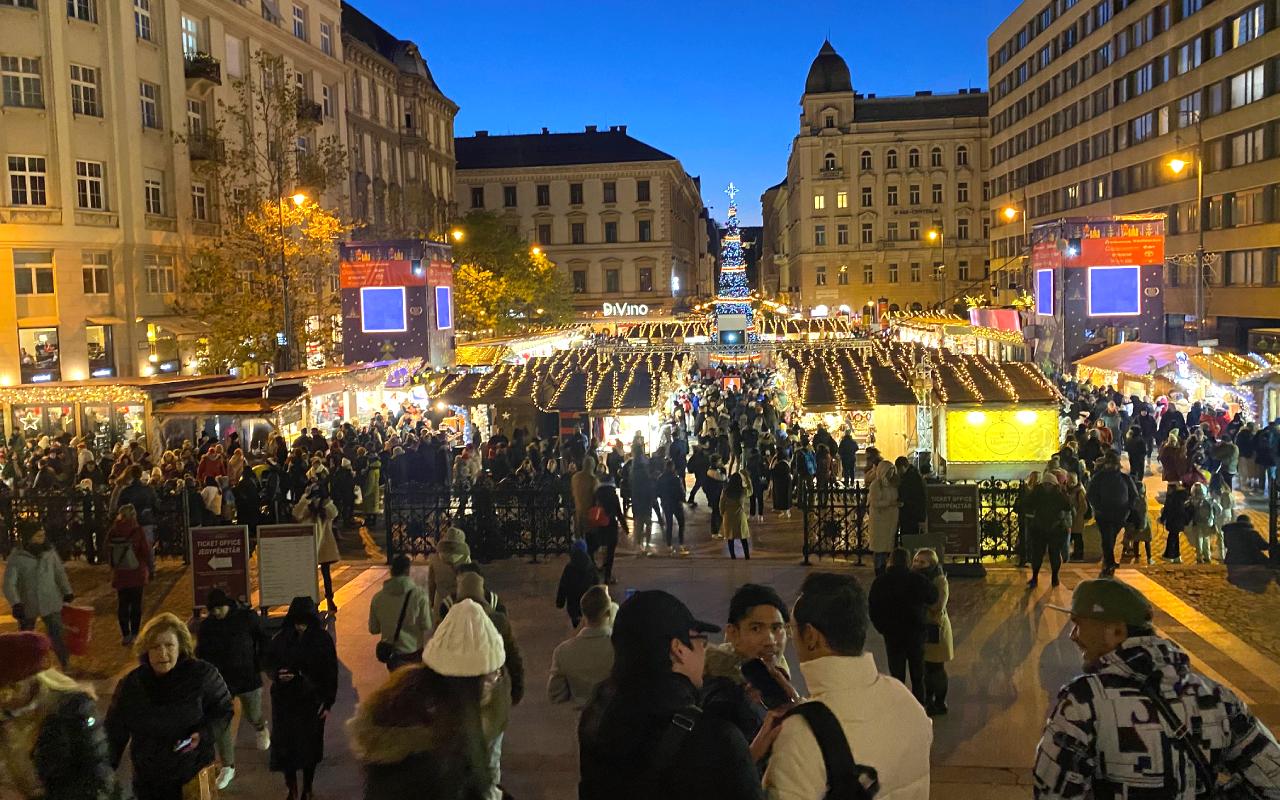
Budapest Christmas Market
Budapest frequently tops lists for the best Christmas markets in Europe, and for good reason. The main market at Vörösmarty Square features incredible light shows projected directly onto the Gerbeaud Cafe building.
Budapest offers a unique winter experience combo: you can spend your morning soaking in the steaming outdoor Széchenyi Thermal Baths while snow falls, and spend your evening eating rich, spicy goulash at the market stalls.
Best Christmas Markets in Northern Europe
Scandinavia and the Baltics offer a darker, colder, but incredibly cozy take on the holiday season. The concept of hygge (coziness) truly shines here.
12. Copenhagen Christmas Market (Denmark)
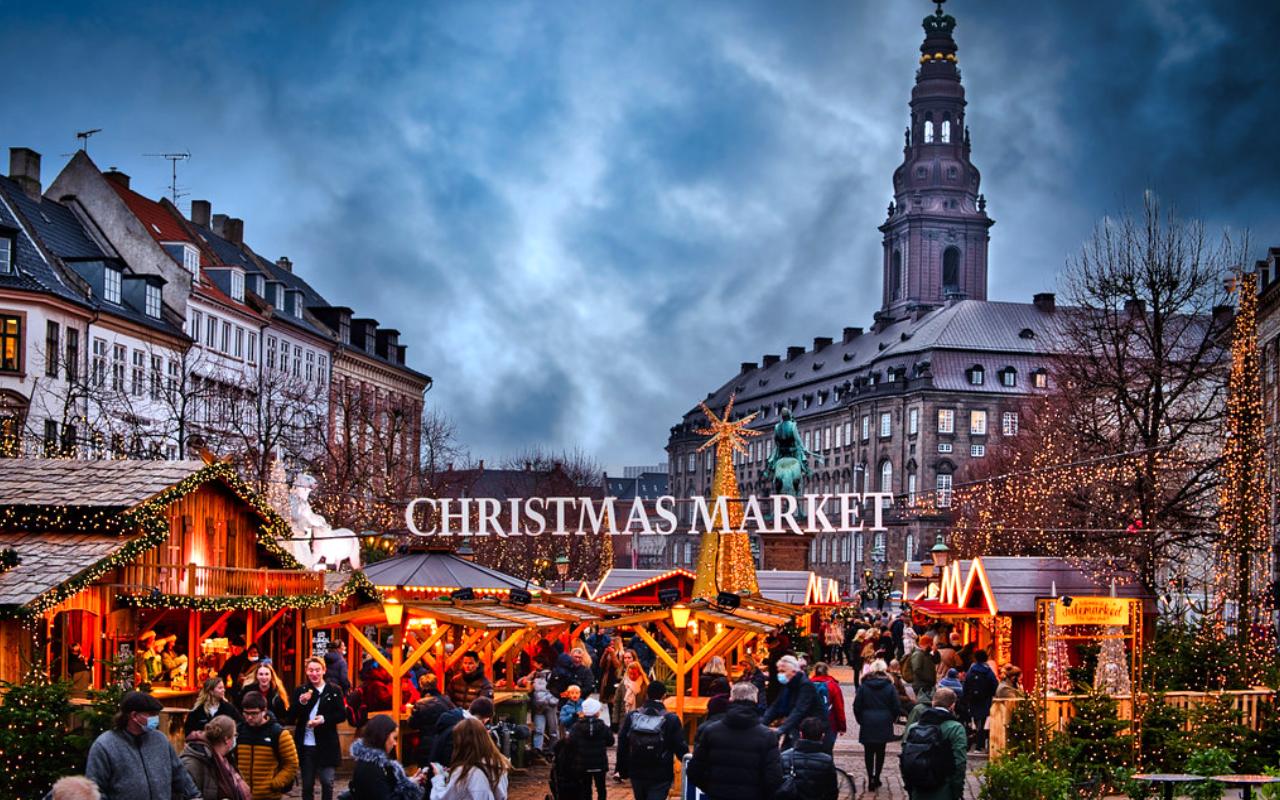
Copenhagen Christmas Market
Copenhagen embraces the winter darkness with millions of warm lights. The Tivoli Gardens amusement park transforms into a spectacular winter wonderland.
The magical lights reflect off the park’s lakes. You can ride vintage roller coasters, browse Scandinavian design goods, and drink Glögg (Danish mulled wine mixed with almonds and raisins).
13. Stockholm Old Town Market (Sweden)
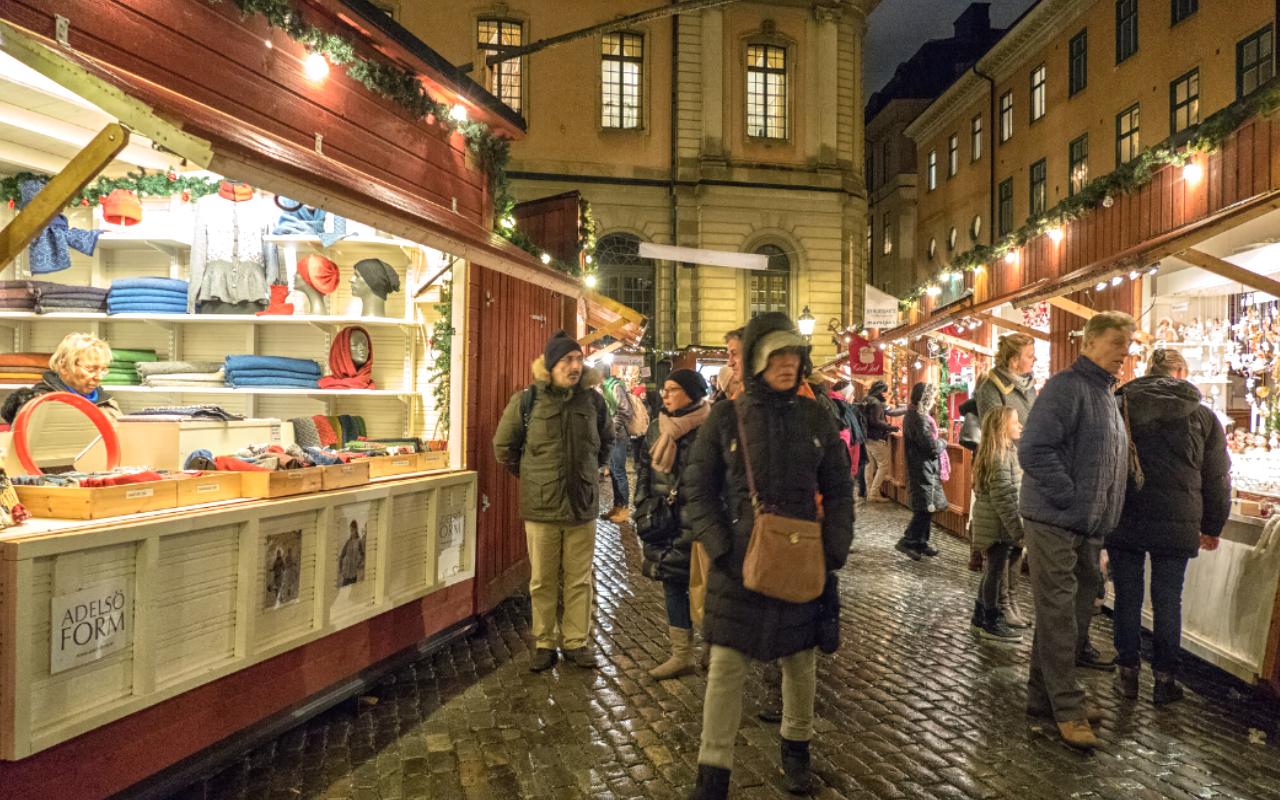
Stockholm Old Town Market
Stockholm’s Stortorget (the main square in the Old Town) hosts a small but incredibly charming market. The colorful, tall merchant houses frame the red wooden stalls perfectly.
This market focuses heavily on traditional Scandinavian crafts. You will find beautiful Sami silver jewelry, hand-knitted wool mittens, and smoked reindeer meat.
14. Tallinn Christmas Market (Estonia)
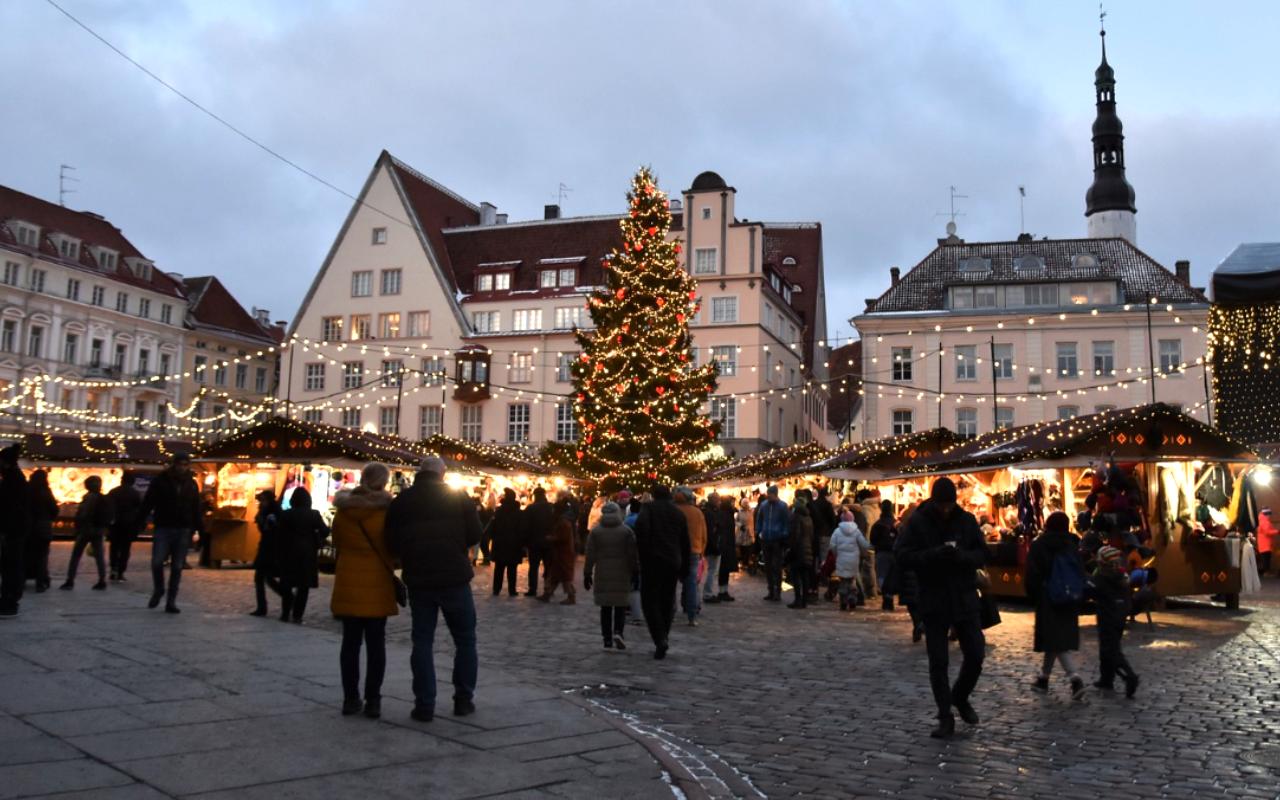
Tallinn Christmas Market
Tallinn offers a true snowy fairytale experience. The market takes place in the perfectly preserved medieval town square.
Tallinn actually claims to be the site of the world’s first public Christmas tree, erected in 1441. Today, a gorgeous tree anchors the market.
The medieval town square atmosphere, complete with folk dancers and hearty black pudding, makes this a must-visit destination.
Hidden Gem Christmas Markets in Europe
If you want to escape the massive crowds found in Germany and Austria, these hidden gem markets offer just as much charm with a bit more breathing room.
15. Bruges Christmas Market (Belgium)
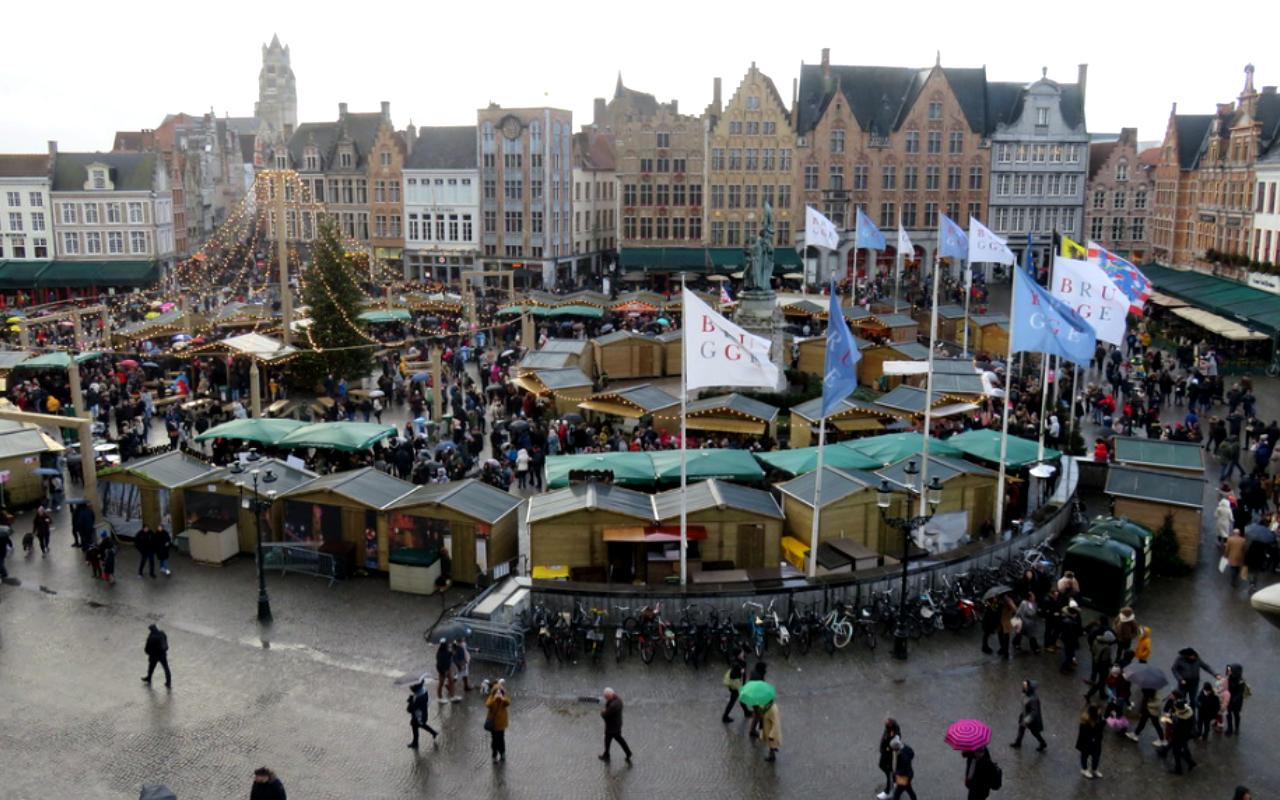
Bruges Christmas Market
Bruges is famous for its romantic canals and cobbled streets. During winter, the city adds thousands of twinkling lights to the mix. The market features an ice rink in the central square, surrounded by stepped-gable brick houses. Do not leave without buying world-class Belgian chocolate truffles.
16. Zagreb Christmas Market (Croatia)
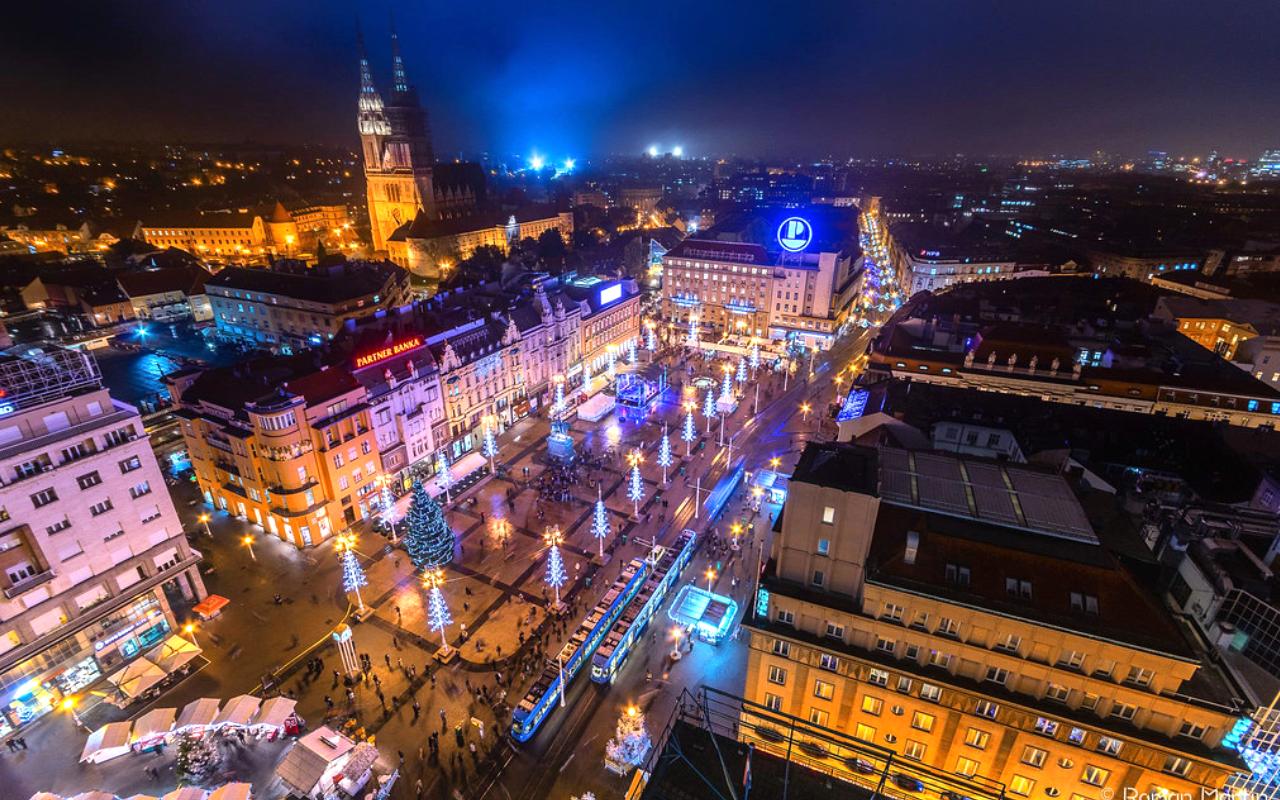
Zagreb Christmas Market
Zagreb consistently wins awards for having the best Christmas festival in Europe. The city goes all out. The market spreads across multiple parks and squares, featuring a massive outdoor ice skating park, live DJ sets, and incredible local food like fritule (mini sweet donuts).
17. Lille Christmas Market (France)
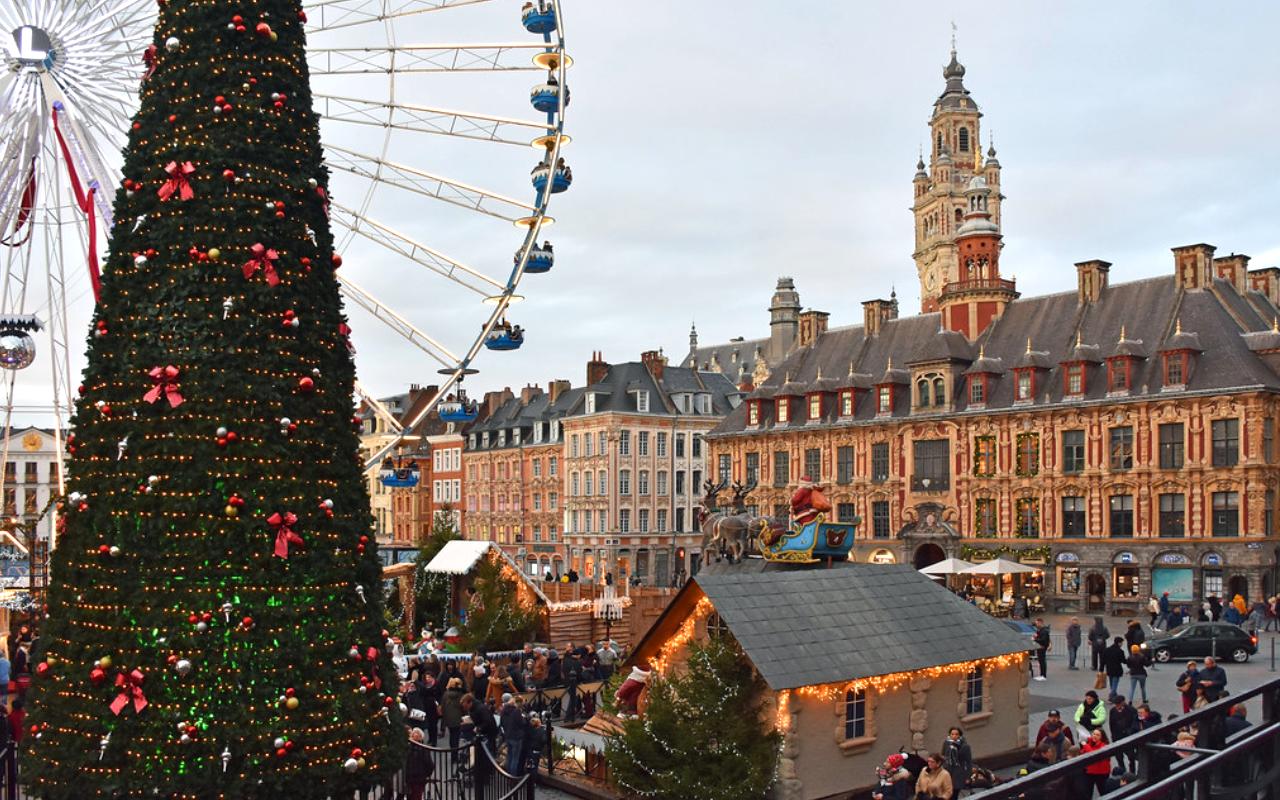
Lille Christmas Market
Located in northern France, Lille offers a fantastic, budget-friendly festive destination. A giant Ferris wheel dominates the main square, offering sweeping views of the Flemish-style architecture. The market stalls sell delicious local waffles filled with brown sugar.
18. Gdansk Christmas Market (Poland)
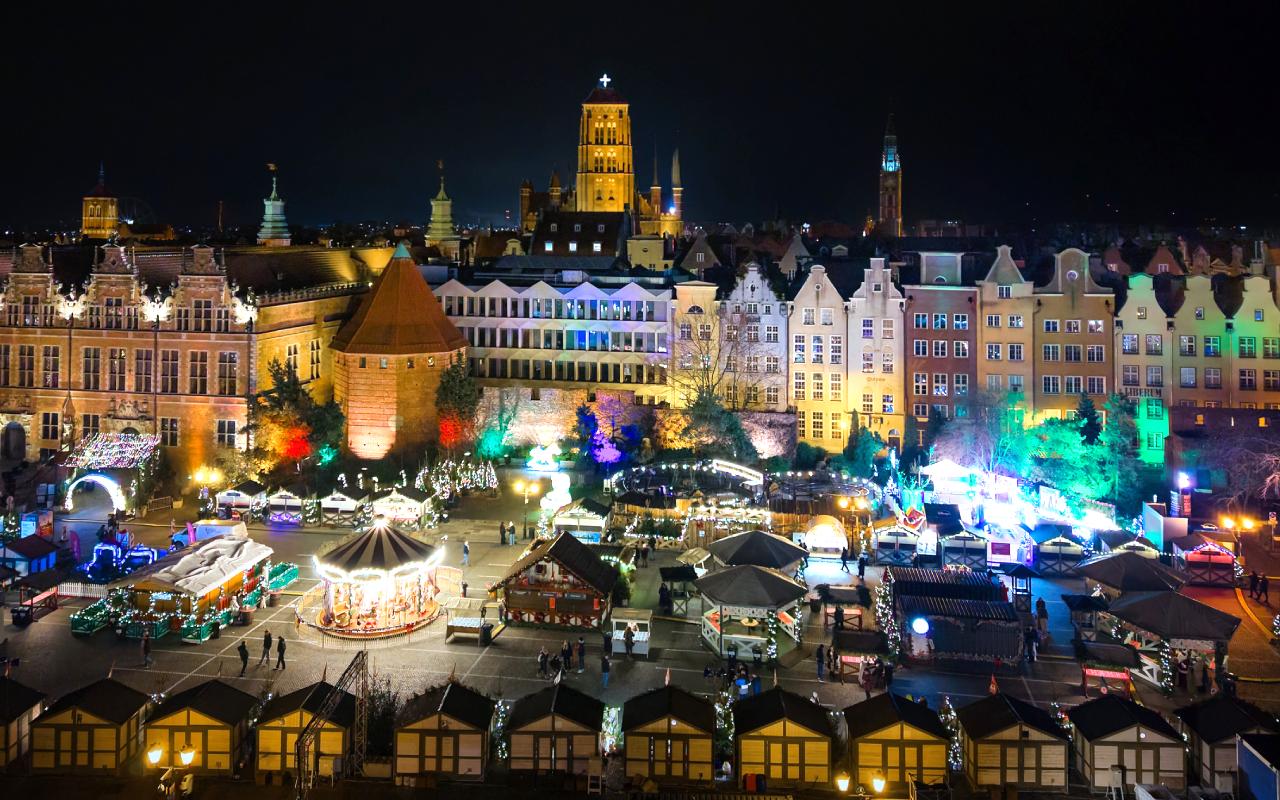
Gdansk Christmas Market
Gdansk provides a stunning Baltic coast setting. The market here features a talking moose head that tells jokes, a beautiful Venetian carousel, and amazing traditional Polish crafts. You must try the pierogi (stuffed dumplings) and hot beer flavored with fruit syrup and spices.
19. Bratislava Christmas Market (Slovakia)
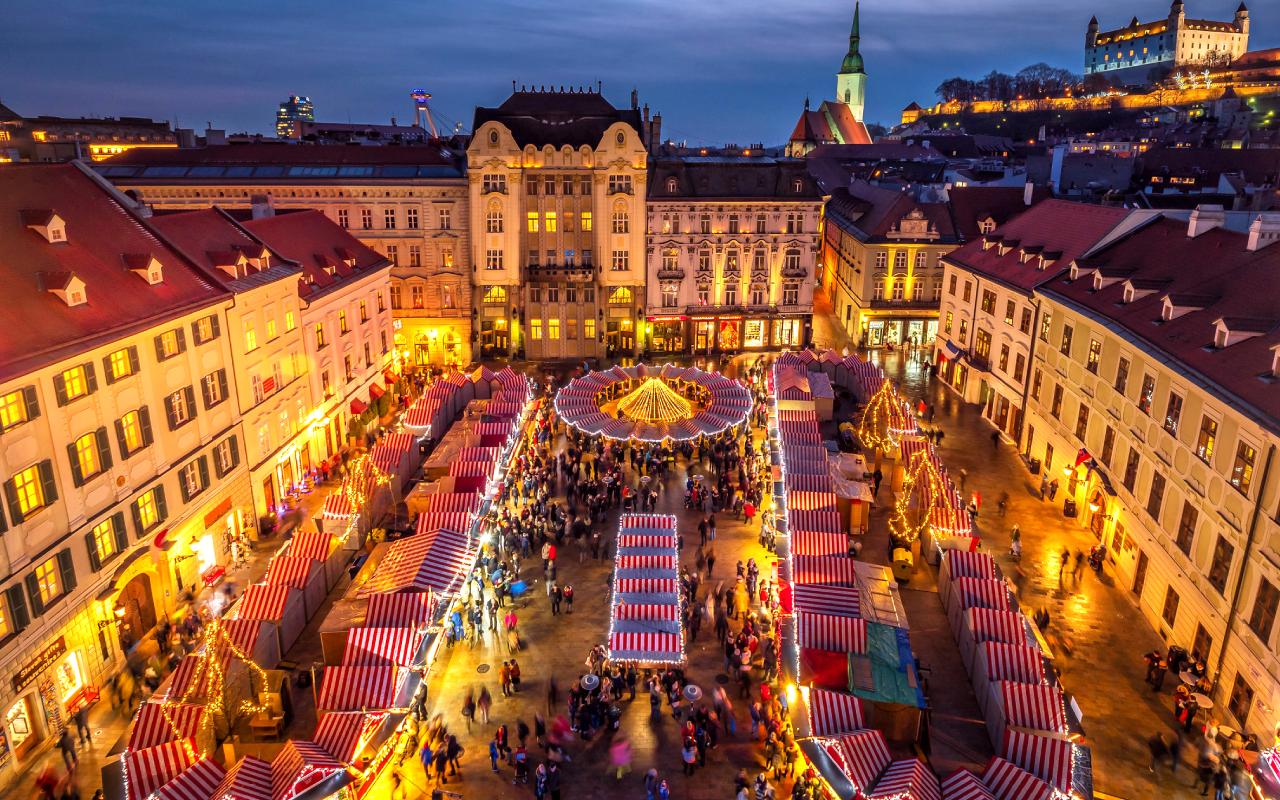
Bratislava Christmas Market
Just a short trip from Vienna, Bratislava offers a smaller, more intimate market. It focuses heavily on delicious food. Try the lokše (potato flatbreads) filled with goose fat or sweet poppy seeds.
Best Christmas Markets in Italy & Spain
Southern Europe celebrates the season with different flavors and traditions, focusing heavily on intricate nativity scenes and unique local sweets.
20. Bolzano Christmas Market (Italy)
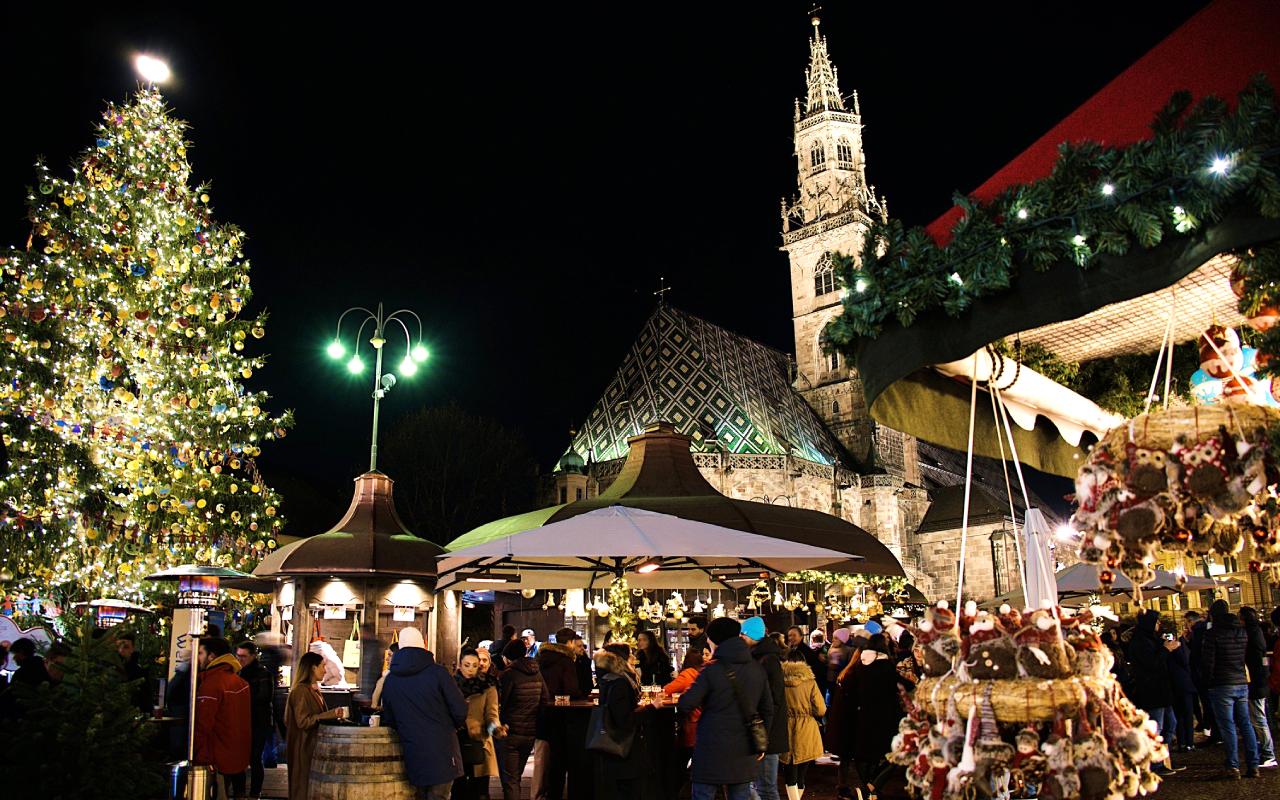
Bolzano Christmas Market
Bolzano sits near the border of Austria, blending Italian culture with Alpine traditions. This Alpine Italian charm makes it the best Christmas market in Italy. You will find stunning wooden crafts, delicious speck (cured ham), and Italian panettone mixed with traditional mulled wine.
21. Verona Christmas Market (Italy)
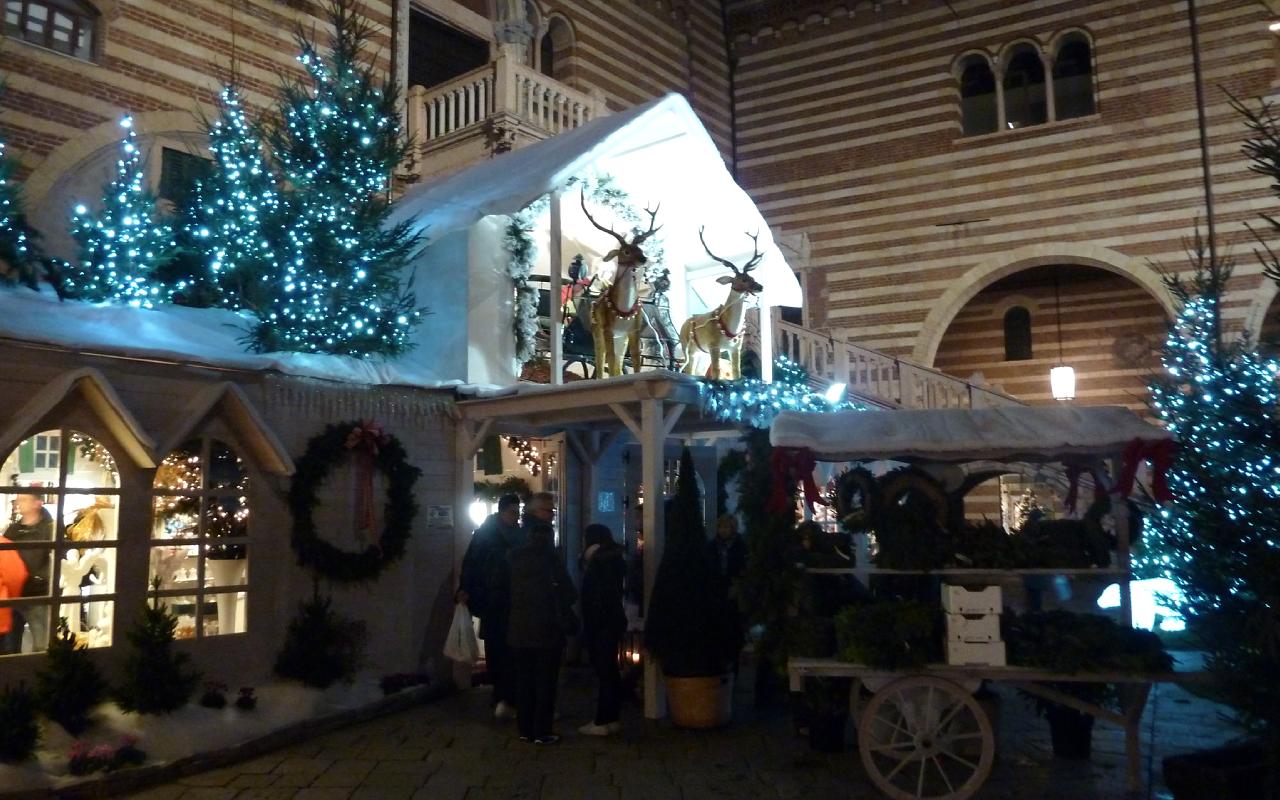
Verona Christmas Market
Verona, the city of Romeo and Juliet, offers a highly romantic city atmosphere. A giant shooting star sculpture bursts from the Roman Arena and lands right in the market square. The stalls here sell beautiful glasswork and rich Italian nougat.
22. Madrid Christmas Market (Spain)
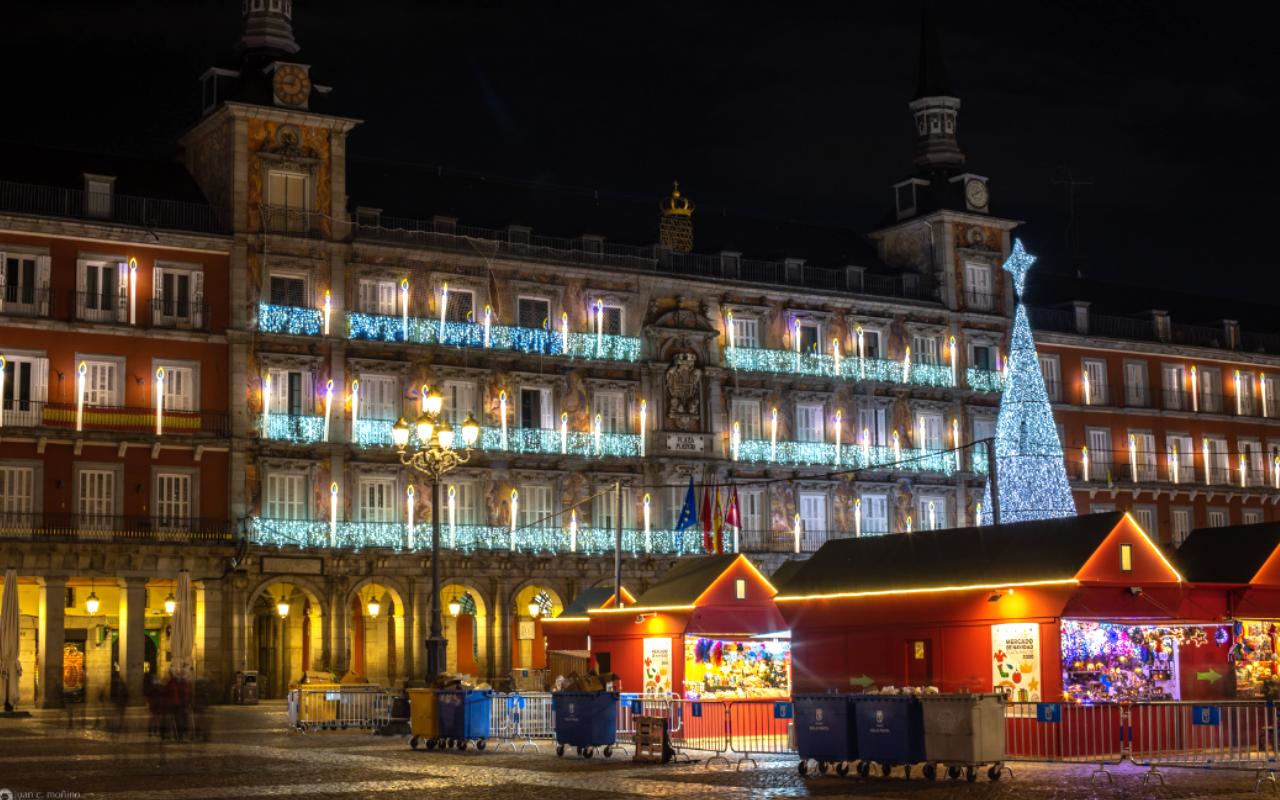
Madrid Christmas Market
Madrid’s Plaza Mayor hosts a lively and festive market. Instead of mulled wine, locals drink hot chocolate so thick you can stand a churro up in it. The stalls focus heavily on intricate, hand-painted figures for elaborate nativity scenes (Bélenes).
23. Florence Christmas Market (Italy)
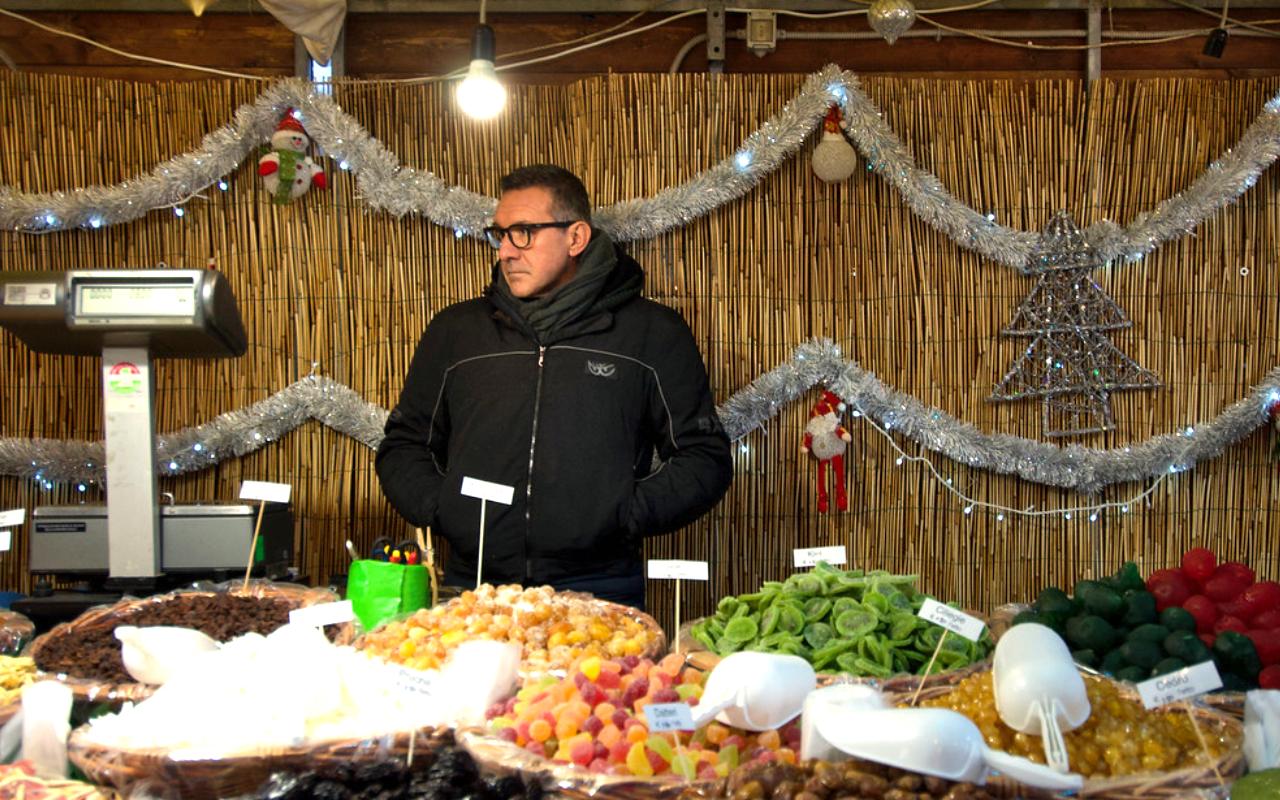
Florence Christmas Market
Set in the Piazza Santa Croce, this market actually takes inspiration from German traditions but adds a Tuscan twist. You can eat traditional bratwurst while gazing up at a stunning Renaissance basilica.
24. Seville Christmas Market (Spain)
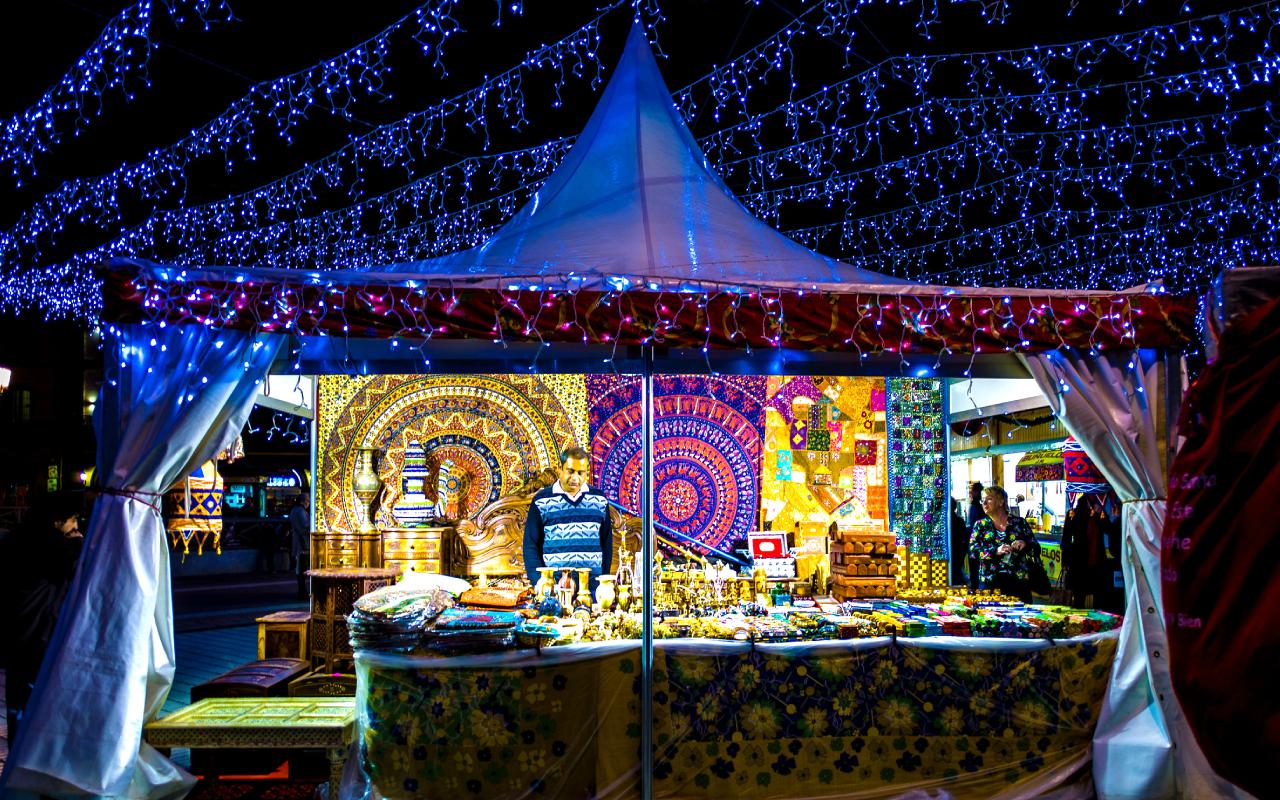
Seville Christmas Market
Seville offers a warmer alternative to the snowy north. The Feria del Belén focuses almost entirely on nativity crafts. It is a fantastic place to buy unique, artisanal ceramic pieces.
25. Milan Christmas Market (Italy)
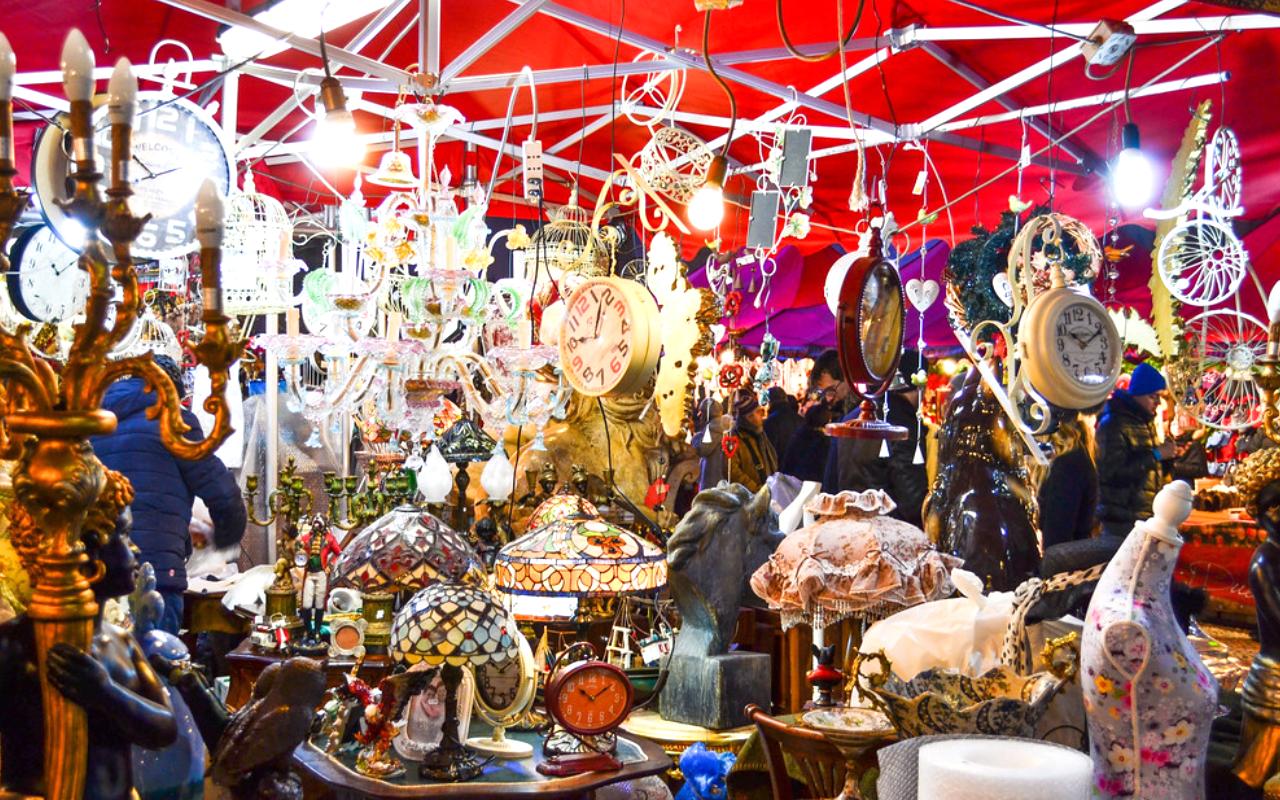
Milan Christmas Market
The “Oh Bej! Oh Bej!” market takes place near the towering Sforza Castle. It is one of the oldest traditions in Milan, offering delicious roasted chestnuts, local honey, and antique goods.
Food & Drinks You Must Try at European Christmas Markets
The culinary experience defines the European winter trip. Arrive with an empty stomach and make sure you hunt down these classics.
- Glühwein (Mulled Wine): The undisputed king of the markets. Vendors heat red or white wine with cinnamon, cloves, star anise, and citrus. You usually pay a small deposit for a beautifully decorated ceramic mug, which you can keep as a souvenir.
- Bratwurst & Sausages: German markets excel at this. Whether it is a spicy currywurst in Berlin or a half-meter-long sausage in Munich, the smoky, grilled meats provide perfect fuel for cold nights.
- Gingerbread Cookies (Lebkuchen): Authentic European gingerbread is softer, thicker, and deeply spiced compared to American versions. They often come coated in rich dark chocolate or a sweet sugar glaze.
- Roasted Chestnuts: You will smell them before you see them. Served hot in paper cones, these offer a warm, earthy, and slightly sweet snack that keeps your hands warm while you walk.
- Hot Chocolate Variations: If you prefer non-alcoholic options, European hot chocolate will blow your mind. It is often rich, thick, and topped with massive clouds of fresh whipped cream.
Travel Tips for Visiting Christmas Markets in Europe (2026 Guide)
Planning a winter trip requires a bit of strategy. Follow these tips to ensure a smooth and magical experience.
Best Time to Visit and Crowd Management
Try to visit on weekdays. The markets get incredibly crowded on Friday nights and weekends when locals finish work. If you visit on a Tuesday or Wednesday morning, you will have plenty of space to browse the stalls and take beautiful photos without shoulder-to-shoulder crowds.
Booking Flights & Hotels Early
The best Christmas markets in Europe draw millions of global tourists. For the 2026 season, you need to book your flights and hotels by August or September. Hotels in cities like Strasbourg and Nuremberg sell out months in advance.
Dress Warm (Winter Layering Tips)
You will spend hours standing outside on freezing cobblestones. Dress smart. Wear a moisture-wicking base layer, a thick insulating sweater, and a windproof winter coat. Most importantly, invest in thick wool socks and waterproof, comfortable walking boots.
Currency & Payment Tips
While many vendors now accept contactless cards, cash remains king at smaller stalls. Always carry a stash of small Euro notes and coins for buying mugs of Glühwein, quick snacks, and tipping the bathroom attendants.
Safety & Awareness
European markets are generally very safe, but the dense crowds attract pickpockets. Keep your valuables zipped inside interior coat pockets. Wear your backpack on your front if the crowd gets too tight.
Suggested Christmas Market Itinerary
Planning your route efficiently saves time and money. Here are two fantastic options for your 2026 trip.
7-Day Europe Christmas Market Tour (The Classic Route)
- Days 1-2: Munich, Germany. Start strong with Bavarian charm. Explore Marienplatz and grab a warm pretzel.
- Days 3-4: Salzburg & Vienna, Austria. Take a short train ride across the border. Enjoy the elegant palaces and world-class ice skating.
- Days 5-7: Prague, Czech Republic. Finish your trip surrounded by Gothic architecture. Eat chimney cakes and shop for Bohemian glass.
10-Day Extended Route (The Western Wonderland)
- Days 1-3: Cologne & Frankfurt, Germany. Arrive in Germany and explore the massive cathedral market in Cologne.
- Days 4-5: Strasbourg & Colmar, France. Cross into the Alsace region to see the most heavily decorated towns in Europe.
- Days 6-7: Zurich, Switzerland. Take the train south to see the crystal-covered indoor tree and enjoy incredible Swiss fondue.
- Days 8-10: Bruges & Brussels, Belgium. Head north to finish your trip with romantic canals, waffles, and world-class chocolate.
Frequently Asked Questions (FAQ)
What is the best European city for Christmas markets?
Strasbourg, France, and Nuremberg, Germany, consistently rank as the top destinations due to their deep historical roots, massive scale, and incredible, authentic atmosphere.
How much spending money do I need per day?
Plan for about €50 to €100 per person per day specifically for the markets. This easily covers a few mugs of Glühwein, lunch and dinner from the food stalls, and a few small handmade souvenirs.
Are the markets open on Christmas Day?
No. Most popular Christmas markets in Europe close on December 23 or midday on December 24. A few major cities might keep a small market open through New Year’s, but the main events end before Christmas Day.
Do I need to speak the local language?
While learning a few basic phrases (like “hello” and “thank you”) is polite, you will easily get by with English. Vendors in major tourist markets speak excellent English.
Conclusion
Europe offers the ultimate Christmas experience. There is simply no substitute for sipping hot mulled wine in a medieval square while snow gently falls on wooden chalets. The best Christmas markets in Europe provide a perfect mix of history, culture, and incredible local food.
Whether you want the grand imperial elegance of Vienna, the fairy-tale charm of Colmar, or the historic authenticity of Nuremberg, a festive adventure waits for you.
The 2026 winter season will arrive faster than you think. Start planning your flights, lock in those centrally located hotels, and get ready for the most magical winter getaway of your life. Pack your warmest coat, bring your holiday spirit, and go experience the magic for yourself!














-
 0115 Best Easy Treks in Nepal for Beginners and Families
 -
 02Best season for Everest Base Camp Trek
 -
 03Best Time to Go Hiking in Nepal: A Seasonal Guide for Trekkers
 -
 04Suchi Purja –Wife of Nirmal Purja aka Nims Dai
 -
 05Dubai desert safari outfit ideas
 -
 06Top Beaches in Sri Lanka
 -
 0710 Best Easy Treks in Nepal