
Now Reading: 15 Best Places to Travel Without a Passport from the USA in 2026-2027
-
01
15 Best Places to Travel Without a Passport from the USA in 2026-2027

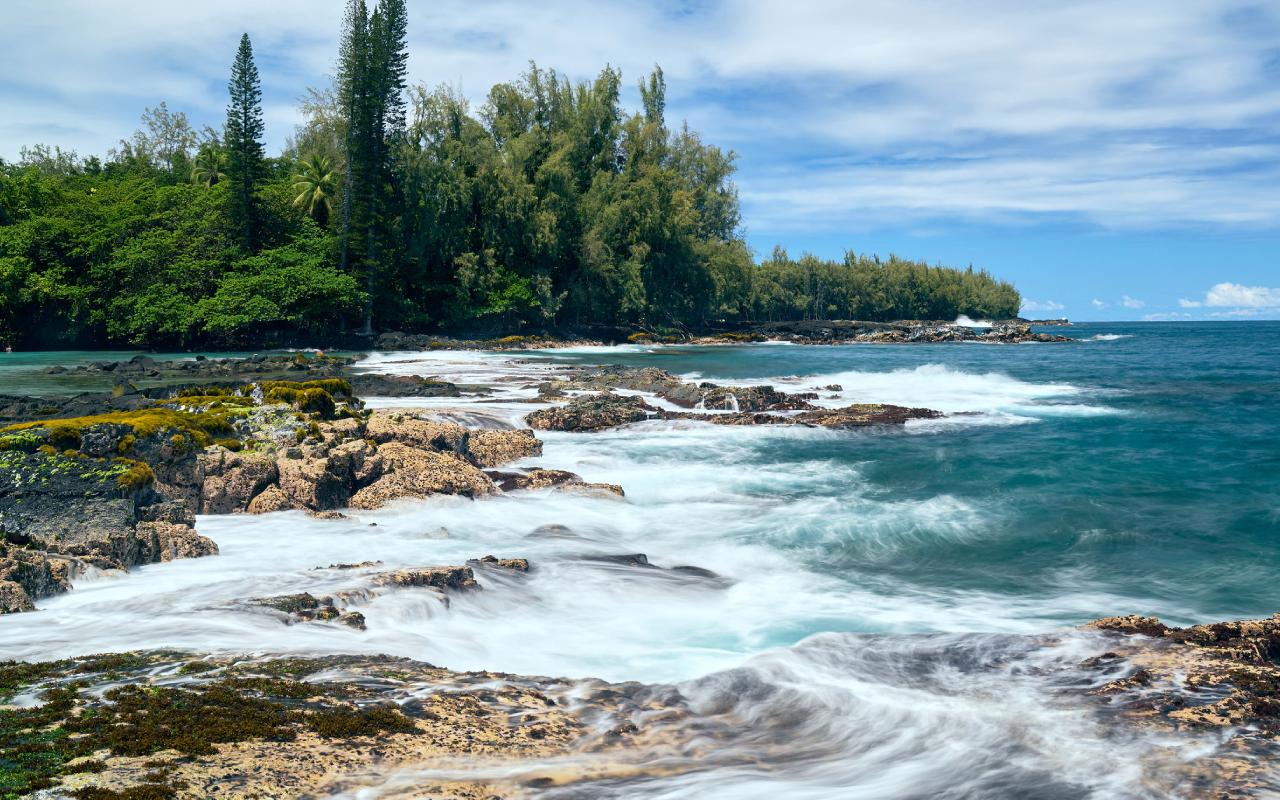
Complete Guide to America’s Passport-Free Tropical Islands, Territories & Cruises
Planning a vacation often brings excitement, but dealing with government paperwork can quickly kill that joy. Passport processing times fluctuate constantly.
Sometimes, you simply cannot wait weeks or months to secure your travel documents. In this blog, you’ll learn about Places to Travel Without a Passport from the USA in 2026-2027.
Fortunately, you have incredible alternatives. You can find exotic, tropical, and deeply cultural destinations right within the United States territory. This guide covers the absolute best places to travel without a passport right now.
We will break down exactly where you can go, what documents you actually need, and how much these trips cost. Whether you want a quick beach escape or a remote Pacific island adventure, you have options. Let us explore the top passport-free places for US citizens to visit in 2026 and 2027.
Quick Facts
• Target Audience: U.S. citizens without a valid passport book
• Best For: Families, couples, budget travelers, retirees
• Top Destinations: Puerto Rico, U.S. Virgin Islands, Guam, American Samoa
• Best Travel Seasons: Year-round (varies heavily by destination)
• Average Trip Length: 3–10 days
• International Flight Required: No (for U.S. territories and domestic flights)
• Passport Needed: No (for U.S. citizens traveling to territories)
• Ideal Budget: $500–$5,000+, depending on travel style
Understanding Passport-Free Travel for U.S. Citizens
What Does “No Passport Required” Really Mean?
When we talk about places to travel without a passport, we refer to destinations under United States jurisdiction. The federal government classifies travel to these areas as domestic travel. You do not cross international borders, so you bypass customs and immigration checks.
U.S. territories function differently from foreign countries. They share federal laws, use the U.S. dollar, and fall under the protection of the U.S. government. Because of this, you only need to prove your identity to board the airplane, just like flying from New York to Florida.
You can also take advantage of closed-loop cruises. These specific cruise ship routes start and end at the exact same U.S. port. Because you begin and finish your journey on U.S. soil, the government allows you to travel using alternative citizenship documents instead of a passport book.
Documents You May Still Need
Even though you do not need a passport, you cannot show up at the airport empty-handed. The rules for domestic travel have changed significantly for 2026 and 2027. You must understand these identification requirements to avoid getting turned away at the security gate.
First, you absolutely need a REAL ID. The federal government began enforcing the REAL ID mandate on May 7, 2025. Your standard state driver’s license no longer works for domestic flights unless it features the REAL ID star in the upper right corner.
If you do not have a REAL ID, you must bring another TSA-approved identification document. This could include a military ID or a passport card. For closed-loop cruises, the cruise line will require your government-issued photo ID along with an original, certified birth certificate.
Important Travel Rules for 2026-2027
Airlines strictly enforce the new TSA identification regulations. You should check your wallet right now to ensure your driver’s license meets the REAL ID standard. If it does not, schedule a trip to your local Department of Motor Vehicles immediately.
Cruise lines also maintain strict documentation rules. They will not accept a photocopy of your birth certificate. You must bring the official, certified copy featuring a raised seal. You also need to make sure the name on your photo ID perfectly matches the name on your birth certificate, or you must provide legal name change documents.
We highly recommend purchasing travel insurance. Your primary health insurance might cover you in Puerto Rico, but it often provides zero coverage on a cruise ship. Travel insurance protects your wallet if you face a medical emergency or a sudden trip cancellation.
Best Tropical Islands You Can Visit Without a Passport
1. Puerto Rico – The Caribbean’s Most Popular Passport-Free Destination
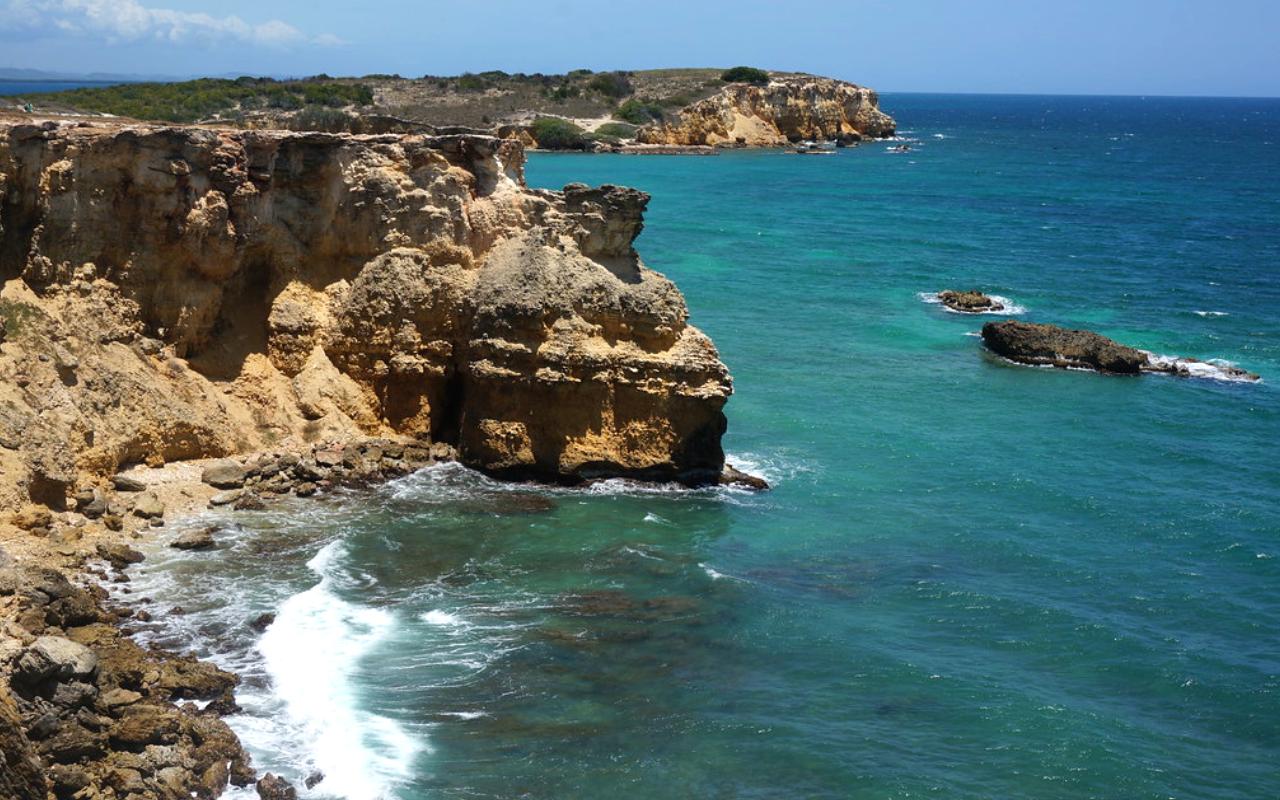
Puerto Rico
Why Visit Puerto Rico?
Puerto Rico ranks as the absolute easiest tropical getaway for mainland Americans. You catch a quick flight, land in San Juan, and step off the plane into a vibrant Caribbean culture. Your cell phone works perfectly, and you pay for everything with standard U.S. dollars.
This island offers everything you could want in a vacation. You can hike through dense rainforests in the morning and sip rum cocktails on a white-sand beach by the afternoon. The locals speak both Spanish and English, making navigation incredibly simple for travelers.
Puerto Rico tops the list of passport-free places for US citizens because it balances accessibility with a rich history. You get the distinct feeling of traveling abroad without dealing with international border agents.
Top Attractions
Old San Juan: You must spend a day walking the cobblestone streets of Old San Juan. The Spanish founded this city hundreds of years ago, and it still features brightly colored colonial buildings. You can explore massive stone forts like Castillo San Felipe del Morro, which offer incredible views of the ocean.
El Yunque National Forest: El Yunque stands out as the only tropical rainforest in the U.S. National Forest System. You can hike well-maintained trails that lead directly to gorgeous waterfalls. Listen closely to hear the unique song of the coquí, a tiny tree frog native only to Puerto Rico.
Flamenco Beach: Many travel experts rank Flamenco Beach on Culebra Island as one of the best beaches in the world. You take a short ferry ride from the main island to reach this paradise. The sand feels like powdered sugar, and the crystal-clear water provides perfect snorkeling conditions.
Best Time to Visit & Costs
You will find the best weather in Puerto Rico from mid-April to June. During this window, you skip the heavy winter tourist crowds and avoid the peak of hurricane season. Expect daily temperatures in the mid-80s.
Budget travelers can easily manage Puerto Rico on $100 to $150 per day by eating at local kiosks and staying in guesthouses. Mid-range travelers should budget $250 to $400 daily for nice hotels and restaurant meals. Luxury resorts will push your budget past $600 per day.
2. U.S. Virgin Islands
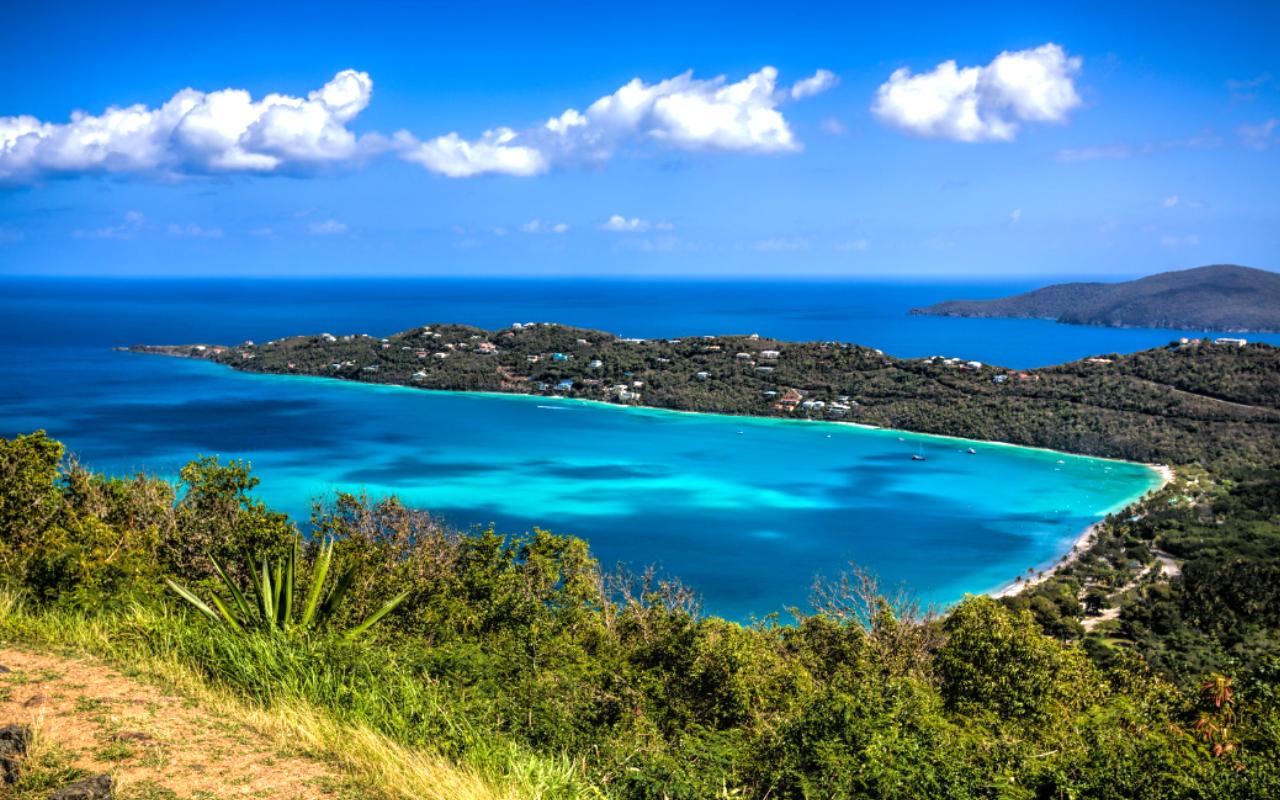
St. Thomas U.S. Virgin Islands.
Why It’s Worth Visiting
The U.S. Virgin Islands (USVI) offer a premium Caribbean experience without the international red tape. You fly directly into St. Thomas or St. Croix and immediately feel island time take over. The water shines in impossible shades of turquoise.
Unlike Puerto Rico, the USVI focuses heavily on nature, boating, and beach lounging. You will not find massive cities here. Instead, you find quiet coves, sailboats bobbing in the harbor, and friendly locals pouring strong tropical drinks.
Best Islands to Explore
St. Thomas: St. Thomas acts as the busy hub of the USVI. Most commercial flights land here, and cruise ships dock here daily. You will find excellent duty-free shopping in the capital city of Charlotte Amalie. The island also features popular resorts and lively nightlife.
St. John: St. John serves as the crown jewel of the territory. The government protects over sixty percent of this island as a pristine National Park. You will not find an airport here; you must take a short ferry ride from St. Thomas. St. John offers pure, untouched nature and profound quiet.
St. Croix: St. Croix sits a bit further south and receives fewer tourists than its sister islands. It boasts a rich agricultural history and incredible scuba diving spots. You can dive the famous “Wall” at Cane Bay or explore the historic town of Christiansted.
3. Guam

Guam
What Makes Guam Unique?
Guam sits all the way out in the western Pacific Ocean. When you search for places to travel without a passport, Guam offers the most dramatic shift in culture and geography. You fly thousands of miles past Hawaii to reach this tiny, beautiful island.
The island features a fascinating mix of ancient Chamorro traditions, heavy Japanese tourism influences, and a strong U.S. military presence. You can eat incredible Asian-fusion food, shop at high-end luxury boutiques, and hike through dense jungle all in the same afternoon.
Travel Tips & Budget
You will spend at least 15 to 20 hours flying to Guam from the U.S. mainland. Break up the trip by spending a few days in Hawaii if possible. Rent a car when you arrive, as public transportation outside the main Tumon tourist zone remains limited.
Flights eat up a massive portion of a Guam travel budget, often costing over $1,500 round trip from the East Coast. Once on the island, expect to pay standard American prices.
4. Northern Mariana Islands

Forbidden Island, SaiPan, Northern Mariana Islands
The Commonwealth of the Northern Mariana Islands (CNMI) sits just north of Guam. Most Americans do not even realize they can travel here without a passport. The CNMI offers a deeply quiet, rugged, and historically significant alternative to busy tourist hubs.
You visit these islands to escape the crowds completely. The pace of life moves incredibly slowly here. You will find empty beaches, dramatic limestone cliffs, and significant World War II historical sites hidden in the jungle.
5. American Samoa

American Samoa
American Samoa sits deep in the South Pacific Ocean. It represents the only U.S. territory located south of the equator. Out of all the passport free places for US citizens, this one requires the most planning and effort to reach.
You visit American Samoa to experience pure, authentic Polynesian culture. The locals proudly maintain “Fa’a Samoa” (The Samoan Way), prioritizing family, respect, and traditional community leadership. The landscape looks like something out of a prehistoric movie, featuring sharp volcanic peaks and deep, green valleys.
Best Mainland U.S. Destinations That Feel International
6. Hawaii

Hawaii
Many travelers searching for places to travel without a passport overlook Hawaii because it is an actual U.S. state. However, Hawaii feels completely different from the mainland. The Polynesian culture, the isolated location, and the dramatic volcanic landscapes make it feel incredibly exotic.
7. Alaska

Alaska
If you want an international feel without tropical weather, look at Alaska. The sheer scale of the wilderness makes it feel like another planet. You get the rugged isolation of a foreign expedition while remaining inside U.S. borders.
Alaska belongs on every list of passport free places for US citizens because it offers once-in-a-lifetime wildlife viewing and glacier exploration.
Closed-Loop Cruises That Don’t Require a Passport
A closed-loop cruise provides a massive loophole for travelers lacking a passport. The rules define a closed-loop cruise as a sailing that originates and terminates at the exact same U.S. port. For example, a ship leaving Miami, sailing to Mexico, and returning to Miami qualifies as a closed-loop cruise.
The federal government allows U.S. citizens to take these specific cruises without a passport book. You get to step foot in foreign countries like the Bahamas or Mexico legally. This makes closed-loop cruises one of the most popular ways to find places to travel without a passport.
Frequently Asked Questions
Can I really travel without a passport?
Yes, you can absolutely travel without a passport. U.S. citizens can fly to all U.S. territories and take closed-loop cruises using alternative documents like a REAL ID and a certified birth certificate.
Do children need passports?
Children do not need passports to fly domestically to U.S. territories. For closed-loop cruises, children under 16 generally only need an original, certified birth certificate to board the ship.
Can I use a REAL ID instead?
Starting May 7, 2025, you must use a REAL ID to board any domestic flight. A REAL ID perfectly satisfies the identification requirements for flying to places like Puerto Rico and the U.S. Virgin Islands.
Which destination is the cheapest?
Puerto Rico usually ranks as the cheapest destination for U.S. travelers. Flights from the East Coast run cheaply, and you can easily find affordable local food and lodging outside the major tourist zones.
Can I take a cruise without a passport?
Yes, you can take a closed-loop cruise without a passport. The cruise must start and end at the exact same U.S. port. You will need a government photo ID and a certified birth certificate to board.

















-
 0115 Best Easy Treks in Nepal for Beginners and Families
 -
 02Best season for Everest Base Camp Trek
 -
 03Best Time to Go Hiking in Nepal: A Seasonal Guide for Trekkers
 -
 04Suchi Purja –Wife of Nirmal Purja aka Nims Dai
 -
 05Dubai desert safari outfit ideas
 -
 06Top Beaches in Sri Lanka
 -
 0710 Best Easy Treks in Nepal