
Now Reading: What to See in Tirana: The Ultimate Travel Guide to Albania’s Capital
-
01
What to See in Tirana: The Ultimate Travel Guide to Albania’s Capital

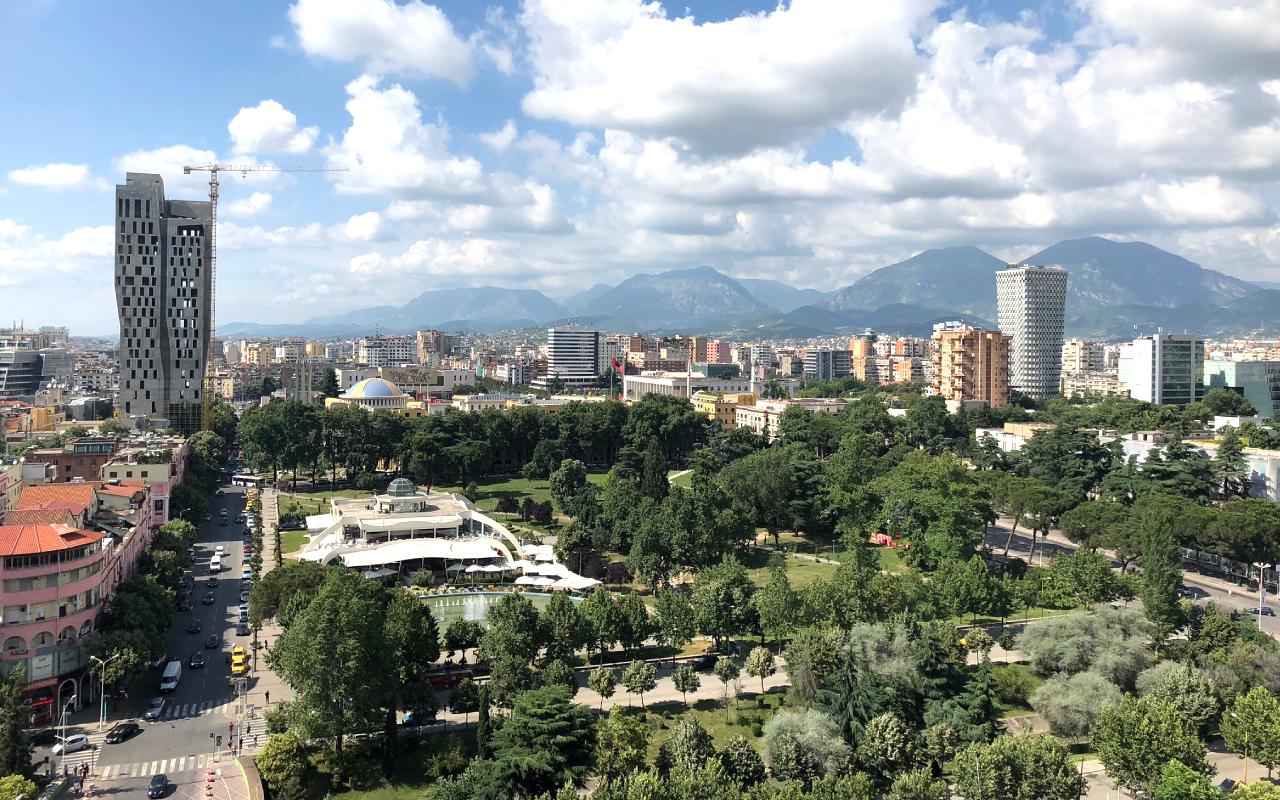
Tirana is the busy capital of Albania, located in the very middle of the Balkans, and it is a town of history and interesting culture, but also of unexpected colors. Tirana was once characterized by its gloomy communist buildings, but today it has turned into a contemporary urban center with shiny facades, vibrant squares, and green parks.
It is easy to understand today why tourists always pose the question of what to see in Tirana, whether it is the statue of national hero Skanderbeg in the central square, the underground Cold War bomb tunnels, or the picturesque cable car to the mountain Dajti.
This guide will take you through the top attractions in Tirana, Albania, what to see, the culture, and a few tips that will make your visit to Tirana unforgettable as you plan your trip to Tirana, Albania.
The story of Tirana is one of change and youthful energy. The city has, since the 1990s, abandoned much of its austere communist past and refined itself to a modern and artistic feel. Streets once gray now burst with color on painted apartment blocks and murals. (Many visitors are surprised to find rainbow-striped buildings and creative graffiti around Blloku and the city center.)
Today, Tirana is recognized as a growing global city and was named European Youth Capital in 2022. and even earned the title of European Youth Capital 2022. Locals say that the city feels “trendy but not pretentious”, with a welcoming, eclectic atmosphere.
With plenty of hip cafes, galleries, and parks, Tirana is no longer just a jumping-off point for Albania’s beaches or mountains; it’s a destination worth savoring in its own right.
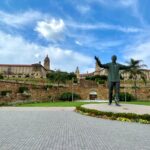
If you’re wondering what to see in Tirana, Albania, start right at the city’s beating heart: Skanderbeg Square. This enormous pedestrian plaza is dominated by a bronze equestrian statue of George Kastrioti Skanderbeg, Albania’s 15th-century national hero. Stroll on the stone-flagged ground (paved with stones from all over Albania!) and take in the surrounding landmarks.
To the south, the Et’hem Bey Mosque (completed in 1821) offers a glimpse of pre-communist architecture, while its bell tower is open to climb for great city views.
To the north, the grand façade of the National History Museum sports the giant mosaic of Albania’s heroes (look for Mother Teresa in the center). Behind you are the Albanian Parliament building, the neo-Renaissance-style Palace of Culture, and, across the boulevard, the modern Pyramid of Tirana (more on that below).
Skanderbeg Square is also truly Tirana’s “living room”: families picnic by the fountain jets, kids bike on wide paths, and street performers entertain tourists.
What makes Skanderbeg Square especially photogenic are the fountains that line its edges. On hot summer days, you’ll see local children (and even adults!) splashing through these shallow water jets to cool off.
(They’re as much an attraction as the museums around!) The whole square shines in the morning light and softly glows at night, often hosting concerts or festivals. In short, Skanderbeg Square encapsulates what to see in Tirana at a glance: history, architecture, and local life all in one vibrant space.
Statue of Gjergj Skanderbeg, Albania’s national hero, at Skanderbeg Square. The square is the city’s main gathering place, surrounded by landmarks like the Et’hem Bey Mosque and National History Museum.
Tirana’s history museums and monuments draw many visitors. Just off the main square is the bold National Historical Museum, whose entrance is unforgettable, a massive mosaic called the “Albanians” that covers the entire building front.
This 1981-opened museum takes you through Albania’s past in themed halls, from ancient Illyrian artifacts to the saga of World War II and the harsh realities of the communist era[6].
For a deeper dive into Albania’s Cold War past, head underground. Two unique museums, BUNK’ART 1 and 2, occupy real nuclear bunkers built by the dictatorship of Enver Hoxha.
(You’ll find Bunk’Art 2 near Skanderbeg Square in the city center, while Bunk’Art 1 is located on the outskirts of Tirana. and the larger Bunk’Art 1 on the city outskirts.) The original Bunk’Art 1 is a massive 5-story bunker covering 3,000 m² with 106 rooms.
It’s one of Albania’s most popular museums, turning cold concrete corridors into a vivid historical exhibit. Inside, each room is an immersive exhibit on a different decade: pre-WWII life, WWII resistance, the ascent of communism, daily life under surveillance, and even sports or education in that era.
Visitors describe it as “immersive”; you actually feel the weight of history as you wander dim halls filled with wartime relics and archival photos. BUNK’ART 2 (in the city center near Skanderbeg Square) focuses more on contemporary art installations and portraits of Hoxha-era figures. Both require a couple of hours, but they’re fascinating for history buffs.
Nearby is the oddly named House of Leaves, the Museum of Secret Surveillance, set in a former Sigurimi (secret police) headquarters. Opened in 2017, it’s now a chilling reminder of the secret police’s reach: darkrooms, wiretapping gear, and personal stories of those spied on. Together, Tirana’s bunkers and spy museums make you feel history rather than just read about it.
Tirana also has some quirky modern landmarks. No visitor misses the Pyramid of Tirana, a huge concrete structure right on the main boulevard.
Built in 1988 as a museum for dictator Enver Hoxha (architects: his daughter Pranvera and son-in-law Klement Kolaneci), the pyramid is a symbol of Albania’s controversial history.
After communism fell, it was a conference center, nightclub, and TV station, but by the 2010s, it was crumbling and slated for demolition. Albanian citizens protested its destruction, and eventually a creative rebuild happened.
Dutch architects MVRDV kept the concrete base but added colorful box-like extensions around the pyramid. Today, the Pyramid is a free public space: it houses tech hubs and cafes, and even a swanky rotating bar.
Its stepped concrete structure is open for climbing; you can hike up to the top and stand on the symbol of the dictator, then gaze out at the whole city with new eyes.
In the afternoon sun, the Pyramid’s surfaces (and those bright boxes) look like a modern art installation. Even if you don’t go inside, it’s worth walking around and snapping photos of this unusual monument.
Another vibrant area is Blloku (Ish-Blloku), Tirana’s trendiest neighborhood. A few decades ago, this block of streets was restricted, home only to the Communist Party elite. Today, Blloku is the place to eat, drink, and party in Tirana.
Swanky bars, rooftop clubs, and terraces line its palm-lined streets. Locals flock here after dark for craft cocktails and live music. Cafes and bistros keep the party going well into the night.
Stroll along, uncovering red-and-white villas that once belonged to Hoxha’s circle – one, in fact, was Hoxha’s own residence, now overshadowed by hip eateries.
Blloku’s vibe perfectly captures Tirana’s transformation: what was a gated compound is now a free-spirited playground. Don’t miss famed spots like Radio Bar or the New York Bar (with its view over Skanderbeg Square), and peek into hidden live-music joints.
On weekends, many young Albanians spill out into the streets, giving Blloku a festival-like buzz. In short, if you’re asking “what to see in Tirana?” Blloku shows you the modern face of the city, vibrant and alive.
Just outside the urban core lies Mount Dajti National Park, a green highland area rising to 1,613 meters. The quickest way up is the Dajti Ekspres cable car, one of Europe’s longest cableways at 4.7 km.
From the base station (25–30 minutes from downtown by bus or taxi), a gleaming gondola whisks you up the steep slope in about 15 minutes. In that short ride, you’ll climb from city streets into pine forests, crossing over farmland and even old bunkers.
At the summit, you’ll find winding hiking trails and picnic areas with panoramic views of Tirana spread out below. On a clear day, you can see the Adriatic coast in the distance.
There are plenty of mountaintop cafes where you can sit with a coffee or lunch on wooden terraces in the cool air. Many visitors simply enjoy the thrill of the ride and the scenery; it’s Tirana’s most scenic escape, offering alpine views without needing to trek all day.
If you have extra time, try mountain biking or paragliding here. (There’s even a Belvedere Hotel and revolving bar at the top if you want to splurge on a sunset drink.) Especially in summer, the Dajti cable car is a must-do for awesome aerial views and a break from the city heat.
Another green oasis is right in the city: Grand Park (Parku i Madh). Centered on a 55-hectare artificial lake, this sprawling park in southern Tirana offers walking and biking paths under shade trees. It’s open daily from dawn to dusk and completely free to enter. Locals jog the lakeside trail, families picnic on the lawns, and kids splash in playgrounds.
Boat rentals let you paddle on the lake when the weather permits. Cafes by the water offer a spot for coffee and snacks. As the green lung of Tirana, the park’s trees and water help clean the air and chill the summer heat.
Spring and fall (April–June, September–October) are especially nice here, when the temperature is mild, and the foliage is fresh. Even in winter, the lake ducks and occasional swans make it picturesque.
If you have just a little free time in Tirana, a leisurely stroll around the lake will show you daily life, from dog-walkers to amateur soccer games, and is a pleasant respite from sightseeing. Grand Park is truly one of those must-see places in Tirana that locals love.
Between all the sightseeing, you’ll work up an appetite. Don’t miss sampling the rich Albanian cuisine; trying local dishes is a must in Tirana. In the city center and in Blloku, restaurants serve hearty traditional fare like byrek (flaky filled pastries), tavë kosi (baked lamb and yogurt casserole), and fërgesë (a baked pepper-and-cheese stew).
A few beloved spots like Oda Restaurant or Mullixhiu are famous for serving classics in a cozy atmosphere. For a quick snack, grab a fresh byrek or a qofte (meatball) at a small bakery.
In Blloku, you’ll also find international options and trendy cafes. To organize it easily, here are some local eats to try:
Byrek – Flaky phyllo pastries filled with cheese, spinach, or meat. Tasty and cheap, they’re a staple of Albanian cuisine.
Tavë kosi – Albania’s national dish: baked lamb (or beef) with yogurt and egg, similar to a Greek moussaka. Rich and warming.
Fërgesë – A baked dish of roasted red peppers, tomatoes, and cottage cheese, sometimes with meat. It is tangy and creamy.
Fresh Fruit – Albania Albania is a country of produce. Sample street stand fruits and nuts in season, in particular, sweet cherries or figs in summer.
Baklava and Kadaif – Sweet honey-soaked phyllo-walnut pastries. Perfect with strong Turkish-style coffee.
Raki – A local spirit (fruit brandy). It’s customary to toast with raki before a meal in Tirana.
Quick Trip Facts About Tirana
| Destination | Tirana, Albania (capital city) |
| Best Time to Visit | Spring to early summer (Apr–June) or early Fall (Sept–Oct) |
| Ideal Trip Duration | 2–3 days (a long weekend) |
| Currency | Albanian Lek (ALL) |
| Language | Albanian (but English is widely spoken in tourism areas) |
| Time Zone | Central European Time (UTC+1) |
| Main Airport | Tirana International Airport Nënë Tereza (TIA) |
| Visa | Visa-free for most EU, US, UK, and many other countries for 90 days |
| Top Attractions | Skanderbeg Square, Et’hem Bey Mosque, Bunk’Art, Mount Dajti cable car, Grand Park, Blloku nightlife |
| Average Budget | €30–€100 per day (backpacker to mid-range) |
| Transportation | City buses and taxis; the compact center is best explored on foot or by bike. |
| Famous For | Colorful city architecture, rich history, vibrant nightlife, and friendly locals. |
Where is Tirana Located?
Geographically, Tirana sits in the center of Albania, a short distance from the Adriatic Sea. It’s about 35–40 km east of the coast (Port of Durrës), roughly a 45-minute drive – so a beach day or ferry trip across the Ionian is easy to arrange. The city itself lies in the Tirana Plain, ringed by hills on three sides.
To the east, you quickly ascend to Mount Dajti (part of the Skanderbeg Mountains); to the north and west, smaller hills overlook the city; to the south, the giant Grand Park lake greets the skyline. Tirana International Airport (TIA) is just 17 km northwest of the city.
Because of this central location, Tirana makes a convenient base for exploring northern Albania (the Albanian Alps), UNESCO sites like Berat, or eastern lakes like Ohrid/Pogradec. The city’s elevation is about 110 meters above sea level, and it has a Mediterranean climate with hot, dry summers and mild winters.
Top Attractions in Tirana
Below is a quick overview of the main highlights you should not miss when visiting Tirana. Each of these attractions is explained in more detail later in this guide.
Skanderbeg Square (Piazza Skanderbeg)
Skanderbeg Square is the central plaza of Tirana and a perfect starting point. At its center is the impressive statue of Gjergj Kastrioti Skënderbeu (Skanderbeg) on horseback, Albania’s revered 15th-century hero. This open square (pedestrianized in recent years) is surrounded by many of Tirana’s most important landmarks.
On one side stands the Et’hem Bey Mosque, an ornate 18th-century mosque now open to visitors outside prayer times. Right next to the mosque, climb the Clock Tower of Tirana (shëtitorja) for a panoramic view over the square. Across from the statue is the National Historical Museum, whose exterior mosaic shows scenes from all periods of Albanian history.
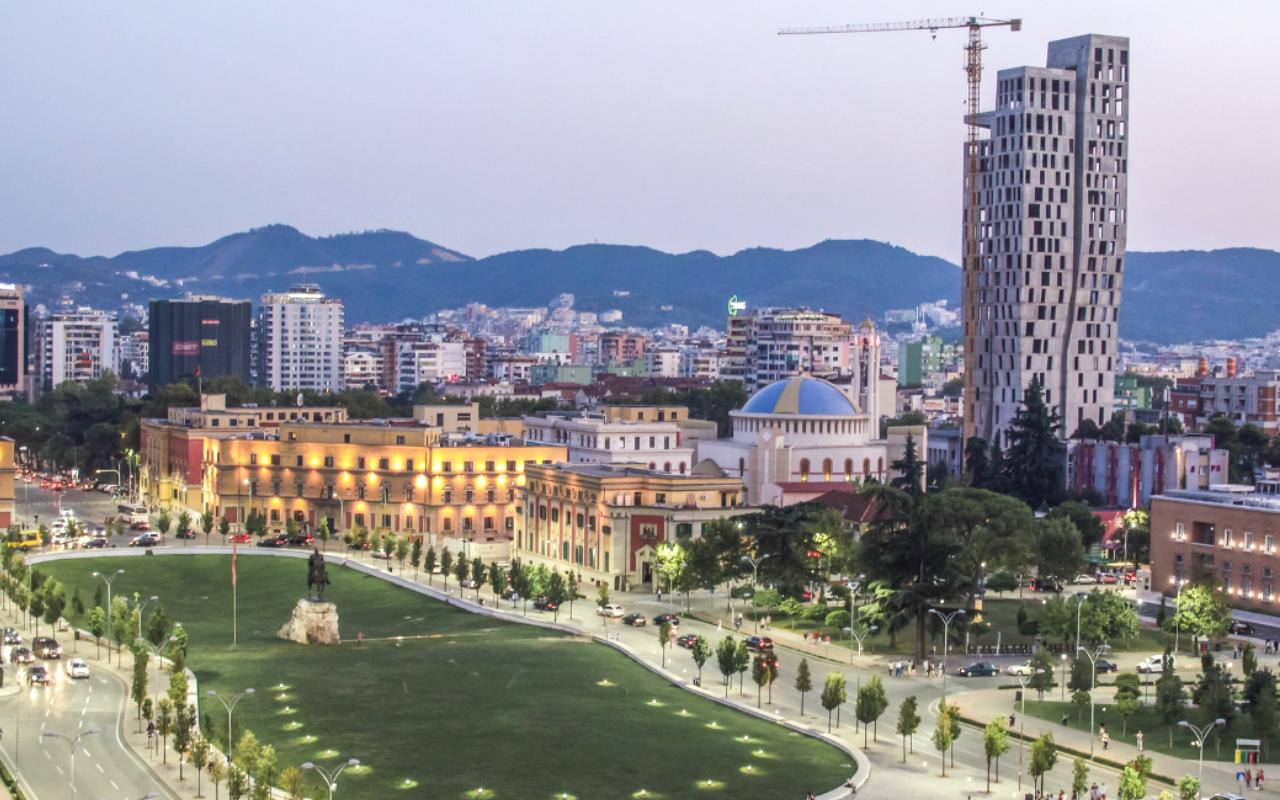
Skanderbeg Square
Walking around the square, you’ll spot communist-era ministries painted in bright colors, the sober façade of the parliament building, and the UNESCO-notable mosaic in the museum.
Locals and visitors alike use the square as a public living room: you’ll see families feeding pigeons, kids biking, or street artists performing against the backdrop of towering historical architecture.
If you visit on a Friday afternoon, the square fills with music from free open-air concerts. By day or night, Skanderbeg Square is a great place to people-watch, take photos, and feel the city’s pulse.
Don’t miss: On the edges of the square are rows of shallow water fountains. On a hot day, these are irresistible. Children (and brave adults!) often splash through the jets; it’s a beloved summer pastime.
Bunk’Art Museums (Cold War Bunkers)
For a truly unique Tirana experience, descend into the city’s Cold War relics. Bunk’Art 1 and Bunk’Art 2 are museums housed in real underground bunkers built by Communist dictator Enver Hoxha.
Bunk’Art 1 (the larger one) lies about 5 km outside the city on rural hills. Inside this five-story, 3,000 m² bunker (with 106 rooms), you can spend hours exploring its illuminated exhibits.
Each section recreates a piece of Albanian history, from the WWII Italian occupation to life under the secret police, down to socialist-era children’s bedrooms and propaganda art.
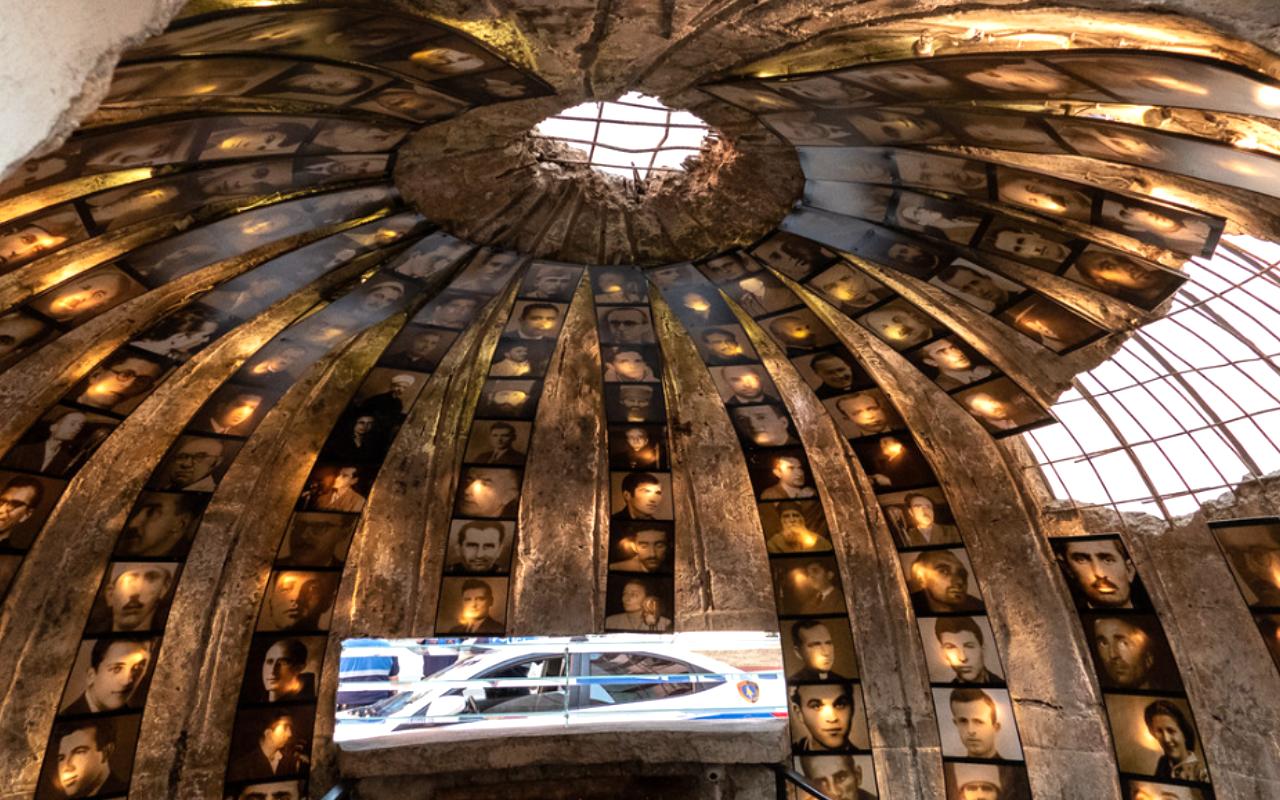
Inside Bunk’Art Museum
The experience is as atmospheric as it is educational: it feels like stepping back in time in a Cold War vault. The displays include wartime uniforms, handcarts, and compelling narratives of daily life under the regime.
Closer to downtown, Bunk’Art 2 sits inside the Grand Park. It’s smaller but very accessible. It emphasizes portraits of important figures and newer art installations, blending history with modern Albanian art.
(If you have time, see both; the combo ticket is good for 3 days.) Outside of these bunkers, the sites themselves are unusual. The entrances are disguised or set in concrete hills. Walking into Bunk’Art is like entering a time capsule.
National History Museum & Et’hem Bey Mosque
Near Skanderbeg Square are two other must-see historical sites. The National Historical Museum (formerly known as the Enver Hoxha Museum) was opened in 1981.
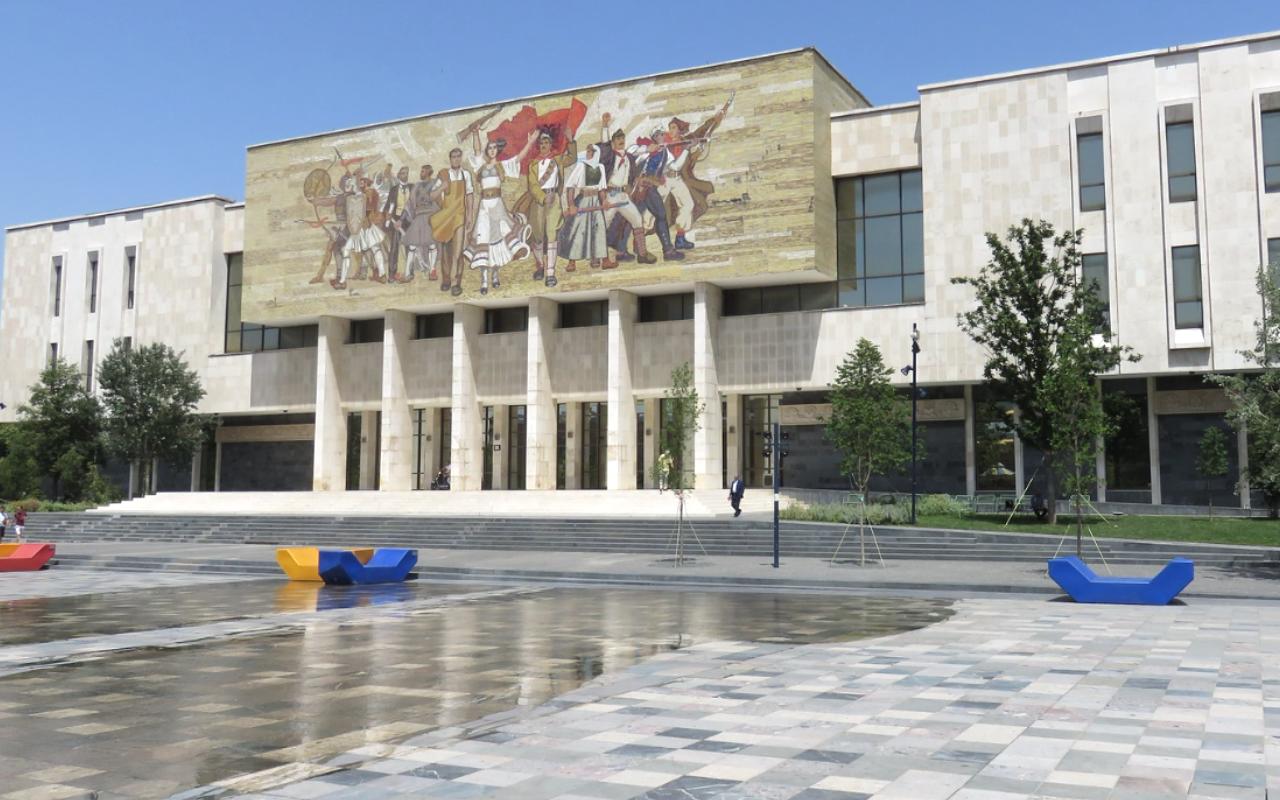
National History Museum
Its most striking feature is the enormous mosaic on the façade, it’s 10m high and depicts Mother Albania (with children’s faces made from real historical photos) flanked by ancient warriors and 20th-century revolutionaries.
Inside, the museum’s galleries trace Albanian history from antiquity through the Middle Ages to the Communist era. Exhibit highlights include Illyrian relics, the medieval artifacts from national hero Skanderbeg, and a comprehensive section on WWII and communist resistance. It’s a great way to learn context before moving on.
Directly adjacent is the Et’hem Bey Mosque, built in 1823. Though small, its interior has beautiful Ottoman-style frescoes with trees and waterfalls. Notably, it was the site of a 1991 peaceful uprising, thousands of Albanians entered the mosque in protest, triggering the collapse of the regime.
Visiting here gives insight into Albania’s cultural shifts. Non-Muslim visitors are welcome outside prayer hours (but dress modestly). From the mosque’s courtyard, you can look up at the old clock tower (built in 1822); climbing its 90 steps rewards you with a view over the rooftops of Tirana.
Pyramid of Tirana
A short walk west of Skanderbeg Square is the curious Pyramid of Tirana. It’s hard to miss: a huge, jagged concrete pyramid in a central location, looking half-finished.
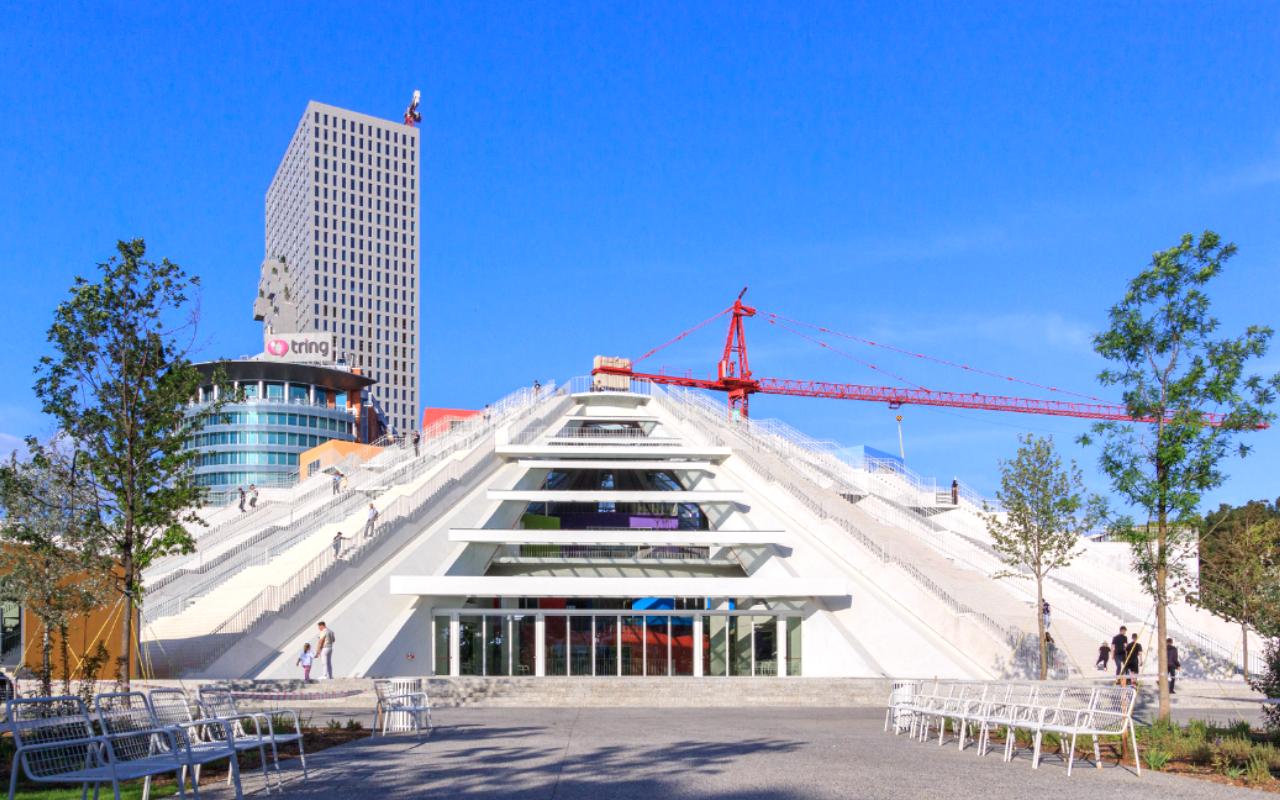
Pyramid of Tirana
Built in 1988 as a memorial museum to Enver Hoxha (designed by his own daughter), the Pyramid went through many uses, from military base to nightclub, before being deemed decrepit.
In the 2010s, instead of tearing it down, the authorities handed it to the Albanian American Development Fund. Dutch architects MVRDV then attached a ring of brightly colored boxy spaces around the pyramid. Today, this 1980s relic is an open community venue. Inside, you’ll find tech start-ups, conference rooms, a children’s entertainment area, and even cafes on the exterior.
Most visitors climb the concrete steps on the outer walls up to the flat roof. From the top platform, you get a unique skyline view: skyscrapers to one side and mountains to the other. Access is free, and it makes for a fun photo opportunity; you’re literally standing atop a piece of Albania’s history.
Blloku District (Nightlife & Cafes)
Ish-Blloku (formerly Blloku) is the name for a small district that was once off-limits. During communism, it was the enclosed residential quarter of the Politburo.
Today, it’s the beating heart of Tirana’s contemporary scene. Think tree-lined avenues with charming villas, each repurposed as something new: embassies, hipster cafes, boutiques, or trendy restaurants.
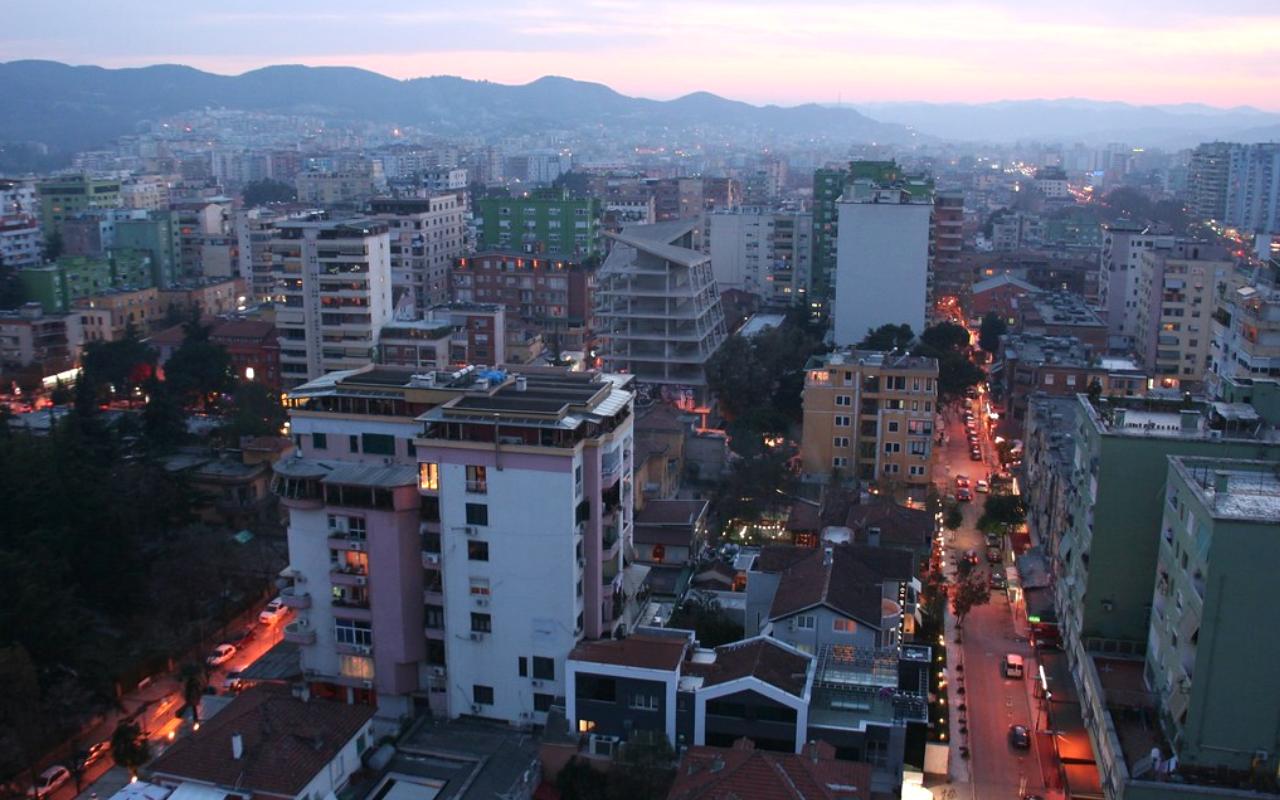
Blloku District
At night, Blloku comes alive. Bars and rooftop lounges (like Radio Bar or Serendipity) stay open late, and young locals and visitors flock here for cocktails and music. If you wonder “what to see in Tirana”, checking out Blloku by night is a must; it shows the city’s modern, vivacious side.
There are also some quirky historic sights in Blloku. The neighborhood’s largest park is Garda Park, a leafy green square with a statue of Azem Hajdari. A walk down “Rruga Mustafa Matohiti” reveals Koco Kokedhima Square (with painted murals) and the National Gallery of Arts.
And as you wander, you might stumble upon Enver Hoxha’s former house (turns out it’s still there in a quiet street!).
For shopping, cross into nearby Zona e Arteve (Art Zone) where small galleries and studios sell contemporary crafts. In short, Blloku is the place for dinner (try savory ram- or goat-kajmak specialties) and after-dinner drinks in Tirana.
Mount Dajti and the Cable Car (Dajti Ekspres)
For nature and views, take the Dajti Ekspres cable car up Mount Dajti (1,613 m). Just 25 km east of Tirana, the Dajti National Park offers forest trails and a cool respite from the city.
The cable car station is reached in about 30 minutes from downtown (bus lines 2 and 5 go there). The ride itself is thrilling: 4.7 km long (the longest in the Balkans), it climbs almost 1,000 meters in 15 minutes.
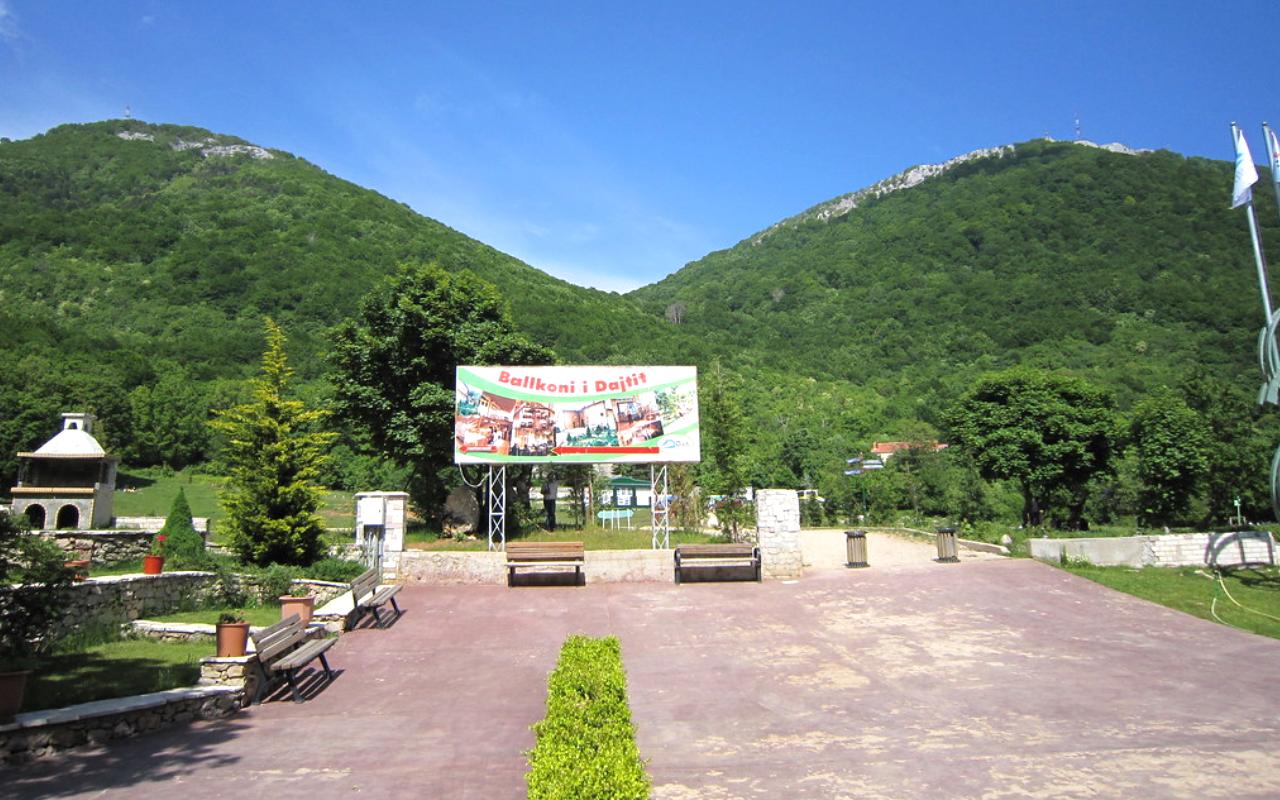
Mount Dajti
On the ascent, you’ll glide over farms, bunkers, and green hills. At the top, you step out into a small village with a few cafes and a 360° viewing platform. You can hike a marked loop or just relax at the restaurant terraces. If you like adventure sports, try downhill biking, paragliding (weather permitting), or even shooting at the gun range.
Families can play mini-golf or simply picnic with panoramic views. Whether for the ride or the summit, the Dajti cable car is one of the best experiences for a clear day in Tirana, offering unmatched vistas of the whole metropolitan area below.
Pazari i Ri (New Bazaar)
Just east of Skanderbeg Square is Pazari i Ri, the New Bazaar, a historic market area that was recently renovated. Don’t mistake “New” for brand-new: this bazaar has roots in the Ottoman era.
Today, it’s a lively complex of stalls and kiosks selling fruits, vegetables, herbs, cheeses, and souvenirs.
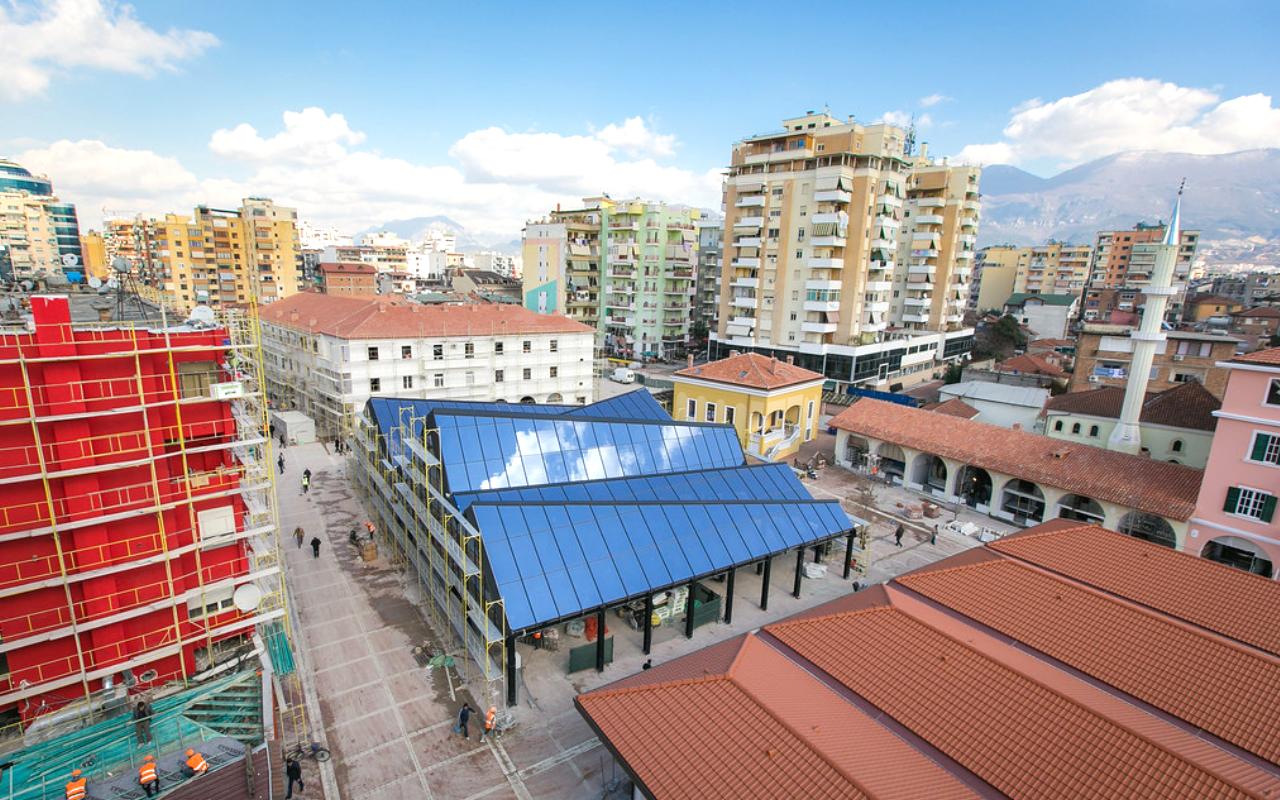
Pazari i Ri (New Bazaar)
The architecture here is charming: lower-floor market halls with open sides, and above them, pastel-colored apartments. The older buildings were restored in an Italianate style with Albanian motifs, making the whole neighborhood picture-perfect.
Strolling Pazari i Ri is a feast for the senses: stalls overflow with local produce, the aroma of grilled meatballs and borek (savory pies) fills the air, and neighbors chat at small cafes.
It’s one of the city’s most atmospheric areas. Snap photos of the ornate facades and pick up artisanal goods or a fresh pastry. Pazari i Ri has become a major attraction in Tirana thanks to its blend of old-world charm and contemporary vibrancy.
Other Gems: Cathedrals, Street Art, and Cultural Sites
Tirana’s attractions go beyond the typical tourist trail. Here are a few more to round out your visit:
National Gallery of Arts – Near Skanderbeg Square, the gallery (Museu Kombëtar i Arteve) has an extensive collection of Albanian paintings and sculptures, from realism to contemporary works.
Street Art & Colorful Buildings, Over the last 20 years, municipal projects have adorned many buildings with bright murals and geometric patterns. A short walk along Bajram Curri Boulevard or Unaza Road reveals “titanic” purple and green blocks, zigzag designs, and whimsical creatures.
One famous spot is the “Rainbow Building” near Blloku, whose façade is a pastel rainbow and is instantly Instagram-worthy. Even if they’re not on a map, admiring Tirana’s colorful architecture is a fun scavenger hunt in itself.
House of Leaves (Museum of Secret Surveillance) – Mentioned above, this is a standalone museum in central Tirana. It opened in 2017 in the former Sigurimi HQ and showcases the tools and tactics of Albania’s secret police. Intrigued history buffs shouldn’t miss it.
National Theater and Palace of Culture – These cultural venues, with their giant Soviet-era mosaics of workers and heroes, are iconic examples of Tirana’s communist past. Even from outside, you can photograph their grand, tile-covered exteriors.
Monument to Ali Demi and other communist memorials – In various parks, you’ll find 20-meter concrete memorials of WWII partisans. They’re relics of ideology, now mostly for photography.
Catholic and Orthodox Churches – Albania is unusual in having two large new cathedrals (one Orthodox, one Catholic) side by side. The Cathedral of Resurrection and the Easter Church were opened in the 2010s near the Grand Park. They’re free to visit and architecturally grand (featuring golden domes and chandeliers).
Night Market and Clubs – If you want a party, note that aside from Blloku, Tirana sometimes has night markets or outdoor concerts (especially in the summer). The club scene isn’t huge, but you can find late-night DJs and drinks at spots like Lollipop or Murat-Agua.
Day Trips from Tirana
Tirana’s location makes it a good base for day trips around Albania:
Durrës (Durazzo) – Less than 40 km west, Albania’s main port city on the Adriatic. Relax on its sandy beaches, visit the massive Roman amphitheater, or stroll the pedestrian waterfront promenade.
Kruja – Only 20 km north, Kruja was Skanderbeg’s medieval stronghold. You can tour the Kruja Castle and the Skanderbeg Museum (his fortress home), perched on a hill. Don’t miss the old bazaar street full of souvenirs like handmade filigree jewelry.
Berat – About 100 km south (a 2-hour drive). Berat is a UNESCO World Heritage city known as the “town of a thousand windows” for its Ottoman-era houses. The castle district and the Onufri Museum inside are highlights.
Shkodër and Lake Koman – To the north, visit the historic city of Shkodër and take a stunning ferry ride across Lake Koman into the Albanian Alps (though that’s a very long day).
While Tirana itself has plenty to fill a weekend, these nearby sites can be great add-ons if you have extra time (especially in good weather).
Quick Travel Tips
Getting Around: Tirana’s city center is quite compact and easy to explore on foot. Walking between most sights takes 5–15 minutes. For further travel, numerous bus lines (numbers 2 and 5 run between the airport and city center) cover the city, or you can hail a taxi or ride-share (Patoko is a local app). Traffic can be busy at rush hour, so plan taxi rides accordingly.
Language: Albanian is the official language, but English is widely spoken in hotels, restaurants, and attractions. You’ll be understood by saying “faleminderit” (thank you) or “përshëndetje” (hello) to locals.
Money: Only the Albanian Lek (ALL) is accepted locally. ATMs are plentiful downtown. Credit cards work in many hotels and restaurants, but small cafes or markets may be cash-only. Tipping is appreciated but not obligatory – around 10% in restaurants or 50 Lek in a cafe is fine.
Safety: Tirana is generally very safe. Petty pickpocketing is rare, but watch your belongings on crowded buses or in markets. The city is flat with well-lit streets, so it’s easy to walk even at night in the main districts (though Blloku is the main nightlife area).
Weather: summers (June to August) may be hot (30C+), thus bring water and sun protection. Winters are cold (approximately 0-10 o C) and sometimes rainy. The most appropriate seasons to visit are spring and fall, which are mild.
Electricity: Albania uses European plugs (220V, type C and F sockets).
Etiquette: Albanians are warm and hospitable. During a visit to religious places, dress in a modest way (covering shoulders/knees) and take off your shoes when entering a mosque.
Visa: The majority of EU, US, UK, and most countries do not require a visa when they stay not more than 90 days. Never forget to check up on the prevailing entry regulations prior to travelling.
One-Day and Multi-Day Itineraries
If you only have 1 day in Tirana, you have to begin in the morning at Skanderbeg Square, go to the National History Museum, and go up the Clock Tower. Explore the colorful Pazari i Ri market and get a burek or coffee. During the afternoon, ride on the cable car to Mount Dajti to have panoramic views. Evening: go to Blloku and have dinner and drinks.
If you have 2–3 days: Follow the 1-day plan, then add: Descend into Bunk’Art 1, explore Grand Park around its lake, and see the Pyramid. Visit the House of Leaves museum. Stop by the new Cathedral and Namazgah Mosque near the center.
On your second night, sample Tirana’s nightlife again in Blloku or catch live music. On day 3, pick a day trip (e.g., Kruja or Durrës) or relax with a foodie tour and a free walking tour to uncover hidden stories.
Here are some suggested bullet points for things to do:
Guided walking tour: Kick off at Skanderbeg Square and learn the city’s history. Many tours cover key spots in 2–3 hours.
Dajti Cable Car: Book a mid-afternoon slot to catch sunset views from above Tirana.
Food tour: Guided by a local guide, explore the food byrek, raki, dhe (and) coffee in various cafes.
Go to Bunk Art: Book 1-2 hours at the museum of the bunker, including audio guides in English.
Explore Blloku by night: Have cocktails on the rooftop, then have dinner in a stylish restaurant.
Art and Culture: Visit the National Gallery or visit a show in the Palace of Culture (check the schedule).
Shopping: Buy handcrafted souvenirs (filigree jewelry, woven rugs) around Blloku or Pazari i Ri.
Cycle or jog: Rent a bike for the Grand Park circuit or along the Lana River promenade to see more of the city.
Attend a festival: If visiting in summer, look out for outdoor concerts in Skanderbeg Square or lake festivals by the Grand Park.
Each season offers different experiences. Spring (April–June) brings blooming linden trees and pleasant weather. Summer can be hot but alive with festivals. Autumn colors the park and hills around Dajti.
Even winter has charm: the city sometimes sees light snow, and there’s a Christmas market in December.
What to Eat & Drink in Tirana
The Albanian food is simple and Mediterranean. The following are some local delicacies that you cannot miss in Tirana:
Byrek– A ubiquitous flaky pie, cheese, spinach, or meat. Get one to eat at a bakery or cart.
Tavë Kosi – Albania’s national dish. Lamb (or beef) baked with yogurt, rice, and egg – tangy and creamy. Often served with a side salad.
Fërgesë – Baked dish of roasted bell peppers, tomatoes, onions, and cottage cheese (sometimes with meat). Hearty and savory.
Seafood Platter – Given Albania’s coastline, restaurants often serve fresh grilled fish or calamari. Try calamari rings with Tzatziki sauce.
Çevapi/Qofte – Grilled minced meat sausages or meatballs, often in a flatbread. Usually served with kajmak (cream) and onions.
Local Cheeses & Meats: Stop by Pazari i Ri stalls to taste spicy Korçë sausage or tangy feta-like cheeses made from sheep/goat milk.
Baklava and Sweets: End your meal with a piece of baklava or knafe (shredded pastry with syrup and cheese).
Turkish Coffee or Kafja e Pabukkuar: Tirana loves its coffee culture. Try a strong espresso at Pedonale or a boza (millet drink) if adventurous.
Raki – A grape brandy that Albanians sip before meals or with dessert. “Na pije rakinë” means “we’re having a toast!”
Many restaurants in Blloku and along Murat Toptani Boulevard (Sheshi Gamti i Pashës) offer international cuisine too, but don’t skip the local taverns (taverna) where simple home-cooked meals are most authentic.
For example, Oda and Mullixhiu in the city center serve traditional dishes in cozy settings.
FAQs
Is Tirana safe for tourists?
Absolutely. Tirana is also relatively safe even during the night in the crowded places such as Skanderbeg Square or Blloku. There is not much crime, although you must of course use simple precautions: you should always keep an eye on your possessions in busy places, and take licensed taxis only at night. The people there are hospitable.
What’s the local currency?
Albania uses the Lek (ALL). ATMs are plentiful downtown. Credit cards work in big restaurants and hotels, but always carry some cash for markets and small vendors.
How many days are enough in Tirana?
You can see the major sights in 1–2 days, but 3 days or more lets you go at a relaxed pace and even take a day trip. Many travelers do a quick 2-day stopover in Tirana between other destinations.
How to pronounce ‘Tirana’?
It’s “tee-RAH-nah” (stress on the second syllable).
Is English widely spoken?
Yes, especially by younger people and in the tourism sector. You’ll have little trouble ordering food or asking directions in English.
What is the best way to see the city?
The center is very walkable, and many attractions are clustered together. Tirana also offers free walking tours (tip-based) in English. For a fun overview, consider the Tirana Sightseeing Hop-On Hop-Off bus, which covers the main sights. The Green Tirana initiative provides public bikes too. Taxis or rideshares are convenient for places farther out (like the Dajti cable car).
Any local customs to know?
When visiting religious sites (mosques, cathedrals), dress modestly (cover shoulders and knees) and remove hats. It’s common courtesy to accept a raki toast or small snack (like cheese) when offered. Albanians are very hospitable; if you’re invited into someone’s home or shop, accept at least a water or coffee.
Is tipping expected?
It is not obligatory, but it is welcome to round up or leave 10 percent in restaurants and cafes. As an illustration, a cafe bill of 10 dollars can leave an amount of 1-2 dollars in a tip.
Conclusion
From the bustling energy of Skanderbeg Square to the quiet paths around the Grand Park lake, Tirana offers a surprising mix of experiences.
By covering the classics, Skanderbeg Square, Bunk’Art, the Pyramid, Dajti Mountain, and adding in local highlights like Blloku and Pazari i Ri, you’ll see why Tirana charms so many visitors.
Remember to relax and explore at a leisurely pace; part of what makes what to see in Tirana becomes even more enjoyable when you chat with friendly locals at a cafe or stumble upon a colorful mural around a corner.
Whether you have one day or a week, Tirana rewards you with a blend of history, culture, nature, and modern flair.
This guide should have you set for planning your perfect trip. Enjoy Albania’s capital, and don’t forget to raise a glass of raki to new adventures. Mirupafshim, Tirana!










-
 0115 Best Easy Treks in Nepal for Beginners and Families
 -
 02Best season for Everest Base Camp Trek
 -
 03Best Time to Go Hiking in Nepal: A Seasonal Guide for Trekkers
 -
 04Suchi Purja –Wife of Nirmal Purja aka Nims Dai
 -
 05Dubai desert safari outfit ideas
 -
 06Top Beaches in Sri Lanka
 -
 0710 Best Easy Treks in Nepal