
Now Reading: A Complete Visitor’s Guide to teamLab Borderless in Tokyo
-
01
A Complete Visitor’s Guide to teamLab Borderless in Tokyo

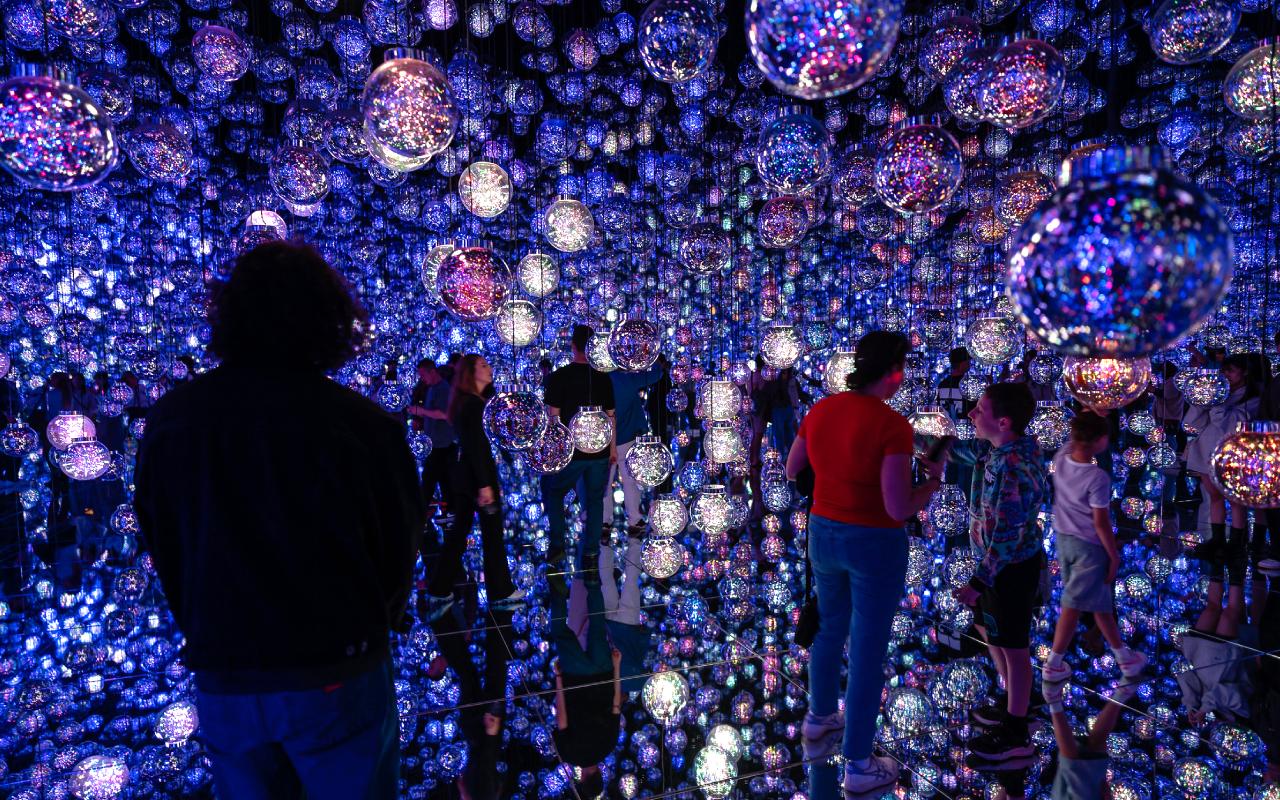
Tokyo never runs out of icons, but few places feel as “only-in-this-city” as teamLab Borderless. You step off the street and into a living, breathing world of moving light, shifting sound, and spaces that react to you.
The museum sits inside the Azabudai Hills development, and it has welcomed huge crowds since it reopened there on February 9, 2024.
This Avivaaa.com guide shows you how to visit teamLab Borderless without stress.
teamLab Borderless works like a city at night. You don’t follow a single route. You drift, you turn corners, and you watch scenes bloom into existence.
The museum refuses the usual “room 1 to room 12” logic, so you explore by curiosity instead of by arrows. TeamLab designed it as “a museum without a map,” and the artworks cross boundaries, spill into neighboring areas, and evolve as people move through them.
That concept explains why so many travelers rank teamLab Borderless as a Tokyo must-do. You can visit temples, markets, and viewing decks across the city, and you still won’t find another place that blends art, code, and architecture into one continuous environment.
Mori Building also frames the museum as “one borderless world,” with dozens of independent works forming complex relationships rather than standing alone like paintings on a wall.
If you search “team labs borderless Tokyo” or “team labs borderless Japan” before your trip, you’ll see the same theme pop up in reviews: people feel both amazed and happily disoriented.
You get to “get lost,” then you get to stumble into something unforgettable. That feeling comes from design choices you rarely see in traditional museums, like minimal signage and artworks that migrate between rooms.
Many travelers also confuse Borderless with teamLab Planets TOKYO. Go Tokyo sums up the difference clearly: Borderless lets you explore freely without a set route, while Planets guides you through more linear spaces and asks you to remove your shoes for water-based rooms.
So, when you plan your “teamlabs borderless tickets” task, double-check the location and the experience style you want.
This guide gives you the practical details you actually need. You’ll learn how to reach the entrance from the nearest subway exits, how the timed entry system works, and what to expect in a dark, maze-like gallery where mirrored floors appear in some areas.
You’ll also get a curated list of can’t-miss installations, plus tips for photos, outfits, families, and first-timers.
One more reason teamLab Borderless keeps showing up on “best of Tokyo” lists: the museum offers a repeatable experience. TeamLab notes that certain artworks and specs can vary by season, and the venue can shift opening times or close sections for maintenance. That means your second visit can feel noticeably different from your first.
Finally, this article aims to help you plan with confidence, especially if you care about timing and pricing. teamLab Borderless uses dynamic pricing for key ticket types, and popular time slots can sell out.
If you want stress-free entry, treat “teamlabs borderless Tokyo” planning like a reservation-heavy dinner: pick a date early, book early, then enjoy the day.
Quick facts
| Category | Details |
| Name | teamLab Borderless |
| Creator | teamLab |
| Location | Azabudai Hills Garden Plaza B (B1), Minato City, Tokyo, Japan |
| Type | Immersive digital art museum |
| Opening year | Opened June 21, 2018, in Odaiba; reopened February 9, 2024, in Azabudai Hills |
| Experience style | Interactive, non-linear exploration (“museum without a map”) |
| Average visit time | 2–3 hours (most visitors), but you can stay longer after entry |
| Ticket type | Timed entry (book online), plus a date-based Flexible Pass option |
| Photography | Allowed (no flash; no tripods/selfie sticks; no commercial shoots without consent) |
| Best for | Art lovers, travelers, photographers, couples, families |
TeamLab launched the original museum in Odaiba on June 21, 2018, and it closed that location on August 31, 2022, before the new Azabudai Hills version opened on February 9, 2024.
The current venue does not provide maps, it offers free lockers, it sets no time limit after entry, and it bans flash and long camera accessories.
Use these details as your baseline when you research “team labs borderless Japan,” “teamlabs borderless Tokyo,” or “teamlabs borderless tickets” planning questions.
What is teamLab Borderless, and why does it feel different?
The “borderless” idea in plain language
team LabBorderless treats art like a weather system. Instead of keeping each piece in its own sealed box, the museum lets images, sounds, and even “creatures” travel across the building.
TeamLab describes artworks that move out of rooms, connect with other works, and sometimes intermingle, which creates one continuous world rather than a collection of separated exhibits.
This approach changes how you behave as a visitor. In a traditional museum, you often hunt for labels, dates, and a “correct order.” In team Lab Borderless, you learn by moving.
You notice that the same artwork might look different when you return later. You also notice how other people affect what you see, because many installations respond to presence, motion, or touch.
Japan National Tourism Organization also frames the Azabudai Hills exhibition as a “truly borderless world” that combines returning works from Odaiba with new pieces, and it directly encourages visitors to wander, explore, and discover.
That official tourism framing aligns perfectly with what you feel inside the galleries. If you plan team labs borderless japan as a first-time visitor, this official language can also help you set expectations before you arrive.
Meet the creators
teamLab describes itself as an international art collective founded in 2001. The group includes specialists like artists, programmers, engineers, CG animators, mathematicians, and architects.
TeamLab focuses on the intersection of art, science, technology, and nature, and it aims to explore the relationship between self and world through new forms of perception.
That background matters because team Lab Borderless does not just “project pretty visuals.” It builds environments that rely on real-time computing. TeamLab often emphasizes continuity, perception, and embodied experience, and those themes shape the museum’s layout and pacing.
A museum without a map, by design
If you expect a printed guide, you’ll feel confused at first. The staff does not hand out a facility map, and the museum explicitly says it provides no maps so visitors can experience the art in line with the “borderless” concept.
The museum also limits traditional labels. TeamLab explains that you won’t see standard captions because artworks move across spaces. Instead, the official app helps you pull up information about the work closest to you, and it even lets you participate in certain pieces like Infinite Crystal World.
That design creates a special kind of freedom. You can spend 10 minutes in one room, then wander away, then circle back. The venue also sets no time limit after you enter, so you can slow down instead of racing.
Borderless vs Planets
If you plan only one immersive museum in Tokyo, choose based on movement style. Go Tokyo explains that Borderless emphasizes free exploration, while Planets follows a set route and includes water exhibits that require shoe removal.
Think of Borderless as a wandering experience and Planets as a guided journey. That single distinction helps when you compare teamlabs borderless Tokyo itineraries in blogs and maps.
That “free exploration” identity also shapes what you pack and wear. You’ll walk a lot, and you’ll double back often, which makes comfortable shoes more important than almost any other style choice.
How teamLab Borderless differs from traditional art museums
Many museums ask you to look quietly at a fixed object. teamLab Borderless asks you to become part of the scene. Go Tokyo, the official Tokyo travel guide, describes Borderless as interactive works that flow between rooms and let visitors freely explore, with lights and mirrors playing a major role.
Mori Building adds another layer: it describes the Azabudai Hills version as a showcase of over 50 independent artworks forming one borderless world. Go Tokyo, which updates its Borderless listing regularly, says the museum displays more than 75 works of art in Azabudai Hills, including works visitors haven’t seen before.
When you read “team labs borderless japan” trip recaps, you’ll often see travelers compare it to a theme park, a meditation space, and a design lab all at once. That mix comes from how the museum invites emotion and play without forcing a linear narrative.
Location, transit, and timing
teamLab Borderless
Where you’ll find the entrance
You’ll find teamLab Borderless in Azabudai Hills, specifically in Garden Plaza B on basement level B1. The official address lists Garden Plaza B B1 for entry, and it points visitors to Toranomon in Minato-ku.
Azabudai Hills itself functions as a “Modern Urban Village,” with major green space and a central plaza design that Mori Building planned over decades. The Tokyo Metropolitan Government’s updates site also notes that Azabudai Hills launched in November 2023 as a new neighborhood, and it positions greenery and a plaza-like gathering space at the heart of the plan.
If you plan to make an “Azabudai day,” this neighborhood helps. You can eat, shop, and see public art before or after teamLab Borderless without spending extra time on trains.
That convenience matters when you want a relaxed “teamlabs borderless Tokyo” schedule. It also helps team labs borderless Japan travelers who stay in outer neighborhoods and prefer fewer transfers.
Nearest stations and the easiest routes
Most visitors arrive by subway. Kamiyacho Station on the Tokyo Metro Hibiya Line sits closest. The museum is listed as a two-minute walk from Exit 5, and it specifically tells you to stay underground after Exit 5 instead of going up to street level.
You can also use Roppongi-itchome Station on the Tokyo Metro Namboku Line. The museum is about a six-minute walk from Exit 4.
Japan National Tourism Organization also highlights the same access advantage: direct connection to Kamiyacho Station (Hibiya Line) and a short walk from Roppongi-Itchome Station (Namboku Line).
Tokyo transit tips that save time and stress
Tokyo transit looks intimidating, but you can master it quickly. Start with one habit: tap in and tap out with a transport IC card. JR East explains that Suica works as a prepaid IC card; you tap it on the ticket gate, and the system deducts the fare automatically.
If you prefer a metro-branded option, PASMO also works across much of Tokyo’s rail and bus network, while keeping transactions simple through touch payment.
Go Tokyo also highlights IC cards as a cheap and convenient way to board trains and buses: you hold the card over the reader, and the fare is deducted automatically, and you can recharge as needed.
For route planning, use a real-time planner app and pay attention to station exits. The Borderless entrance connects most directly with Kamiyacho Exit 5, so that single detail can save you a lot of wandering above ground in the wrong direction.
Helpful routes from major stations and airports
If you stay in central Tokyo, you can reach teamLab Borderless fast. Go Tokyo estimates about 12 minutes from Tokyo Station using the metro transfers, and about 24 minutes from Shinjuku Station with a transfer route. Use these as rough planning numbers, then confirm with your navigation app on the day.
If you arrive via airports, Go Tokyo also provides broad time estimates: around 30 minutes by train from Haneda Airport and around 45 minutes by train from Narita International Airport (times vary by route and connection).
Those estimates can help you decide if you should visit teamLab Borderless on arrival day or save it for a calmer morning. If you fly in for teamlabs borderless Japan and you land early, you can sometimes fit an evening slot without stress.
Opening hours and what “typical” means here
teamLab Borderless changes its hours more often than most museums. The official site lists a standard window (often 8:30–21:00) but also publishes date-specific variations, like earlier closings or later closings on certain days. It also sets the last entry one hour before closing.
Go Tokyo lists slightly different “general” hours (often 9:00–21:00) and also warns that the museum closes on some days, so you should check the official schedule before you go.
Treat those differences as a planning signal, not as a contradiction. The museum actively updates hours by date, and you should always confirm the exact slot during ticket purchase. Use the confirmation page for team labs borderless tickets as your single source of truth for that day.
Best time to visit for lighter crowds and better photos
If you want calmer rooms and cleaner photos, aim for an early weekday slot. Klook, one of the official sales platforms listed by teamLab, highlights the value of visiting early and avoiding peak queues.
Evening slots can feel dramatic because the dark rooms match the outside city vibe, but crowds often build later in the day. If you care about “team labs borderless Tokyo” photos that show open space, you’ll usually feel happiest right after doors open.
Weekends bring higher demand for entry slots, and ticket availability can tighten. The museum clearly warns that timed tickets may sell out, so a weekend plan needs earlier booking.
If you want calmer rooms and sometimes lower-priced slots, compare team labs borderless tickets across weekday mornings and weekend afternoons before you commit.
Seasonal considerations in Tokyo
The museum sits indoors, so rain or summer heat won’t ruin the experience, but Tokyo’s travel calendar can still affect crowds. Golden Week, a cluster of national holidays from late April to early May, pushes travel peaks across Japan, and Japan Guide explains that travel activity spikes during this period.
In mid-August, Japan’s Obon season also drives heavy domestic travel, and Japan Guide forecasts peak travel dates for Obon by year.
Families should also note Japan’s long summer vacation window. Kids Web Japan, a Japanese government-run educational resource, describes summer vacation at most schools as roughly late July through August.
Those dates can add families to Tokyo attractions, including teamLab Borderless. If you plan teamlabs borderless japan during summer break, grab a weekday morning ticket early.
If you want the most flexible planning, book your “team labs borderless tickets” outside these peak windows, or lock in a weekday morning slot well in advance.
Ticket pricing, booking, and entry process
teamLab Borderless runs a timed-entry system for standard tickets (Entrance Pass). The official site lists adult pricing (18+) at 3,600 yen as a baseline, and it notes that adult and disability tickets follow a dynamic pricing system, so the final price changes by date and time.
The museum also charges an extra 200 yen for tickets purchased on site. Go Tokyo repeats this 200 yen surcharge and encourages online booking.
Children’s pricing stays more stable. The museum lists 2,800 yen for ages 13–17, 1,500 yen for ages 4–12, and free entry for ages 3 and under. It also requires proof of age for the 13–17 category at the entrance gate.
If you need flexibility, the museum sells a date-based Flexible Pass that does not lock you into an entry time. You still need to enter before the final entry time, and the last entry still happens one hour before closing.
For most travelers, online booking wins. Go Tokyo notes that you can present a QR code on your phone on the day of your visit for entry. The museum also warns that tickets can sell out and that resale will block entry, so stick with official channels when you buy “team labs borderless tickets.”
Once you arrive, show up at your admission time and line up. The museum warns about waits during busy times, and it asks visitors not to wait around the museum area too early.
If you arrive too early, use that time for lockers and for a quick ticket check. The venue says it may ask for identification upon entry, and it lists acceptable IDs like passports, driver’s licenses, student cards, and health insurance cards.
Bring your passport if you travel internationally, especially if you plan to travel on teen tickets that require proof. Run a final check on your team labs borderless tickets QR code and admission time, then map your teamlabs borderless Tokyo route to the team Lab Borderless entrance before you leave your hotel.
If plans change, the museum limits cancellations, but it allows date changes up to three times for tickets purchased through the official ticketing website, as long as you make changes at least two hours before your admission time.
What to expect inside
teamlab borderless
First impressions: darkness, depth, and “productive confusion.”
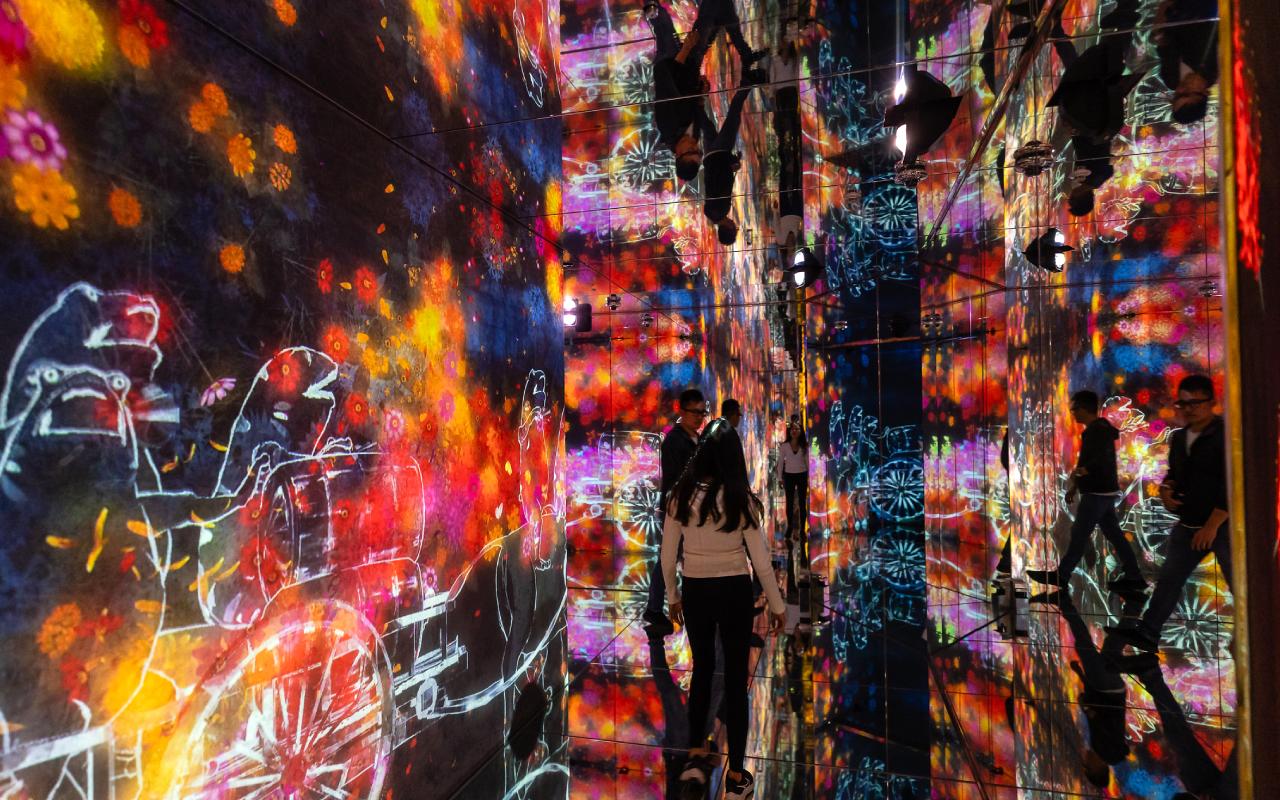
Expect a dark venue with uneven footing and some low ceilings. The museum warns visitors about these conditions, and it asks parents to watch children closely for safety.
That darkness serves a purpose. It turns light into architecture. It makes glowing lines feel physical. It also makes your camera work harder, so you’ll want to plan your phone settings before you enter.
You also won’t find a fixed path. The museum leans into exploration, and it does not offer maps. That design can feel disorienting for 10 minutes, then it starts to feel playful.
How the spaces connect and evolve
The core magic of team Lab Borderless comes from motion between spaces. TeamLab describes artworks that move out of rooms, relate to other works, and sometimes intermingle with no boundaries, which creates a continuous world.
You can feel that idea in small moments. A school of fish might “leave” Sketch Ocean and appear elsewhere. A breeze might scatter petals in a landscape room. A room that felt calm might suddenly pulse as people walk through a light field.
Because of that movement, you should embrace repetition. You might miss a space on your first pass. You might return later and find it changed. TeamLab even notes that specs can vary by season, and some works might pause for maintenance or crowd control.
Must-see installations you should prioritize
The Azabudai Hills version includes both iconic works and newer additions. Time Out Tokyo highlighted several standout installations at the relaunched location, and many of them line up with the museum’s official artwork pages.
People Don’t See the World as through a Camera
Start strong at the entrance. This artwork creates a visual trick: the words “teamLab Borderless” appear to rise toward you when you view them through a camera from a designated position, but they don’t “float” the same way to the naked eye. TeamLab uses this work to explore how lenses and perspective flatten space differently from human perception.
Japan’s official tourism site also calls this entrance moment a key first encounter, and it connects it to teamLab’s Cognitive Sculpture ideas. If you want a fun “team labs borderless Tokyo” photo before the crowds pull you deeper into the maze, take it right here. If you arrive early for teamlabs borderless tickets, you can practice this shot before you rush into the maze.
Universe of Water Particles on a Rock where People Gather
Universe of Water Particles on a rock
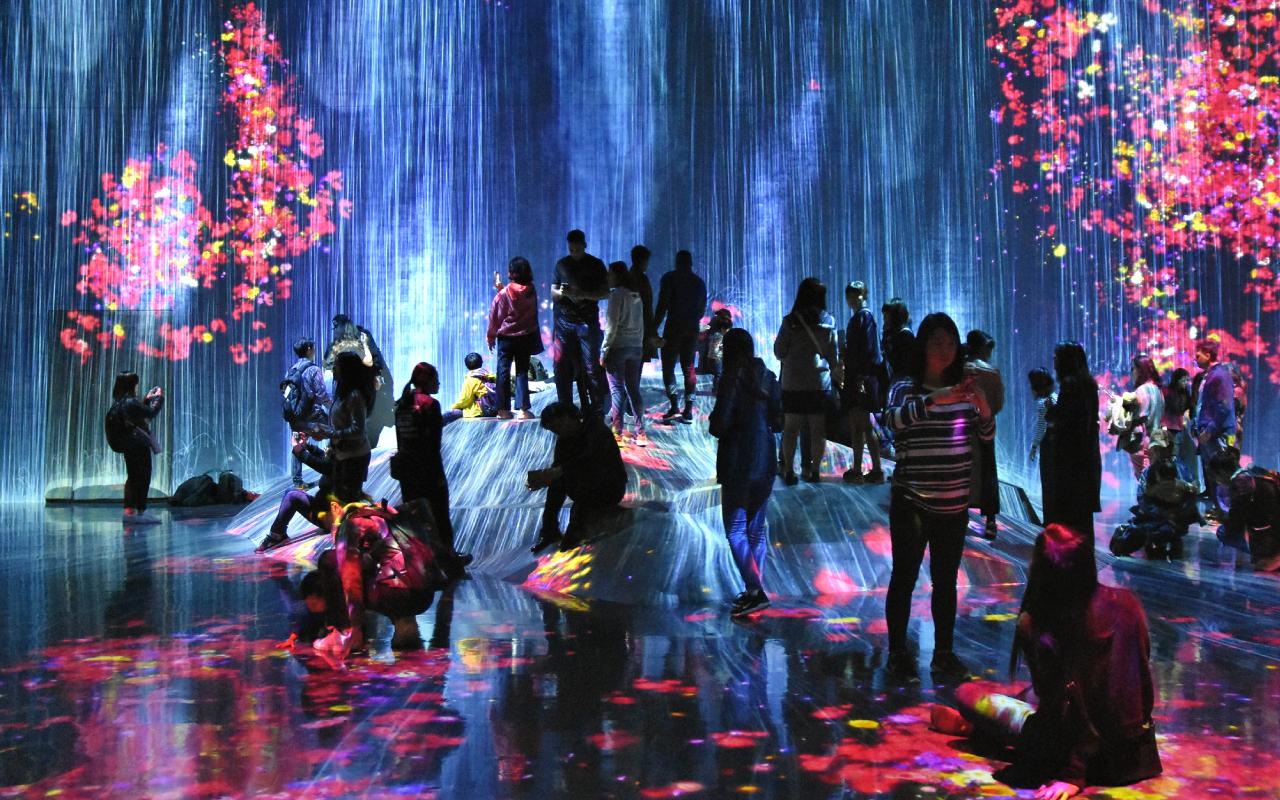
This waterfall room often becomes your first “wow” moment after entry. TeamLab explains that the waterfall continues to transform and that the flow can influence other artworks that enter the space, so you’ll never see the exact same scene twice.
Try standing still for a moment, then walk slowly across the floor. The space responds to presence, and you’ll notice the scene shift as people move.
Infinite Crystal World
If you want the classic mirrored “crystal universe” feeling, prioritize Infinite Crystal World. TeamLab describes a light sculpture that extends infinitely in all directions, and it notes that visitors can use smartphones to throw selected elements into the work, which keeps it evolving.
This room rewards revisits. You’ll see what other people “added,” and you’ll notice how your viewpoint changes the perceived depth.
Bubble Universe and Microcosmoses
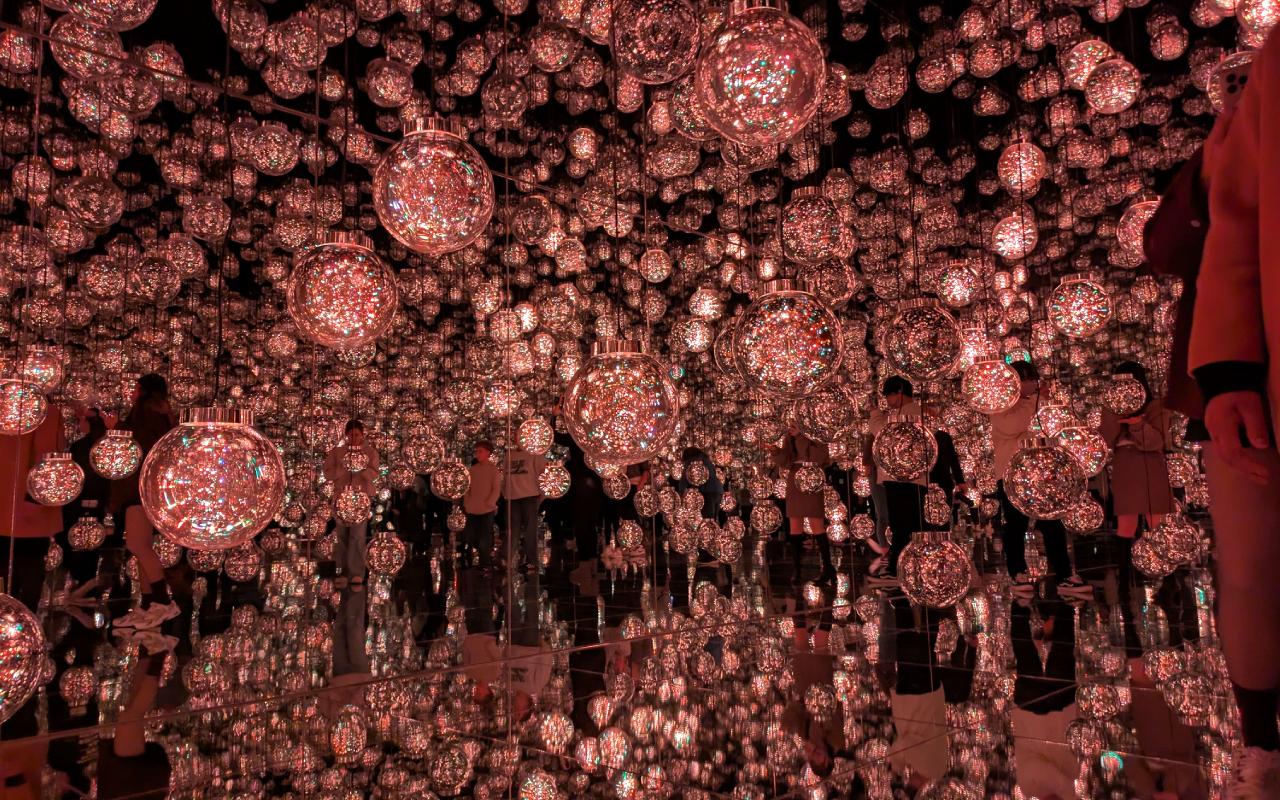
Bubble Universe
Bubble Universe fills a mirrored space with countless spheres and layered light phenomena. TeamLab frames it as a question about perception and existence, and it connects the work to Cognitive Sculpture concepts.
Microcosmoses sits in the same area and explores a universe of moving lights inside reflective spheres, asking whether a universe can emerge when different orders overlap as a whole.
If you chase “team labs borderless Tokyo” mirror photos, these two spaces deliver the strongest results, especially when you take a moment to let the lights settle before you shoot.
Light Sculpture spaces
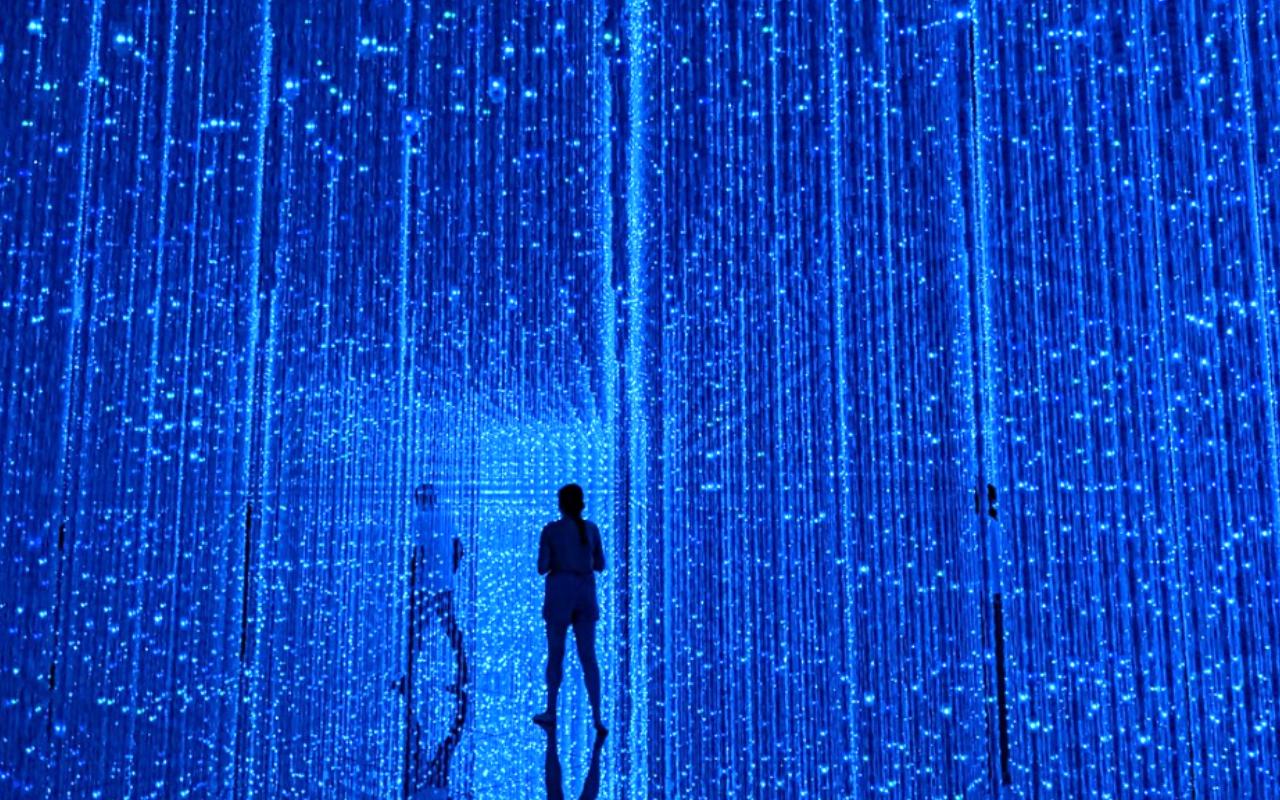
The Infinite Crystal Universe
Time Out highlights a dedicated Light Sculpture area where beams intersect and create three-dimensional effects.
On the official side, teamLab group works like Light Vortex and Tunnel into the Mirror Universe under Light Sculpture concepts. Light Vortex explores how order (not material) creates a sense of existence, while light flows inward and outward to form a “biocosmos.”
Tunnel into the Mirror Universe adds a mirror-world twist. TeamLab describes a light sculpture that travels between real space and the mirror’s space, with asymmetry as part of the work’s identity.
Memory of Topography
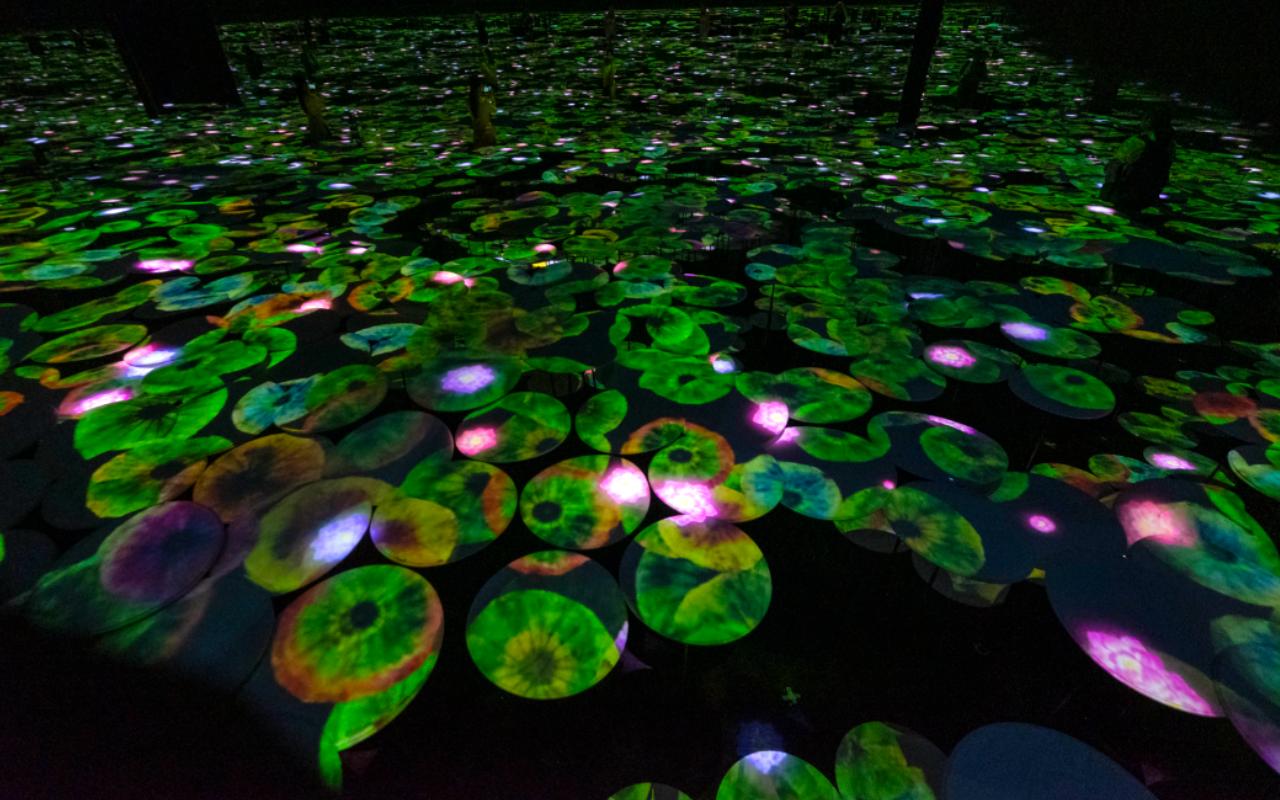
Memory of Topography
Memory of Topography offers a calmer, nature-linked space. TeamLab depicts rural mountain landscapes across elevations you can walk through, and it ties the visuals to real time: rice shoots grow through seasons, breezes respond to people, and air flow changes as visitors move. The work aims to dissolve the boundary between your body and the landscape world.
Many teamlabs borderless Japan visitors use this room as a calm anchor. If you visit with older parents or anyone who needs a slower pace, use this room as a reset. It still feels immersive, but it doesn’t demand fast movement or intense sensory spikes.
People Create Space and Time, at the Confluence of their Spacetime, New Space and Time is Born
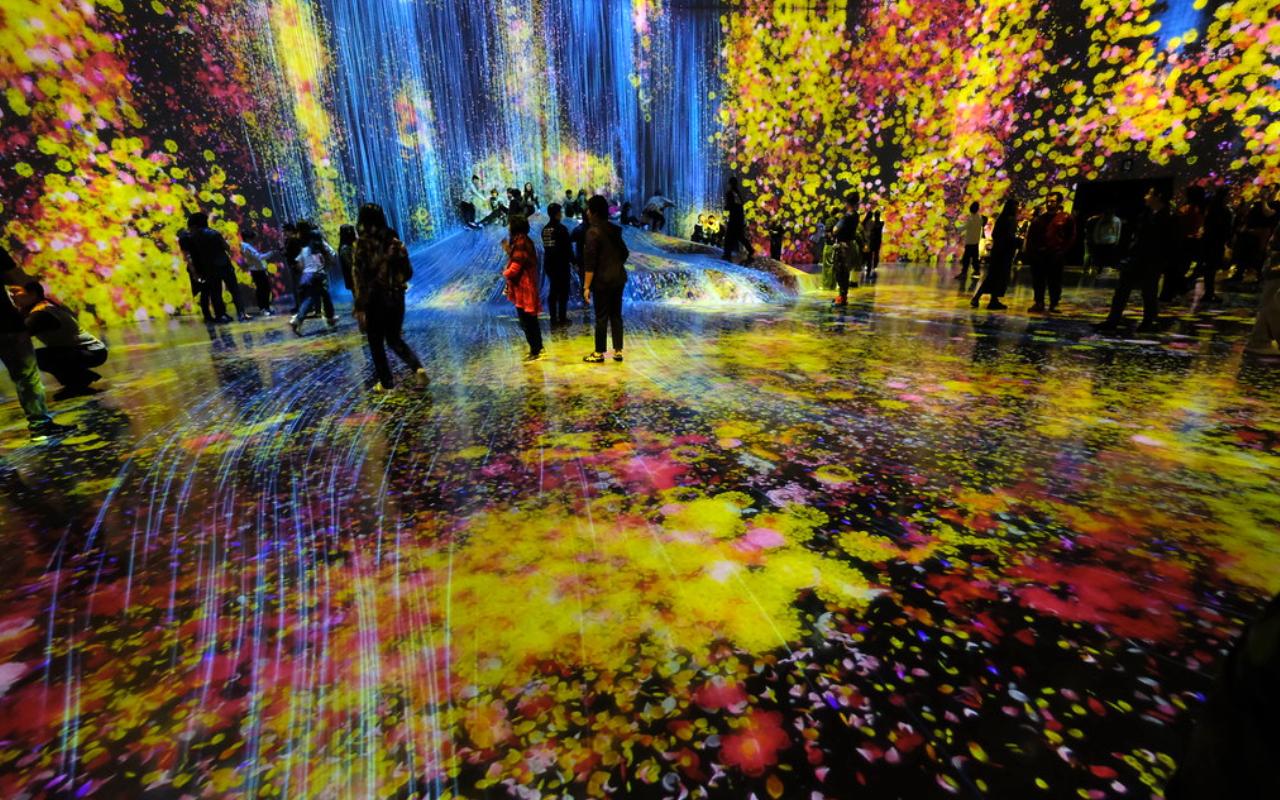
This piece turns the idea of “a wall” into something alive. TeamLab describes a repeating cycle of life and death through flowers, and it says space and time change due to the presence of people.
When those changes intersect, the piece frames that moment as “new spacetime.”
It’s also a great reminder that teamLab Borderless rewards participation without forcing “games.” You don’t need to press buttons. You just move naturally, and the environment reacts.
Flowers and people cannot be controlled, but Live Together
This installation delivers the “flowers” moment many visitors crave. TeamLab describes flowers that blossom and change with seasons, and it notes that the flowers respond to visitors: stay still and they bloom more; touch or step, and they scatter and fade.
If you visit during cherry blossom season, this room can feel like a digital echo of Tokyo’s real cherry blossom calendar, which often peaks in late March to early April.
Sketch Ocean and Sketch Factory
Sketch Ocean works especially well for families and first-timers. You color a fish, scan it, and watch it swim into the digital ocean. TeamLab also notes that fish can leave the room, transcend boundaries, and swim through the museum, which reinforces the “borderless” theme in a playful way.
If you want a souvenir beyond photos, Sketch Factory can produce items based on your fish drawing, like a badge, towel, T-shirt, tote bag, or papercraft. The museum notes that Sketch Factory sits outside of the main exhibition space.
Walk, Walk, Walk: Search, Deviate, Reunite
This piece turns movement into narrative. TeamLab explains that anonymous figures keep walking and that visitors can touch them to change their behavior, which creates decisions, detours, and a shifting path through the work.
It’s a great “reset room” when you feel overstimulated, because it pulls you into a calmer story rhythm without demanding fast action.
EN TEA HOUSE and Flowers Bloom in an Infinite Universe inside a Teacu
EN TEA HOUSE gives you a deliberate pause. TeamLab describes tea that triggers flowers to bloom inside the cup, with petals scattering when you lift the cup. Once the tea disappears, the artwork disappears too.
The museum also asks each person to order at least one drink if they enter the Tea House area, so plan a small budget for it if you want the full experience.
How much time do you need?
Most visitors plan 2–3 hours for teamLab Borderless, and Go Tokyo frames it as a massive space with many works to explore.
The museum also gives you a key freedom: it sets no time limit after admission. That freedom means you can treat team Lab Borderless as a slow experience, not a rushed checklist.
If you want a calm pace, block at least 3 hours. If you visit with kids or you want repeated passes through mirrored rooms for photos, add an extra buffer. You’ll enjoy “teamlabs borderless japan” more when you give it time to breathe.
Practical tips for photos, outfits, and stress-free exploration
Photography rules and respectful shooting
teamLab Borderless welcomes photos and videos, and it allows social media posting. The museum bans flash, and it bans tripods, monopods, and selfie sticks or photo aids longer than 30 cm. It also blocks commercial shoots without consent. If you plan team labs borderless Japan content creation, follow the rules and keep it personal.
Those rules matter because the space gets tight. Japan’s official tourism site (JNTO) reminds travelers that tripods can obstruct others in busy places, so courtesy matters even when rules permit something.
If you want great “team labs borderless Tokyo” shots, step aside after you capture them. Let others pass. Don’t stop on stairs or in narrow corridors. The museum explicitly asks visitors to avoid sitting or blocking aisles and stairways around the museum area.
Low-light camera settings that actually work here
Skip flash. The museum bans it, and you’ll also ruin the projection mood if you try it.
Instead, aim for stability. Canon’s low-light guidance emphasizes aperture and ISO adjustments, and it also underscores the value of stability to reduce blur. In team Lab Borderless, you can’t set up a tripod, so brace your elbows, slow your breathing, and use image stabilization or night modes when your phone offers them.
If you use a dedicated camera, try a wide aperture and a higher ISO, and accept a little grain. Grain looks better than blur in moving light.
Where photos look best
Mirrored rooms and light sculpture spaces tend to deliver the strongest social media shots. Go Tokyo even suggests simple, plain clothing because it stands out in dark spaces, and it can function like a canvas for light.
Also, watch for the entrance illusion artwork. It literally rewards cameras, so it’s the easiest “wow” picture you’ll take without fighting crowds.
For couples, avoid turning every room into a photoshoot. Pick two or three “photo priority” spaces (Bubble Universe, Infinite Crystal World, and the waterfall room usually work), then put the phone away for a while. You’ll remember the experience more clearly.
What to wear
Start with comfort. You’ll walk a lot, and Go Tokyo directly recommends comfortable shoes and easy-to-move-in clothing for Borderless.
Then think about reflections. The museum warns guests that some artworks use mirror floors. If you wear a skirt, the museum offers a wrap skirt you can borrow near the artwork.
Light or plain colors often photograph well in dark rooms, and Go Tokyo explicitly recommends white or plain clothing for that reason.
Avoid flashing shoes or glowing accessories. The museum asks visitors not to enter with items that can affect other visitors’ viewing experience, like flashing shoes, flashing bracelets, or glow sticks.
What to bring, what to store, and what to leave behind
Charge your phone fully. You’ll use it for QR code entry, photos, and possibly the official app for artwork explanations and interaction.
Travel light. The museum prohibits items larger than 50 cm, bans food and alcohol, and asks strollers to go into the luggage room. It also offers free lockers.
If you arrive with a suitcase, you can waste time and risk missing your teamlabs borderless ticket slot. A practical travel guide from NAVITIME specifically recommends storing large luggage at your hotel or a major station before you visit, because locker availability can feel limited.
Bring a drink with a cap if you want one. The museum bans drinks without caps, and it allows drinks while it bans food (including candy and gum).
Tips for different types of visitors
Solo travelers often thrive here. You can move fast, double back, and wait for empty moments in popular rooms without negotiating with anyone. You can also lean into the “teamlabs borderless Japan” vibe and treat the museum like a personal exploration.
Couples should split responsibilities. One person watches for spaces opening up; the other person manages tickets and directions. That teamwork reduces stress, especially in the first 15 minutes when you get your bearings. Families with kids should prioritize Future Park zones like Sketch Ocean.
TeamLab describes Future Park as an educational project based on collaborative creativity (co-creation). Sketch Ocean supports that co-creation feel without needing advanced museum behavior.
First-time immersive art visitors should pause often. teamLab Borderless can overload your senses with loud sounds, flashing lights, and aromas, and the museum warns visitors about those effects. Small rests help you enjoy the experience rather than endure it.
Accessibility and safety notes you should know in advance
The museum supports wheelchair and stretcher access through elevators, and it lists elevator dimensions and weight-related restrictions for mirrored floors. It also notes that some artworks remain inaccessible to wheelchairs for safety reasons.
The museum also limits re-entry. Once you exit, you can’t come back in on the same ticket, so use restrooms and lockers before you commit to deeper exploration.
If you travel while pregnant, note that the museum restricts pregnant women from some areas for safety.
Common mistakes to avoid
Don’t arrive late and hope for a miracle ticket. Timed slots can sell out, and the museum warns about sold-out tickets and resale blocks. Book “team labs borderless tickets” early and treat your admission time like a reservation.
Don’t follow crowds blindly. The whole point of teamLab Borderless is free exploration. When you see a crowd surge into one hallway, pause and go the other way. You’ll often find a quieter room and a more personal moment.
Don’t ignore the environment. The museum runs dark, it includes low ceilings, and it warns about unstable footing. Slow down on steps and watch your surroundings, especially with kids.
Don’t plan to snack inside. The museum bans food, and it enforces that rule, so plan a meal before or after.
Nearby attractions around Azabudai Hills and how to pair your day
Explore Azabudai Hills beyond the museum
Azabudai Hills aims to function like a compact city, not just a mall. Mori Building describes a design concept built around greenery and wellness, with a central square and a large amount of green space in the heart of Tokyo.
The Tokyo Metropolitan Government’s updates site echoes this: it describes Azabudai Hills as a “Vertical Garden City” with offices, residences, hotels, shops, medical facilities, and an international school, all within walking distance.
So after team Lab Borderless, you can decompress outdoors for a few minutes without needing a train ride. That small transition often helps, especially after intense light and sound.
City views from the Sky Lobby
If you want a skyline view near teamLab Borderless, look for the Sky Lobby in the Mori JP Tower. Truly Tokyo notes that the Sky Lobby used to allow general public access for a short period, but it now limits entry to customers of certain cafes and restaurants on those floors.
That access rule can change, so treat a Sky Lobby visit as “nice if it works,” not as a guaranteed plan. If you do get in, you can catch an excellent view of Tokyo Tower in clear weather.
Pairing team Lab Borderless with classic Tokyo sights
team Lab Borderless sits in central Tokyo, so you can combine it with nearby icons without losing the whole day to transit.
Tokyo Tower sits within the broader area, and it often pairs well with late afternoon or evening plans. The Sky Lobby view also lines up with it visually, which makes the pairing feel cohesive.
If you want another culture stop, consider Roppongi Hills as a dining-and-view option. Mori Building’s own history highlights how it developed cultural facilities in the broader Minato area through projects like Roppongi Hills.
You can also add a quiet temple visit to balance the sensory intensity. Zojoji Temple offers a very different atmosphere from TeamLab Borderless, and many travelers enjoy that contrast in one day.
A simple half-day itinerary that works
If you want a low-stress plan, try this structure for teamLab Borderless.
Start with a morning slot (especially on weekdays). Explore without a map for about two hours, and then revisit one mirrored room for photos once the first wave spreads out. Next, schedule lunch in Azabudai Hills, and finish with a short walk to Tokyo Tower or a café stop if you still have energy.
This rhythm works well for “team labs borderless Tokyo” first-timers because it protects your museum time from rushing. It also helps you honor teamlabs borderless ticket timings and keep the rest of the day flexible.
Food and coffee planning
Because the museum bans food inside, you should plan a meal outside. Azabudai Hills includes large retail and dining areas, and Mori Building’s facility overview explicitly frames the complex as a place with stores, culture, and “new experiences” under the theme of “Green & Wellness.”
If you want a simple formula, go early, explore teamLab Borderless slowly, then eat in Azabudai Hills afterward. This approach fits team labs borderless Japan travelers who want simplicity. That rhythm keeps transit easy and helps you avoid feeling rushed inside the museum.
Why team Lab Borderless deserves a spot on your Tokyo itinerary
teamLab Borderless stands out because it treats creativity as something you experience with your whole body, not something you observe from a distance. The museum’s “borderless world” concept emphasizes movement, relationships, and continuous change.
It also offers a real emotional range. Some rooms feel playful and bright. Others feel meditative. Some feel like stepping inside a living system. That variety makes the museum work for a wide mix of travelers, from couples to families to solo explorers.
The museum also carries real cultural weight in Tokyo’s attraction landscape. TeamLab reports that its Tokyo museums drew over 4.2 million visitors in 2025, with teamLab Borderless welcoming around 1.69 million. TeamLab also notes that TIME named Borderless among the “World’s Greatest Places 2024.”
If you want a final set of “don’t forget” tips, keep these in mind. Book “team labs borderless tickets” early, arrive on time, wear comfortable shoes, and give yourself enough hours to wander without pressure. Those small choices turn a popular attraction into a personal memory.
teamLab Borderless fits almost any Tokyo trip, but it especially rewards travelers who feel curious about art, technology, and the strange happiness of getting lost on purpose.
If you want that feeling in Japan, you won’t find a better place to start than teamLab Borderless. That’s why so many team labs borderless Tokyo itineraries place it near the top, and why team labs borderless Japan planners keep returning to it.














-
 0115 Best Easy Treks in Nepal for Beginners and Families
 -
 02Best season for Everest Base Camp Trek
 -
 03Best Time to Go Hiking in Nepal: A Seasonal Guide for Trekkers
 -
 04Suchi Purja –Wife of Nirmal Purja aka Nims Dai
 -
 05Dubai desert safari outfit ideas
 -
 06Top Beaches in Sri Lanka
 -
 0710 Best Easy Treks in Nepal