
Now Reading: A Visitor’s Guide to Christiansborg Palace in Copenhagen
-
01
A Visitor’s Guide to Christiansborg Palace in Copenhagen

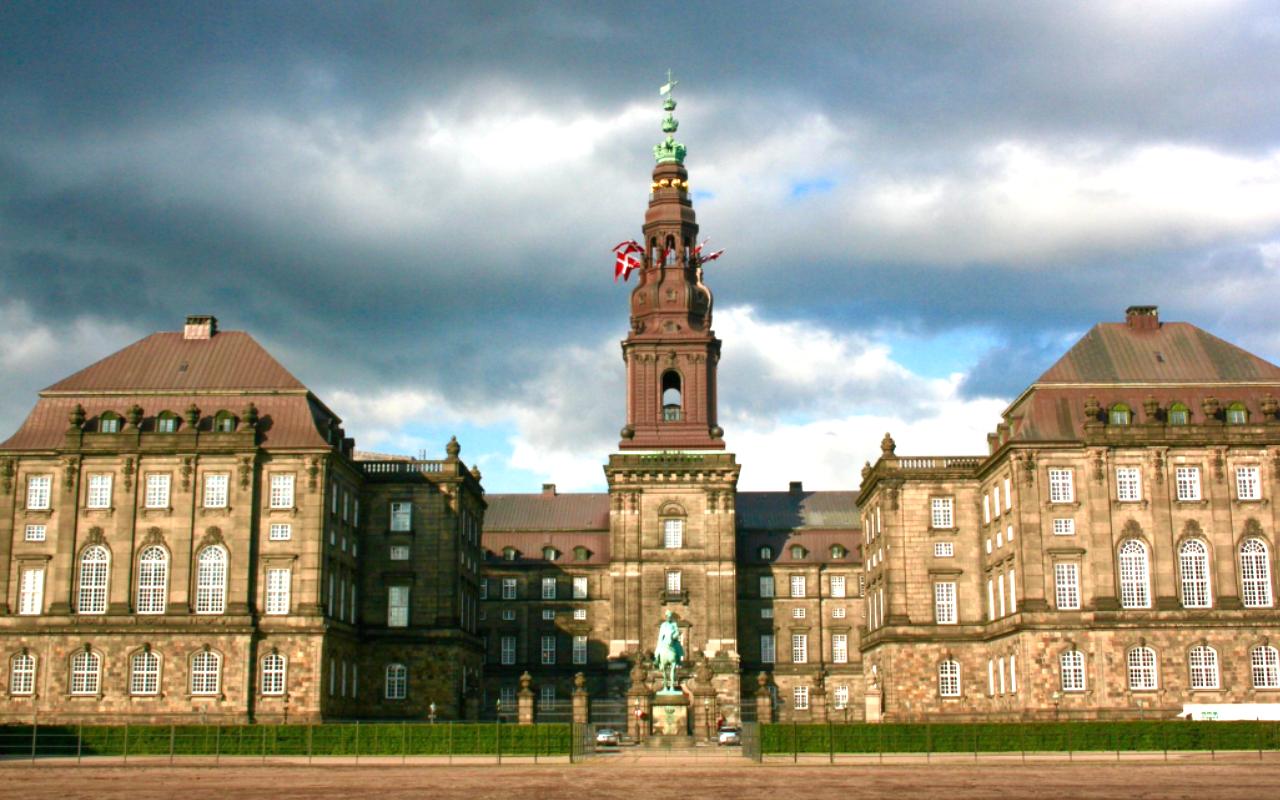
Christiansborg Palace is a one-of-a-kind landmark in the heart of Copenhagen. It sits on the small island of Slotsholmen, at the city’s historic core. For over 800 years, this site has been Denmark’s centre of power. Today, it houses all three branches of the Danish government, the Folketing (Parliament), the Supreme Court, and the Prime Minister’s Office, under one roof.
Parts of the palace are still used by the Royal Family for official events, making it a unique blend of royal heritage and political significance.
Visitors to Christiansborg Palace can explore gilded royal reception rooms, an epic Great Hall with modern tapestries, the dim medieval castle ruins beneath the palace, the historic Royal Stables with carriages, and climb the Christiansborg Palace tower for panoramic views of Copenhagen.
By reading this guide, you will learn about the rich history of Christiansborg Palace and why it’s a must-visit on your Copenhagen itinerary. We’ll cover the palace’s origins, its three reconstructions after devastating fires, and its transformation from a royal residence to Denmark’s government hub.
You’ll also discover the top attractions inside and around the palace, from the opulent Royal Reception Rooms and the Queen’s Tapestries in the Great Hall, to the hidden medieval ruins and the working Royal Stables.
We include practical visitor information on opening hours, tickets, and how to get there, as well as tips on the best times to visit. Finally, we’ll suggest a sample half-day itinerary that combines Christiansborg Palace with nearby landmarks like Nyhavn and Amalienborg.
Whether you are a history lover, a political buff, or a photographer hunting great city views, Palace offers something special. Read on to plan your visit and get the most out of this iconic Copenhagen attraction.
Quick Facts Christiansborg Palace
| Quick Facts | Christiansborg Palace |
| Location | Slotsholmen, Copenhagen, Denmark |
| Built / Style | Completed 1928 (current palace); Neoclassical design by Thorvald Jørgensen |
| Functions | Houses the Danish Parliament (Folketing), the Supreme Court, the Prime Minister’s Office, and the Royal Reception Rooms |
| Tower Height | 106 metres (tower is the highest in Copenhagen) |
| Royal Connection | Still used for state banquets, ambassador audiences, and New Year’s levées |
| Attractions | Royal Reception Rooms, Great Hall (Queen’s tapestries), Medieval Ruins, Royal Stables, Christiansborg Tower |
| Tickets | Combined palace ticket 215 DKK (includes Reception Rooms, Ruins, Stables); children under 18 free |
| Tower Access | Free entry; elevator takes you to the viewing platform |
| Opening Hours | Mar–Nov: Tue–Sun 10:00–17:00; Dec–Feb: Wed–Sun 10:00–17:00 (Royal Stables open 13:30–16:00) |
| How to Get There | Central location on Slotsholmen; walking from Nyhavn (15 min) or Amalienborg (10 min); nearest metro: Kongens Nytorv or Christianshavn |
A Quick History of Christiansborg Palace
The site of Christiansborg Palace has been Denmark’s power center since the Middle Ages. In 1167, Bishop Absalon built a fortress on Slotsholmen to defend Copenhagen. That fortress was later destroyed, and by around 1380, a royal residence, Copenhagen Castle, stood here on the same spot. However, by the 1700s, the old castle was in poor shape.
King Christian VI ordered it demolished, and between 1734 and 1745, he built the first Christiansborg Palace in its place. The first great palace of Christiansborg was the biggest building in Denmark at the time, which represented the royal authority and the contemporary architecture. It was a tragedy when the first Palace was gutted in a fire in 1794, leaving only ruins.
Tragically, the first Christiansborg Palace burned down in 1794, leaving only ruins. The Royal Stables survived along with a few furnishings. A second Palace was constructed and completed in 1828 under King Frederik VI.
This new building was designed by C. F. Hansen in a neoclassical style. It served as the royal residence for decades, but fate repeated itself; another great fire destroyed the second palace in 1884. Only the palace chapel and some artworks survived.
After the 1884 fire, plans were made for the current palace. Work began in 1907, and King Frederik VIII laid the cornerstone. The third (and present) Christiansborg Palace was finished in 1928 and officially opened by King Christian X.
Architect Thorvald Jørgensen retained a grand appearance while accommodating parliamentary needs. He split the design: one wing for the royal reception rooms and another wing for the two chambers of parliament. When it opened, the palace once again united Denmark’s monarchy with its democracy under one roof.
In modern times, Christiansborg Palace no longer serves as the royal family’s home (they moved to Amalienborg after the late 1800s), but it remains the nation’s ceremonial center. The King still holds New Year’s levees and state banquets here, and foreign leaders are received in the palace.
The Christiansborg is a place of real governance, where a debate in the Folketing, council meetings with the monarch, and Supreme Court sessions are all located. Since it began as a medieval royal residence, up to the present day, Christiansborg Palace is the only place that tells the story of the Danish royal family and its democratic future.
Why Visit Christiansborg Palace?
Christiansborg Palace in Copenhagen is a must-see for visitors because it uniquely blends royal heritage with political life. No other building in Denmark does double duty like this. You can tour grand royal chambers used for state events, and then step outside to see parliament in session or climb the Tower for a city view.
The Christiansborg Palace tower tells the story of Denmark’s history, from kings and castles to modern democracy, all in one place. Visitors can absorb beautiful architecture and art: gilded halls, ornate ceilings, and the Queen’s own tapestries.
Christiansborg appeals to many interests. History buffs will admire the 800-year legacy of the site (you can even explore a medieval castle ruin below ground). The neoclassical architectural style and rich decoration will be enjoyed by fans of architecture. The tower offers stunning interior views and panoramic views of the skyline to its enthusiasts in photography.
Political and civic-minded travelers will be interested in going to the cradle of Danish democracy. The Christiansborg Palace tower is also home to cultural experiences such as guided tours of the Royal Reception Rooms and haunting tours of the underground ruins, and therefore interesting to families and inquisitive minds.
The courtyard and tower of Christiansborg are the symbols of Denmark even outside. Its distinctive green-copper spire dominates central Copenhagen’s skyline.
The Tower is open free to visitors and offers one of the best free viewpoints in the city. Because of all these features, history, culture, politics, and beauty. Christiansborg Palace is one of Copenhagen’s most unique landmarks.
Visiting here lets you “walk in the footsteps of royalty” while also witnessing the day-to-day workings of Denmark’s government.
Top Attractions Inside the Palace
a. Royal Reception Rooms: Step into the palace’s lavish state rooms. These rooms on the first floor (bel étage) are richly decorated with art and furniture rescued from earlier palaces.
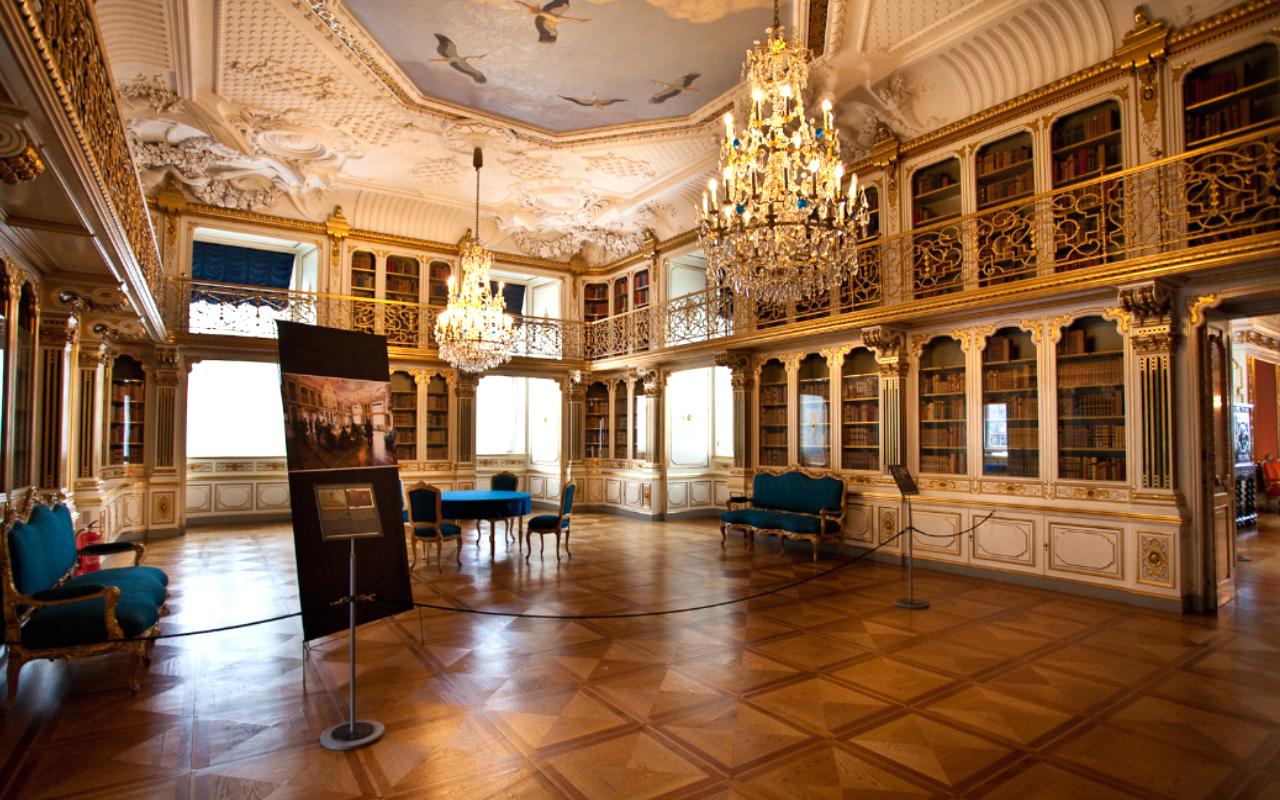
The Royal, Christiansborg Palace
You’ll see gilded salons like the Fredensborg Room and the Velvet Room. The centerpiece is the Throne Room, with twin thrones under a giant ceiling painting of the Dannebrog flag.
The opulent Royal Reception Rooms are still used today for events like New Year’s receptions and state dinners, giving them a living-history feel. Visitors enter via the grand King’s Staircase, shown below, adding to the sense of ceremony and grandeur.
b. The Great Hall: The palace’s Great Hall (Knights’ Hall) is an imposing space 40 meters long with a high vaulted ceiling. It’s famous for the Queen’s Tapestries, a series of 11 modern tapestries depicting 1,000 years of Danish history. These were commissioned by the Danish business community as a birthday gift to Queen Margrethe II in 1990.
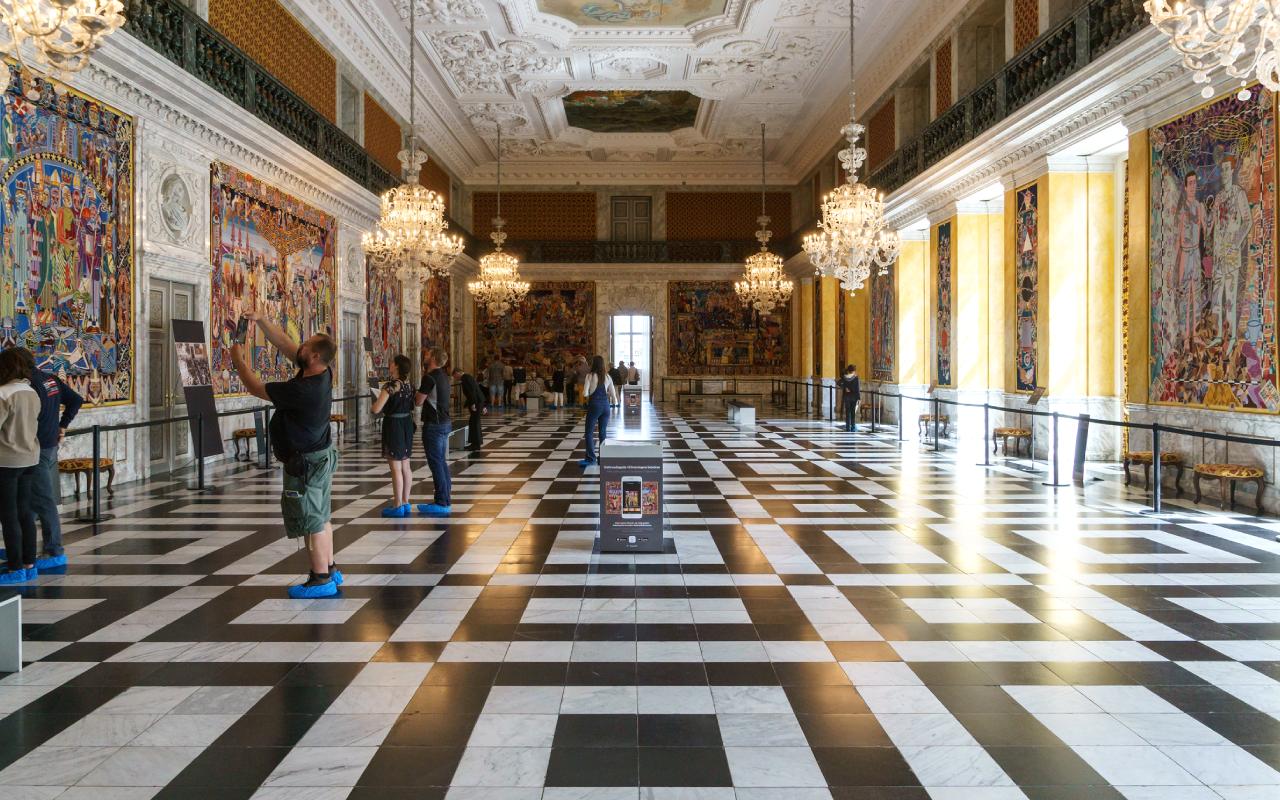
The Great Hall
Look also for three large ceiling paintings symbolizing the legislative, executive, and judicial powers (a reminder of the palace’s dual role). The Hall is used for official events but can be admired by visitors who can learn about its art and meaning.
c. The Ruins Beneath the Palace: Hidden under Christiansborg are authentic medieval remains. In the 1910s, builders discovered castle walls dating back to 1167, from Bishop Absalon’s original fortress.
Excavations have since exposed remnants of Copenhagen Castle, including the infamous Blue Tower, where prisoners like Leonora Christine (Christian IV’s daughter) were once held.
Walking through the underground site, you can see thick stone walls, arches, and foundations lit with atmospheric lighting. The ruins tell a grim and fascinating story of Denmark’s past.
Guided “spooky” tours highlight these ancient walls and the castle’s eventual collapse under Christian VI, who tore it down to build the first Christiansborg.
d. The Royal Stables: Christiansborg’s own stables (Rideskolen) date back to 1740 and are the only part of Christian IV’s palace complex that survived all the fires. Today, the stables are still in use and open to tourists.
They house nearly 20 elegant Lipizzaner horses along with historic carriages and sleighs. In the past, up to 250 royal horses were kept here; they were the “living thrones” that carried the monarchs through war and ceremony.
The highlight is the Harness Museum inside, where you can see the gold-plated Coronation Coach (1840), the carriage of Queen Juliane Marie, and other royal equestrian treasures.
If you visit at the right time, you might see the horses brought out onto the large Riding Grounds. The exterior of the Stables building is shown below with a carriage outside, hinting at this site’s rich tradition.
e. Christiansborg Palace Tower: Rising 106 meters high, the tower is the tallest in Copenhagen. Unlike many old palaces, Christiansborg lets visitors ascend to its top free of charge.
A glass elevator (no stairs) whisks you to the observation platform 44 meters above ground. From here, you enjoy sweeping 360° views over Copenhagen, the city hall, the harbor, Amalienborg, the Opera House, and more.
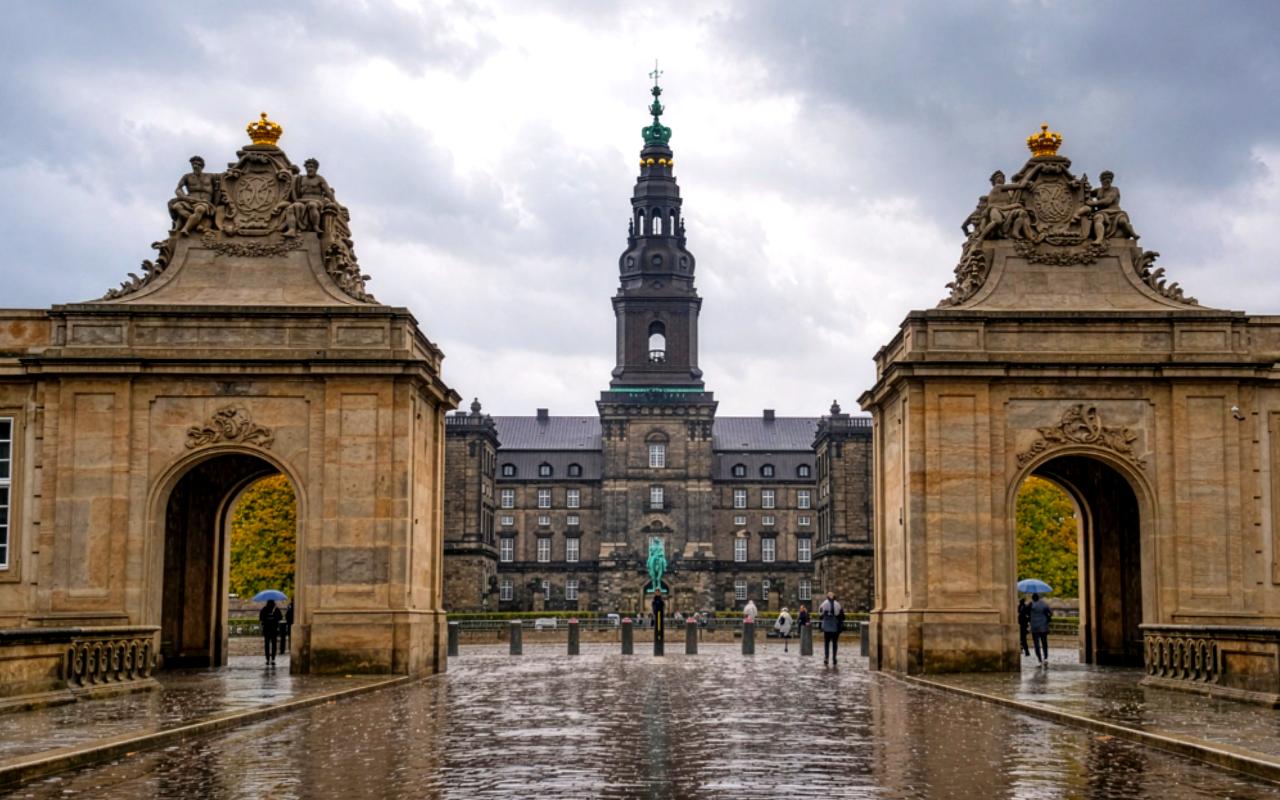
Since opening to the public in 2014, the tower has become one of the city’s best vantage points. Be aware that only about 40 people are allowed on the platform at once, so you may encounter a short queue.
The tower’s entrance is at the King’s Gate on Slotsholmen (near the Marble Bridge); follow the signs and the flag around the tower base.
Visitor Information
Opening Hours: Christiansborg Palace sites (Royal Reception Rooms, Ruins, and Royal Kitchen) are generally open Tuesday through Sunday, 10:00–17:00 (last entry around 16:30) from late March through the fall. During the winter (Nov–Mar), they are typically closed on Mondays and open Wed–Sun 10:00–17:00. The Royal Stables open daily from 13:30–16:00 (also closed Mondays).
Note that the Palace Church only opens on Sundays. Hours can change for state events, so always check the official site in advance. In general, arriving around opening time is best to avoid crowds.
Tickets and Prices: A combined ticket (~215 DKK adult, children under 18 free) covers entry to the Royal Reception Rooms, the Ruins, the Royal Kitchen, and the Royal Stables. (Smaller sites, like the Riding Grounds and tower, are free.)
The “Combi Ticket” is available on site or online. If you only want part of the palace, single tickets may be offered (for example, 75 DKK for just the Ruins or Stables). Copenhagen Card holders get free entry to all these attractions.
Keep in mind: tickets must be brought or shown on a smartphone. On busy days, guided tours (in Danish) of the Royal Reception Rooms run at 11:00 and 13:00; an English tour is offered in summer at 15:00.
Free Areas: The Palace Grounds, Marble Bridge, and Christiana Tower exterior are free to roam (the courtyard plaza at Christiansborg is an open public space). The Christiansborg Tower itself is free to enter via its separate line; just walk up and wait for your turn. Also, the switch of the Royal Guards is visible from the courtyard when in session (generally daily at noon, see below).
How to Get There: Christiansborg Palace sits on Slotsholmen Island in central Copenhagen. The address is Prins Jørgens Gård 1 (1218 København K). It’s an easy 10–15 minute walk from areas like Nyhavn, the University, or Kongens Nytorv Metro Station. Buses 1A, 2A, 26, and others stop nearby at Rådhuspladsen or Stormbroen.
The nearest Metro stations are Kongens Nytorv (heading through Nyhavn past the Opera) or Christianshavn (across the canal). From the station, it’s a short stroll over the Marble Bridge. If you enter the inner Christiansborg Palace tower grounds, you’ll find the official entrance and ticket office.
Location on Slotsholmen: The palace complex faces the Palace Square (Slotspladsen). To reach the Christianborg Tower entrance, walk to the middle of the palace near the Marble Bridge (you’ll see a large gated portal called the King’s Gate beneath the tower).
The King’s Gate entrance leads to an elevator up the tower. Once inside the tower line, you cannot climb stairs; it’s an elevator only, so it’s accessible to all.
Tips for Visiting
Best Time to Go: Arrive early in the morning, right when it opens (usually 10:00). Mornings are less crowded in the Reception Rooms and Ruins. The tower line is shorter just after opening or late afternoon. Weekdays are quieter than weekends. Summer is peak tourist season, so if you visit then, get there at 10 AM. In shoulder seasons (spring/fall), mid-day is fine.
Time Needed: Plan to spend 2–4 hours at Christiansborg Palace to see everything. For example, 1–1.5 hours in the royal rooms and hall, 30 min in the stables, 30 min in the ruins, and 30 min–1 hour at the tower (including any waiting). Walk the outdoor courtyards too. You may not want to try it all in one go if you’re rushing.
Guided vs Self-Guided: A guided tour of the Palace is included if you buy a ticket to the Royal Reception Rooms. The tours (in Danish, English in summer) last about 50 minutes and add context to what you see. If you prefer to wander on your own, the audio guide or info panels are helpful. The guide really enriches the experience, so consider joining if language isn’t a barrier. Tours of Parliament (Folketing) are also available in English on specific days (check online) and are free, but require advance booking.
Photography: You may take photos inside most areas (no tripods or flash). The grand halls and tapestries make for stunning images. At the tower, bring a camera or phone – the 360° view at 44m up is well worth shooting (Copenhagen’s City Hall tower is only 40 cm shorter, but Christiansborg has the best free view). Just be mindful of crowds in narrow corridors.
What to Wear: Dress comfortably and wear good walking shoes. You’ll cover uneven ground in the ruins and climb stairs in parts of the palace. Layers are wise since indoor rooms can be cool, but you’ll also go outside on courtyards and up the tower. There’s a security check at the entrance, so avoid carrying large bags.
Nearby Attractions to Explore
After your Christiansborg visit, there are several attractions within easy reach:
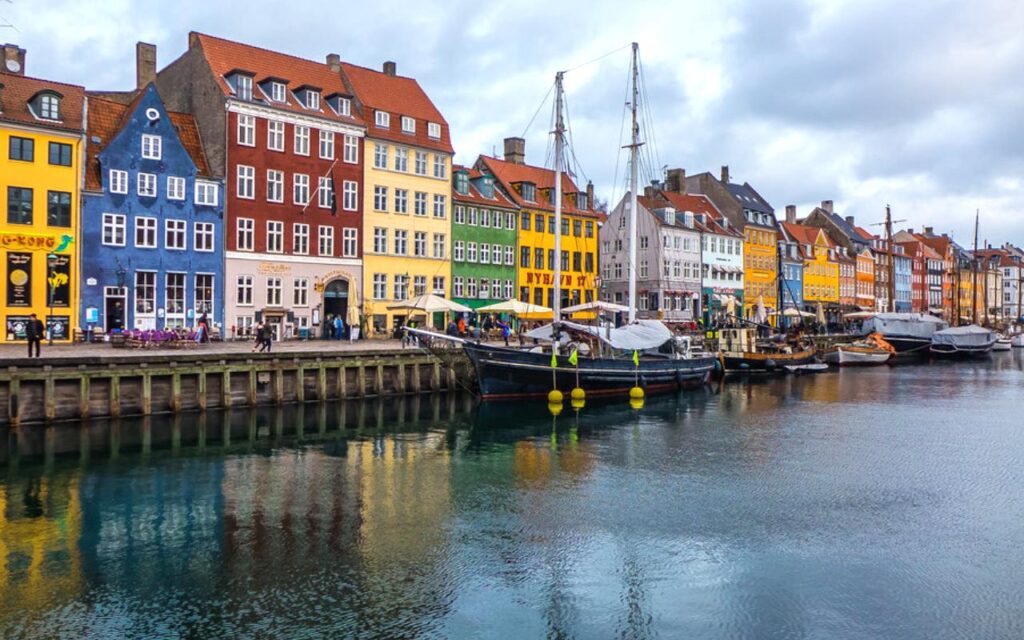
Nyhavn – Colorful Historic Harbor: Just a 10–15 minute walk or short bus ride to the northeast. Nyhavn is Copenhagen’s famous canal lined with bright 17th-century townhouses and open-air cafés.
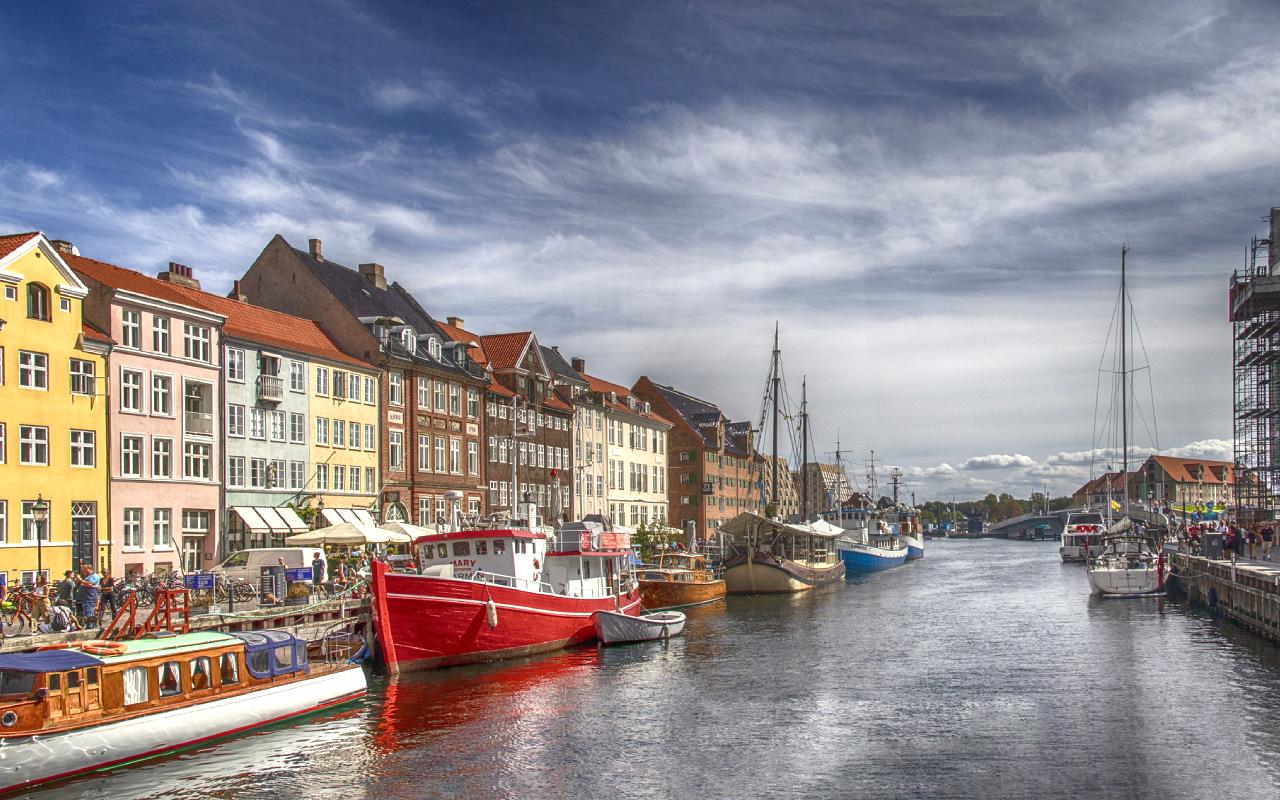
Nyhavn
It’s a lively spot for lunch or a canal boat tour. Snap photos of the rainbow-painted facades and maybe enjoy a traditional Danish smørrebrød by the water. In winter, Nyhavn hosts a festive Christmas market in December. Even a quick stroll here is worth it for the atmosphere (Hans Christian Andersen once lived here).
The National Museum of Denmark: Located very near Christiansborg (at Ny Vestergade 10), it’s Denmark’s largest cultural history museum. You can explore 9,000 years of Danish history, from Vikings with golden horns to everyday life displays.
Highlights include Bronze Age artifacts, Egyptian mummies, and the iconic Golden Horns. The National Museum is ideal if you want more context on Danish culture and history after seeing Christiansborg’s political side.
Amalienborg Palace – Home of the Royal Family: A 15-minute walk from Christiansborg across the water. Amalienborg is the residence of Denmark’s Queen and King. Here you can watch the changing of the Royal Life Guard at noon (a colorful parade of marching soldiers with music).
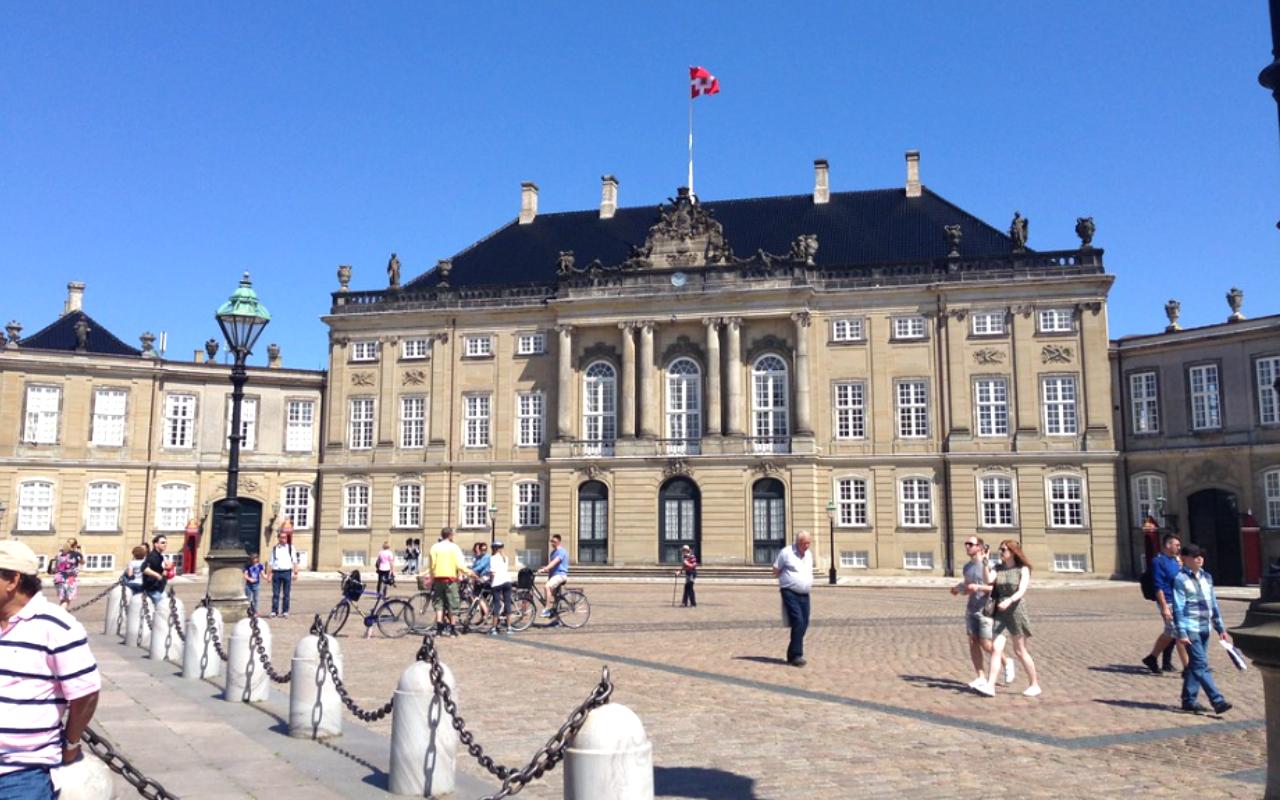
Amalienborg Palace
On the square, four identical palaces surround a statue of King Frederik V. The Amalienborg Museum (in Christian VIII’s Palace) shows royal apartments and tells the story of Denmark’s monarchy. It’s a nice follow-up to see how the royal family lives today, after exploring their former palace.
Other highlights not far include the waterfront Opera House and the Maritime Museum at Nyhavn. Copenhagen’s compact center means you can easily combine these sites on a single outing around Christiansborg.
Sample Itinerary
Half-Day Christiansborg & Nearby:
- 09:30 – Start at Christiansborg Palace (arrive just before opening).
- 10:00–11:30 – Tour the Royal Reception Rooms and Great Hall. Enjoy the tapestries and the throne room.
- 11:30–11:45 – Head to the King’s Gate entrance and ride the elevator up Christiansborg Tower. Spend ~30 min taking in the view.
- 12:00 – Walk to Amalienborg Palace (about 10 min). At noon, go see the guards in the palace square.
- 12:30 – 12:30 – Lunch at a cafe at Amalienborg or stroll along the waterfront to Nyhavn (15 min).
- 13:30 – Sightseeing in the colorful canals of Nyhavn: maybe a boat tour or just a walk about the harbor.
- 14:30 – If time permits, visit the National Museum (near Christiansborg) or go back to Christiansborg to visit the Underground Ruins (open late afternoon).
- 15:30 – Let the Royal Stables (16:00) be the last to visit, seeing the horses and royal carriages, then go back.
This itinerary will fit in the major attractions of Christiansborg and highlight other iconic attractions in the neighborhood. You can customize according to interest: some might omit the tower in case the view is not important, or spend more time in the stables.
The level city streets and good transport network of Copenhagen mean that getting around is fast, and you can adjust this half-day itinerary to suit your pace.
Final Thoughts
Christiansborg Palace is indeed a sight not to be missed in Copenhagen. Its royal tradition that is combined with political influence is a unique feature of it: you can feel Danish history at several levels at once.
And you will go away amazed with the lavishness of the reception rooms and tapestries, and fascinated with the old ruins that lie in the basement, and revitalized with the prospect that the free tower offers, and standing in the midst of Danish democracy.
The Christiansborg Palace is a memorable place to visit, whether you are looking at the architecture, the politics, or simply a great panoramic view. Read its tales, and look at its rooms, and you will know why this palace is a gem of Copenhagen.














-
 0115 Best Easy Treks in Nepal for Beginners and Families
 -
 02Best season for Everest Base Camp Trek
 -
 03Best Time to Go Hiking in Nepal: A Seasonal Guide for Trekkers
 -
 04Suchi Purja –Wife of Nirmal Purja aka Nims Dai
 -
 05Dubai desert safari outfit ideas
 -
 06Top Beaches in Sri Lanka
 -
 0710 Best Easy Treks in Nepal