
Now Reading: Hierve el Agua Oaxaca Travel Guide 2026: How to Visit Mexico’s Stunning Petrified Waterfalls
-
01
Hierve el Agua Oaxaca Travel Guide 2026: How to Visit Mexico’s Stunning Petrified Waterfalls
Hierve el Agua Oaxaca Travel Guide 2026: How to Visit Mexico’s Stunning Petrified Waterfalls

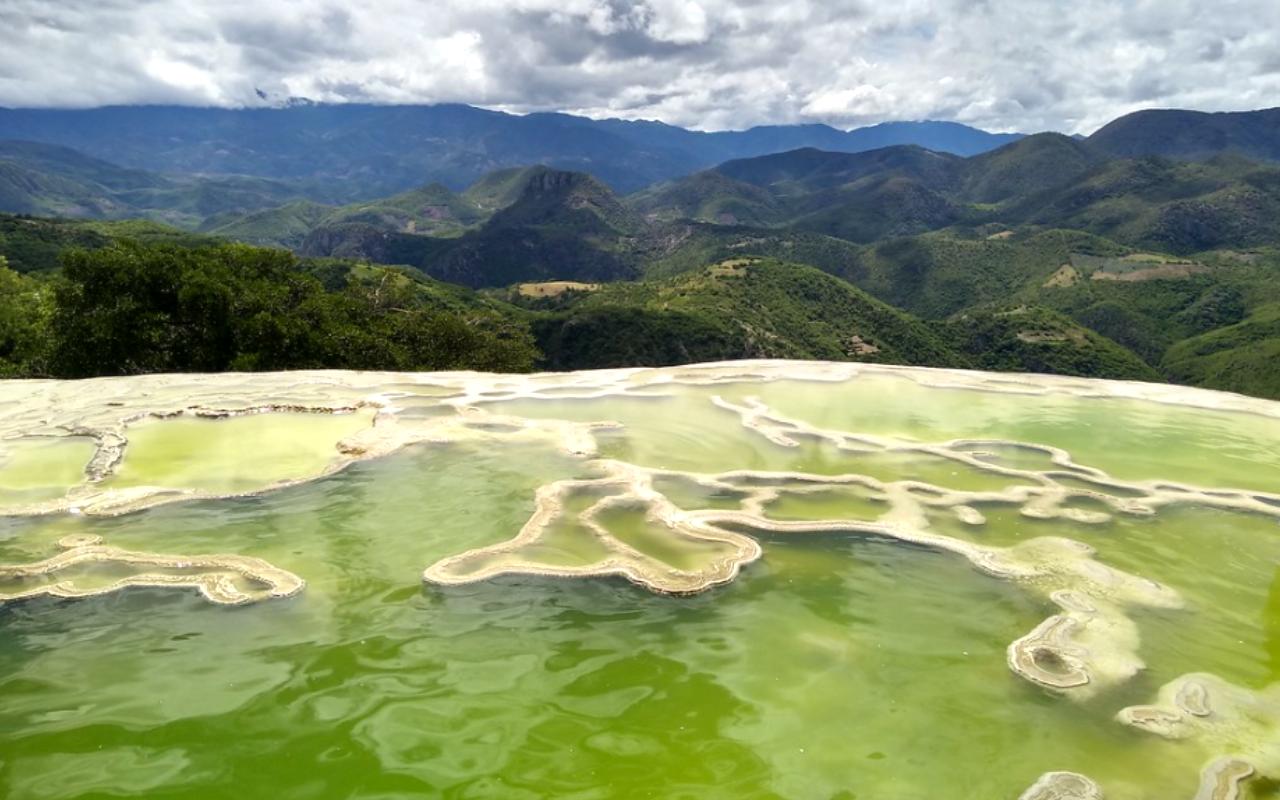
1. Introduction
Imagine standing on the edge of a mountain cliff, staring at a massive waterfall that has completely turned to stone. This is the magic of Hierve el Agua. You will not find roaring river rapids here. Instead, you discover an incredible natural illusion that tricks your eyes and captures your imagination.
Hierve el Agua stands out as one of the most unique geological wonders on the planet. Visitors flock to this Oaxaca mountain site to witness the “petrified waterfalls.” From a distance, the white rock formations look exactly like cascading water frozen in time.
This breathtaking destination ranks high on every traveler’s bucket list. It easily claims the title of Oaxaca’s top natural attraction. People travel from all over the world to swim in the mineral pools and hike the stunning cliffside trails.
Our comprehensive Hierve el Agua travel guide will help you plan the perfect 2026 trip. We cover everything you need to know for a smooth journey. You will learn exactly how to get there, what to pack, and how much money you need to bring.
We also reveal the absolute best time to visit to avoid the heavy tourist crowds. Get ready to experience Mexico’s most surreal landscape. Welcome to your ultimate guide on Avivaaa!
2. What is Hierve el Agua?
The name “Hierve el Agua” translates to “The Water Boils” in English. This name often confuses first-time visitors. When you hear this name, you might expect steaming hot springs.
However, the water here does not actually boil from heat. The name comes from the way the water bubbles up from the underground springs. Mineral gases force the water to the surface, creating a bubbling effect that looks exactly like boiling water. The water temperature actually stays quite cool all year round!
So, how did these magnificent petrified waterfalls form? The process took thousands of years. The natural springs here hold massive amounts of calcium carbonate and magnesium.
As the spring water trickles over the cliff edge, the harsh sun evaporates the liquid. The water leaves behind tiny mineral deposits on the rock face. Over millennia, these deposits built up layer by layer.
The process mimics how stalactites form inside underground caves. The result is a massive, towering rock formation that mimics a flowing cascade of water. You can explore two main “waterfalls” at the site: the large waterfall (Cascada Grande) and the small waterfall (CascadaChica).
Nature also carved out gorgeous infinity pools right at the cliff’s edge. The mineral water fills these shallow basins. You can step into these pools and look out over the sweeping mountain valleys.
You will only find one other place on Earth that strongly resembles this location. Pamukkale in Turkey features similar white travertine terraces. However, Hierve el Agua offers a much more rugged, untouched mountain atmosphere.
3. Where is Hierve el Agua Located?
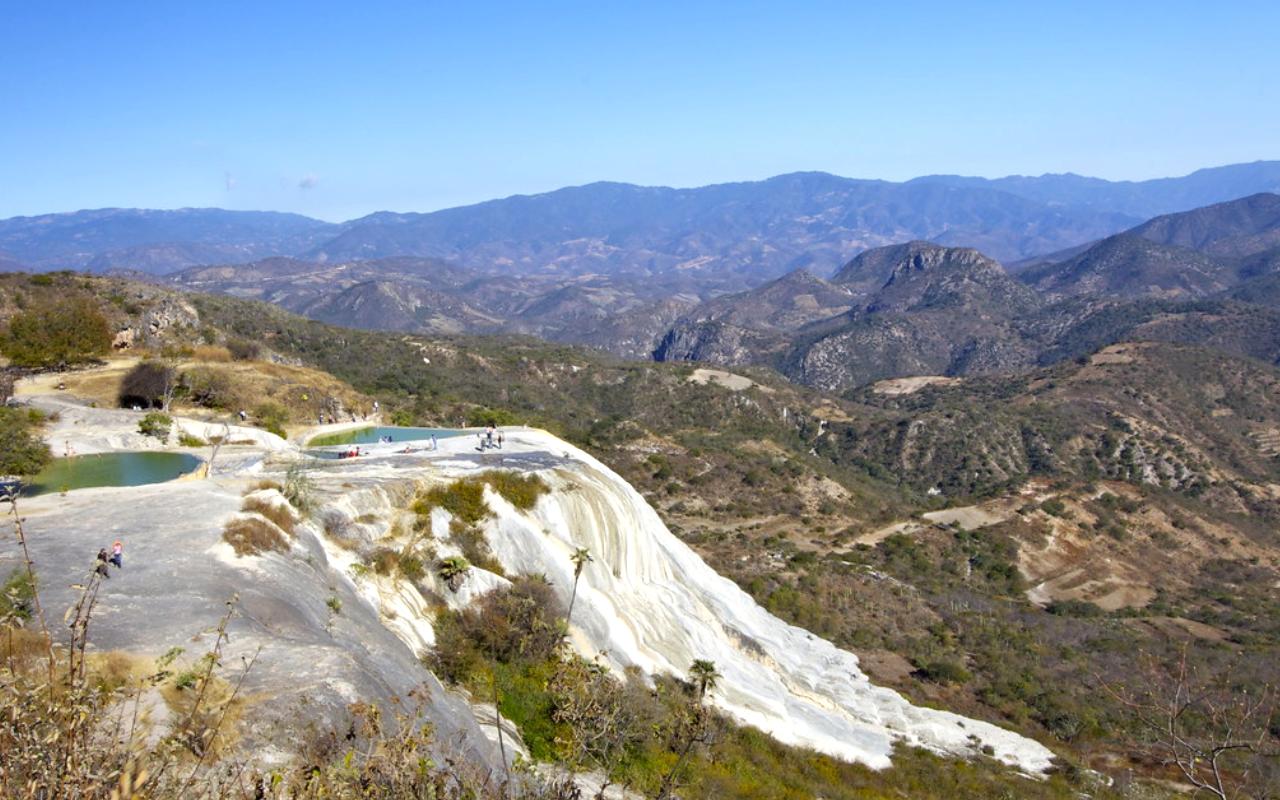
Hierve el Agua
You will find Hierve el Agua tucked away in the rugged Sierra Madre mountains. The site belongs to the beautiful state of Oaxaca in southern Mexico. Specifically, it sits near the small indigenous village of San Isidro Roaguía.
The site sits approximately 65 kilometers (40 miles) southeast of Oaxaca City. This distance might sound short on paper. However, the mountain geography makes the journey quite an adventure.
The route takes you through the stunning Tlacolula Valley. You will pass sweeping fields of agave plants. These spikey green plants supply the famous local mezcal industry.
As you leave the valley, the roads change drastically. You must navigate winding, steep mountain passes to reach the final destination. The elevation climbs higher and higher, offering incredible views of the rural landscape.
Because of these winding mountain roads, the travel time takes about 90 minutes to two hours from Oaxaca City. Traffic, road conditions, and your chosen method of transportation will impact your exact travel time.
The location makes it incredibly easy to pair your visit with other famous sights. You drive directly past the town of Mitla to reach the mountains. Mitla holds famous ancient Zapotec ruins that you absolutely must see.
You also pass through several traditional weaving villages and mezcal farms. This rich cultural corridor makes the drive just as exciting as the destination itself.
4. How to Get to Hierve el Agua
4.1 From Oaxaca City
- By Tour: Booking a guided tour remains the most convenient option for most travelers. You simply hop into an air-conditioned van in Oaxaca City and let the driver do all the work. Tour operators handle the navigation, the gas, and the parking.
- By Colectivo (Shared Taxi/Minivan): Budget travelers love taking colectivos. A colectivo is a shared transport vehicle. You will first take a colectivo or bus from Oaxaca City to the town of Mitla. Once you reach Mitla, you hop into a local shared pickup truck (camioneta) that drives up the mountain to the site.
- By Rental Car: Renting a car offers you total independence. You set your own schedule and beat the tour buses. You can leave before sunrise and stay as long as you want. However, you must feel comfortable driving on foreign roads.
4.2 Transportation Details
Mountain driving requires a lot of caution. If you rent a car, you will eventually hit a toll road junction. You can choose the new toll road (cuota) or the old dirt road (libre).
Always take the toll road! The old dirt road features massive potholes, steep drop-offs, and rough conditions. The toll road provides a much safer and smoother drive.
Here is a quick breakdown of travel times:
• Guided Tour: Full day (usually 8 to 10 hours, including other stops).
• Colectivo Route: 2 to 2.5 hours each way due to transfer times.
• Rental Car: 1.5 to 2 hours each way.
Cost estimates vary wildly based on your choice. A full-day tour generally costs between $40 and $70 USD. The DIY colectivo route costs less than $10 USD round-trip. A rental car costs about $30 to $50 USD per day, plus gas and tolls.
Safety remains a priority in this region. The route from Oaxaca City to the site is generally very safe for tourists. Just drive slowly on the final mountain stretch and watch out for roaming livestock!
4.3 Guided Tours vs DIY Travel
Should you book a tour or go it alone? Let us compare the two options so you can make the best choice.
Guided Tours
Tours remove all the stress of travel planning. Your guide provides historical context and local legends. Most tours also bundle the trip with stops at a mezcal distillery, the Mitla ruins, and a weaving village.
• Pros: Zero stress, informative, covers multiple locations in one day.
• Cons: You follow a strict schedule, you arrive when the site is most crowded, and you get limited time at the pools.
DIY Travel (Car or Colectivo)
Traveling independently allows you to experience the magic on your own terms. You can arrive at 7:00 AM before any tour shows up. You can hike the trails without rushing back to a van.
• Pros: Complete freedom, cheaper (if using colectivos), ability to beat the crowds.
• Cons: Requires navigation skills, transferring buses takes patience, and there is no built-in guide for history.
5. Entrance Fee, Opening Hours & Practical Info
You need accurate information to plan your day perfectly. We have updated all the practical details for your 2026 trip.
| Information | Details (2026 Updates) |
| Opening Hours | 7:00 AM to 6:00 PM (Daily) |
| San Lorenzo Community Fee | 20 MXN per person |
| Main Entrance Fee | 50 MXN per person |
| Parking Fee | 50 to 80 MXN per vehicle |
| Payment Method | Cash only (No credit cards!) |
The local indigenous community manages the entire site. They use the entrance fees to maintain the trails, clean the area, and support their village. You actually pay two separate fees on your way in.
First, you hit a roadblock in the town of San Lorenzo Albarradas. They charge a small road access fee (around 20 pesos). Further up the road, you reach the main gate where you pay the official entrance fee (around 50 pesos).
You must bring plenty of cash. The mountains have zero cell service, which means credit card machines do not work. Bring small bills (20, 50, and 100 peso notes) to make exact change easily.
The site offers basic facilities for visitors. You will find simple bathrooms near the entrance. You usually pay 5 pesos to use the toilet, so keep your coins handy!
You will also discover a vibrant row of food stalls near the parking lot. Local vendors sell fresh coconuts, cold drinks, tacos, and memelas (a local Oaxaca dish). You can easily grab a cheap and delicious lunch after your hike.
6. Things to Do at Hierve el Agua
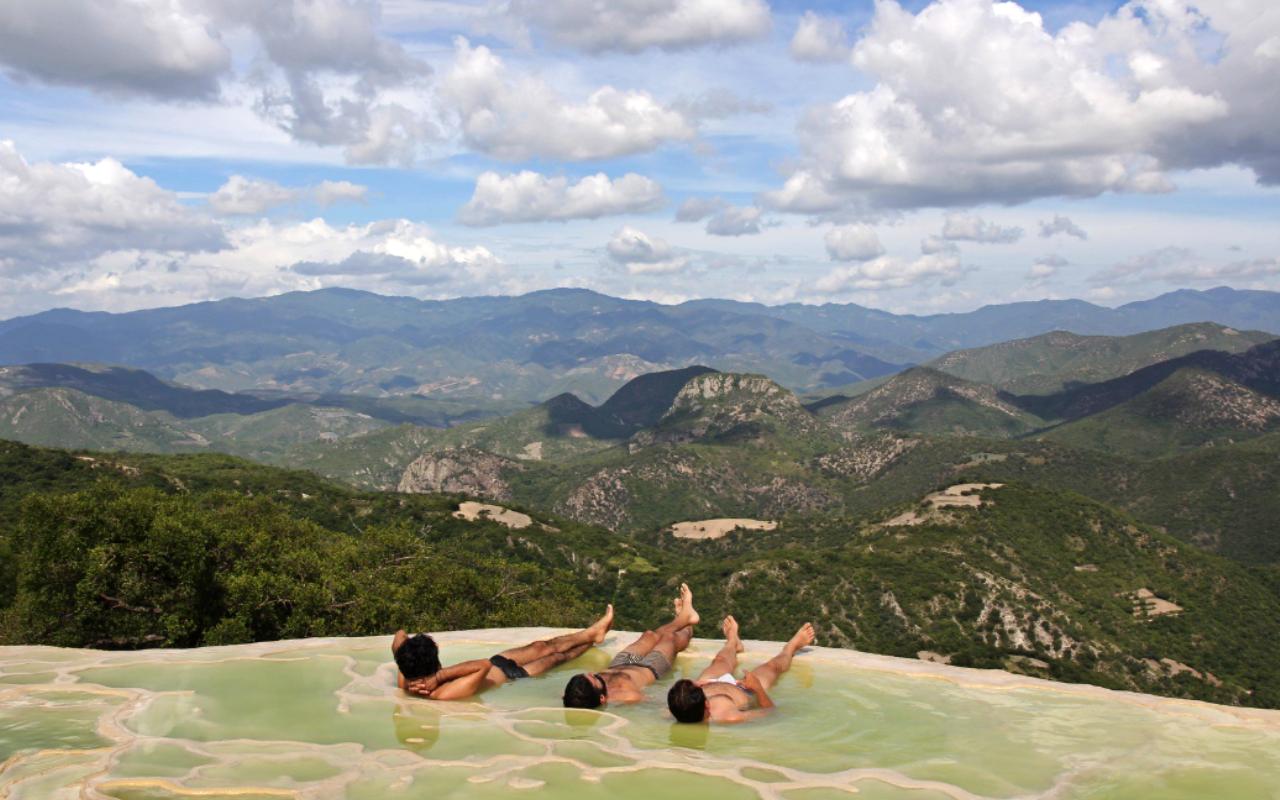
Hierve el Agua
You will find plenty of exciting activities to fill your day. Many people think you just look at the waterfall and leave. In reality, you can easily spend four hours exploring everything.
6.1 Swim in the Natural Infinity Pools
Swimming in the cliffside pools offers an unforgettable experience. The water sits right on the edge of the mountain drop-off. You feel like you are swimming in the sky!
The locals built small stone walls to contain the spring water. These walls created the perfect shallow pools for wading. The contrast between the bright turquoise water and the white rock looks stunning.
As we mentioned earlier, the water does not boil. The temperature ranges from cool to lukewarm. On a hot, sunny Oaxaca day, the cool water feels incredibly refreshing on your skin.
You must follow basic safety rules while swimming. The wet rocks get extremely slippery. Walk slowly and carefully near the edges. Never cross the safety ropes or climb on the fragile mineral formations.
6.2 Hike the Petrified Waterfalls Trails
Do not just look at the falls from the top. You must hike down to the bottom to truly appreciate their massive scale! Hiking stands out as one of the top Hierve el Agua attractions.
A well-marked loop trail takes you around the entire site. The hike offers an easy to moderate difficulty level. Anyone with a basic level of fitness can complete the loop in about an hour.
The dirt path winds down the side of the mountain. You walk through a dense forest of agave plants and giant cacti. Soon, you arrive at the base of the Cascada Grande.
Looking up from the bottom completely changes your perspective. The “frozen” drips of rock tower dozens of meters above your head. You can see the intricate details of the calcium deposits up close.
6.3 Photography Spots
Photographers consider this place a paradise. The dramatic landscape provides endless opportunities for breathtaking shots.
To get the best photos, you need to think about lighting. Sunrise offers a soft, golden glow over the mountains. Sunset paints the sky with vibrant pinks and purples, reflecting perfectly in the pools.
You will find the most Instagram-worthy viewpoint near the Cascada Chica. Stand near the main pool and frame the Cascada Grande in the background. The resulting photo captures the water, the stone waterfall, and the valley all in one shot.
Take note of the drone rules. The local community strictly regulates drone usage. As of 2026, they either ban drones completely or require a very expensive permit fee. Always ask the guards before launching a drone to avoid heavy fines.
6.4 Explore the Surrounding Landscape
Take some time to appreciate the unique high-desert environment. The surrounding landscape looks like a scene from an old Western movie. Giant organ pipe cacti dot the rolling hillsides.
The dry, rugged terrain contrasts beautifully with the lush green valleys far below. Keep an eye out for local wildlife, including colorful birds and sunbathing lizards.
After you finish exploring nature, engage with the local culture. The vendors at the entrance love chatting with visitors. Buying a fresh fruit cup or a handmade craft directly supports the families who protect this beautiful area.
7. Best Time to Visit Hierve el Agua
Timing your visit makes a massive difference in your experience. Oaxaca experiences two distinct weather patterns: the dry season and the rainy season.
The dry season runs from November through April. This period serves as the absolute best time to visit. The skies stay clear, the sun shines brightly, and the roads remain dry and safe.
During the dry season, the infinity pools glow with a vibrant turquoise color. The lack of rain keeps the water crystal clear. This season provides the perfect conditions for swimming and photography.
The rainy season lasts from May to October. Visiting during these months presents a few challenges. Heavy rains can wash out the mountain dirt roads, making driving difficult.
Furthermore, the rain stirs up mud and sediment. The pools often lose their bright blue color and turn a murky brown. The afternoon clouds also roll in quickly, which ruins visibility and hides the mountain views.
You also need to choose the right time of day. Arrive right when the gates open at 7:00 AM. You will beat the intense midday heat and experience the pools without crowds.
Most tour buses arrive between 11:00 AM and 2:00 PM. The site gets incredibly crowded and noisy during these peak hours. If you want a peaceful experience, avoid the middle of the day at all costs.
8. What to Bring
Packing the right gear ensures a comfortable and fun trip. The remote location means you cannot easily buy forgotten items. Use this checklist to prepare your day bag.
- Comfortable Walking Shoes: Leave the flip-flops in your bag! You need sturdy sneakers or hiking boots to safely navigate the steep, rocky dirt trails.
- Swimwear and Towel: Wear your bathing suit under your clothes. The site lacks fancy changing rooms. Bring a quick-dry microfiber towel to dry off after your swim.
- Sun Protection: The sun beats down relentlessly at this high altitude. You must pack high-SPF sunscreen, a wide-brimmed hat, and UV-blocking sunglasses. You will find very little shade on the trails.
- Water and Snacks: Dehydration happens quickly in the mountains. Bring at least two liters of water per person. Pack some energy bars or fruit for your hike.
- Plenty of Cash: We cannot stress this enough. Bring enough Mexican Pesos to cover your entrance fees, bathroom access, food, and transport.
9. Travel Tips for First-Time Visitors
- Start Early to Avoid Crowds: The early bird truly gets the worm here. Arriving at 7:00 AM feels magical. You get the pools entirely to yourself. You can take photos without dozens of strangers blocking your view.
- Be Prepared for Rough Roads: Even if you take the toll road, the final stretch of the journey gets bumpy. The paved road ends, and you must drive on dirt and gravel. If you suffer from motion sickness, take medicine before you leave Oaxaca City.
- Respect the Local Community Rules: The San Isidro Roaguía community owns and protects this land. They enforce strict rules to preserve the fragile environment. Never litter, do not step on protected rock areas, and always treat the staff with respect.
- Manage Your Hydration and Altitude: Hierve el Agua sits at an elevation of about 1,700 meters (5,500 feet). The thin air can make hiking feel much harder than usual. Drink plenty of water, walk slowly, and take breaks if you feel dizzy.
- Combine Your Trip: Do not drive all the way out here just for one stop! The Tlacolula Valley holds so much magic. Plan your day to include other stops along the highway to maximize your time.
10. Nearby Attractions to Combine with Hierve el Agua
Mitla Archaeological Site
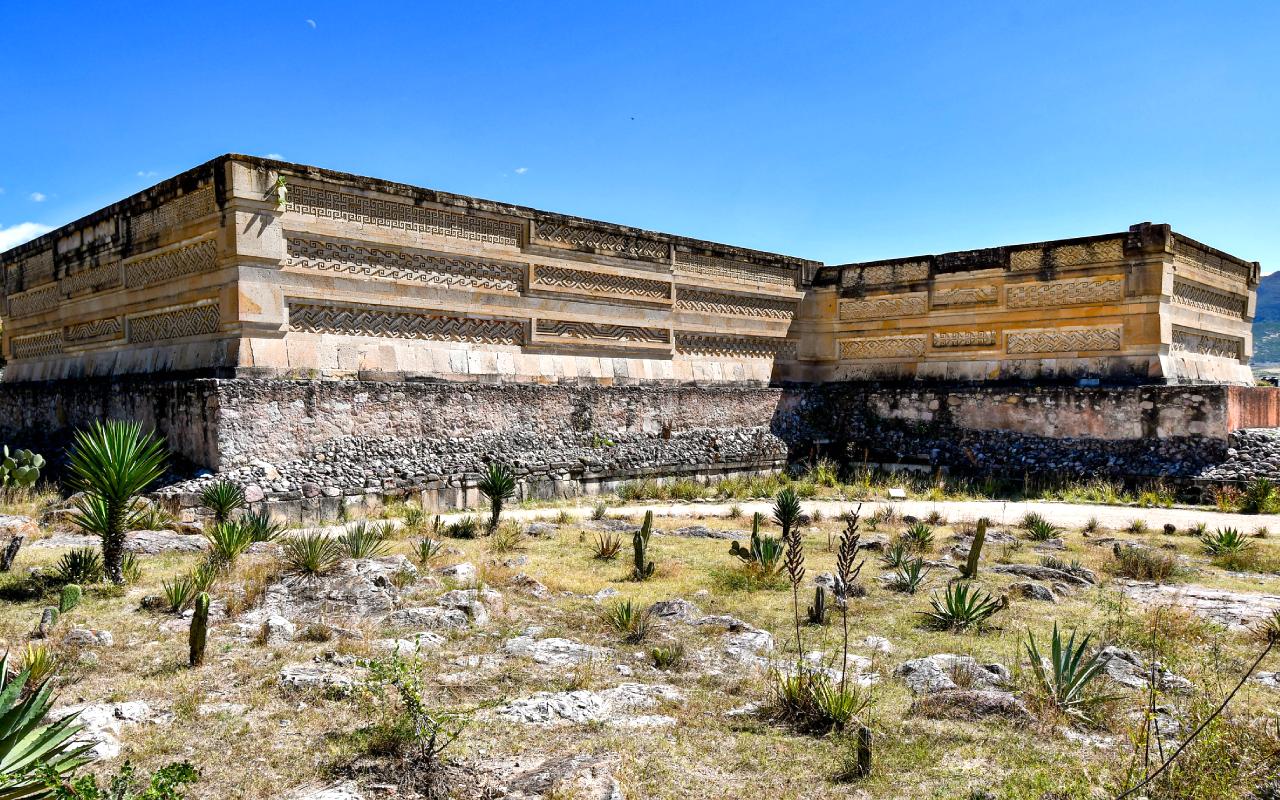
Mitla Archaeological Site
You literally drive right past Mitla on your way to the waterfalls. Mitla served as a crucial religious center for the ancient Zapotec people. You will marvel at the intricate, geometric stone mosaics that cover the ancient palace walls.
Teotitlán del Valle
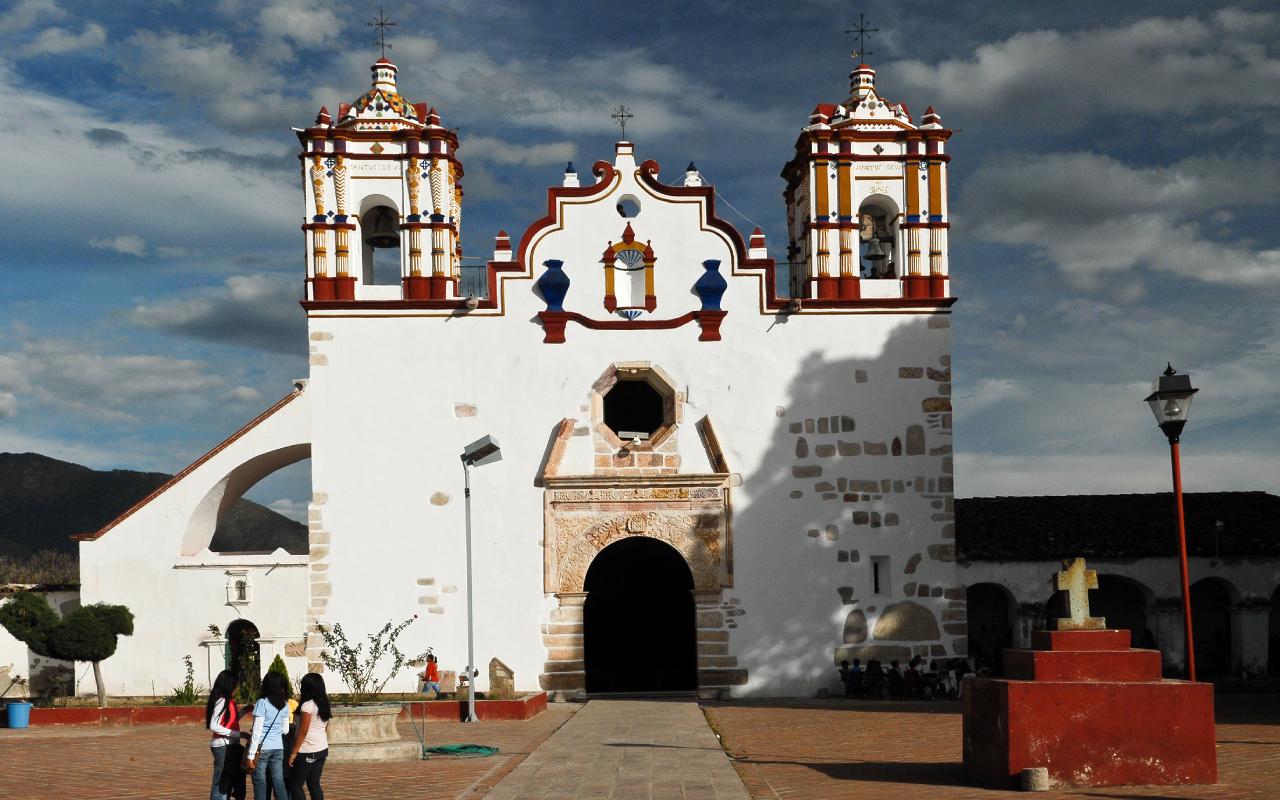
Teotitlán del Valle
This charming village is famous for its master weavers. Local artisans use traditional wooden looms to create stunning wool rugs. They dye the wool using natural ingredients like pomegranate, indigo, and the famous cochineal bug.
Mezcal Distilleries (Palenques)
Oaxaca produces the best mezcal in the world. You will pass dozens of small, family-run distilleries on the highway. Stop at a palenque to see how farmers roast the agave hearts in underground fire pits. You can enjoy a tasting session right at the source!
Tlacolula Market (Sunday Only)

Tlacolula Market
If you travel on a Sunday, you hit the jackpot. The town of Tlacolula hosts one of the oldest and largest indigenous markets in Mesoamerica. You can wander through endless stalls selling fresh produce, traditional clothing, and sizzling street food.
11. Is Hierve el Agua Worth Visiting?
Travelers often ask us if this destination lives up to the hype. We offer an honest, straightforward answer: Yes, absolutely!
Nature lovers and photographers will completely fall in love with this place. The unique geology simply does not exist anywhere else in the Americas. The sweeping views of the valley alone justify the long drive.
However, we want to manage your expectations. Who might feel disappointed? If you arrive expecting a roaring, wet waterfall, you will feel let down.
If you expect steaming hot springs like those in Iceland or Costa Rica, the cool water will shock you. Furthermore, travelers who hate long car rides might find the two-hour mountain journey exhausting.
Overall, the experience remains magical. As long as you understand the science behind the “frozen” falls and prepare for the rugged terrain, you will have an incredible adventure. It truly earns its spot as a must-see Oaxaca attraction.
12. Suggested Itinerary
Option 1: The Half-Day Trip
This option works best for travelers short on time who just want to see the waterfalls.
- 6:00 AM: Depart Oaxaca City (grab coffee to go!).
- 7:30 AM: Arrive at the gates just as they open.
- 7:45 AM: Swim in the empty infinity pools and take photos.
- 9:00 AM: Hike down to the base of the Cascada Grande.
- 10:30 AM: Eat fresh tacos at the food stalls near the exit.
- 11:30 AM: Drive back to Oaxaca City, arriving by 1:00 PM.
Option 2: The Full-Day Oaxaca Valley Explorer
This itinerary gives you a complete cultural and natural experience.
- 7:00 AM: Depart Oaxaca City and drive straight to the waterfalls.
- 8:30 AM: Explore the trails and pools at Hierve el Agua.
- 11:30 AM: Drive down the mountain to the Mitla ruins.
- 12:00 PM: Explore the ancient Zapotec mosaics at Mitla.
- 1:30 PM: Stop for a traditional Oaxacan lunch at a roadside restaurant.
- 3:00 PM: Visit a local Mezcal Palenque for a tour and tasting.
- 4:30 PM: Stop in Teotitlán del Valle to watch the rug weavers work.
- 6:00 PM: Return to Oaxaca City just in time for dinner.
13. FAQs about Hierve el Agua
Is Hierve el Agua natural or man-made?
The petrified waterfalls formed completely naturally over thousands of years. However, the locals built the small stone walls around the spring water to create the perfect infinity pools for swimming.
Can you swim in the pools?
Yes, you can! The local community allows visitors to wade and swim in the designated mineral pools. Just remember that the water feels cool, not hot.
How far is it from Oaxaca City?
The site is about 65 kilometers (40 miles) away. Depending on traffic and the road you choose, the drive takes between 90 minutes and two hours.
Is it safe to travel there?
Yes, the region remains very safe for tourists. The local community fiercely protects the area. Just drive cautiously on the steep mountain curves.
Do you need a guide?
You do not strictly need a guide. You can easily navigate the marked trails on your own. However, a guide provides excellent transportation and shares fascinating local history.
14. Conclusion
You now possess all the knowledge you need for an unforgettable journey. Our Hierve el Agua travel guide gives you the tools to explore this geological marvel like a true expert.
From the bubbling mineral springs to the towering stone cascades, this destination promises to take your breath away. You will return home with stunning photographs and incredible stories. Exploring the rugged Oaxaca mountains offers a travel experience you will cherish forever.
Remember to practice responsible tourism during your visit. Bring your trash back out with you, respect the local vendors, and follow the trail rules. By treating the land with care, we ensure future generations can enjoy these natural wonders.
Are you ready to pack your bags and head to southern Mexico? Start planning your epic Oaxaca adventure today! Check out our other Mexico travel guides on Avivaaa to uncover more hidden gems. Drop a comment below if you have any questions, and happy travels!













-
 0115 Best Easy Treks in Nepal for Beginners and Families
 -
 02Best season for Everest Base Camp Trek
 -
 03Best Time to Go Hiking in Nepal: A Seasonal Guide for Trekkers
 -
 04Suchi Purja –Wife of Nirmal Purja aka Nims Dai
 -
 05Dubai desert safari outfit ideas
 -
 06Top Beaches in Sri Lanka
 -
 0710 Best Easy Treks in Nepal