
Now Reading: Frameless London: The Ultimate Guide to London’s Immersive Art Experience
-
01
Frameless London: The Ultimate Guide to London’s Immersive Art Experience


Why Frameless London feels like the right attraction for right now
Immersive art is no longer a niche experiment. Over the past five years, dozens of large-scale immersive art venues have emerged globally, and scholars increasingly describe this format as one that surrounds the visitor, engages multiple senses, and encourages a more active, emotional relationship with artworks than a standard wall-hung display usually can.
In other words, people are not only looking at art anymore. They want to step inside it. In London, that shift has helped create a new category of attraction that sits somewhere between museum, digital installation, and theatre.
Frameless London arrived at a time when demand for immersive art was rapidly growing. It opened on 7 October 2022 near Marble Arch and has since positioned itself as the UK’s largest permanent multi-sensory experience.
The venue spans around 30,000 square feet and presents over 40 reimagined artworks by nearly 30 artists across four permanent galleries, with additional residencies and seasonal programming appearing in its bonus gallery space when available.
What makes the attraction especially appealing is that it does not try to imitate a traditional museum visit. It is not about quietly filing past original paintings in rectangular rooms.
Instead, it uses projection mapping, motion tracking, mirrored architecture, custom sound design, and room-scale storytelling to make familiar artworks feel newly alive.
The venue also gives visitors context before they enter each gallery through interpretive material, QR guides, and multilingual support, which helps the experience feel curated rather than gimmicky.
Visit London’s behind-the-scenes feature even suggests it can act as a bridge into more traditional art appreciation, especially for people who might feel intimidated by conventional galleries.
If you are planning a visit, or writing for readers who are deciding whether the venue deserves a slot in their itinerary, the short answer is yes: it is arguably one of the most distinctive indoor cultural experiences in central London.
The longer answer is more interesting, because whether the experience feels magical, moving, playful, relaxing, or slightly overpriced depends a lot on when you go, who you go with, and what you want from art in the first place.
This guide covers all of that, from location and ticket strategy to the mood of each gallery and whether it is actually worth the money.
Quick facts for planning a visit
| Category | Details |
| Attraction name | Frameless London. |
| Location | 6 Marble Arch, London W1H 7AP, inside Marble Arch Place at the edge of the West End. |
| Type | Permanent immersive digital art experience. |
| Opening year | 2022, with public opening on 7 October 2022. |
| Standard opening hours | Opening hours vary by day and season, generally running from late morning to evening, with extended hours on weekends. |
| Last entry | Typically, two hours before closing. |
| Suggested duration | Around 90 minutes to two hours, though there is no strict route or fixed time limit inside the galleries. |
| Typical ticket price | Adult tickets typically start from around £25–£30, with higher prices for peak times and Flexi options |
| Best for | Families, couples, solo visitors, art-curious travelers, and people who enjoy highly visual experiences. |
| Nearest Tube | Marble Arch Underground Station is about a one-minute walk; Bond Street Underground Station is about an eight-minute walk. |
| Photography | Personal photography and filming are allowed; professional/commercial shooting, tripods, and selfie sticks are not. |
| Accessibility | The building, toilets, and Café Bar are wheelchair accessible, with additional support options including Chilled Sessions, carer tickets, audio-described resources, and deaf/hard-of-hearing support. |
| Official booking | Best to book through the official Frameless website or approved official ticketing partners. |
Because both prices and hours can change around holidays, special sessions, and seasonal events, the smartest advice is to treat the official ticketing page as the source of truth right before your visit.
What Frameless London is and where to find it

Frameless London
At its core, Frameless London is a curated immersive art venue built around one simple idea: instead of standing in front of a painting, you step into its world.
Researchers writing about immersive exhibitions describe the format as one that envelops the viewer and uses digital tools to trigger emotional response and active engagement.
That description applies especially well here. Frameless combines wall-to-wall projection, large-scale animation, surround sound, and motion-responsive design so that brushstrokes, skies, waves, shapes, and color fields move around you rather than staying still inside a frame.
The permanent experience brings together artists whom most visitors already know by name, such as Vincent van Gogh, Claude Monet, Rembrandt, and Gustav Klimt, but it also introduces less instantly recognizable figures through the same sensory language. That breadth is part of what stops the attraction from feeling like a one-note projection show.
It is not only interested in famous paintings as social media backdrops. It is interested in grouping artworks by mood, movement, and theme, then letting visitors experience those themes bodily.
It also helps that the technology is not hidden away as a novelty trick. Frameless openly builds the visitor experience around sound and scale. The venue says the four galleries are reported to use over 150 surround-sound speakers, while original and curated scores help shape each room’s atmosphere.
Before entering a space, visitors can use the Crossing Gallery and QR-based guides to read more about the art, curation, and music, with support offered in nine languages alongside BSL and audio-described services.
That means the experience works best when approached as a hybrid: part spectacle, part interpretation, part invitation to look more closely than you normally would.
Location is another big reason the attraction works so well. The attraction sits at 6 Marble Arch, in Marble Arch Place, at the meeting point of Oxford Street and Hyde Park. For travelers, that is ideal.
You can combine it with a shopping-heavy afternoon, a walk in the park, or a broader West End sightseeing loop without much logistical effort. It is one of those rare central London attractions that feels both easy to add and substantial enough to anchor half a day.
Public transport is straightforward. The nearest station is Marble Arch Underground Station, around one minute away, and Bond Street Underground Station is about eight minutes on foot.
Visit London notes that Marble Arch connects to the Central line, while Bond Street offers Central, Jubilee, and Elizabeth line access. Several bus routes also stop at Marble Arch, and the venue’s own transport information highlights how easy it is to reach from Paddington, Marylebone, Victoria, and Waterloo.
That centrality matters because the experience is most enjoyable when it does not feel rushed. If you’re staying in central London, it’s easy to walk there. If you’re arriving from elsewhere, it is still one of the simpler cultural outings to slot into a wider itinerary.
In practical terms, that makes it particularly attractive for short-break visitors who want something memorable without spending half the day crossing town.
Inside the four immersive galleries
The simplest way to understand Frameless London is to think of it not as one exhibition, but as four very different emotional environments housed under one roof. The venue does not force a set route, so visitors can move through the spaces in any order, revisit favorites, and stay longer where the mood suits them best.
That freedom is a big part of the appeal. Some people want the big wow moment immediately. Others want to ease in slowly and save the most dramatic room for last. Frameless London lets both approaches work.
Beyond Reality
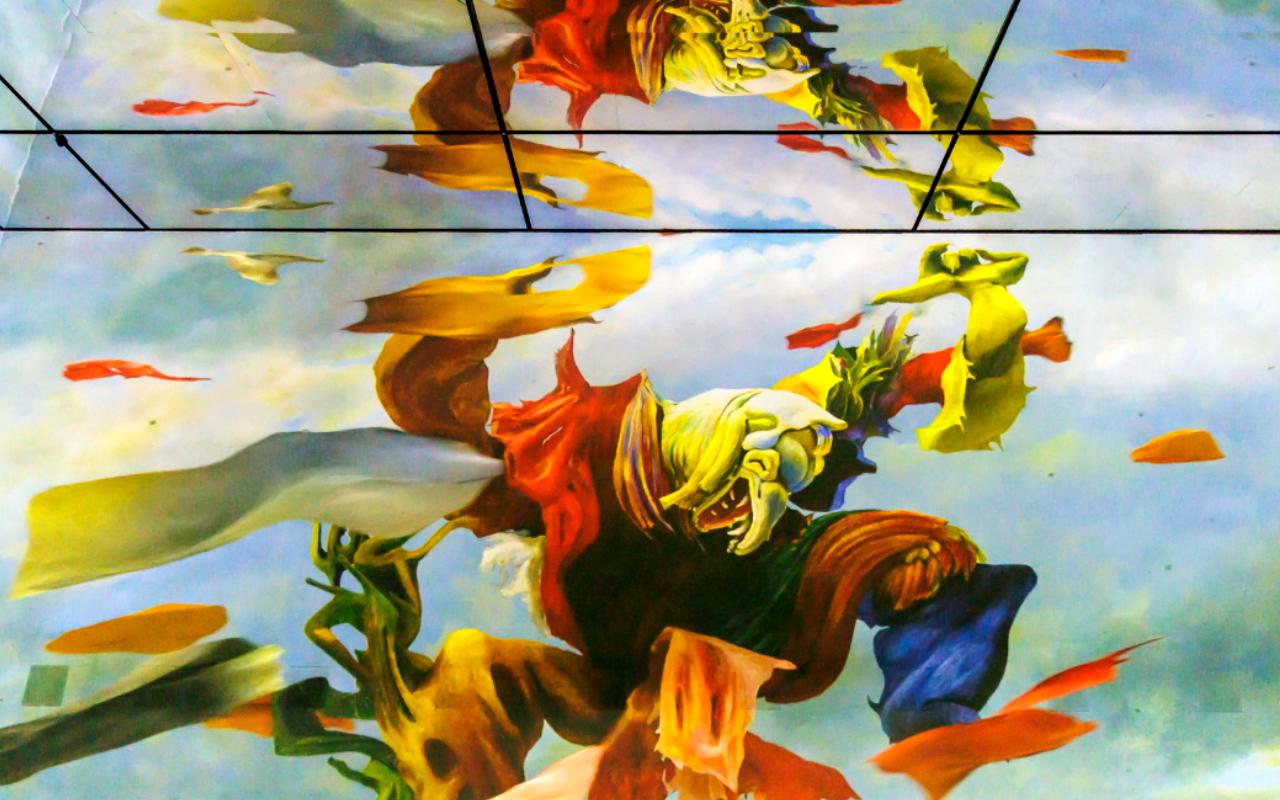
If readers imagine immersive art as surreal, theatrical, and slightly disorienting, Beyond Reality is probably the room they are imagining. Frameless describes it as a mind-bending journey that uses mirrors and projection to take visitors beyond the everyday, and the venue’s 2026 remaster makes that description feel accurate.
The gallery is now presented as a six-walled mirrored environment created in collaboration with Cinesite, which helps blur spatial boundaries and intensify the sense that you are wandering inside a dream rather than watching an animation.
The artists here are the ones who adapt especially well to immersive treatment: Salvador Dalí, Hieronymus Bosch, Edvard Munch, Henri Rousseau, and Max Ernst all appear in official materials for the gallery, while recent remastered content has also highlighted Thomas Lowinsky and Odilon Redon.
Visitors move from melting clocks and impossible deserts to underwater worlds, feverish screams, tropical fantasies, and Bosch’s dense, strange vision of excess and symbolism.
This is also probably the gallery that best shows why Frameless London often feels more thoughtfully designed than many generic projection shows. Rather than simply enlarging a painting, it tries to preserve the logic of the original work while extending it into architectural space.
Visit London’s curator-led feature, which describes the room as an “Alice in Wonderland” environment where the mirrors amplify the art’s dreamlike quality, and that feels like a fair summary. The room not only displays surrealist images. It creates a surrealist sensation.
For many visitors, Beyond Reality is the emotional hook of the entire venue. It is dramatic, slightly uncanny, and very photogenic without feeling shallow. If someone comes here wanting to feel transported, this is the gallery most likely to deliver that first real rush of immersion
Colour in Motion
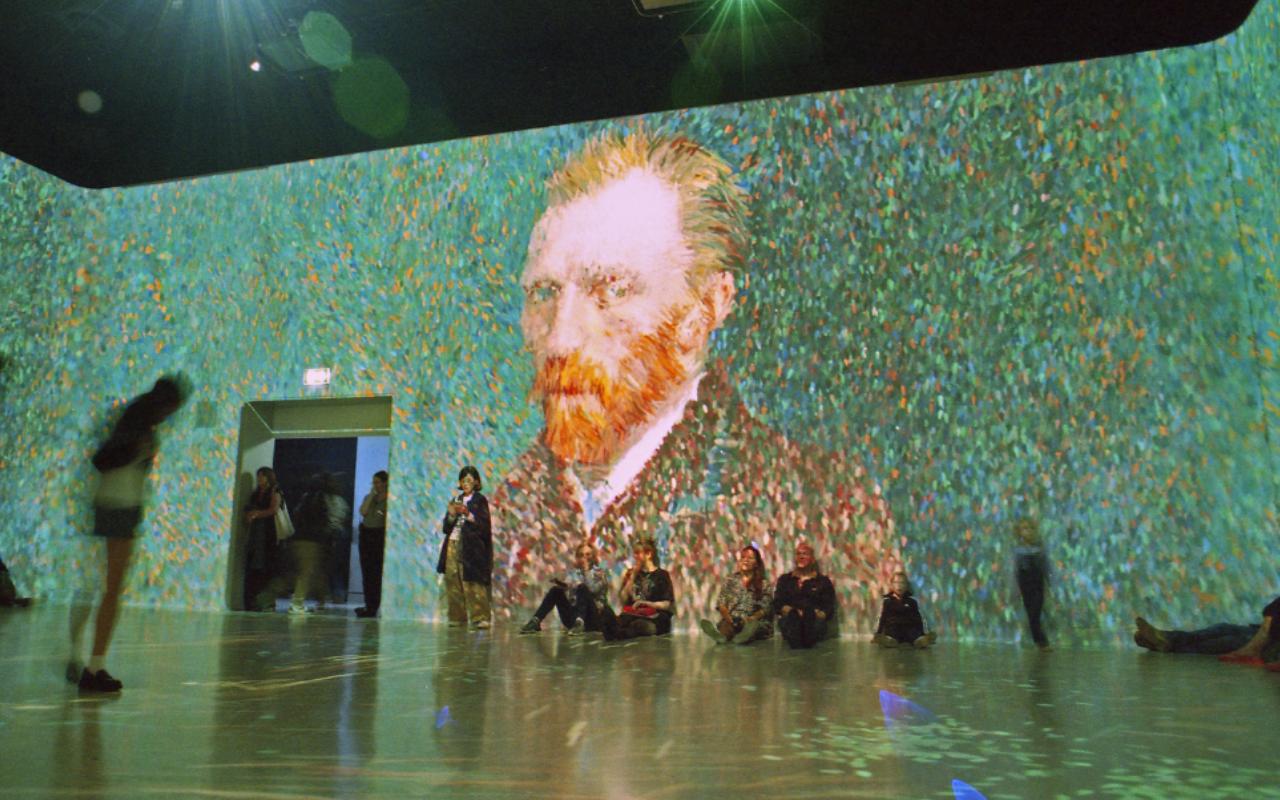
Where Beyond Reality feels dreamlike and a little uncanny, Colour in Motion feels joyful, lively, and physically playful. This gallery focuses on impressionism, post-impressionism, and pointillism, and official material emphasizes its use of advanced motion tracking that allows visitors to “paint” with pixels as they move through the room.
That playful mechanic matters because it turns passive spectators into participants without making the art feel childish.
The gallery includes works by Paul Signac, Georges Seurat, Berthe Morisot, and Robert Delaunay alongside Monet and Van Gogh.
Visit London’s behind-the-scenes account, which describes individual brushstrokes being lifted out of the paintings and scattered across the floor so they can reform on the walls as visitors move through them.
In practice, that means the room is constantly shifting between image, gesture, and color field. It is the gallery that most directly shows how digital technology can help people notice how a painting is built rather than only what it depicts.
The strongest moments here come from how color seems to detach from the canvas and become almost touchable. In the official and curator materials, readers will see examples like Monet’s waterlily world, Morisot’s garden scenes, and Van Gogh’s skies and self-portrait textures used to create an interactive environment where paint becomes movement.
That makes Colour in Motion the least solemn of the four spaces, and probably the one families and first-time visitors tend to love most immediately.
If someone worries that an art experience sounds too worthy, too quiet, or too “museum-like” for children, this is the gallery that answers the concern. It still feels artistic, but it also makes room for delight.
Adults can appreciate the structure of the paintings while kids chase color across the floor. That balance is one of the reasons Frameless London works so well across age groups.
Frameless London
The World Around Us
The World Around Us is the broadest and most cinematic gallery in the building. Official materials call it the largest of the four main spaces, and Frameless describes it as a place where visitors are thrown into crashing oceans, pastoral scenes, cityscapes, and volcanic edges.
If Beyond Reality is about fantasy, this room is about scale, atmosphere, and the emotional pull of landscapes and human environments.
The artist mix here includes Canaletto, Paul Cézanne, Rachel Ruysch, and familiar names such as Monet and Rembrandt. Visit London’s curator tour also draws attention to works by Joseph Wright of Derby and Katsushika Hokusai in the gallery’s more recent programming, with additional remastered works added in the 2024 relaunch.
That means the room extends beyond one narrow conception of “landscape” and instead moves through storms, city nights, blossoms, volcanoes, and famous vistas.
This is often the gallery people remember most emotionally. Visit London highlights the drama of interpretations of works, such as interpretations inspired by works by Rembrandt and Vincent van Gogh, alongside dramatic scenes like the life-sized figure in Grimshaw’s Reflections on the Thames, and the immersive calm of Van Gogh’s The Starry Night.
What makes the room effective is that it keeps shifting between awe and intimacy. One moment, you feel caught inside the weather. Next, you feel as if you are standing quietly inside a painted memory of a city or a night sky.
For travelers, this is also the room that quietly connects best with London itself. Grimshaw’s moonlit Thames scene, hidden details, and life-sized riverside figures make the city feel like part of the show rather than just the setting outside.
That local resonance gives The World Around Us a slightly different weight from the more universal abstractions or fantasies elsewhere in the venue.
The Art of Abstraction
The Art of Abstraction is the gallery most likely to surprise visitors who assume abstraction will be the least engaging room. In reality, it may be the most hypnotic.
Official descriptions frame it as a maze of color, shape, and form, while Visit London explains that it uses 17 translucent surfaces and inward-moving projections that create the sensation of walking among floating geometric elements rather than standing before them. It is less about representation and more about rhythm, composition, and mood.
The artists associated with the space include Wassily Kandinsky, Piet Mondrian, Kazimir Malevich, Paul Klee, and Hilma af Klint. Instead of asking visitors to decode abstract art intellectually first, the room lets them feel it spatially.
Blocks, arcs, lines, and chromatic shifts move around the body, which can make abstraction seem more intuitive than it often does in a conventional gallery.
This is where Frameless London most clearly becomes a sensory design experience as much as an art one. The musical score, layered projection surfaces, and moving forms create something closer to a visual composition you inhabit.
It is a room that rewards patience. Visitors who rush through may simply think it looks cool. Visitors who stop, slow down, and let the shapes repeat often find it unexpectedly meditative.
Taken together, the four galleries are what make Frameless London more than a one-room novelty. You move from the surreal to the playful, from the sublime to the contemplative, and each shift changes how long you want to stay, where you want to stand, and what kind of attention you give the art. That variety is the venue’s real strength.
Tickets, prices, and the best time to visit
Ticket prices typically start from around £27.50 for adults and vary depending on date, time, and ticket type. Flexi tickets start at £31.50 for adults and £22 for children, while a flexible family ticket starts at £86.
A fixed family ticket for two adults and two children starts at £82, senior tickets start at £20, and the student ticket listed on the official page is £20.65. The venue also notes a £2.50 booking fee per order.
These prices place Frameless London firmly in the premium attraction category for London, so it is worth choosing the ticket type deliberately rather than just clicking the first option.
For most readers, the distinction that matters is simple. Standard online tickets are the cheapest route in. Flexi tickets cost more but offer a more flexible timeslot on the chosen date.
If travel plans are uncertain, the extra spend can be worth it. There are also clearly family-focused options, adults-only Lates tickets, parent-and-toddler sessions, Multi-Sensory Tots classes, Chilled Sessions, annual memberships, and gift cards.
On top of the four main galleries, the ticket page notes that standard admission typically includes artist residencies and seasonal events when they are open.
Buying direct is the smart move. Frameless states that tickets are valid only when purchased through official partners such as Universe and Ticketmaster, and says tickets from unofficial resellers will not be honored.
Visit London also notes that children under three can enter for free, although they still require a ticket. In other words, advance online booking is not only cheaper in many cases, but also the safest way to avoid arrival-day problems.
Refund language on the official FAQ is a little more cautious than many travelers would like. What Frameless clearly advertises is that date and time changes can be managed up to 48 hours before scheduled entry through the Manage Booking feature, and that an amendment fee of £1.50 per ticket applies.
Because the venue also points customers to seller terms and conditions, the fairest way to phrase it is this: official guidance emphasizes amendments more clearly than blanket refunds, so anyone needing maximum flexibility should read the current fare conditions carefully before booking.
Timing matters almost as much as ticket type. The official opening pattern is broad enough to create real choice: quieter daytime slots during the week, longer evening hours on Fridays and Saturdays, and adults-only Lates on Friday and Saturday nights.
Visitor-planning guides and recent traveler feedback consistently suggest that weekday mornings tend to be calmer, while weekend afternoons and school-holiday periods are the busiest.
Frameless’ own responses on TripAdvisor also acknowledge that half-term and school-holiday periods can be particularly busy with families, and the venue recommends Lates for adults who want a different atmosphere.
That means the best time to visit really depends on who you’re going with: Families with small children may actively prefer daytime or toddler-friendly slots.
Couples and adults visiting without kids may find Lates a better fit, especially if they want a date-night mood and a less child-focused atmosphere.
Travelers who mainly want good photos and room to breathe should generally avoid weekend afternoons and school-break peaks if they can. That is an inference from the official scheduling and visitor feedback, but it is a practical one.
Seasonal programming can also shape the experience. Frameless often uses its Blank Canvas residency space for short-run events such as The Colour Monster and the upcoming Stories, Brought to Life collaboration with the National Portrait Gallery, both included with standard tickets on selected dates and times.
That is a nice bonus if your dates line up, but also another reason to check the current “What’s on” page before booking.
What to expect on the day
A visit to Frameless London is usually smooth, but it helps to know that the practical experience is not arranged like a classic museum route. The four main galleries sit on the basement level, which the venue says can be reached by escalators or lifts. Once downstairs, visitors can explore the rooms in any order and at their own pace, rather than moving through a prescribed sequence.
That freedom is one of the reasons the venue recommends allowing about two hours, even though many people finish in closer to 90 minutes.
Visitors can explore at their own pace, whether quickly moving through or spending longer in each gallery. Formally, you have no time limit on the length of time you can spend in each gallery, and the visitor comments reveal that some individuals end up spending much more time than intended in the rooms after getting comfortable in the rooms.
Others move through it more quickly, treating it as a high-impact 90-minute experience.
The experience is designed in waves, so allowing yourself to pause between galleries can make it more enjoyable. The shifts in artworks and moods are part of the design, and thus, when rushing between projection to projection, that will tend to flatten the design.
The visit is interwoven with interactive elements, without making it a button-press attraction. Colour in Motion is reactive to movement, the Crossing Gallery offers context, and QR-based guide content, as well as The Art of You, a paid photo experience at the venue that transforms the visitor into a stylized artwork based on the galleries.
Besides the main rooms, we have an on-site gift shop and Café Bar to serve daytime food and drinks. The mix of that makes the attraction rather like a multi-act performance, as opposed to a one-note display.
Accessibility is one of the venue’s strongest practical features. Frameless says the whole building is wheelchair accessible, including toilets and the Café Bar, and highlights step-free transport links nearby.
It also offers free carer tickets with valid documentation, Chilled Sessions for disabled and neurodivergent visitors who may prefer a less stimulating environment, support for deaf and hard-of-hearing visitors, audio-described resources for visually impaired visitors, and ear defenders for those affected by sound levels.
The venue also notes that while there is no strobe lighting in the main galleries, there are moving images and changing light effects, and sound can peak above 85 decibels. That is valuable information for anyone sensitive to light, movement, or volume.
Photography is allowed, which is one reason Frameless London has become so socially shareable. The rule is that personal-use photography and filming are permitted, but professional or commercial shooting is not, and tripods and selfie sticks are banned.
Food and drink are generally not allowed inside the galleries, although the adults-only Lates sessions make a partial exception for drinks in some spaces, with Colour in Motion remaining off limits to beverages.
For most visitors, that translates into a very simple packing strategy: bring a phone or camera, skip bulky gear, and plan to eat either before or after the main galleries unless you are relaxing in the Café Bar.
A few practical tips make a real difference. Book ahead, especially for weekends, school breaks, or evening slots. Wear comfortable shoes, because even though the attraction is indoors, most visitors spend a long time standing, wandering, and circling back through rooms.
Start by scanning the contextual material rather than ignoring it, because understanding the artistic theme of each gallery increases the payoff. And if taking photos matters, give yourself extra time; the rooms are immersive enough that many people end up lingering longer than expected.
Nearby attractions to pair with your visit
Frameless London is easy to combine with nearby sightseeing. Hyde Park is the obvious companion stop. Its pedestrian gates are generally open from 5 am until midnight, so it works equally well for a pre-visit walk or a post-visit decompression loop, especially after sensory-heavy gallery time.
Oxford Street is even closer, and that changes the feel of the day entirely. If readers want shopping, coffee, meals, or a more classic West End pace, they can step out of the immersive galleries and back into one of Europe’s busiest retail corridors almost immediately.
Oxford Street’s own official destination site positions the area as the heart of West End shopping, which pairs naturally with the attraction’s central location.
If readers want to stretch the day into a more recognizably royal London itinerary, Buckingham Palace is the obvious next addition. It is not as close as Hyde Park or Oxford Street, but it remains one of central London’s flagship attractions, with official summer 2026 State Rooms admission scheduled from 9 July to 27 September.
That makes it particularly easy to position within a half-day or full-day central sightseeing plan.
Is Frameless London worth it?
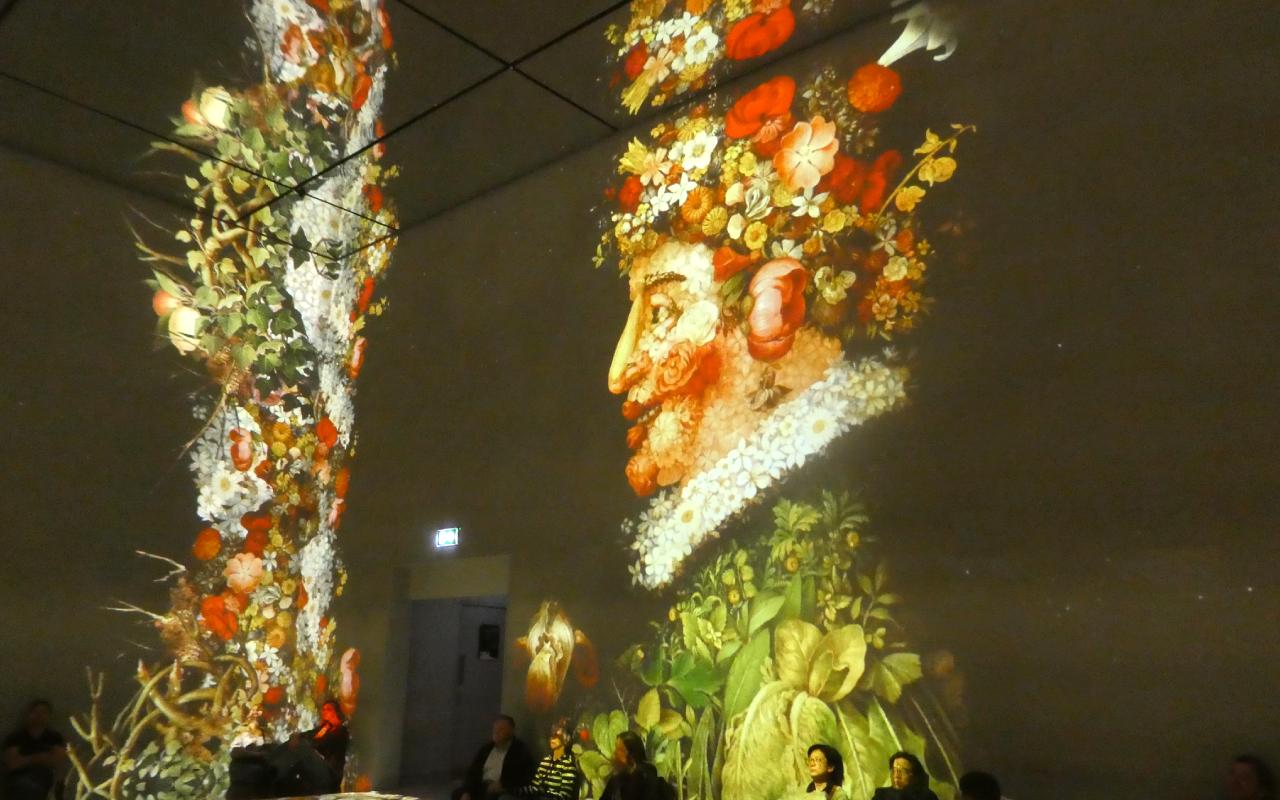
For most visitors, yes, Frameless London is worth it. The strongest case in its favor is not only that it is visually impressive, but that it offers a form of art experience many people genuinely cannot get elsewhere in the city.
Traditional museums in London are extraordinary, and many are free, but they are not built to surround the body with light, motion, and music. The attraction gives travelers something different: a premium, central, highly shareable cultural experience that is also surprisingly accessible to people who do not usually think of themselves as “art people.”
There are also concrete advantages. The attraction is family-friendly, central, indoors, and easy to understand. It offers enough variety across four galleries to keep mixed groups engaged. It has accessible infrastructure and support options that many venues still struggle to provide.
And as of the TripAdvisor page captured here, it holds a strong rating of around 4.5+ on major review platforms, which suggests that the experience lands well with a large share of paying visitors even after the initial novelty has worn off.
The drawbacks are real, too. It is expensive relative to London’s many free museums. It can feel crowded at peak times. You are not seeing original canvases, which will matter to some art lovers.
And recent visitor comments do show recurring complaints about crowding during school holidays and about the desire for more seating in some areas. Those are not deal-breakers for everyone, but they are worth stating plainly because they shape whether the experience feels relaxing or overstimulating.
There is also a broader cultural critique hanging over the immersive-art sector. Critics and digital artists interviewed by major outlets have argued that some projection-based exhibitions prioritize spectacle and Instagrammable moments over artistic depth.
That criticism is worth taking seriously, especially because immersive art can slide into formula very quickly. But the venue appears to answer that critique better than many rivals by combining multiple artistic movements, stronger interpretive material, distinct room design, and a clearer curatorial structure rather than building everything around a single endlessly looped projection room.
That last point is partly an inference, but it is supported by the venue’s structure and by the curator’s commentary published by Visit London.
Frameless London compared with Van Gogh: The Immersive Experience
The clearest comparison point is Van Gogh: The Immersive Experience, because many travelers use the two attractions as shorthand for the whole immersive-art category. The difference is straightforward.
Frameless London is a permanent, multi-artist venue in central London with four thematically distinct galleries, broad family programming, and a flexible roam-at-your-own-pace structure.
By contrast, the official London page for Van Gogh: The Immersive Experience described a roughly 90-minute, single-artist show built around 360-degree projection, a VR add-on, and a more focused storytelling format centered on Van Gogh’s life and works.
There is one especially important practical update: as of April 2026, the official London page for Van Gogh: The Immersive Experience is marked closed. The site still describes its former London venue at 106 Commercial Street, its 90-minute format, and its VR component, but it no longer appears to be operating in the city.
That means travelers making a present-day decision are not really choosing between two active London attractions. They are choosing between Frameless London and whatever else London currently offers in the immersive space.
The difference, in concept, is beneficial, though. In case a person desires a more comprehensive overview of art history, more visual moods, greater central-London convenience, and a superior choice among mixed groups, the attraction is the more suitable choice.
Should one desire a more artist-focused, biography-tinged, VR-added experience, the Van Gogh format was more specialized at the time it was active.
Who will get the most out of it?
Families are a natural audience because the experience is suitable for all ages, movement is welcomed rather than discouraged, and ticketing is clearly structured around family groups.
Couples do well here too, especially during adults-only evening sessions, when the mood shifts from family attraction to date-night cultural outing.
Solo travelers often enjoy it more than they expect because there is no social pressure to move on quickly; you can simply stand still and soak it in.
Art enthusiasts may be more divided, but many still appreciate the close-up visibility of brushwork, composition, and hidden details that scale and motion reveal.
And for people who love photography and visually rich content, Frameless London is almost absurdly generous.
FAQs and final thoughts
How long does Frameless London take?
The official answer is that most people spend about two hours across the four galleries, though Visit London suggests around 90 minutes, and there is no strict time restriction inside the main experience. In practice, readers should budget somewhere between 90 minutes and two hours, with extra time if they want photos, café time, or a slow second pass through favorite rooms.
Is Frameless London suitable for kids?
Yes. Frameless sells family tickets, describes the attraction as suitable for all ages, and offers dedicated parent-and-toddler and under-three-focused programming. At the same time, the venue advises parental guidance and states that children under 16 must be accompanied by an adult, while under-18s must arrive by 4 pm on Friday and Saturday because evening Lates sessions are adults-only.
Can you take photos inside Frameless London?
Yes, for personal use. Frameless allows visitors to take photos and videos, but it does not allow professional or commercial photography, filming, tripods, or selfie sticks. That is a good setup for casual travelers because it keeps the experience easy to document without turning the rooms into full-on photo sets.
Is Frameless London wheelchair accessible?
Yes. The venue says the whole building is wheelchair accessible, including toilets and the Café Bar, and highlights step-free public transport nearby. It also offers free carer tickets with valid documentation, accessibility resources for blind and visually impaired visitors, support for deaf and hard-of-hearing visitors, and Chilled Sessions for reduced-stimulation visits.
Are Frameless London tickets refundable?
The official information most clearly states that bookings can be amended up to 48 hours before entry through Manage Booking, with a £1.50 fee per ticket. Because Frameless also directs customers to the ticket seller’s terms and conditions, refund and exchange details should be checked on a case-by-case basis before purchase rather than assumed. If flexibility matters, a Flexi ticket is usually the safer choice.
Is Frameless London more like a museum or like entertainment?
Honestly, it is both. Academic writing on immersive exhibitions frames this kind of experience as one that intentionally blends technology, engagement, and emotion, and Frameless London embraces that fully. It is not a replacement for seeing original art in a museum, but it is also more than simple entertainment.
The best way to think about it is as a gateway experience: something that can make familiar art feel immediate again, or make art feel approachable for people who rarely connect with traditional gallery settings.
The attraction stands out because it understands that modern visitors often want culture to be felt, not only observed. It takes canonical art, scales it up, wraps it in sound, gives it movement, and lets people walk through it at their own speed. Sometimes that means wonder.
Sometimes it means overload. Sometimes it means children laughing in a room full of animated brushstrokes while adults quietly stare at a storm or a sky.
For a city with no shortage of museums, monuments, and bucket-list sights, that combination still feels refreshingly different. And that is ultimately why it has earned its place among the capital’s most memorable indoor attractions.














-
 0115 Best Easy Treks in Nepal for Beginners and Families
 -
 02Best season for Everest Base Camp Trek
 -
 03Best Time to Go Hiking in Nepal: A Seasonal Guide for Trekkers
 -
 04Suchi Purja –Wife of Nirmal Purja aka Nims Dai
 -
 05Dubai desert safari outfit ideas
 -
 06Top Beaches in Sri Lanka
 -
 0710 Best Easy Treks in Nepal