
Now Reading: Kelingking Beach: Complete Travel Guide to Bali’s Iconic T-Rex Cliff (2026)
-
01
Kelingking Beach: Complete Travel Guide to Bali’s Iconic T-Rex Cliff (2026)

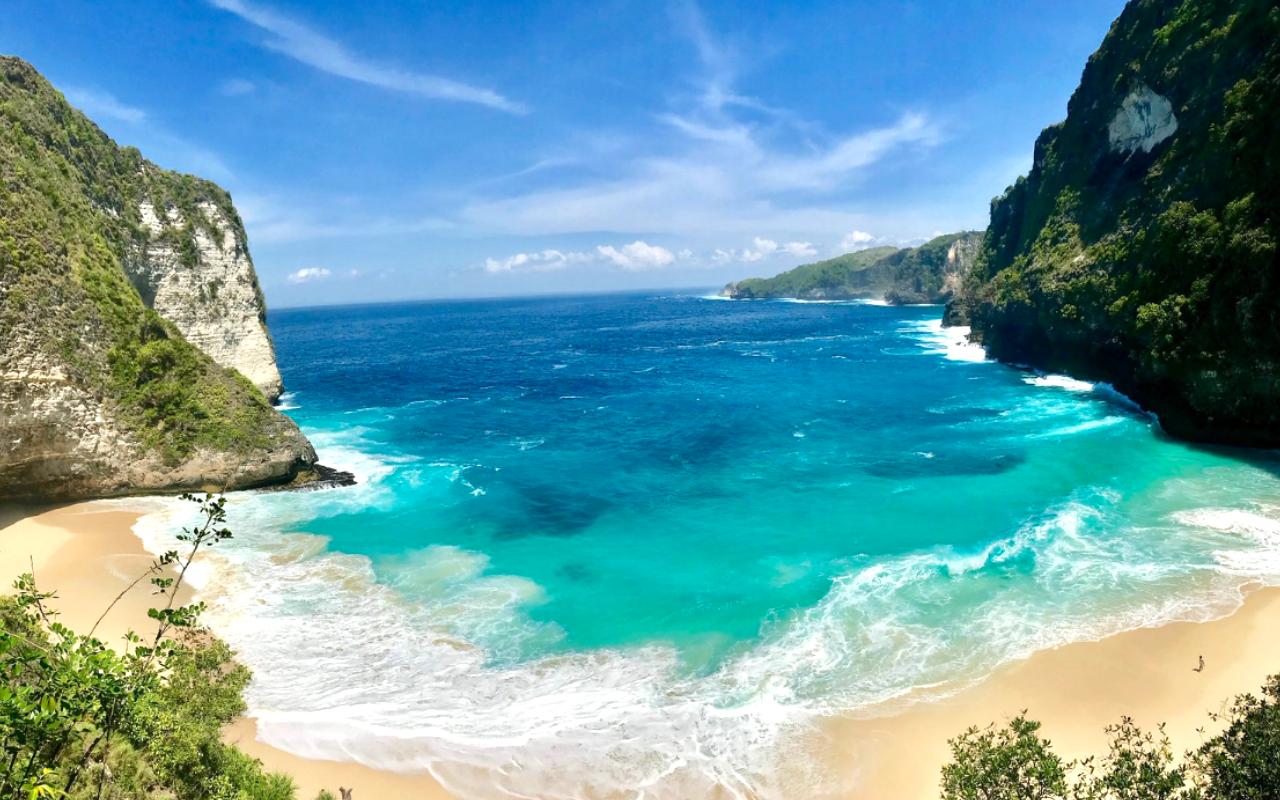
Kelingking Beach is a spectacular cliffside viewpoint on the west coast of Nusa Penida, Bali. The high limestone cliffs and the turquoise bay create a clear T-Rex shape that is one of the most popular and recognisable landscapes in Indonesia.
Above you look down to a jagged head and neck of rock winding off into a white sandy cove way down. It has become one of the most recognizable viewpoints in Bali, and it has been captured by dozens of travel photos and Instagram accounts.
You will discover all about the Beach, its location, its popularity, how to get there, hiking, safety, recent incidents involving Kelingking Beach deaths, the entrance fees, attractions, itinerary, and so on.
This guide will ensure that regardless of whether you are a lone traveler, a couple, or a photographer, you plan a memorable trip to Kelingking Beach, Bali.
Kelingking Beach’s famous “T-Rex” cliff seen from above. The sheer cliff face and hidden white beach below create one of Bali’s most photogenic views.
Quick Facts About Kelingking Beach
| Category | Details |
| Location | : Nusa Penida, Bali, Indonesia. |
| Type | Cliff viewpoint (with a hidden beach below) |
| Famous For | Limestone cliff of Dino-shape (T-Rex formation) |
| Hike Difficulty | Moderate to difficult (steep, exposed trail) |
| Hike Time | 30-60 minutes (down) one way. |
| Entry Fee | Approximately IDR 25,000-35,000 (see fees section) |
| Distance to Bali | 40 45 min by fast boat via Sanur (Bali) |
| Swimming | Strong currents; swimming is discouraged |
| Best For | Photography, panoramic, adventure hiking. |
| Optimal Time | Early morning or late afternoon (not in the middle of the day) |
These quick facts give a snapshot of what to expect at Kelingking Beach. It’s important to note that the path down is steep and challenging, with wooden stairs and railings only on some sections.
Swimming is strongly discouraged because powerful undercurrents have led to multiple fatalities. Visitors should always exercise extreme caution near the water.
Where is Kelingking Beach?
Kelingking Beach lies on the southwestern coast of Nusa Penida, a small island southeast of Bali. It falls in the village of Bunga Mekar (sometimes called Karang Dawa), on the west side of Nusa Penida. From the vantage point at the cliff’s edge, you overlook a hidden cove of white sand below and the vast Indian Ocean.
Despite being on an outlying island, Kelingking Beach has become synonymous with Bali travel and is often included in Bali itineraries due to its world-famous views.
Nusa Penida itself is just a short ride from Bali. Fast boats from Sanur harbor (Denpasar, Bali) reach Toya Pakeh or Sampalan port in about 35–45 minutes.
From there, Kelingking Beach is roughly a 14–18 km drive (about 45 minutes) through winding island roads.
For example, one local travel site notes that the fast boat crossing takes about 35 minutes, and then the subsequent car ride from port to Kelingking takes about 44 minutes. (Driving conditions are rough and the route is steep, see How to Get There below.)
In Bali terms, think of Nusa Penida and Kelingking Beach as accessible by a morning boat trip: depart Bali (Sanur or Padang Bai), arrive midday on Nusa Penida, drive to Kelingking, enjoy the viewpoint, and return by afternoon or evening.
Why Kelingking Beach is So Famous
Kelingking Beach’s fame rests on its spectacular T-Rex–shaped cliff and epic views. The limestone headland and coral rock jutting into the sea create a profile strikingly like a dinosaur (hence nicknames like “T-Rex Beach” or “Whale’s Tail”).
This unique geology is rare – few beaches have such a distinct and dramatic formation. Travel guides highlight that “Kelingking Beach is famous for its spectacular T-Rex-shaped cliff” and panoramic vantage.
From the clifftop viewpoint, you get a panoramic vista of emerald ocean waters below a white crescent beach and jagged cliff spine. One writer notes that from above, “the hidden cove remains one of Bali’s most pristine beaches — untouched, remote, and breathtaking”.
This visual drama has made Kelingking one of Indonesia’s most photographed spots. Over half a million Instagram posts use hashtags like #KelingkingBeach to capture its beauty.
The rise of social media has only magnified Kelingking’s fame. It’s frequently featured in Bali tourism campaigns as an iconic image. Travelers seeking “the ultimate Bali postcard” flock here, especially at sunrise or sunset.
Even international media list Kelingking Beach among the world’s best beaches. In short, the extraordinary shape of the cliffs (resembling a dinosaur backbone) combined with the wild turquoise sea makes Kelingking an Instagram sensation and bucket-list destination.
Locals and bloggers also point out the drama and scale of the site. One guide advises walking further along the ridge to the right (north) to find quieter angles with the cliff framed by blue ocean.
A sunrise photo might show the cliff shadowed in gold, while a midday drone shot captures the full “T-Rex” outline. Golden light and stormy skies each give a different mood.
This geological mix with photogenic light is what puts Kelingking Beach at the top of the list of iconic Bali viewpoints.
How to Get to Kelingking Beach
Kelingking Beach is accessed in two stages: arriving at Nusa Penida in Bali, and then this is followed by traveling within Nusa Penida to the west coast. Here’s how:
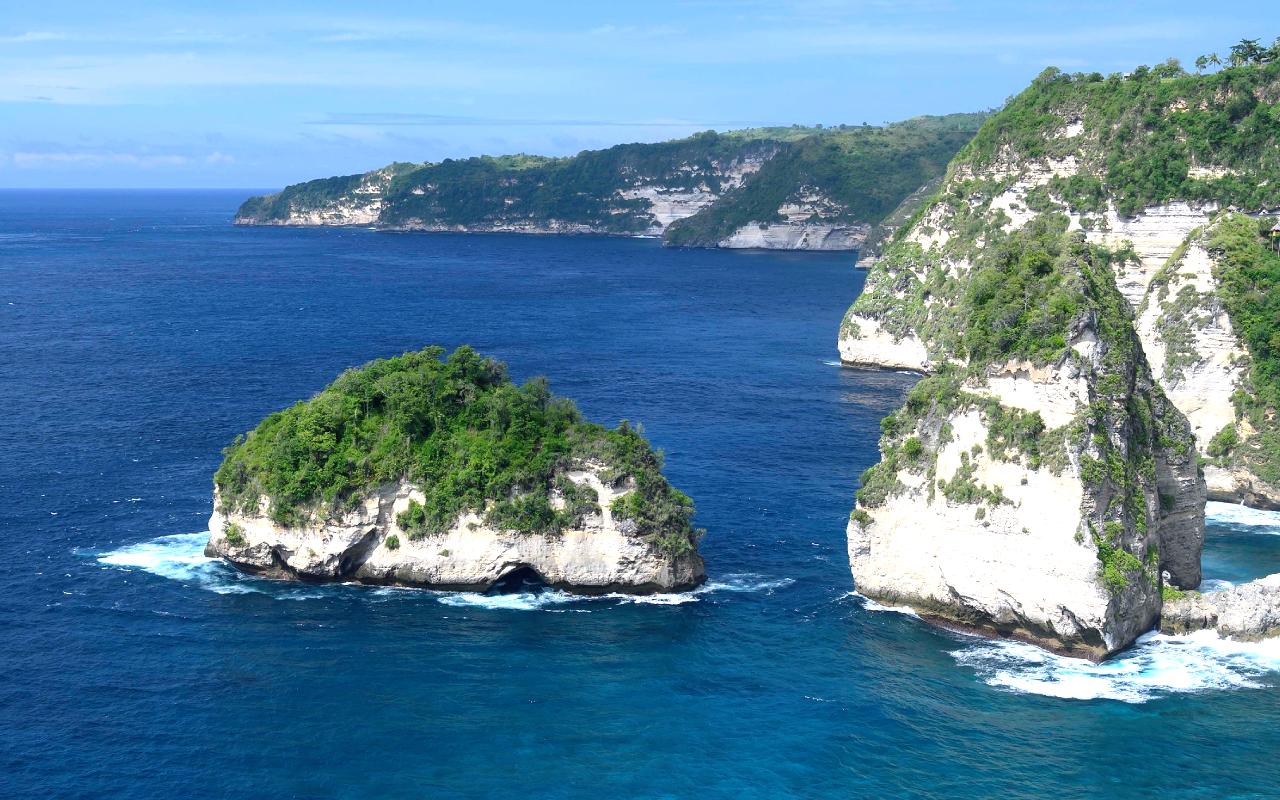
Nusa Penida
By Fast Boat (Bali→ Nusa Penida): Fast Boats usually leave Sanur Beach or Padang Bai on the southeast coast of Bali. In Sanur, Nusa Penida can be accessed by fast boats (speedboats) in a 40 to 45-minute trip.
Prices for Sanur→Nusa Penida fast boats generally run around IDR 150,000–200,000 per person one-way. From Padang Bai, a slower public ferry (90 min) or speedboat (50–60 min) is available; ferries cost about IDR 50,000. (The harbor-to-harbor distance is similar in either case.)
Always check the schedule timetables in advance. Boats typically start early (8–9 am), so plan to catch a morning boat to maximize your day.
Arrival Ports: Fast boats land at Toya Pakeh (on the west side of Nusa Penida) or at Sampalan (north). These ports are about 5–6 km apart. Check which one you arrive at, as it will affect your onward travel route.
Car or Scooter (Nusa Penida→Kelingking Beach): Once on Nusa Penida, you have two main options:
Rent a Scooter: If you’re experienced, renting a scooter at the harbor is popular. Rental is about IDR 70,000–100,000 per day. Keep in mind that Nusa Penida’s roads are very narrow, hilly, and often in poor condition. Only confident riders should attempt it. Travel guides warn that Google’s estimated 40-min drive can take closer to 60 minutes in reality.
Hire a Driver: Many travelers prefer a private car/driver for safety. A full-day car/driver costs roughly IDR 500,000–700,000 (split among passengers). This is more expensive but eliminates driving stress. Drivers will pick you up at the harbor and take you door-to-door.
From either port, the road to Kelingking Beach winds through villages and hills. Example: An online guide notes it’s about 14.4 km from Toya Pakeh port to Kelingking, taking roughly 44 minutes by car. The journey passes through the village of Pelilit, goes past the Manta Bay viewpoint, then climbs west toward Kelingking. There are a few signposts, so a driver or GPS map is helpful.
Travel Time & Cost Summary: From Bali (Sanur) to Toya Pakeh port is 45 min by boat, plus 15-30 min transfer from Denpasar or Ubud to Sanur. Boat tickets are roughly IDR 150k–200k. Then the Nusa Penida port to Kelingking is 45–60 min. Scooter rental is IDR 70k/day; private drivers IDR 600k+/day. Keep local currency (rupiah) on hand – some boats and parking areas accept only cash.
Kelingking Beach Hike Guide
Reaching the sandy beach below Kelingking requires hiking down a steep cliff trail. This hike is strenuous and not to be taken lightly. The following is what you need to know:
Trail Start: The actual trail starts at the main viewpoint parking area at the top of the cliff. It has a little ticket booth and stalls. Here, take the little road (concrete steps and muddy places) down into the valley.
Terrain: The trail is quite steep, narrow, and rough. It is made of wooden steps, an improvised dirt path, and handrails or ropes at places. The hike down is exposed to the elements, and you’ll feel the heat. It requires a sure footing at all times. One travel guide describes the path as “rugged and demanding,” and others as “infamous steps, steep”.
Difficulty: We’d rate it moderate-to-difficult. You should be in good physical shape. The descent might take 30–45 minutes for an average hiker (some sources say 20–30 min if brisk). The return climb will take longer – allow at least 1–1.5 hours to come back up. Only attempt the hike if you are fit, not prone to dizziness, and can grip handrails safely.
What to Bring: Proper preparation is crucial. Wear sturdy shoes or hiking sandals, not flip-flops. Bring plenty of water (the sun is intense and there’s no shade). A hat and sunscreen are essential. Snacks are smart since the climb can burn a lot of energy. Also carry your ticket (entry pass), camera, and a light backpack.
Safety Tips: Hold on to rails and ropes where available. Avoid hiking in the rain, or if it’s wet, the trail becomes much more dangerous. One guide warns hikers: “If you plan to hike down, please exercise caution, wear proper footwear. The first time I descended, I made the mistake of wearing flip-flops”. Descend slowly and in small groups (don’t overcrowd the trail). Avoid going too far past the first beach (the backside is even riskier to access).
Trail Conditions: The stairs and trail have been improved in recent years, but parts remain slippery or eroded. As of 2025, authorities suspended a planned glass elevator project, so all visitors must use the stairs for now. Inspect the path carefully as you descend. Locals say if you take your time, it’s “not for everyone, but doable”.
Expert Hikers Only (Beach Access): Only fit, steady travelers should attempt to reach the beach. The summit view itself is incredible, but the actual beach below is remote and life-threatening due to the surf. One guide bluntly states, “Please DO NOT go into the water.” The climb back up in emergency conditions is nearly impossible. If you have any doubt, admire the view from above.
Can You Swim at Kelingking Beach?
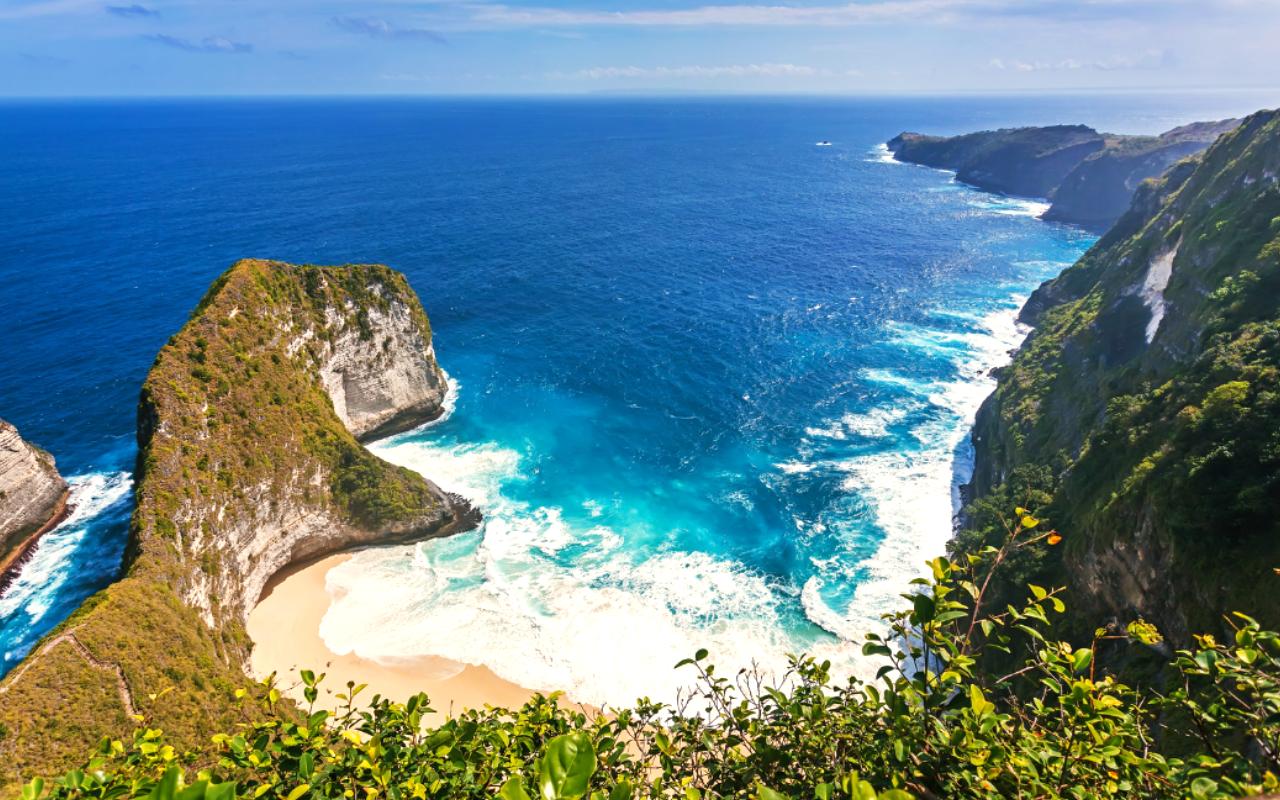
Swimming is strongly discouraged due to dangerous currents and waves. Kelingking Beach has very dangerous currents and waves. The bay looks inviting, but even strong swimmers can be caught by the swell.
In fact, local authorities officially banned swimming at Kelingking in early 2023 after a tragic drowning. News reports repeatedly warn that the beach’s “strong undercurrents” and surf have claimed lives.
For example, in October 2025, a French tourist was swept away and drowned despite trying to rescue another swimmer. Another report notes that, after that incident, “several fatal accidents have occurred here due to strong currents, so swimming is strongly discouraged”.
Rescue teams emphasize that there are no lifeguards and help would take too long. The consensus among travel guides is: “Even the strongest swimmers would find the water here challenging”.
At the shore of Kelingking Beach, you will see warning signs in Bahasa and English. Please obey them. Do not enter the water.
At best, you might swim in the shallow pools behind the reef, but really, Kelingking is not a swimming beach. Instead, enjoy the view of the waves crashing and explore the rocks carefully at your own risk.
Best Viewpoints & Photo Spots
The iconic view of Kelingking Beach is usually photographed from the main cliff-top viewpoint, which overlooks the dinosaur’s head and back. Here you’ll often see a crowd jockeying for a front-row shot.
Tips for photos:
Main Viewpoint (T-Rex Head): From the top parking area, walk to the far edge railing (north end) for the classic shot: the T-Rex cliff extends left into the sea, with the hidden beach in front. An early tip: go a little further right (north) along the cliff) to escape crowds and capture the cliff at a slightly different angle.
Side Angles: If you have time, explore a short walk along the ridge. Turning your back to the ocean and walking about 50 meters, you’ll find quieter vantage points with the same scene. These spots are great for wide-angle or drone shots.
Golden Hour (Sunrise/Sunset): Lighting is crucial. The best photos are at sunrise or sunset. In the morning, the cliffs on the left glow in warm light, and crowds are light (many tours arrive later in the day).
By late afternoon, the right-hand cliffs catch golden light. However, note that the sun is almost behind you at midday, which lights the beach fully. Many photographers prefer pre-dawn arrival to get the first light on the cliff.
Drone Photography: If you have a drone, Kelingking is A popular drone photography spot, but always check local regulations and fly responsibly. A drone lets you capture the “T-Rex” shape head-on – the best view is from above the cliff, looking straight down on the beach and rock formation. Always fly safely and follow local regulations (and avoid disturbing wildlife like monkeys).
Monkeys: The area has wild monkeys. They are usually more interested in tourists’ snacks than cameras, but be prepared: keep your belongings secure and do not feed them.
Sunset at Kelingking Beach: Arriving early or late rewards you with soft light and thinner crowds. From the viewpoint above, you see the T-Rex–shaped rock to the right and the hidden beach below.
In summary: for the ultimate shot, go at sunrise (before 9 am) to avoid crowds, stand at the edge with the cliffhead in frame, and consider a drone if available.
Best Time to Visit Kelingking Beach
Timing your visit can vastly improve the experience:
Time of Day: Aim for early morning (sunrise) or late afternoon (sunset). This avoids the mid-day crowds and harsh sun. As one guide notes, getting there right after dawn often means “you’ll have the viewpoint almost to yourself”. By contrast, by 9–10 am, the number of people swells dramatically.
In short, go early or late if you want photos without large crowds of tourists. The peak of golden hour also makes the cliffs glow.
Season: The dry season (April–October) is ideal. Expect mostly blue skies, calm seas, and manageable hiking trails. During the wet season (Nov–March), heavy rains and storms are common; the hike becomes slippery and the boat crossing rough.
If you must go in the rainy season, pick a clear day and be prepared for unpredictable weather and higher water levels. Late January and February tend to be the rainiest.
Weekdays vs Weekends: Kelingking Beach is popular year-round, but weekdays (and outside Indonesian holiday weeks) see fewer local tourists. Many Indonesian families visit on weekends, and international tourists peak around June–Sept.
Avoid Full Moon Danger: Note that around the full moon, tides and waves can be especially strong (Bali meteorology warns of this), another reason not to swim. It’s best to plan your beach descent/hiking on a calm-tide day.
Essential Travel Tips
The following are the main suggestions to ensure your Kelingking Beach trip is secure and hassle-free:
Pack Smart: Pack water (at least 23 liters of water per person) and snacks, because there are no stores on the hike. Use a wide-brimmed hat, sunglasses, and high-SPF sunscreen; the sun is strong on the clifftop. A small first aid kit will come in handy in case of scrapes or heat.
Footwear & Clothing: Good Hiking Sandals or good sturdy closed shoes; the trail is very rocky and steep. Flip-flops or heels are highly discouraged. Bring a light jacket or cover-up if visiting in the off-season (it can be windy up high).
Health & Fitness: You should be in decent physical condition. The hike down/up is taxing. Those with heart or mobility issues should reconsider. It’s better to enjoy the view from above than risk overexertion.
Safety First: Stay on marked paths. Don’t climb over barricades or stray off the main trail – the cliff drops are sheer. There are no railings on many dangerous ledges. Keep children and non-swimmers close. Given past Kelingking Beach death incidents, always be cautious near the edges and follow posted warnings. If you go down, do so in daylight (never after dark).
Crowd Avoidance: As noted, arrive early to beat the crowds. A midday visit means fighting hundreds of tourists. If possible, plan Kelingking for your first stop of the day. If on a tour, ask to do Kelingking in the AM or PM instead of midday.
Respect the Environment: Kelingking Beach and Nusa Penida emphasize conservation. Do not litter; authorities even issue fines for leaving trash. Use refillable bottles to reduce plastic waste. Stick to paths to avoid trampling vegetation. (Under new post-COVID rules, Bali is strict about plastic-free zones and no littering.) Leave the area as beautiful as you found it.
Facilities: Facilities are very basic. There are basic toilets at the viewpoint, but no fresh water taps or cafes (except a couple of local warungs selling cold drinks and snacks by the parking area). There is no lifeguard or ranger service on the beach.
Safety Gear: If you rent a scooter, always wear a helmet. Roads on Nusa Penida are rocky and steep; accidents are common. Full travel insurance is recommended given the risks.
Kelingking Beach Hotels: There are no hotels on the beach, but lots of accommodation on Nusa Penida. The various visitors remain close to Toya Pakeh (the principal harbor) or towards the west of the island by Kelingking.
Some of the hotels that have been recommended in West Nusa Penida are Ocean Terrace Suite & Spa, Semabu Hills Hotel, and Sawit Garden Cottages. These provide the ocean views and are comparatively near Kelingking Beach. It is a good idea to book in advance, particularly during the high season.
Entrance Fees & Costs (2026 Update)
Nusa Penida Tourism Fee: Since 2024, a typical tourism retribution fee must be paid by everyone visiting Nusa Penida (paid at the port or through an e-ticket). International adults pay IDR25,000 (USD 1.50) and children IDR 15,000. Indonesian nationals pay less. Keep the receipt from this fee – officials may check it at spots.
Kelingking Beach Entry Ticket: In addition to the island fee, Kelingking Beach itself has a small entrance charge. The latest reports (2026) suggest around IDR 10,000–20,000 per person for foreigners. Travel blogs note an entry fee of about IDR 10,000. Combined with the tourism fee, expect around IDR 25,000–35,000 total per person, depending on current local fees.
Parking: There is a small parking area at the Kelingking viewpoint. Scooter parking is typically IDR 5,000; car parking costs around IDR 10,000. Again, bring cash.
Transportation Costs:
- Fast Boat: Sanur→Nusa Penida about IDR 150,000–200,000 one-way per person. Padang Bai ferry 50,000 IDR (local rate).
- Scooter Rental: IDR 70,000–100,000 per day.
- Private Driver: A full-day car rental with driver IDR 500,000–700,000 (split among group).
- Food & Drink: There are a few small warungs at the top that serve basic food and drinks at modest prices. Budget on buying water and snacks there if you didn’t bring your own. Plan to spend at least IDR 25,000–50,000 for a meal on the island.
Nearby Attractions in Nusa Penida
Nusa Penida is packed with stunning spots, many of which are easy to visit on the same trip as Kelingking. Key nearby attractions include:
Angel’s Billabong: A short drive north of Kelingking (toward Broken Beach). A natural rock pool by the sea that forms a tidal infinity pool when the water is calm.Best seen at low tide when you can walk safely.
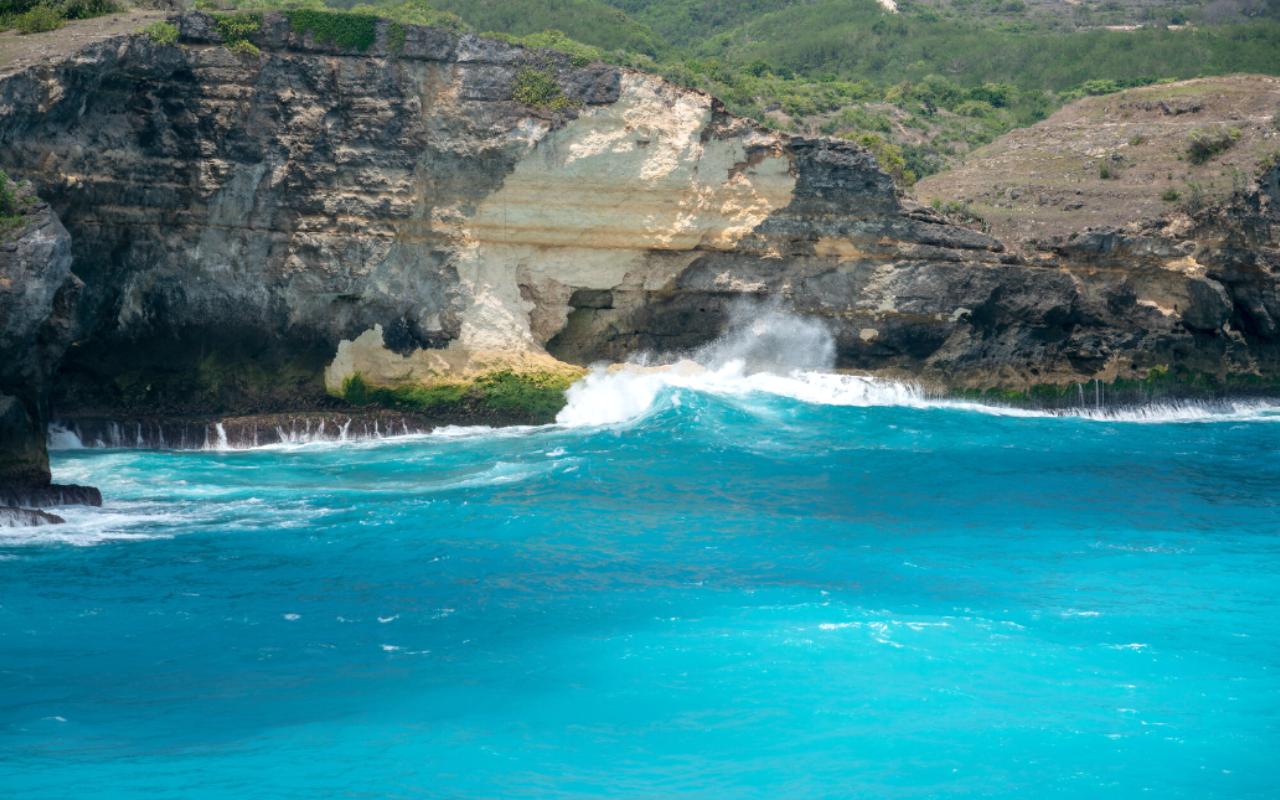
Angel’s Billabong
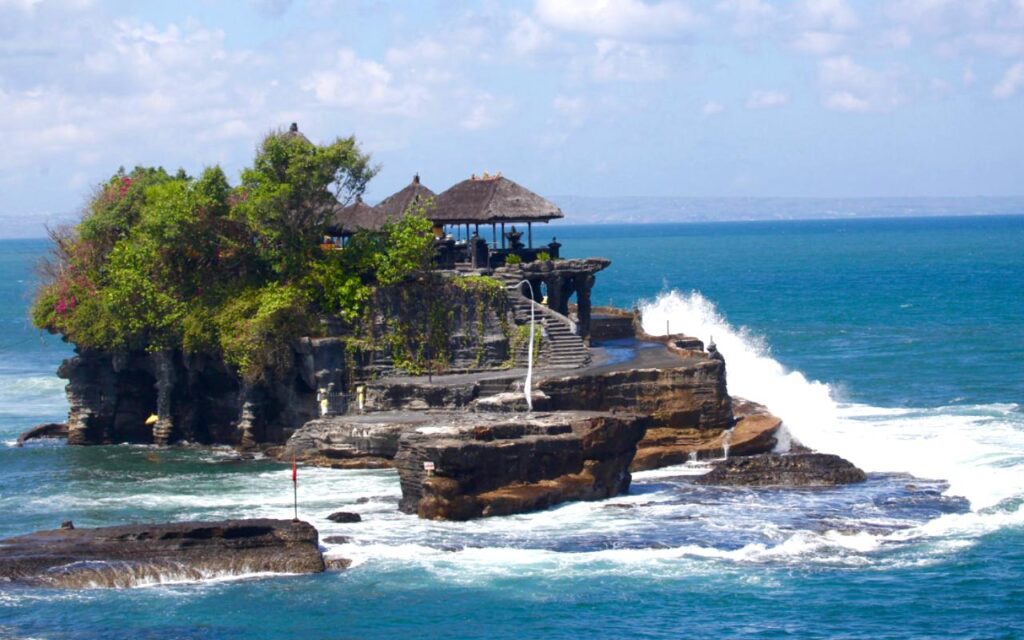
Broken Beach (Pasih Uug): Next to Angel’s Billabong. A circular cove with a large natural rock arch over the sea. A dramatic photo spot where waves crash below. Both Angel’s and Broken Beach are very popular with tourists.
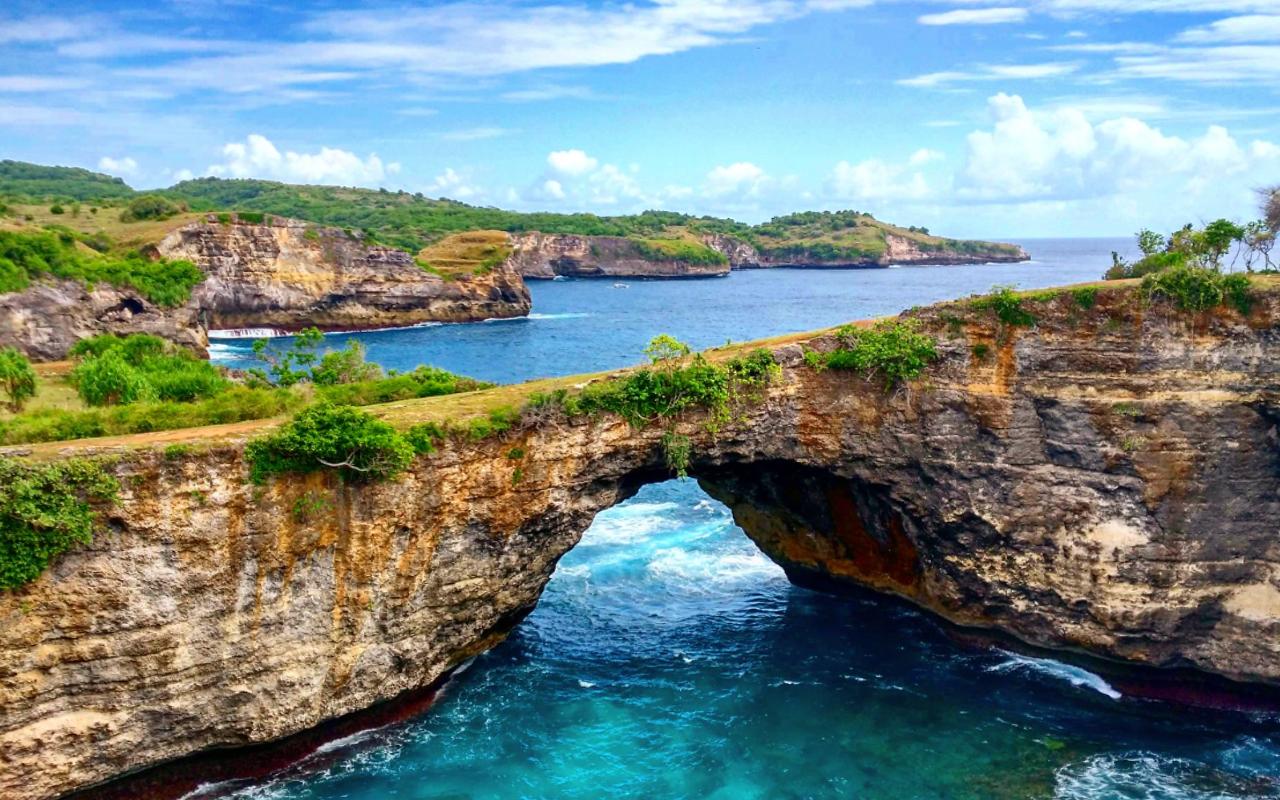
Broken Beach (Pasih Uug):
Diamond Beach: On the east side of Nusa Penida, about 1.5–2 hours’ drive from Kelingking. Diamond Beach features a long wooden staircase down white cliffs to an isolated beach. It’s famous for its photogenic stairs and sunrise views. (Often paired with Kelingking on east-coast tours.)
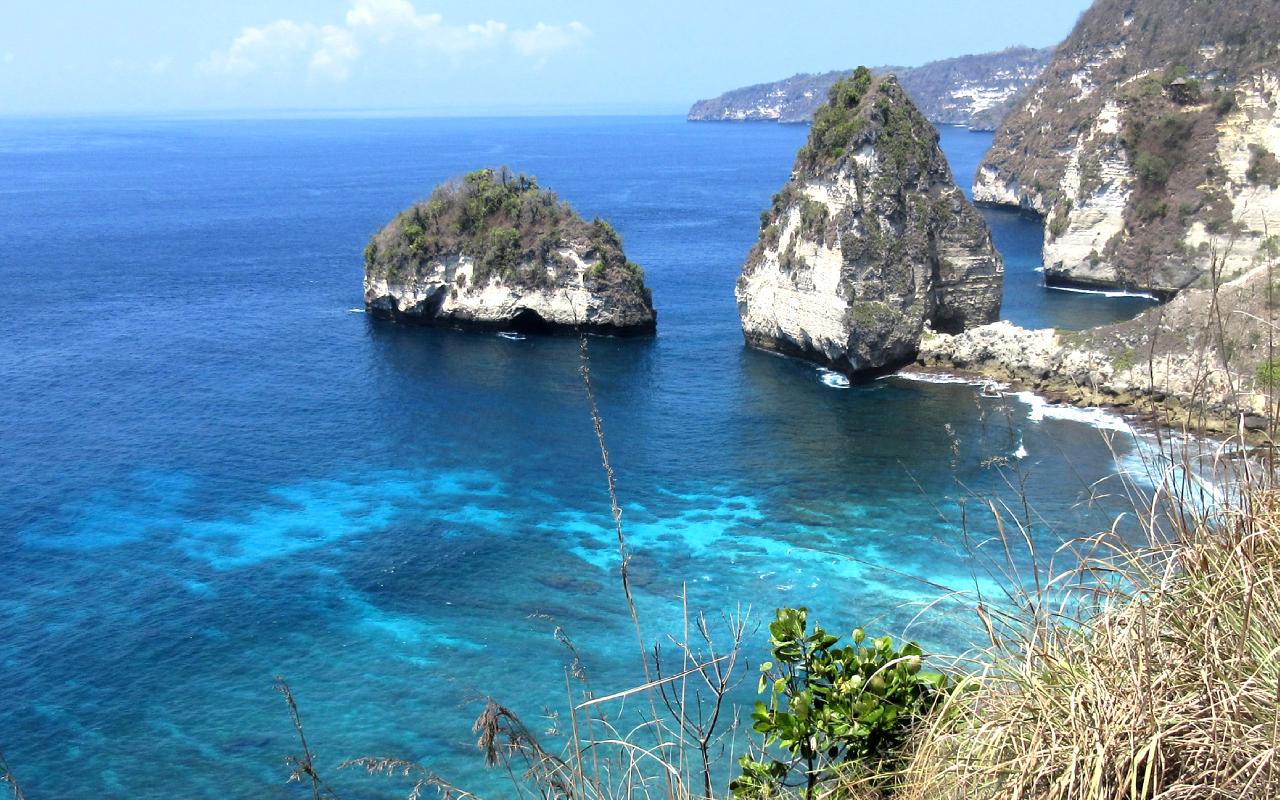
Diamond Beach
Atuh Beach: Also on the far southeast corner, near Diamond Beach. Known for towering cliffs, white sand, and two rock islets offshore. Atuh has a steep but short hike down (about 10–15 minutes). Both beaches require small entry fees and have scenic viewpoints.
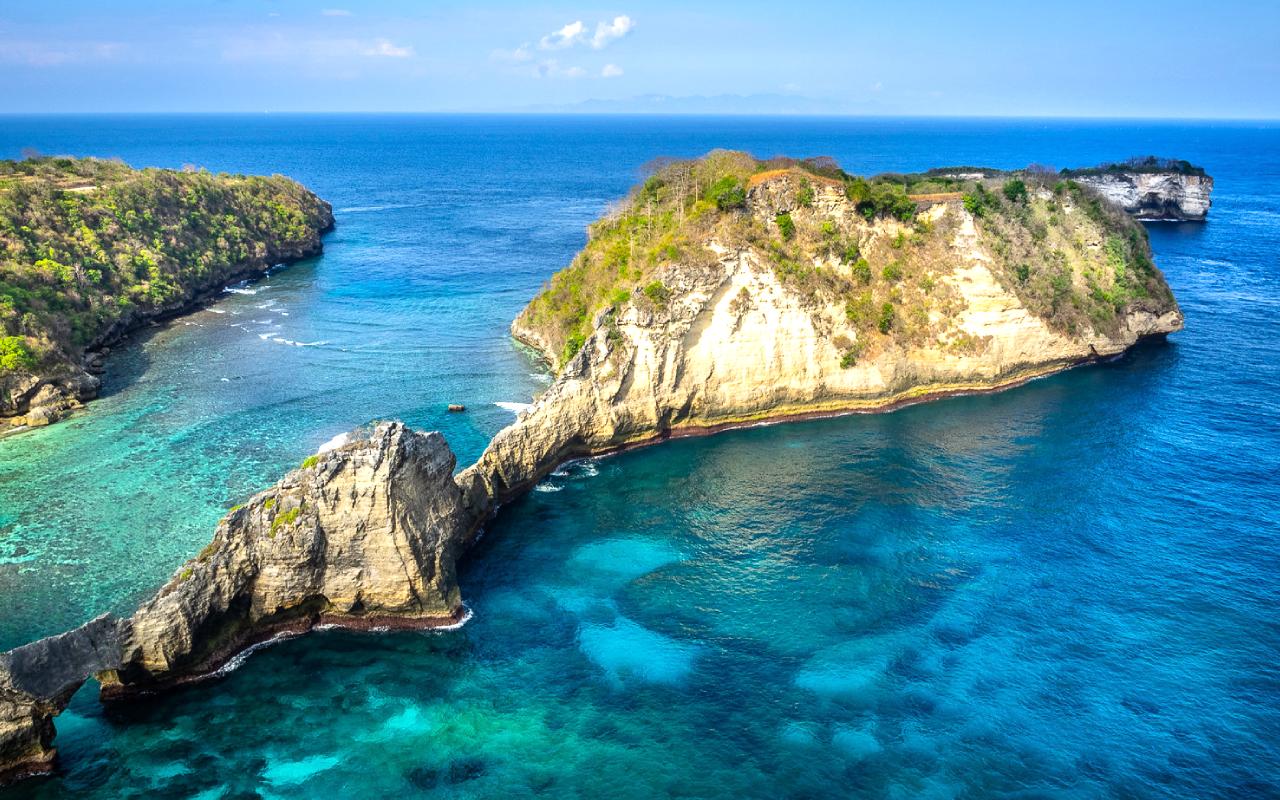
Atuh Beach
Rumah Pohon Treehouse: Also in the east, a famous “swinging treehouse” on a cliff overlooking the ocean. Great for sunrise.
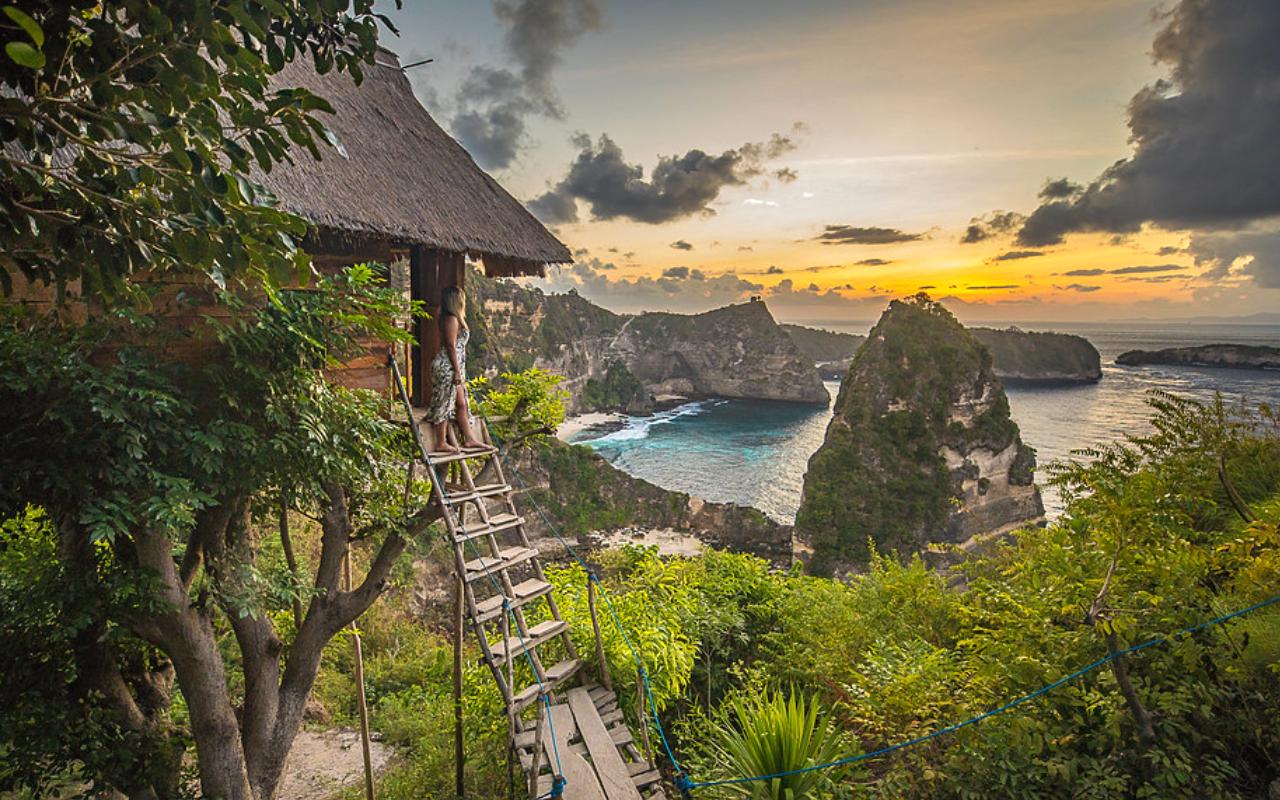
Rumah Pohon Treehouse
Many travelers do a circuit: Kelingking → Broken Beach → Angel’s Billabong → (optionally) Crystal Bay → return. Or, one-day tours will include Kelingking plus the eastern trio (Atuh/Diamond).
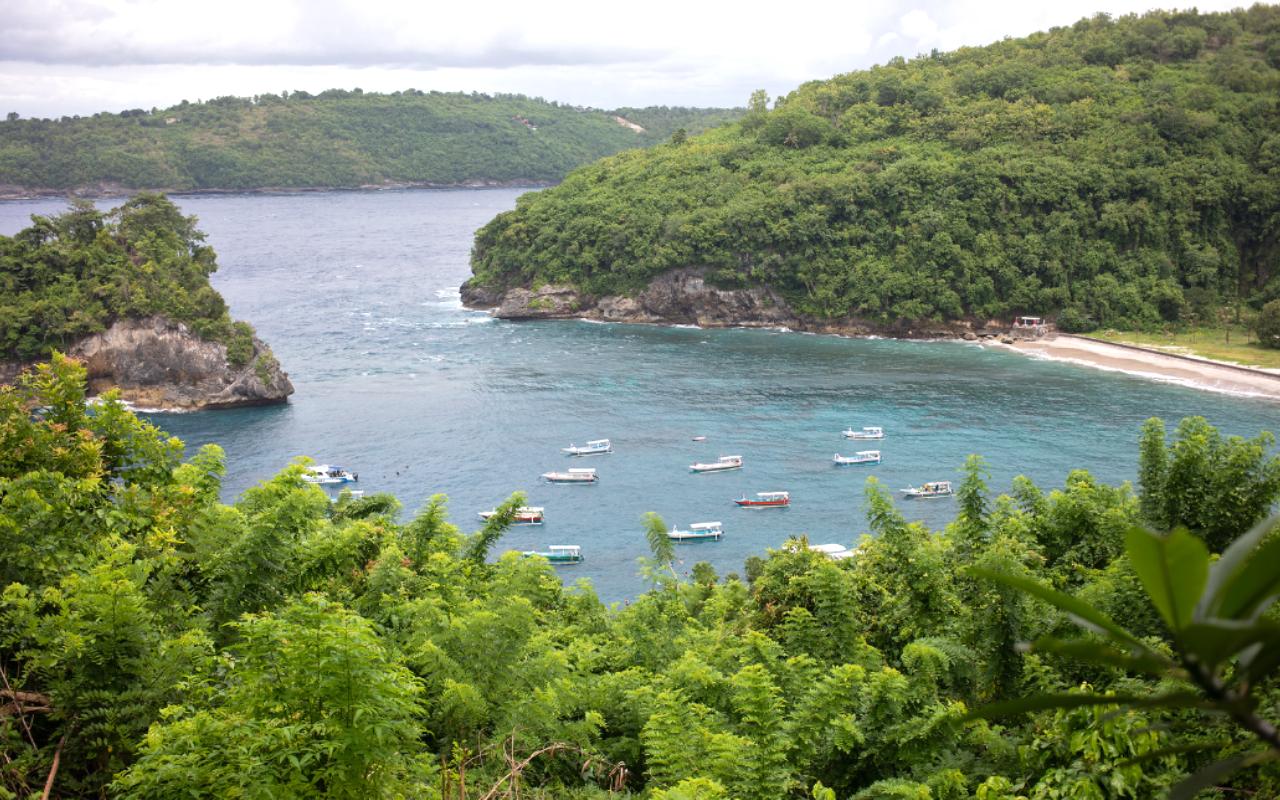
Crystal Bay
Sample Kelingking Beach Itinerary
Here’s a sample one-day plan from Bali:
1. Early Morning ( Depart Bali): Depart Bali mainland by 7:008:00 am via fast boat (Sanur – Nusa Penida). Remit the penalty fee (IDR 25k) at departure.
2. Mid-Morning (Arrive Nusa Penida): Arrive at Toya Pakeh port (8:30 am). Have your driver or scooter ready. Get a fast coffee/snack in Toya Pakeh.
3. Late Morning (Kelingking Beach Viewpoint): Drive to Kelingking Beach (45–60 min). Arrive around 10:00 am. Take in the main viewpoint, snap photos, and relax.
4. Afternoon (Optional Hike & Lunch): If fit, hike down to the beach (30–45 min) and back up (1 hour). The climb is tiring, so do it only if the weather is good. Have lunch or snacks at the food stand on the summit (following the hike or skipping it and having lunch at the viewpoint).
5. Late Afternoon (Additional Sights): On the way back, go to Broken Beach and Angel Billabong (approximately 10 min drive from Kelingking). Visit 30-45 minutes at each, and perhaps make a stop at Crystal Bay (with sunset or snorkeling).
6. Evening (Return to Bali): Head back to Toya Pakeh port. Return to Bali (Sanur) on an evening fast boat to arrive by 7 -8 pm. This day tour is a must-see tour on Kelingking.
Alternatively, you can stay overnight on Nusa Penida to explore more slowly, including Diamond & Atuh the next day, or just soak in island life.
Who Should Visit Kelingking Beach?
- Adventure Seekers: If you love a bit of challenge and dramatic views, Kelingking is perfect. The hike and remote beach appeal to adventurers.
- Photographers: Absolutely, landscape photographers and influencers come for the epic “T-Rex” shot and the surrounding scenery.
- Solo Travelers and Couples: Kelingking can be enjoyed alone (at sunrise for peace) or with a partner (teamwork on the climb down).
- Nature Lovers: While touristy, it’s still a raw, natural spot. You’ll see manta rays from above on lucky days.
- Avoid if Fear of Heights or Poor Health: The cliffs are high and the hike is steep. If you’re acrophobic or have mobility/heart issues, enjoy the view from the lookout rather than risking the descent.
Things to Know Before You Go
Safety Warnings: There are no lifeguards, no safety nets, and limited emergency access. One fall could be fatal. Young children or non-swimmers should stay at the top. Always heed warning signs at Kelingking Beach (often “No Swimming” and “Danger: Unstable Cliff”). Several fatal accidents have occurred, so stay vigilant.
Facilities: Limited. Carry some cash to use on toilets (typically IDR 2k) and snacks. It has a few warungs (basic food stalls) that offer drinks and simple meals.
Mobile Phone Signal: Intermittent. Download maps offline or ask your driver for directions.
Climate: It gets very hot and humid. Plan for the sun. Rainfall can make paths slippery; check the weather.
Leave No Trace: Take any trash with you. Bali strictly enforces anti-litter rules on beaches and in nature.
Transport on Nusa Penida: Fill up on gas after arriving on the island. Scooter fuel stations are sparse near Kelingking.
Drones: Permitted at most viewpoints, but avoid drones near temples and crowded areas. Always fly responsibly.
FAQs About Kelingking Beach
Is Kelingking Beach worth visiting?
Yes! Almost everyone who visits Bali says Kelingking Beach is a must-see. Travel writers describe it as “more than worth a visit”. Its unique cliff shape and beauty are unparalleled, even if you only see it from above.
How long should I stay at Kelingking Beach?
If you only want the view, 30–45 minutes at the top viewpoint can suffice. If hiking down, allow 2–3 hours total (descend + explore beach + climb back). Our advice: budget at least 2 hours to fully appreciate it.
Can beginners hike down to the beach?
Beginners can attempt the hike only if they are reasonably fit and take it slow. The path is challenging for the inexperienced. Many guides recommend that only fit hikers descend, and to skip the hike if you’re unsure.
Is it crowded year-round?
Yes, Kelingking Beach is almost always busy by mid-morning, especially during peak season (July–Sept). The only consistently uncrowded times are early dawn or later afternoon. Off-peak seasons see fewer tourists, but it never gets entirely deserted.
Are there hotels near Kelingking Beach?
There are no hotels on Kelingking Beach itself, but several resorts and homestays on Nusa Penida. As mentioned, recommended places include Ocean Terrace, Semabu Hills, and Sawit Garden. More accommodations are available in Toya Pakeh and on the western road to Kelingking.
What about the “kelingking beach death toll”?
Unfortunately, fatalities do occur here due to risky hiking and swimming attempts. Bali media reports multiple drownings over the past years. Always respect the danger and stay safe.
Conclusion
The Kelingking Beach is indeed what it is said to be, the T-Rex cliff of Bali. It is hypnotising with the tall limestone, the blue waters, and that spine-like ridge. It requires care and labor, but the result is a view that few locations on this planet can rival.
The Kelingking Beach can be seen in all its glory only by planning (arriving early, bringing the right equipment, thinking about safety).
To conclude, arrive early, evade the crowds, and capture the epic photo opportunities. The Kelingking Beach is not just a beautiful site, but it is a reflection of the great power of nature.
Take out your camera, your hiking shoes, and get ready to have a memorable sight.











-
 0115 Best Easy Treks in Nepal for Beginners and Families
 -
 02Best season for Everest Base Camp Trek
 -
 03Best Time to Go Hiking in Nepal: A Seasonal Guide for Trekkers
 -
 04Suchi Purja –Wife of Nirmal Purja aka Nims Dai
 -
 05Dubai desert safari outfit ideas
 -
 06Top Beaches in Sri Lanka
 -
 0710 Best Easy Treks in Nepal