
Now Reading: La Paz Bolivia Travel Guide: Top Attractions, Culture, and Tips for First-Time Visitors
-
01
La Paz Bolivia Travel Guide: Top Attractions, Culture, and Tips for First-Time Visitors
La Paz Bolivia Travel Guide: Top Attractions, Culture, and Tips for First-Time Visitors

Introduction & Quick Facts about La Paz Bolivia
La Paz Bolivia (complete name Nuestra Señora de La Paz, “Our Lady of Peace”) is Bolivia’s seat of government and one of Bolivia’s largest cities, perched between 3,250 and 4,100 meters above sea level. La Paz is Bolivia’s administrative capital (seat of government), while Sucre remains the constitutional capital.
From its founding on the site of an Inca village in 1548 by Spanish conquistadors, La Paz grew into a sprawling city climbing up steep canyon walls towards the high Altiplano in La Paz Bolivia.
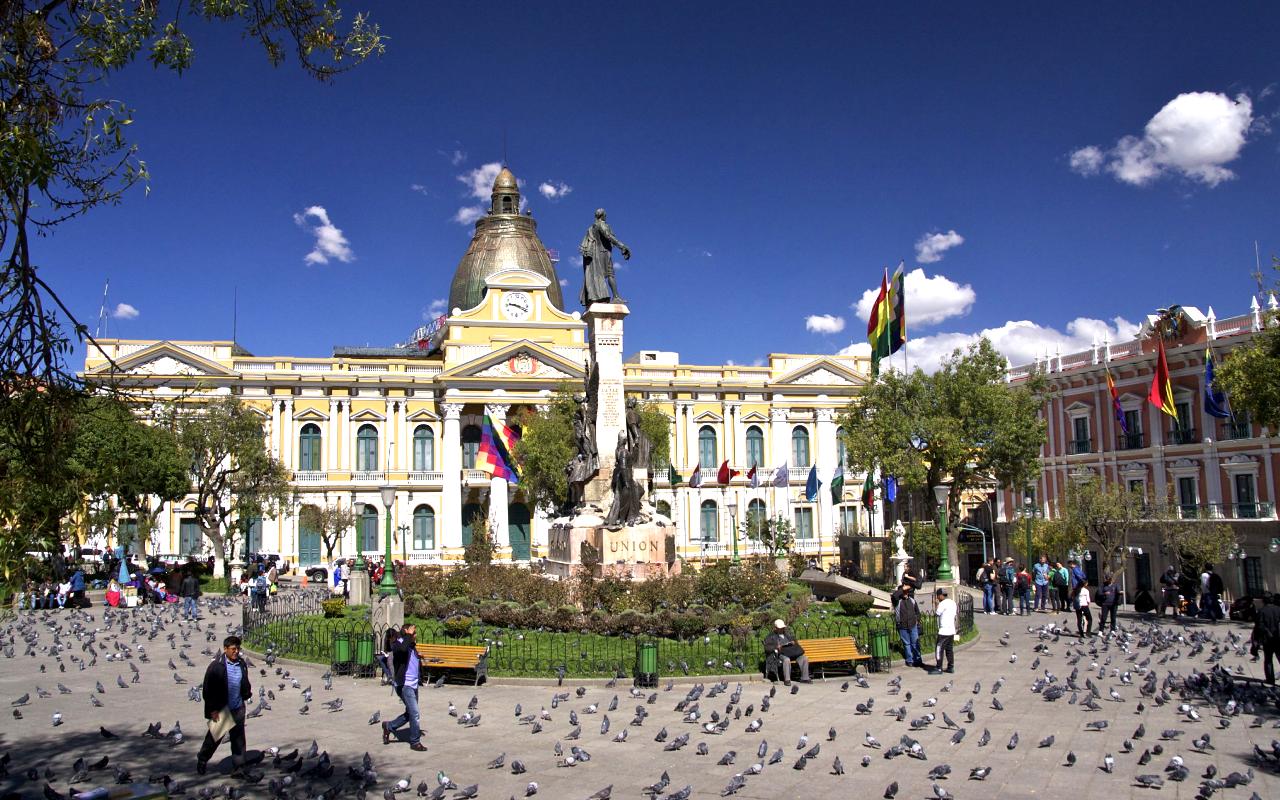
The city’s heart is Plaza Murillo, a plaza surrounded by the gilded Palacio Quemado (Government Palace) and the cathedral.
Glittering modern skyscrapers and cable cars mix with colonial-era streets, indigenous markets, and snow-capped peaks (Nevado Illimani, 6,438 m) towering overhead.
La Paz Bolivia is unique for its combination of culture and altitude. At 3,650 m, even fit visitors feel breathless until they acclimatize.
Visitors should plan a day or two to adjust to La Paz Bolivia. The city’s layout, long and narrow in a gorge, means different neighborhoods are perched at very different heights.
This gives La Paz dramatic vistas but also steep streets and a chilly climate. Typical midday temperatures are mild (50–60 °F/10–15 °C), but nights can drop below freezing at altitude.
Key facts: city altitude 3,600 m; population 800,000; elevation range 3,250–4,100 m. Official language: Spanish (Aymara and Quechua are widely spoken). Currency is 1 USD 6.9–7.0 Bolivianos. Security: mostly safe in tourist areas, but petty theft can occur (see Safety section).
History & Geography of La Paz Bolivia
La Paz’s dramatic geography shaped its history. The city lies in a deep canyon carved by the Choqueyapu River, about 430 m below the Altiplano plateau. This canyon location moderates cold winds but means the city stretches steeply up the valley sides.
La Paz Bolivia is named after a 1548 Spanish settlement, Nuestra Señora de La Paz, founded by Captain Alonso de Mendoza on the site of an Inca village.
It was renamed La Paz de Ayacucho in 1825 to commemorate a battle for independence. Despite being founded in the 16th century, few original colonial buildings survive; the city was largely rebuilt after a 1841 fire. Its mix of low colonial roofs and new towers against the Cordillera Real backdrop remains distinctive.
As Bolivia’s governmental hub since 1898, La Paz hosts the executive and legislative branches in La Paz Bolivia, that including the presidency and parliament. (Sucre, farther south, remains the nominal capital and Supreme Court seat.) The Plaza Murillo area is the core of political life:
It contains the President’s palace (Palacio Quemado) and the Legislative Assembly. Off Plaza Murillo lies the old quarter (Casco Viejo), with narrow streets, colonial churches, and museums.
Surrounded by mountains (including Illimani to the east at 6,438 m), La Paz’s thin air means oxygen levels are 60% of sea level. Visitors often experience shortness of breath and fatigue until acclimated.
The Andean heritage includes high-altitude adaptations (wild potato varieties, freeze-dried chuño, and coca tea). It is indicative of this indigenous background in the cultural landscape of the city: Aymara and Quechua peoples are still dominant, and traditional markets (selling alpaca wool to ritual herbs) are an important part of life.
In general, La Paz is characterized by its elevation, its combination of ancient and modern, and its indigenous life. It’s a city where colonial history meets Andean traditions, all set amid spectacular highland scenery.
Best Time to Visit La Paz Bolivia & Climate
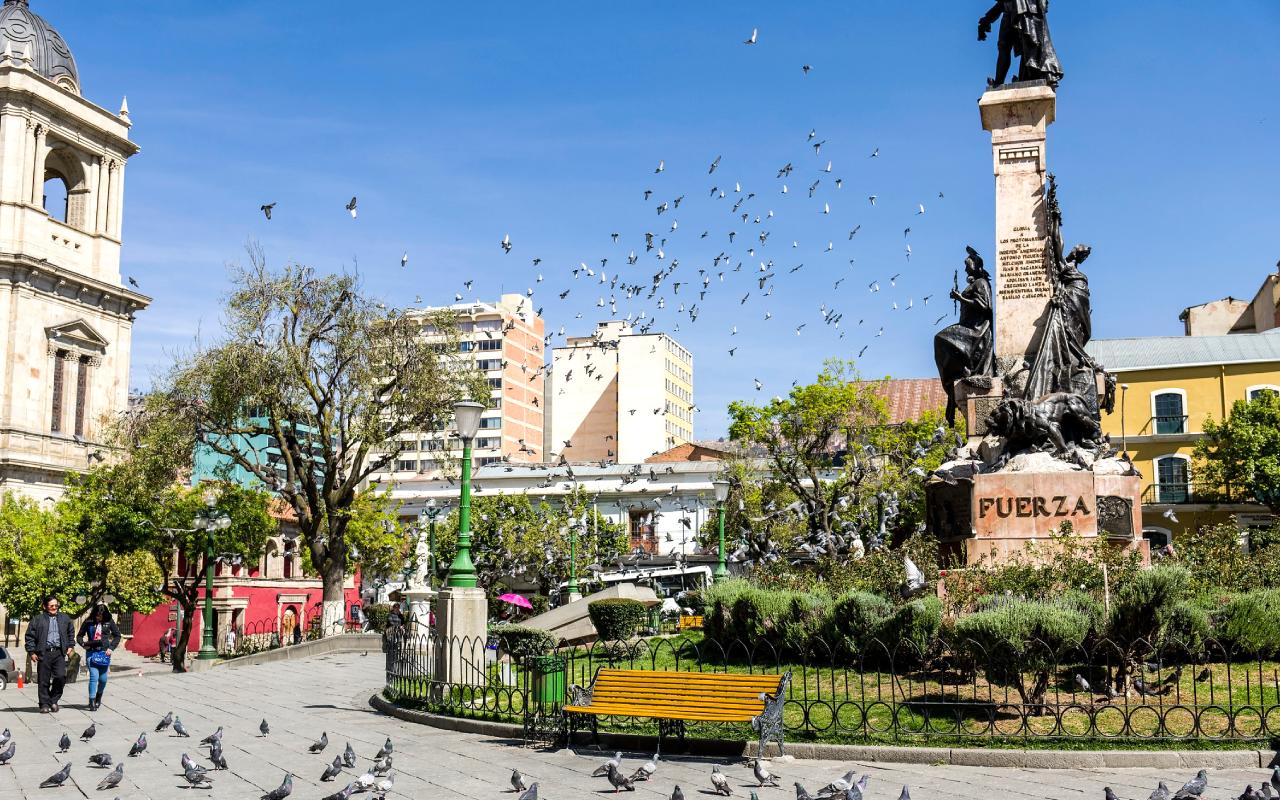
La Paz has a high-altitude, subtropical highland climate in La Paz Bolivia: cool and dry most of the year, with a wet season roughly November–March.
The best time to visit La Paz Bolivia (and the Altiplano in general) is April through October, Bolivia’s dry winter season. Expect clear blue skies and minimal rain in these months, though nights can be very cold (often below 0 °C).
Daytime highs typically range from 10–18 °C. April–May and September–October are ideal shoulder months: days remain mostly sunny, crowds thin after Easter, and the surrounding landscape is still green from the early rains. July–August is the peak tourist season: very sunny but also the coldest part of winter, with frequent frosts at night.
The rainy season (November–March) brings frequent afternoon showers or thunderstorms. Roads in mountainous areas (and to Lake Titicaca or Uyuni) can get muddy or flooded, and some rural routes may be temporarily impassable.
However, heavy rains also bring lush valley scenery, fewer tourists, and lower prices. Even during the rains, city sightseeing is still possible on sunny mornings.
Temperature: At 3,600 m, La Paz’s high altitude means intense sun and large day-night swings. In the dry season, daytime highs often reach 20 °C, but nights can dip near or below freezing.
Always pack layers (long sleeves, hats, gloves) and sunscreen for the altitude. In the rainy season, average highs drop to 15 °C and nights remain near freezing, with frequent overcast periods.
Weather Tips:
- Plan outdoor excursions (teleférico rides, tours) for the morning when skies are clearest.
- Bring a warm jacket and hat for evenings year-round.
- Even in “summer,” expect at least one daily storm in the afternoon during November–March.
A fun cultural event is Feria de Alasitas (late January), a street fair of miniatures where locals buy tiny models of houses, cars, and cash to offer to the ekeko (god of abundance), a fascinating local tradition.
Another is Fiesta del Gran Poder in late May/early June, when tens of thousands take to the streets in colorful religious pageantry. If your trip coincides, witnessing Gran Poder’s parades (over 30,000 dancers in folkloric costumes) is unforgettable.
Culture & Traditions of La Paz Bolivia
La Paz Bolivia’s culture is a vibrant blend of indigenous Aymara/Quechua heritage and Spanish influence. The city’s majority of residents are of indigenous descent, and traditional customs remain strong. The colorful “cholitas” Aymara women in multi-layered pollera skirts, shawls, and bowler hats are iconic symbols of La Paz Bolivia.
You’ll see cholitas everywhere (markets, streets) and even in events like cholita wrestling, where matriarchs strap on sneakers and compete in Lucha Libre-style matches at El Alto’s arena. The oldest cholita fighters now number dozens, and attending a match (often billed as “La Guerra de las Cholitas”) is a unique cultural experience.
Religious festivals fuse Catholicism with Andean beliefs. The aforementioned Gran Poder parade honors Jesús del Gran Poder with a 6‑km route through the city.
Thousands of dancers perform Diablada (devil dance), Morenada (African slave dance), and others, wearing elaborately bejeweled costumes made by hand over months. Smaller-scale traditions include the ch’alla (blessing offerings) and the ubiquitous reverence for Pachamama.
Markets are a cultural cornerstone in La Paz Bolivia. Beyond crafts and produce, markets host vendors of coca leaves and ritual items.
Most famously, the Mercado de las Brujas on Calle Linares is devoted to Aymara spiritual goods, dried llama fetuses, herbs, and potions for use in rituals of good fortune or ancestral blessings.
Visiting the Witches’ Market is as much anthropological as shopping: vendors explain their wares, reflecting indigenous worldviews. (Basic Spanish or an Aymara-speaking guide is useful for context.)
Arts & folklore: Museums preserve cultural heritage. The Museo Nacional de Etnografía y Folklore displays indigenous textiles, musical instruments, and the famous “3000 Years of Textiles” exhibit.
On Calle Jaén (the old crafts street), there are small museums of colonial life, music, and art. The city’s architecture also blends Andean motifs (like Inca patterns on San Francisco’s façade) with baroque.
Modern La Paz Bolivia, also values its café and artistic scene. Neighborhoods like Sopocachi host theaters, galleries, and cafés, often with free WiFi, where young Bolivians gather. Live music (from charango and quena flute to rock) is popular in plazas and venues.
The gastronomy scene is rising too: young chefs at places like Gustu (see next section) are revitalizing local cuisine with innovative techniques, earning international acclaim.
In daily life, you’ll notice that many bolivianos speak Spanish interspersed with Aymara words. Quechua is less common in La Paz than in some Andean regions, but it remains important among older generations.
Respect for elders and pilgrimage sites is part of local values: for example, roads up to Cerro Calvario (east of the city) are lined with murals and offer spiritual viewpoints.
Overall, La Paz’s culture is defined by its Indigenous heritage: expect to see traditional dress, hear folk music, and witness syncretic religious rituals alongside modern city life.
Engaging respectfully (e.g., asking before photographing vendors, bargaining politely) will enrich your experience of La Paz’s living traditions.
Cuisine & Recommended Dishes in La Paz Bolivia
Anticuchos
Bolivian highland cuisine is hearty and rich in native ingredients, and in La Paz Bolivia you can sample an extraordinary range of dishes. Many meals center on potatoes (including freeze-dried chuño), corn, quinoa, and meats like llama or beef.
Street foods and markets are the best places to try local specialties cheaply, in La Paz Bolivia, while top-notch restaurants serve gourmet versions. Key dishes:
Salteñas (morning empanadas): A Bolivian classic. Salteñas are baked pastries filled with stewed meat (beef, pork, or chicken), peas, potatoes, olives, and hard-boiled egg, in a slightly sweet, juicy sauce. They are typically eaten as breakfast, often baked fresh around 6–10 AM.
The best salteñas are golden, piping hot, and crisp outside, so get them early. Popular vendors include Salteñas Madre, La Rosita, and roadside stands near markets like Lanza or Jaén. (Pro tip: each stand claims its salteña is unique, so feel free to sample a few.)
Chairo: A warming Andean soup perfect for altitude. Chairo is prepared using beef (occasionally lamb), the corn on the cob, chuuno (sun-dried potato), potatoes, carrots, and herbs such as huacataya. The result is a thick, earthy soup that locals often eat for breakfast or lunch in markets.
Try chairo at any mercado (e.g. Mercado Camacho or Mercado Lanza), often served with a side of mote (hominy) or accompanied by a tawa-tawa (herbal tea) for altitude relief.
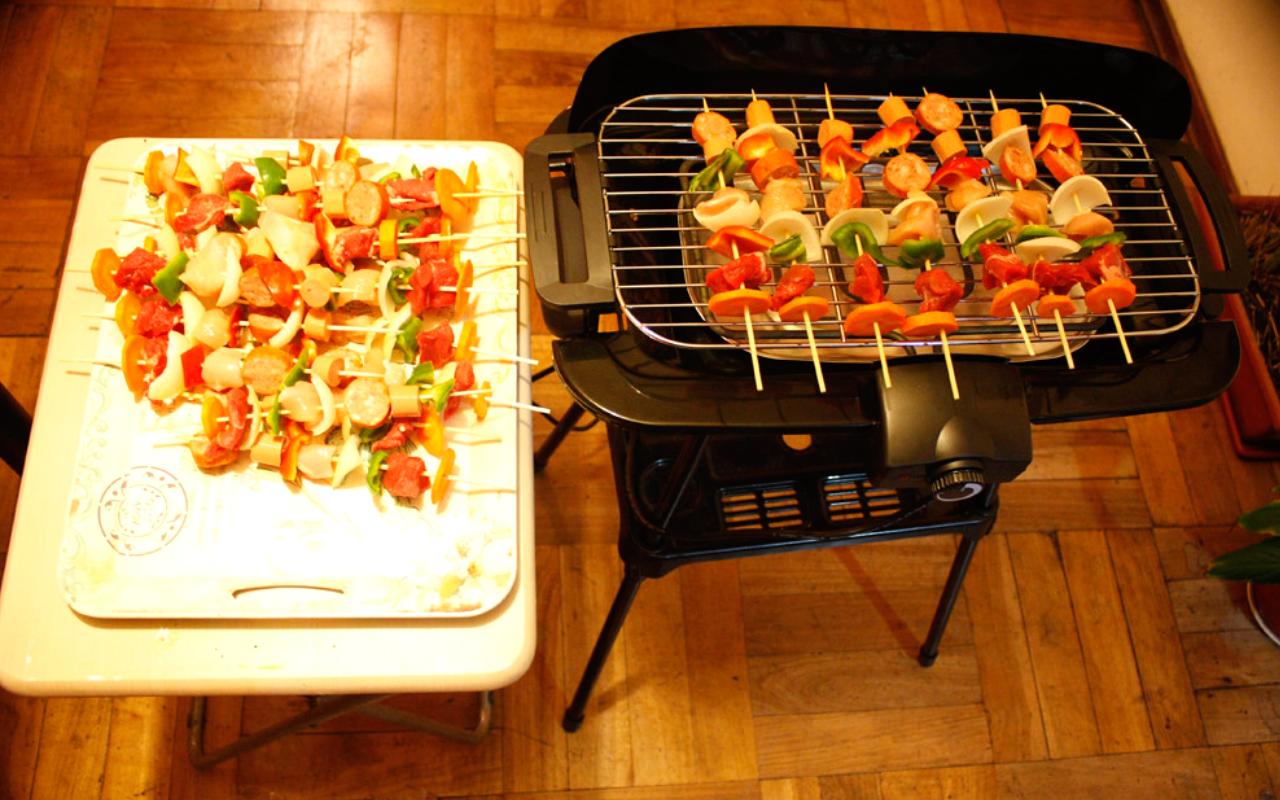
Anticuchos: Skewered grilled meats, usually beef heart, marinated in a spicy sauce. On cool evenings, look for anticuchos carts or stands, often grilling over charcoal on the street.
Anticuchos come with boiled potatoes and a peanut-chili sauce. They are a popular late-night snack in La Paz’s nightlife districts.
Humintas & Tamales: Corn-based treats. Humintas are like sweet tamales: fresh corn ground and mixed with anise or cheese, wrapped in corn husks, and steamed. They are usually eaten at breakfast. Salteñas’ dough is similar to tamales’, but pastel – a fried pastry – is served with api.
Api (con pastel) is a traditional hot drink of purple or yellow corn, spiced with cinnamon and cloves. It is served with pastel, a flaky fried wheat snack (similar to a fritter). You’ll see vendors (often women in bowler hats) selling steaming cups of api & pastel on cold mornings, especially around markets.
Locro & Llama meat: Locro is a hearty stew of squash, corn, beans, potatoes, and cheese. Many restaurants also serve charque de llama (jerked llama meat) or llama steaks, a local favorite (lean and gamey). Try llama lomo saltado (stir-fry) or llama anticuchos for a novelty.
Queso Humacha: A simple but beloved dish of fresh cheese (queso fresco) mixed with warm corn puree, flavored with huacataya (Andean mint). It tastes like an herbed cheese on grits. Sometimes served as a snack or part of a meal, often found in markets.
Where to eat in La Paz Bolivia
Mercado Rodriguez (above Valle de Laikakota viewpoint) and Mercado Lanza (downtown) are food hubs. Rodriguez is famous for soups and juices, with dozens of stalls under a red-roofed hall. Lanza has salteñas, sandwiches, and local soups.
- Street vendors: Find api & pastel vendors in the morning near La Paz’s main squares and markets. For anticuchos, roam the Sopocachi or Sagarnaga area at night.
- Local eateries (comedores): Small family-run restaurants serve typical lunches (plato del día) with soup, meat stew, and rice/vegetables. These are abundant in downtown.
- Restaurants: La Paz has seen a gourmet renaissance. Notable spots: Gustu, Bolivia’s highest-ranked restaurant (from Noma’s Claus Meyer), offering tasting menus of refined Andean ingredients (llama, quinoa, native potatoes). Very upscale and pricey, reservations needed.
Popular Cocina Boliviana – a mid-range favorite where you can try a variety of Bolivian dishes (sopa de maní, churrasco, silpancho) in a charming colonial courtyard.
Ancestral – another high-end restaurant blending indigenous ingredients with modern flair (ceviches with Amazon fish, etc.).
Café Pringles or Café del Mundo, Sopocachi cafés known for breakfast and coffee (try local brew with coca cookies!).La Jeunesse ou Grillos – modern bistros. - Street food: Besides those above, don’t miss helado de canela (cinnamon ice cream), a La Paz specialty sold in small shops (blend of cinnamon-infused ice cream and praline).
In summary, La Paz cuisine emphasizes altitude-friendly, hearty foods. Eating locally is cheap ($2–4 for a market meal), and the flavors are robust. The fusion scene adds excitement for foodies, while markets and street carts ensure backpackers can eat well on the cheap.
How to Get There
By Air: El Alto International Airport (LPB) is the main gateway for La Paz. It’s one of South America’s highest major airports (4,100 m) and is about 14 km (30–60 minutes) northwest of downtown.
Several airlines fly to La Paz: major carriers include Boliviana de Aviación (BoA), Sky Airline, LATAM, and Amaszonas for domestic routes; and international flights connect La Paz to regional hubs.
(Note: Many long-haul visitors fly into Santa Cruz or Lima and take a connecting flight.) Routes in 2026 include non-stop flights to and from Lima (Sky/BoA), Miami (BoA), Panama City (Copa), and some Mexican cities (VivaAerobus/Aeroméxico to Mexico City). Domestic flights link La Paz with Santa Cruz, Cochabamba, Sucre, Uyuni, and others via BoA, Amaszonas, or EcoJet. Always check current schedules and book in advance if traveling in peak season (June–Aug).
From the airport, the cheapest transfer into town is the Teleférico (Red Line from the 16 de Julio station in El Alto, which you reach by a short taxi ride from the airport, connects to downtown), fare ₿3, which goes directly to downtown stations (Central). Taxis or shuttles are also available; reputable hotels may offer airport transfers. Negotiate taxis or use apps like InDrive to set a fair price.
By Bus: La Paz is well-connected by long-distance bus. Top routes: from Santa Cruz de la Sierra (12–14h ride, $20–30) and Cochabamba (8h, $15) bring you to La Paz.
Buses from Potosí or Uyuni (Salar de Uyuni) also arrive here. Services range from basic “minerito” buses to comfortable Bolivian “cama” buses (reclining seats). Tickets can be bought at bus stations; mid-range buses cost $10–25 per journey.
By Car or Overland: Highways link La Paz to Chile (Arica) and Peru (Desaguadero at Lake Titicaca). Border crossings are possible but time-consuming (exit fees, queues).
From Peru, buses from Puno or Juliaca (Peru) to Copacabana can continue to La Paz via bus/boat.
Arrival: La Paz city is long and narrow. Most visitors arriving by road or air will reach the city center via Avenida Ecuador or through El Alto, often using a taxi or a minibus.
Getting Around La Paz Bolivia
Teleférico (Cable Cars): La Paz Bolivia boasts the world’s highest urban cable-car network, the Mi Teleférico, which connects the city to El Alto and different neighborhoods. It is both a transport and an attraction.
The eight-color lines (Yellow, Red, Green, etc.) run 5 AM–10 PM, departing every 12 seconds (so waits are short). A single ride costs just ₿3 ($0.40), making it cheaper than the old bus fare.
Take the cable at Central Station (Rojo Line) to quickly visit downtown sites: the Red Line’s Central stop is next to Plaza Murillo, the Witches’ Market, Calle Jaén, and San Francisco Church. The Red Line’s 16 de Julio station goes up to El Alto’s famous open-air market, Cholita-wrestling stadium, and the airport.
For city views, the Cable Amarillo (Yellow) from Sopocachi up to Alto Sopocachi provides breathtaking panoramas. Teleféricos are clean, efficient, and a must-use; during rush hour, they become very full, but using them at any time is safe and inexpensive.
Minibuses & Micros: The lifeblood of La Paz Bolivia local transport. Micros are the large, colorful buses with fixed routes (especially common in El Alto). They run any time from early morning to late night, costing ₿2. They’re very cheap but crowded and slow (stop anywhere on request). Minibuses (colectivos) are vans painted with route numbers. Fares ₿2.5.
These are faster and one of the most common ways to get around central La Paz. To hail a micro/minibus, simply raise your arm; to get off, call “¡Bajo!” as they approach. Beware pickpockets on packed vehicles.
PumaKatari Buses: These are modern, yellow city buses with set routes and stops, introduced to improve comfort. They are also electronic payments and safer than informal minibuses. Routes may, however, be baffling and not on-demand, so they are only suitable when you have a particular known route.
Trufis & Taxis: Trufis are shared taxi vans with fixed routes. They leave when full and charge more than micros but less than a private taxi. Use them for places not served by bus, but confirm the route. For private rides, regular taxis are plentiful in Zona Sur and hotel areas; agree on a price upfront (typical 10–25 Bs for short rides).
Our choice is taxi apps: Ride-hailing apps like InDrive and Yango are widely used, while Uber has limited availability Tricks: to avoid being overcharged, taxi meters or booked through an app should be used always, regardless of the time of the day or night, to avoid overcharging.
Walking: Central La Paz (Plaza Murillo, Sopocachi, Jaén) is compact and walkable, though very hilly. Wear comfortable shoes! Walkable areas include San Francisco Plaza, Mirador Killi Killi, and Calle Jaén.
Summary: The cable car network is the city’s transportation backbone and an attraction itself. Together with buses and trufis, it allows tourists to bypass terrible traffic and reach high parts of the city (including El Alto) quickly. Keep small bills/coins for fares (₿3 coin for teleférico, ₿2 for bus), and always have a taxi app or a note of your destination if flagging a cab in Spanish.
Top Attractions in La Paz Bolivia
Plaza Murillo & Government Palace
Plaza Murillo
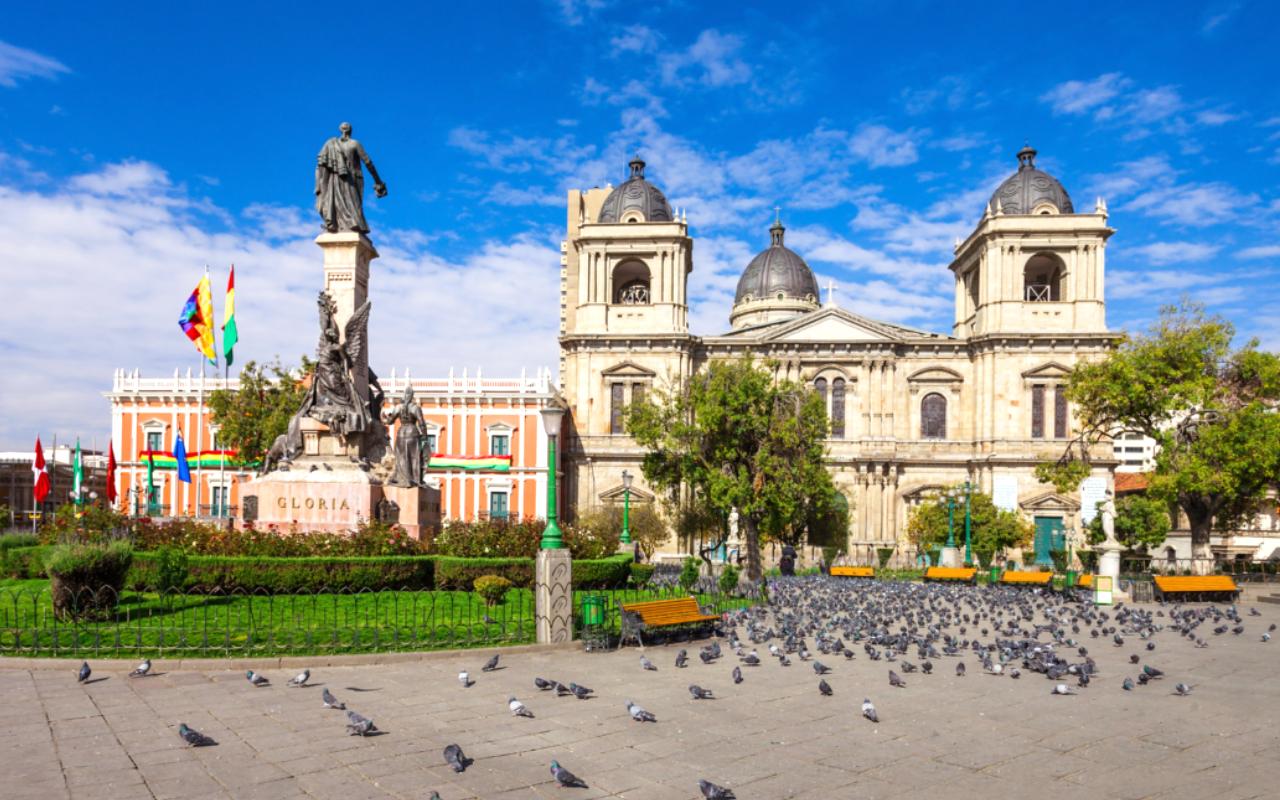
La Paz’s beating heart is Plaza Murillo, a grand square named after independence leader Pedro Domingo Murillo in La Paz Bolivia. It hosts the flamboyant Casa Grande del Pueblo (the presidential palace with a gold dome) and the old Palacio Quemado (“Burnt Palace,” once home of presidents).
The National Congress/Legislature building and Cathedral also line the plaza. This area (sometimes called Casco Viejo) is where Bolivia’s politics play out.
Visitors can stroll the perimeter, enjoying the architecture (19th-century facades of the Government Palace, legislative wing) and people-watching on benches. Across the street is the Supreme Court building (in Senate House) and a statue of Murillo himself.
Behind the Palacio Quemado is Casa de Libertad, the colonial house where Bolivia’s Declaration of Independence was signed (now a museum).
Nearby, the wax figures at Museo de la Revolución and Museo Casa de Murillo recount Bolivian history (e.g., independence from Spain). The Cathedral of La Paz (4 pm Mass daily) still holds some original colonial art and remains a key landmark in La Paz Bolivia.
All Plaza Murillo sights are free to walk by or enter (for the cathedral, no fee; entry times limited). Official ceremonies often happen here, including the trooping of guards or flag-raising.
Early morning or late afternoon light makes the yellow and white buildings glow, so plan a visit then for photos. (A climb up nearby Mirador Killi Killi gives a panoramic view of Plaza Murillo, just behind the Basilica of San Francisco.)
Mercado de las Brujas (Witches’ Market)
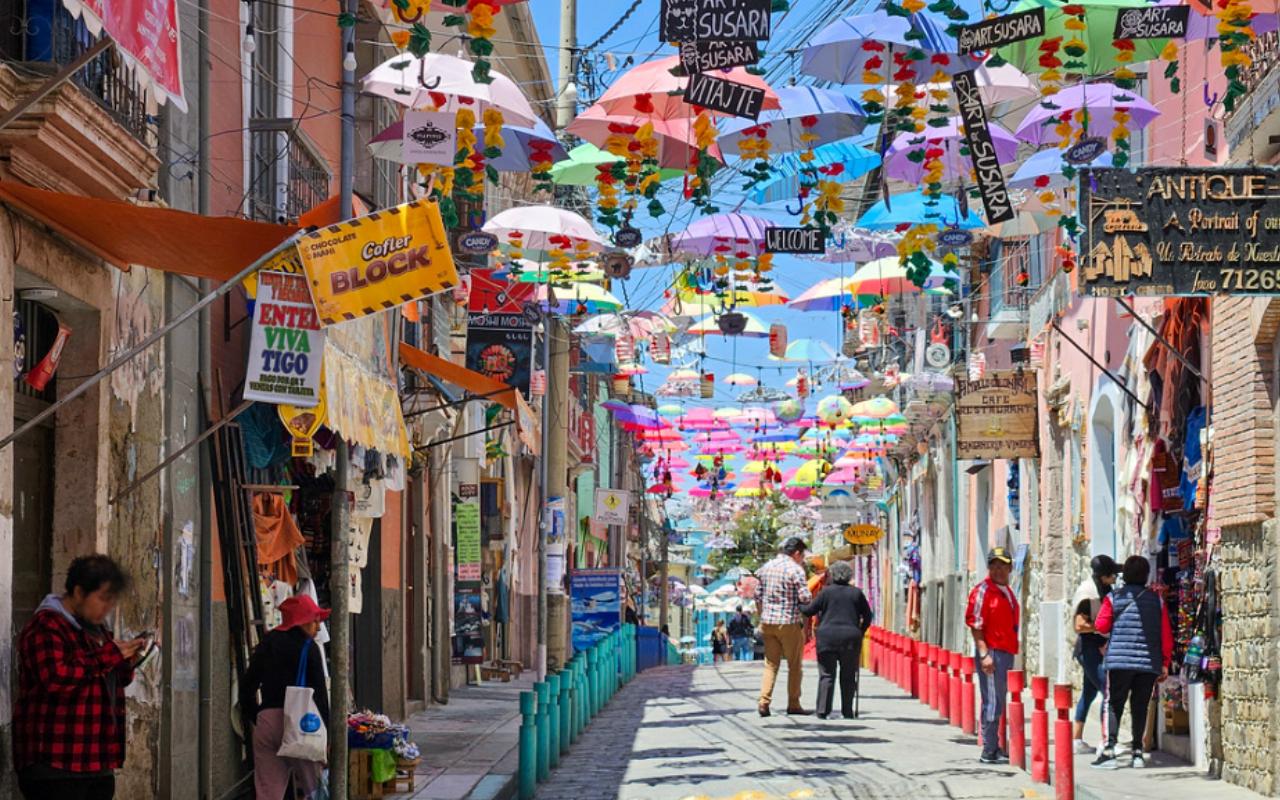
Mercado de las Brujas (Witches’ Market)
A must-see oddity is the Witches’ Market on Calle Linares (just north of Plaza Murillo). Officially called Mercado de Las Brujas, it’s really a collection of open stalls and shops selling ritual items for indigenous Aymara spirituality.
Here you’ll find dried herbs, ritual candles, miniature silver cradles (for the god Ekeko), and famously chuñu (dried potatoes), llama fetuses (for prosperity offerings), dried frogs, coca leaves, and potions.
Vendors (often cholitas in bowler hats) are happy to explain prices and uses. No photography of fetuses or people without permission! Visiting gives insight into Andean beliefs about Pachamama and luck.
Admission is free; the market runs daily (approx 9:30 AM–10 PM). A morning visit sees locals shopping; evenings see locals doing rituals by candlelight.
(Tip: The market connects to Calle Sagarnaga, a touristy street of souvenir shops. Paceños say the Witch’s Market is not for typical souvenirs, but rather genuine ritual goods.)
Iglesia de San Francisco & Museums
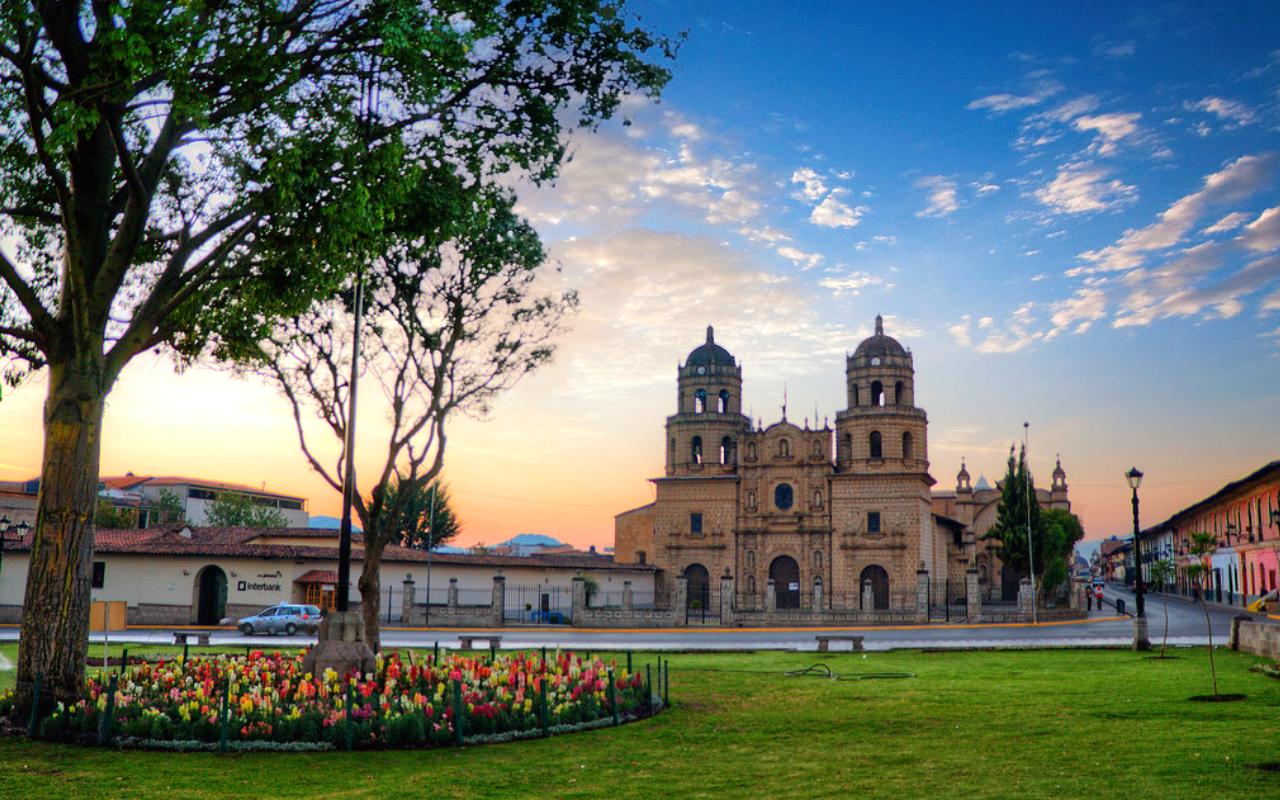
On the south edge of Plaza San Francisco stands the Basilica of San Francisco, an ornate baroque church (1743) blending Spanish and Aymara styles. The golden facade and high domes are iconic.
Inside, the church itself is free to enter; take in the vaulted ceiling and silver altarpiece. Behind the church is the ex-convent, now a cultural center.
Guided tours (₿20, $3) in Spanish/English give access to hidden gems: the cloister, small ethnographic rooms (with colonial furniture), and the vaulted rooftop terraces for city views. Tour guides will point out Pedro Murillo’s tomb (the founder of Bolivia’s independence) under the floor.
Nearby, Calle Jaén is lined with 17th–19th-century houses now converted into small museums. Highlights include Museo de Metales Preciosos (Gold Museum), Casa de Murillo (revolutionary hero’s home with period furniture), Museo Costumbrista Juan de Vargas (traditional life), and the Museo de Instrumentos Musicales (ethnic instruments).
These entries are typically combined (about ₿10 each) and open daily 9:00–18:00. In Jaén, don’t miss local history artifacts.
For a broader anthropological view, the Museo Nacional de Etnografía y Folklore (Ingavi 916) is excellent. It showcases Bolivian indigenous cultures: textiles, pottery, masks, and the famous “3000 Years of Textiles” collection of woven cloth.
It’s open limited hours (Mon–Tue, Sun). Finally, the Museo Nacional de Arte (older colonial building on Plaza Murillo) has Bolivian art from pre-Columbian to modern.
Valle de la Luna (Moon Valley)
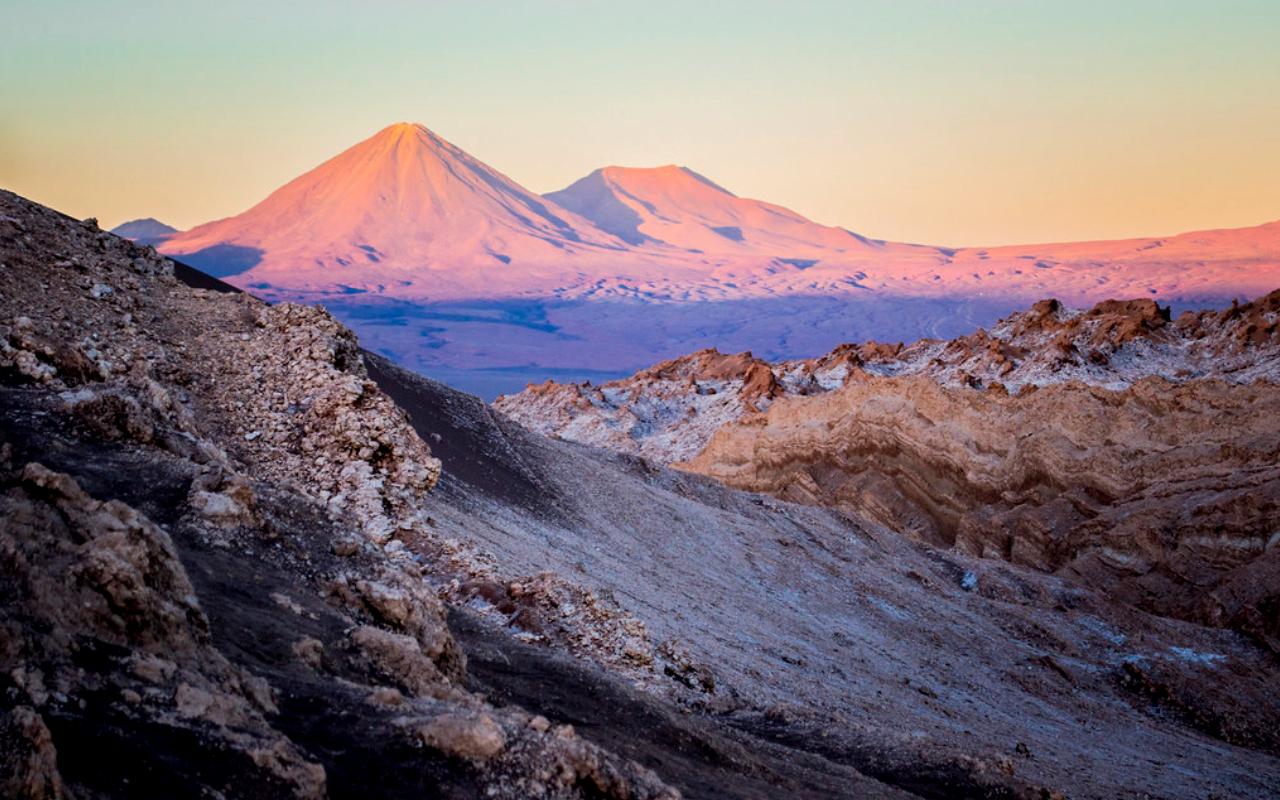
About a 30–40-minute taxi ride south of the city center is Valle de la Luna, a surreal erosion landscape of clay pinnacles and spires. Sometimes called Moon Valley, this rugged area looks like another planet.
It’s located in the District of Mallasa, near the military cemetery. The park has an entry fee (around ₿15 for foreigners) and offers two main loop trails (short 15 min and longer 45 min).
Along the way, informational plaques explain how centuries of wind/rain carved the waxy earth. Bring water and sun protection; it can get hot and exposed.
Valle de la Luna is often combined with a visit to nearby hot springs (no fee to walk around), as there’s a memorial statue to Neil Armstrong (who reportedly likened the terrain to the Moon).
The best times to go are late afternoon when the setting sun highlights the ridges, but note the park closes at dusk (hours vary, often 6–7 PM). There’s no food on-site, so eat beforehand.
It’s a quick escape from the city for photographers or families, and a good spot if you need an easy hike to help adjust to the altitude.
Mi Teleférico (Cable Car Experience)
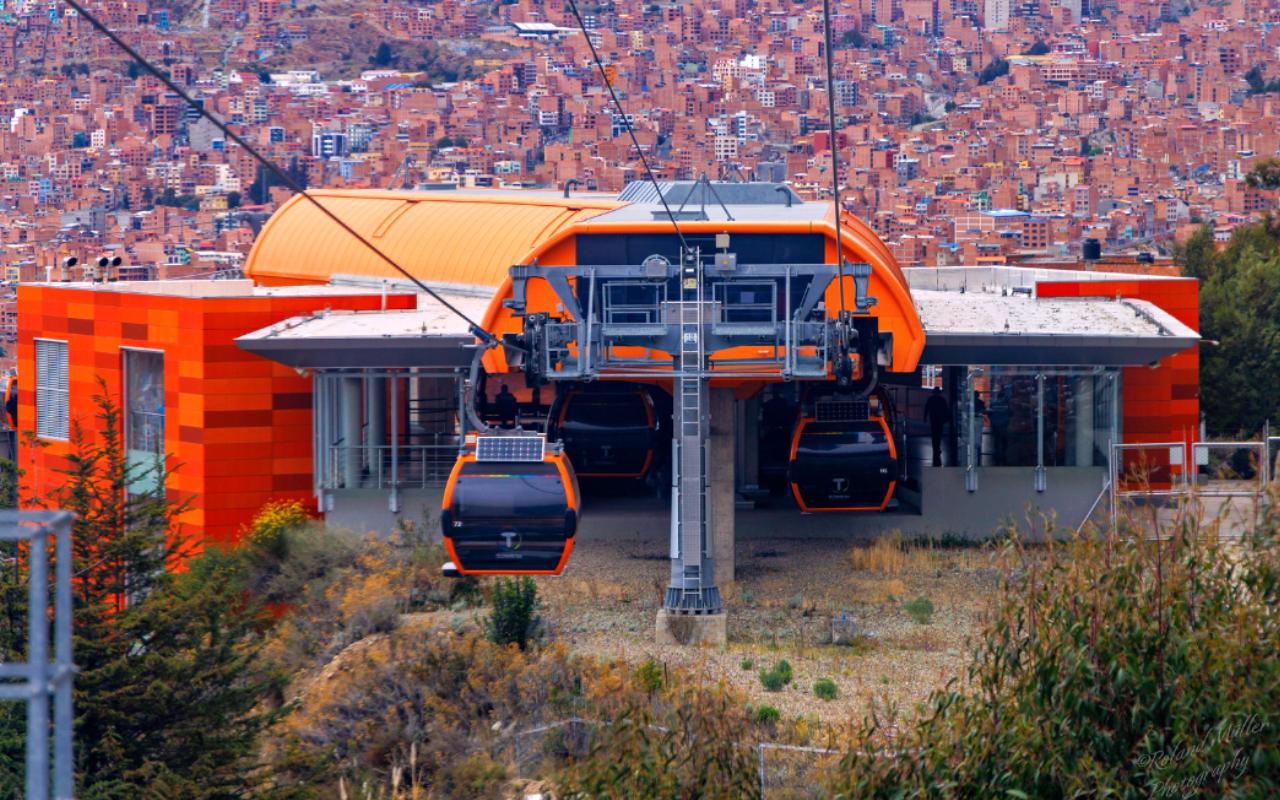
Riding the cable car is itself an attraction and nearly compulsory for first-timers. The views of La Paz stretching across the canyon are breathtaking.
The Sky Blue Line from Sopocachi (yellow station) to El Alto (red station) climbs from 3,200 m to 4,100 m. On a clear day, you see the city grid, sprawling markets, and snowcaps in all directions.
Similarly, the Orange and Red lines linking urban La Paz to El Alto give panoramic lookout points (especially at Sopocachi station and Ceja/16 de Julio). Tickets are purchased at kiosks at each station for ₿3.00. Lines operate roughly 5 AM–10 PM.
Especially recommended:
- Take the Red Line up to 16 de Julio and switch to Yellow/Green for El Alto’s downtown market (the bustling Feria 16 de Julio). From there, you can return via Red Line to Central.
- Ride the Purple or Yellow lines (Sopocachi–Irpavi) for dramatic vistas of Illimani. Avoid peak morning rush (7–9 AM) if you prefer space, though even then the journey is short (minutes).
Death Road (Camino de la Muerte)
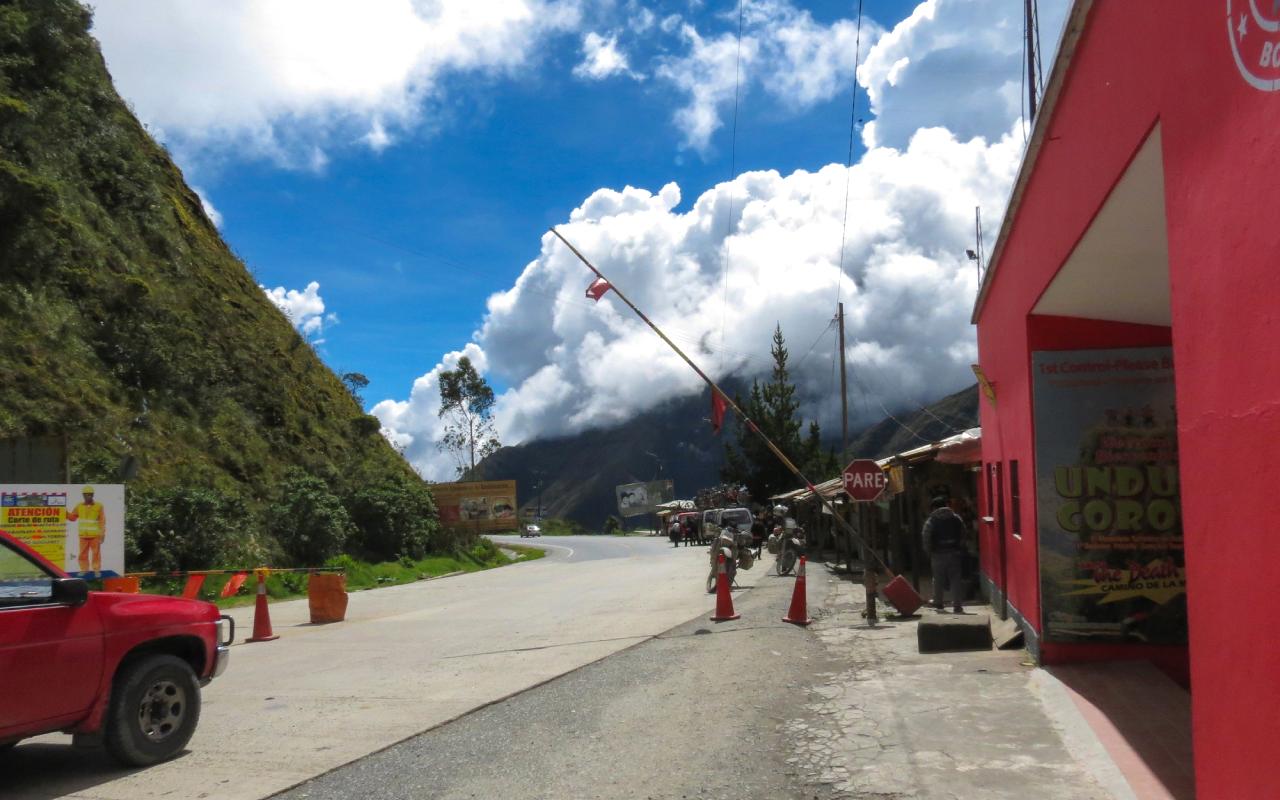
A top adventure activity is biking the old Yungas Road, nicknamed Death Road. In the 1990s, this 64 km road from La Paz into the Amazon foothills in La Paz Bolivia was infamous as “the world’s most dangerous” due to sheer cliffs with little guardrail.
Today, that narrow section of traffic has reduced since the new highway opened, but the road is still used by local vehicles (a new highway opened in 2006). Various companies offer guided downhill mountain-biking tours from the high-altitude start (4,700 m) down into the cloud forest (ending around the Yungas town of Coroico).
Riders get full gear and descend on rugged mountain bikes, often reaching tree line in 1–2 hours. It’s high adrenaline: steep, winding road clinging to lush canyon walls, with waterfalls and fog. Tours include hotel pickup (often from La Paz early morning) and return transport.
If you do this, make sure to use a reputable operator (check reviews). The cost is around $70–$100 (as per the same advice about not skimping on brakes). Do note this is physically demanding (and cold at the start), so only for fit travelers.
El Alto Markets & Cholita Wrestling

Cholita Wrestling
Riding the cable to the 16 de Julio station deposits you at El Alto, a city of 1.2 million at 4,150 m. El Alto’s Sunday/Thursday Feria 16 de Julio is one of South America’s largest open-air markets.
It spreads for blocks: vendors sell furniture, hardware, electronics, alpaca textiles – all at wholesale prices for locals. Tourists won’t find typical souvenirs here, but it’s fascinating to see. (Pickpockets are known here, so keep gear secure.) Notably, small replicas for the alasita fair (miniature cars, houses) pop up in January.
Also in El Alto is the Polifuncional de la Ceja, hosting the Cholita Wrestling matches. Shows (with indigenous women wrestling in bowler hats) occur on certain Sundays. Schedules change, so ask locally (hostels often have info). It’s a cultural experience, albeit touristy.
The El Alto district also offers viewpoints on the city: for example, cross via cable to the Airport cable car, or drive up to Mirador Killi Killi or the Teleférico station. As the highest continuous altitude city, El Alto is less touristed but worth a half-day visit to see genuine Aymara urban life.
Accommodations & Neighborhoods of La Paz Bolivia
La Paz’s accommodations range from dormitory bunks to luxury hotels. Below is a brief comparison of popular neighborhoods and lodging tiers:
| Neighborhood | Character/Highlights | Price Level |
| Zona Centro (Plaza Murillo, San Francisco) | Historic core with museums and markets. Bustling, safe for tourism. Many backpacker hostels (party and laid-back) and mid-range hotels. | Budget: hostel dorms (₿50–60/night) <br>Mid-range: 2–3 star hotels (₿100–200)<br>Luxury: rare, mostly older 4-star hotels. |
| Sopocachi | Bohemian arts district with cafés, nightlife, and theaters. Slightly quieter than Centro. Home to popular hostels (Selina) and boutique hotels (Stannum, Ritz Apart). Good restaurants and Mirador viewpoints. | Budget: guesthouses, hostels (₿60–100), Mid: boutique hotels (Stannum ₿350–500), Luxury: upper-mid lodgings (Ritz ₿600+). |
| San Pedro | Authentic local vibe with markets (San Pedro market) and the city prison. Very basic lodgings; many backpacker guesthouses. Convenient for the airport (close to Autopista). | Budget: hostels & B&Bs (₿50–80), Mid: few mid-range hotels (₿150–200). |
| Zona Sur (Calacoto, Achumani) | Newer upscale residential and embassy area. Quiet, leafy streets with shopping centers (Sopocachi Mall, Villa Fatima). Most luxury hotels and expat apartments here (e.g., Casa Grande, Hotel Rosario, Villa Victoria). | Mid: 3–4-star hotels (₿200–400), Luxury: high-end hotels/serviced apartments (₿500+). |
| Miraflores | Flat, lower-altitude district with fútbol stadium and tech hub. Some tourist hostels and cheap hotels. Far from the main plaza. | Budget: limited hostels (₿50–80). |
| El Alto | Industrial and residential sprawl; no tourist hotels (closest to the airport). | Few hotels near the airport (₿200+). |
Table: La Paz neighborhoods and typical accommodation levels.
In practical terms, backpackers often stay in Sopocachi or Centro (Wild Rover, Loki Hostel, Lobo), where dorm beds run ₿50–60.
Midrange travelers may choose boutique hotels in Sopocachi (El Museo Hotel, Hotel Rosario) or business hotels near Calacoto. Luxury stays (with suites and airport shuttle) are in Zona Sur (Casa Grande del Sur, Ritz Aparthotel). Book ahead for high season (Aug, Dec).
For budgeting, dorms start at $7 (₿50) while private 3-star rooms are $20–40 (₿150–300).
All categories usually include breakfast. Many lodgings offer coca tea and oxygen tanks for altitude relief.
Always confirm at booking that heating is adequate (some Bolivian hotels lack hot water at night).
Safety & Altitude Sickness
General Safety: La Paz is relatively safe compared to some capitals, but like any major city, it requires vigilance. Violent crime against tourists is uncommon; incidents are usually opportunistic theft.
The U.S. State Department notes that civil unrest, strikes, and roadblocks are the main risks in Bolivia, with demos occasionally turning violent. While downtown La Paz is usually peaceful, protests can occur with little warning, so stay updated via local news or hotel staff.
In cities and markets, petty theft is the primary concern. Pickpocketing or bag-snatching can happen in crowded areas – notably markets (El Alto market, La Paz bus terminal, San Francisco Plaza).
Keep valuables secure: use a money belt or internal zippered pocket, don’t flaunt cash/phones, and avoid unlit streets at night. In taxis, lock doors immediately. Carry photocopies of important documents, and store originals in a hotel safe if possible.
Use only licensed taxis or booked services (Uber/TaxiFy/InDrive): Women should be cautious when walking alone at night. Overall, common-sense precautions – as you would in any city – keep most travelers safe. If in doubt, check current travel advisories (e.g., U.S. Smart Traveler Enrollment Program or local embassy updates) as Bolivia’s political climate can shift.
Altitude Sickness (Soroche): La Paz’s altitude (3,650 m) means soroche is a real risk. Symptoms include headache, nausea, shortness of breath, and fatigue.
They can begin within hours of arrival and vary by person; even fit travelers can suffer (as one guide notes, “altitude sickness can affect anyone”).
To minimize symptoms:
- Acclimatize: Plan 2–3 days of easy activity before strenuous outings. Avoid sudden increases or vigorous activities. At least three days are recommended to acclimatize at La Paz.
- Hydrate & Rest: Take a lot of water and herbal teas (coca or tawa-tawa). Do not take alcohol and coffee initially because they dehydrate you.
- Coca Tea/Leaves: The conventional medicine is Coca tea. Sipping coca tea or chewing coca leaves can alleviate headaches and fatigue. It’s culturally accepted and legal (just don’t try to take coca leaves out of the country!). Many hotels provide coca tea; local markets and cafes also sell it.
- Medication: Over-the-counter “sorojchi” pills (with acetazolamide or herbal blends) are popular. It may help to start these before symptoms get severe. Ibuprofen can mitigate headaches.
- Oxygen: Some travelers use bottled oxygen (available at pharmacies or hotel lobbies). Even sitting in a room with an oxygen tank can help you sleep.
- Know Symptoms: Mild soroche often improves after 24–48h with rest. Severe symptoms (persistent vomiting, confusion) are rare, but medical attention in Bolivia can be limited. If someone is very affected, descending even a few hundred meters usually provides immediate relief.
Lastly, acclimatization is still necessary even if you’ve been to La Paz, Bolivia, before; each visit resets your body’s oxygen adaptation. As one source advises, “Definitely rest at least three days before booking excursions,” and consider first spending a night at a lower elevation if possible. With these precautions, most visitors quickly adapt and enjoy the “lightness” of the air in a few days.
Sample 3-Day Itinerary of La Paz Bolivia
Day 1: Sightseeing in downtown La Paz. Start at Plaza Murillo (visit the Cathedral and government palaces), then walk east to Casa de la Libertad (Independence Museum) and the nearby Wax Museum (optional).
Wander through the narrow Calle Jaén (old merchant houses) and shop or snack at boutiques. By late morning, head to Mercado de las Brujas in Linares (free, open 9:30–10:00).
For lunch, eat at Mercado Lanza or the surroundings (try salteñas or chairo soup). In the afternoon, take a guided tour of the San Francisco Church and the rooftop ₿20 tour.
Finish Day 1 with a cable car ride (Central station) up to Sopocachi or Mirador Killi Killi for sunset views. Dinner can be at a Sopocachi restaurant or cafe (try aji de fideo or grilled trout).
Day 2: Get an early cable car up to El Alto (Line 16 de Julio). Browse the Friday/Sunday Feria 16 de Julio market (or the areas around the station). If timing allows, attend a cholita wrestling event at Polifuncional de la Ceja stadium (check the schedule for 11 AM matches).
Return to La Paz via the cable car in time for lunch in El Alto or Sopocachi. In the afternoon, take a taxi (30 min) to Valle de la Luna to hike the lunar trails. Go back to the city for dinner; you could go to a local grill house and have a parrillada (mixed grill) or camelids.
Day 3: Immerse in museums or take a full-day trip.
Option A (city focus): Visit the Museo Nacional de Etnografía y Folklore (open Mon/Tue/Sun) to see indigenous art and textiles. Then ride the Orange/Yellow cable lines for scenery and end at an Alto panorama deck. Lunch in Miraflores (salteñas or local fast food).
Afternoon at your leisure: perhaps souvenir shopping in Sagárnaga or relaxing in a café. Evening: dine in Zona Sur (Calacoto/Achumani) at a stylish restaurant (e.g. Gustu or a steakhouse).
Option B (day trip): Organize a tour to the Yungas or Lake Titicaca. For example, a day-trip to Coroico via the new road (admire waterfalls) or a more adventurous half-day on Death Road (biking with a tour company).
Another option is a Lake Titicaca trip to Copacabana (3.5 h each way) or Tiwanaku ruins (1.5 h drive each way). These require early starts and guide/transport booking. Return by late evening.
Each day’s plan allows 10–12 hours of activity with built-in rest time. Plan the itinerary according to your arrival and departure time, energy level, and which activities you like most. In any case, include time for short naps or coca tea breaks to manage altitude.
Day Trips and Nearby Excursions
If you have extra days or prefer not to stay strictly in the city, consider these popular excursions from La Paz Bolivia:
- Valle de la Luna: Covered in the 3-day itinerary above; suitable as a half-day trip from La Paz.
- Coroico / Yungas: As mentioned, the cloud-forest town of Coroico (ca. 3–4 h drive via new road) offers hot springs and jungle hikes. Some travelers combine it with an overnight to better acclimatize.
- Tiwanaku Ruins: The ancient archaeological site of Tiwanaku (a UNESCO World Heritage site) lies 72 km west of La Paz. Full-day tours (₿200 including guide and transport) explore temples and monoliths of this 1,000–1,200 AD pre-Inca civilization. There’s also an excellent onsite museum.
- Lake Titicaca (Isla del Sol): Though the main access is from Copacabana (3.5 h drive), some operators run 2-day tours from La Paz that include Copacabana and Isla del Sol (tiny Andean community islands). It’s a long trip, but it shows the famed lake scenery.
- Valleys & Moon Valley: In addition to the Valle de la Luna near the city, the Cinturón de las Aguas park (south of the city) has a cable car and gardens, and the suburban Cerro Jahuira viewpoint on the South Road.
- San Pedro Prison: Unusual tours allow a guided visit to San Pedro Prison (infamous from the book Marching Powder) to see daily life inside Bolivia’s largest penitentiary. Not typical for casual tourists, but an option for the highly curious and guided.
Each excursion should factor in altitude and road conditions. Tours generally include water and snacks. Check seasonal accessibility: for example, Yuraj Vila Highway may flood in heavy rains, but most seasonal tours adapt.
Budget and Costs of La Paz Bolivia
La Paz is very affordable compared to most capitals. A day’s expenses breakdown (all in USD) might be:
| Category | Budget Traveler | Mid-Range Traveler | Luxury Traveler |
| Accommodation | Hostel dorm $8–$15 | Private hotel $30–$60 | 4star hotel $100+ |
| Meals | Street food $3–5 | Restaurants $10–20 | Fine dining $30+ |
| Transport | Bus/Telef. $0.50–1 | Occasional taxi $5–10 | Private transfers |
| Activities | Walking tours $0–5 | Guided tours $20–50 | Private tours $100+ |
| Daily Total | $25–40 | $50–80 | $120–250+ |
(Adapted from general La Paz Bolivia budgets: backpackers $25–40/day, mid $50–80, luxury $120–250.)
In La Paz specifically, expect to pay roughly: $2–4 for a local market meal, around $6–12 at a mid-range restaurant, and more at upscale places. Dorm beds in hostels run $7–15, while simple hotels are $20–40/night.
Cable car rides are extremely cheap ($0.40/ride). Museum entries are usually under $2–5. Taxis within the city are modest (short ride $2–3); always confirm or use an app.
Tours out of La Paz (e.g., Death Road bike tour $70 or Salar de Uyuni overnight $200) can add to the budget. Always budget a little extra for souvenirs (alpaca textiles, silver jewelry) and tips (10% is customary in restaurants if service is not included).
Money-saving tips: Go to mercados and street stalls, take public buses/teleférico, and negotiate souvenirs. Credit cards are accepted at larger shops/restaurants, but carry cash (bolivianos) as many places (especially markets and small eateries) do not take cards. ATMs are available downtown, but have a daily withdrawal limit; notify your bank that you’ll be in Bolivia.
Pros & Cons of Visiting La Paz
Pros:
- Special Views: The mountainous location (mountains, valley) is aesthetically appealing and unparalleled by any other city. Rides in cable cars provide views that are not available anywhere in the capital.
- Cultural Richness: Living museum of Andean culture: cholitas, traditional markets (with the renowned Witches’ Market), and colorful festivals. It is a chance to enjoy indigenous traditions that are used every day.
- Value & Authenticity: There is a lot of affordable stuff, including street food and tours. The city is not as touristy as usual capitals, presenting a truer image of Bolivia.
- Adventure: Adventure activities such as Death Road biking and high altitude trekking (e.g., Illimani) are right at the doorstep of adventure tourists. Even the city tours consist of special transportation (teleférico).
- Climate (in Dry Season): Sunny days, no oppressive heat, cool days.
Cons:
- Altitude: Virtually all people feel soroche initially. It can be a major dampener of the initial couple of days unless it is handled well.
- Terrain: The city is a steep and sprawling terrain; even short walks can require long uphill climbs. People with health problems can have a hard time being mobile.
- Pollution/Traffic: The quality of air in some places, particularly along highways or around the markets of El Alto, can be poor. There is heavy traffic during rush hours.
- Language Barrier: English is not commonly spoken beyond the tourism industry. A few Spanish words or a guide are useful.
- Unpredictability: Bolivia is a politically unstable country, which may lead to sudden roadblocks or strikes (unpredictable but normally easy to handle with patience).
- Nightlife is not very active: Nightlife is not as active as in other capitals (Sopocachi has bars and clubs, though). Others might feel restricted by After Dark activities.
All in all, La Paz Bolivia compensates those who come to see with pre-planning and interest. It is magic because it is unexpected, a mix of culture, altitude, and adventure, but it will require respect for the environment and adaptability in plans
FAQ
Q: Do I require a visa to La Paz Bolivia?
A: Most nationalities (e.g., US, EU, Canada, Australia) have a 90-day visa-free stay in Bolivia; others must inquire with a Bolivian consulate. The passports should be 6+ months in validity. (Always check up on existing visa regulations before travelling.)
Q: How many days are enough in La Paz?
A: A minimum of 2–3 days covers the main city highlights (Plaza Murillo, markets, churches, cable car). Four days is better to acclimatize and add nearby attractions (Moon Valley, Tiwanaku).
Q: Can we drink tap water in La Paz Bolivia?
A: Tap water is not consistently safe. Use bottled or purified water. Hydrate with lots of drinks to counter altitude dehydration.
Q: What clothing should I bring?
A: While visiting La Paz Bolivia: Layered clothing is key. Days can be warm in the sun; nights get cold. Bring a warm jacket, hat, gloves, and sunscreen. Sturdy shoes are recommended for walking on rough, hilly streets.
Q: How to best beat altitude sickness?
A: To handle altitude in La Paz Bolivia, take it easy the first 2–3 days: rest, hydrate (water and coca tea), and avoid alcohol/caffeine. Consider soroche pills if needed and use supplemental oxygen or coca if symptoms worsen. Most visitors acclimate in 3 days.
Q: Is it possible to use my credit card in La Paz Bolivia?
A: Hotels, large restaurants, and shops accept credit cards. However, there are numerous little shops and cabs that need cash (Bolivianos). There are ATMs in the downtown; you can plan to take out enough cash to go to the markets and transportation.
Q: Do people speak English?
A: Spanish is the main language in La Paz Bolivia. In tourist areas, many speak some English, but knowledge varies. Learning basic Spanish or traveling with a guide/translator app will help. Aymara and Quechua are also spoken by locals (especially in markets).
Q: Is it safe to travel alone or to be a woman?
A: Lots of individuals are visiting La Paz Bolivia by own. Standard rules are to be followed: use registered taxis/apps, do not walk in dark places at night, and do not leave valuables in places. Women ought to be wary of lonely places at night.
Q: How to get from the airport to the city center?
A: Options: taxi (₿80–100 to the city), shared shuttle (₿50–60), or the Teleférico cable (Line Red from 16 de Julio station), which takes you to the center for only ₿3.
Q: What is the local tipping custom?
A: In La Paz Bolivia, tipping around 10 % customary in restaurants if service is not included. It’s not expected in street food or markets. Tour guides and drivers appreciate 10% for good service.
Q: Can I visit the Cholita Wrestling as a tourist?
A: Yes, cholita wrestling matches are a popular attraction in La Paz Bolivia. They usually take place on certain Sunday afternoons in El Alto (at the stadium by Teleférico 16 de Julio). Check schedules in advance; tours can include it.
Q: Are cameras allowed in museums?
A: In La Paz Bolivia, Many museums (e.g., Jaén museums, Etnography Museum) allow photography (often for a small fee).
The Witches’ Market permits photos of goods, but always ask permission before photographing a person or sensitive items (e.g., llama fetuses).
Q: What’s a typical daily budget?
A: A budget traveler might spend USD 25–40/day (hostel, street food, public transit). A mid-range traveler might spend $50–80/day for nicer lodging and meals. Luxury budgets are $120–250/day. The table above provides a breakdown.
Q: How do I call a taxi safely?
A: Use your hotel reception or a taxi app (InDrive, Yango) to avoid hailing random cabs. If flagging on the street, ensure the taxi has a taxi ID, meter, and is from a hotel or major taxi company. Never share a taxi with strangers if you’re alone, and negotiate the price when the meter is off.
Q: Any health precautions besides altitude?
A: Apart from altitude, no special vaccines are required for city travelers (some recommend hepatitis A). Carry sunscreen and wear a hat for sun protection. In the rainy season, roads may be muddy, so allow extra travel time.











-
 0115 Best Easy Treks in Nepal for Beginners and Families
 -
 02Best season for Everest Base Camp Trek
 -
 03Best Time to Go Hiking in Nepal: A Seasonal Guide for Trekkers
 -
 04Suchi Purja –Wife of Nirmal Purja aka Nims Dai
 -
 05Dubai desert safari outfit ideas
 -
 06Top Beaches in Sri Lanka
 -
 0710 Best Easy Treks in Nepal